Support

Gimhae

About

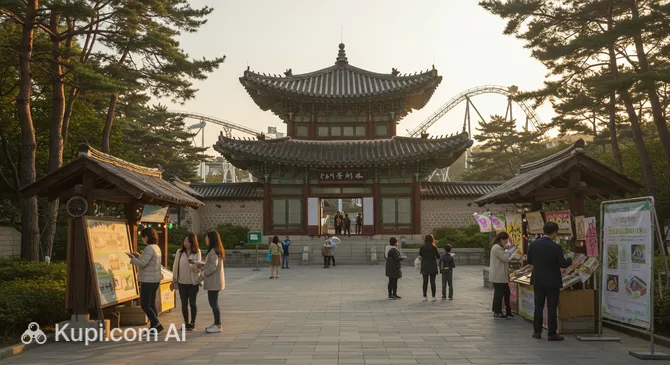
Gimhae is an amazing city where ancient legends come to life against a backdrop of picturesque mountains, and centuries-old history is harmoniously interwoven with the dynamics of modern life. It offers a unique atmosphere that allows travelers to touch the origins of Korean culture, feel the spirit of antiquity, and simultaneously enjoy the comforts of a modern city.

Located in the southeast of South Korea, in close proximity to Busan, Gimhae is nestled in a fertile valley surrounded by low mountains. With a population of over 550,000 people, it is a significant city in Gyeongsangnam-do province and an important cultural and administrative center of the region. Thanks to its favorable geographical location, the city has long served as a crossroads of trade and cultural routes.
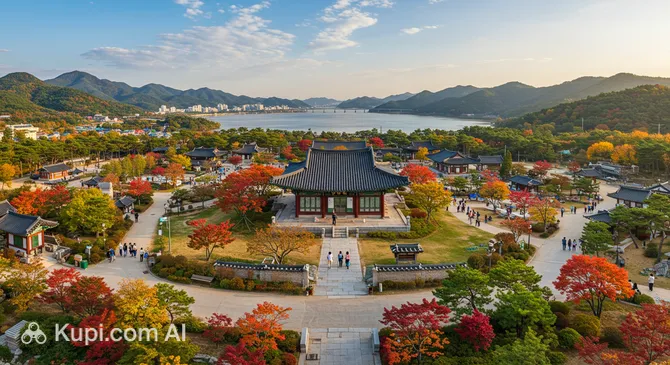
Gimhae. Illustration.
Source: Kupi.com AI

Gimhae is famous for its rich historical heritage, as it was once the center of the ancient Gaya confederacy of city-states. Today, this glorious past is remembered through numerous artifacts, majestic ancient tombs—such as the Royal Tomb of King Suro, the founder of Gaya—and the exhibitions of the Gimhae National Museum. It is also worth visiting the theme park dedicated to Gaya culture to fully immerse yourself in the atmosphere of that era.

If you strive to feel the authentic spirit of Korea, explore its ancient history away from standard tourist routes, and discover its unique charm, Gimhae will be a real revelation for you. This city invites you on a fascinating journey through time, where every corner holds its own secrets and awaits its explorers.

You can find more interesting facts on the Gimhae city history page.
Weather Overview

The weather in Gimhae is characterized by distinct seasons. Summer, especially in July and August, is warm and humid, with average temperatures reaching 25.7-26.8°C and the highest number of rainy days (up to 16 per month). Winters in Gimhae are cool and significantly drier, with the average January temperature around 2.6°C and minimal precipitation. Spring (March-May) and autumn (September-November) are transitional seasons with moderate temperatures and variable amounts of precipitation, offering comfortable conditions for visiting the city. Overall, expect warm summers with periodic rains and cool, drier winters. For detailed information on the weather by month, including data on temperature, precipitation, and the number of sunny days, visit the Gimhae Climate page.

Average monthly temperature

Average monthly precipitation

Interesting Facts

In addition to its famous landmarks, Gimhae holds many amazing stories and little-known details that make it truly unique. Ready to learn some of them?

  • According to an ancient legend, the first ruler of the ancient state of Gaya, King Suro, was born from a golden egg. In honor of this mythical event, even the building of the local astronomical observatory is built in the shape of an egg, reminding of the unusual origin of its first ruler.

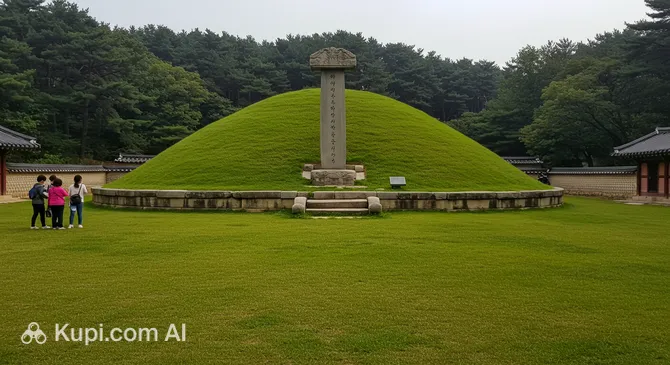
  • Gimhae is a real treasure trove for history buffs, as it was the center of the Gaya confederation. The city is famous for its ancient burial sites, among which the Royal Tomb of King Suro, the founder of Gaya, holds a special place.

  • One of the city's most romantic stories is associated with Queen Heo Hwang-ok, the wife of King Suro. Legend has it that she arrived in Gimhae by sea from the distant Indian kingdom of Ayuta (believed to be ancient Ayodhya), bringing new cultural trends and initiating the region's international ties.

  • The city is the birthplace of one of South Korea's former presidents—Roh Moo-hyun. His home-museum in Gimhae attracts many visitors interested in the country's modern history.

Royal Tomb of King Suro. Illustration.
Source: Kupi.com AI

Traveler photos:

How to Get There

You can reach Gimhae in various ways, but air travel remains the most convenient and fastest option for most tourists, thanks to a major international airport in the immediate vicinity. The region also has a well-developed network of rail and bus connections with other parts of the country. You can find out more details on how to get to Gimhae on the special page of our guide.

The main air gateway for travelers is Gimhae International Airport (PUS). Formally, this airport belongs to the city of Busan, but it is located only 7.8 km from the center of Gimhae, making it an ideal arrival option. It is a major international hub with high passenger traffic, receiving flights from all over the world. The journey to the city by taxi or bus takes about 30–40 minutes.

As an alternative, you can consider Daegu International Airport (TAE), located in the city of Daegu. It is about 76 km away from Gimhae. This is a less crowded but convenient airport, from where the journey by car takes approximately 2 hours and 15 minutes. Also operating in the region is Ulsan Airport (USN) in Ulsan (about 58 km), serving primarily domestic flights.

For clarity, here is summary information on the main nearby airports:

AirportPassenger trafficDistance
Gimhae International Airport15.8 mln8 km
Ulsan Airport786 73958 km
Sacheon Airport219 28976 km
Daegu International Airport3.3 mln76 km
Pohang Airport253 70397 km

Rail travel also plays an important role in the region's transport system. One of the key transport hubs is Dongdaegu Station (IATA: XDK), located in Daegu, about 75 km from Gimhae. This station has very high passenger traffic and receives high-speed KTX trains from all over the country. From here, travelers can continue to Gimhae by bus or taxi, which takes about 2 hours.

Below is information about the nearest major railway stations:

StationPassenger trafficDistance
Jinju Station70 km
Dongdaegu Station20 mln75 km
Yeosu Expo Station117 km
Daejeon Station18.6 mln184 km
Gwangju Songjeong Station3.4 mln191 km

Main Attractions

Gimhae, a city with a rich history and culture, offers tourists many interesting places to visit. Here, everyone will find something for themselves, from ancient tombs to modern entertainment complexes and picturesque parks.

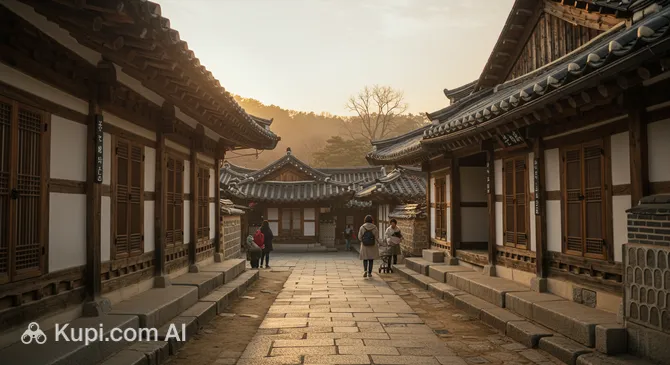
One of the most significant historical sites is the Royal Tomb of King Suro. This is the final resting place of the legendary founder of the ancient state of Geumgwan Gaya. Visiting the tomb allows you to touch the history of the region and learn more about its ancient rulers. The complex around the tomb is well-maintained and perfect for quiet walks.

Royal Tomb of King Suro. Illustration.
Source: Kupi.com AI

Traveler photos:

For those seeking entertainment and active recreation, Gaya Land is an excellent choice. This theme park offers attractions for the whole family, colorful performances, and various relaxation areas. It is a great place to spend a fun and unforgettable day, especially if you are traveling with children.

Gaya Land. Illustration.
Source: Kupi.com AI

Traveler photos:

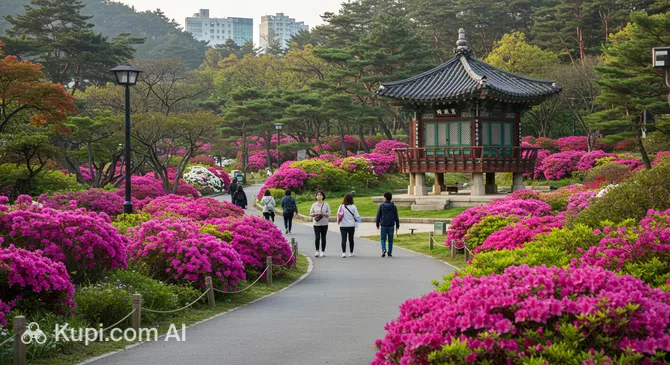
Nature lovers and those seeking peaceful strolls should visit Yeonji Park. This picturesque park with a lake, well-kept alleys, and relaxation areas is a popular spot among locals and tourists alike. Here you can enjoy the beauty of nature, feed the ducks, or simply take a break from the city bustle.

Yeonji Park. Illustration.
Source: Kupi.com AI

Traveler photos:

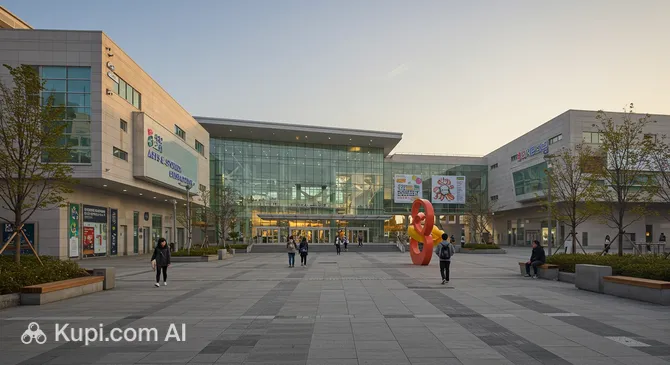
You can get acquainted with the city's cultural life at the Gimhae Cultural Center. It regularly hosts exhibitions, concerts, theatrical performances, and other events reflecting both traditional and contemporary South Korean art. This venue allows for a deeper understanding of Gimhae's cultural heritage and creative potential.

Gimhae Arts and Sports Center. Illustration.
Source: Kupi.com AI

Traveler photos:

Another wonderful place for outdoor recreation is Turtle Park. It got its name from a small hill shaped like a turtle. The park offers beautiful landscapes, walking trails, and picnic spots, serving as an oasis of tranquility within the city.

Local Cuisine

The gastronomic scene in Gimhae is a real discovery for connoisseurs of authentic Korean cuisine, where traditions harmoniously blend with the freshness of local products. Located near the coast, the city is famous for its fish and seafood dishes. You must try "Gyaekkujang"—a spicy crab soup that is especially good in cool weather and is considered one of the region's signature dishes.

In addition to seafood, Gimhae's cuisine offers a variety of rice, vegetable, and beef dishes, generously seasoned with local spices. Don't miss the chance to taste kimchi prepared according to old recipes, as well as unique fermented sauces characteristic of the area. Street food also deserves attention: tteokbokki rice cakes, fried squid, and sweet pastries with bean paste make for a great snack during city walks.

Raeoak. Illustration.
Source: Kupi.com AI

Traveler photos:

As for drinks, traditional Korean beverages will perfectly complement your meal: from refreshing non-alcoholic ones like barley tea (boricha) to popular alcoholic drinks like soju and makgeolli (rice wine). Locals and tourists often choose both small family-run restaurants and more modern establishments for lunch or dinner. One such place to experience the local cuisine is the Raeok restaurant. Additionally, visiting local markets will leave a vivid impression; there, you can not only buy the freshest products but also try street food and feel the true flavor of Gimhae. The city is also known for its gastronomic festivals, during which you can dive deeper into culinary traditions, including the heritage of the ancient kingdom of Gaya.

Travel Tips

Welcome to Gimhae! This city, the cradle of the ancient Gaya confederation, is full of history and unique culture. To ensure your journey goes smoothly and leaves only pleasant impressions, we have prepared some practical tips.

  1. Clothing and Essentials:

    Gimhae, like all of South Korea, has four distinct seasons. In summer (June-August), it is hot and humid—choose light, breathable clothing. In winter (December-February), it can be cold, so warm items including a jacket, hat, and gloves will be needed. Spring and autumn are the most comfortable times with moderate temperatures, ideal for layering. Make sure to bring comfortable walking shoes, as Gimhae is rich in historical sites. Don't forget a universal adapter (Korea uses types C and F plugs, voltage 220V). When visiting temples or tombs, show respect by choosing modest clothing that covers shoulders and knees.

  2. Transport in the City:

    Getting around Gimhae is convenient by public transport. The city has a well-developed bus network. There is also a light rail transit line (Gimhae Light Rail Transit) that connects to the Busan metro, making trips to the neighboring metropolis fast and easy. Taxis are available and relatively inexpensive; they can be hailed on the street or called via the Kakao T app (may require a local SIM card or payment method). Renting a car can be useful if you plan to explore the Gyeongsangnam-do province countryside, but for Gimhae itself, public transport is usually sufficient.

  3. Finance: Currency, Cards, and Tipping:

    The local currency is the South Korean Won (KRW). You can exchange money at banks or official exchange offices in the city, as well as upon arrival at Incheon or Busan airports. Credit and debit cards (Visa, Mastercard) are widely accepted in most shops, restaurants, and hotels. Nevertheless, it's always useful to have some cash on hand for small purchases at markets or in small establishments. International cards usually work without problems, but just in case, notify your bank of your trip. ATMs are easy to find; look for those labeled "Global ATM," as they most often service foreign cards. An approximate daily budget for a mid-range level could be 70,000-150,000 won per person (excluding accommodation). Important: tipping is not customary in South Korea.

  4. Health and Safety:

    Pharmacies (약국 - yak-guk) are frequent in Gimhae. Some staff may speak basic English, but it's better to have a translation app handy. 24-hour pharmacies are less common, but hotel staff will be able to help in an emergency. Medical care in South Korea is at a high level; it is recommended to take out travel insurance. In case of an emergency, call 119. Gimhae is a very safe city. Follow standard precautions: watch your belongings in crowded places and stay vigilant. There are no particularly dangerous areas for tourists here.

  5. Communication and Internet:

    The official language is Korean. English is not universally spoken, but young people and tourism workers often have a command of it. Learning a few basic phrases in Korean is always appreciated by locals: "Annyeonghaseyo" (Hello), "Kamsahamnida" (Thank you), "Juseyo" (Please give me). A SIM card with internet access can be purchased at the airport or at convenience stores (e.g., CU, GS25). Wi-Fi is widely available in cafes, hotels, public places, and even on transport. Popular local navigation apps are Naver Maps or KakaoMap (Google Maps has limited functionality for pedestrian and car navigation in Korea), and for translation—Papago.

  6. Local Etiquette and Communication:

    When greeting, Koreans often bow slightly. Handshakes are also acceptable, especially in business settings. In public places, especially on transport, try not to speak too loudly. When giving or receiving items, use both hands or your right hand supported by your left. At the table, do not stick chopsticks vertically into rice—this is associated with funeral rituals. Remember that tipping is not accepted.

  7. What to Avoid:

    Do not write people's names in red ink—in Korean culture, this is associated with death and is considered a bad omen. Also, avoid pointing at people or objects with a single finger; instead, use your entire palm.

  8. Feature of Gimhae: Gaya Heritage:

    Gimhae is the historical heart of the ancient Gaya confederation. To truly capture the spirit of the city, be sure to visit the Gimhae National Museum and the Royal Tomb of Suro—the founder of the Gaya state—as well as the tomb of his wife Heo Hwang-ok. This will allow you to deeper understand the unique history of this region of South Korea.

Gimhae offers an amazing combination of ancient history and modern Korean life. We hope these tips help you plan an unforgettable trip and get the most out of your discovery of this wonderful city!

Entertainment & Nightlife

Gimhae, known for its rich history and culture, offers its guests and residents diverse opportunities for evening and nighttime leisure. While the city may not be as bustling as Seoul or Busan, there are definitely places to have a good time after sunset.

The main nightlife in Gimhae is concentrated in the central districts, especially around shopping streets and university campuses where young people traditionally gather. Here you can find numerous restaurants, bars, cafes, and, of course, the karaoke bars (noraebang) popular in Korea. The atmosphere is usually lively but quite relaxed. Most establishments stay open until late at night, especially on weekends. There is usually no specific dress code, but a neat casual style is welcomed.

Raeoak. Illustration.
Source: Kupi.com AI

Traveler photos:

For dinner in a pleasant setting, you might consider a restaurant like Raeok, which serves local cuisine. After dinner, many head to small, cozy bars for a glass of soju or beer with friends. Although Gimhae may not have massive world-class nightclubs, there are plenty of venues with live music or DJ sets where you can dance and have fun. Look out for the Shinsegae or Naewae-dong areas, which are known for their concentration of entertainment venues.

When planning an evening out, it is best to arrive at popular spots after 8:00 PM or 9:00 PM, when they start to fill up. Average prices in Gimhae's bars and restaurants are moderate, especially compared to the capital. The most convenient way to get around the city at night is by taxi. Taxi-hailing apps like Kakao T are widely used and easy to navigate. The city is generally considered safe, but as always, it is worth taking standard precautions, especially in less crowded areas late at night.

During the day, Gimhae also offers plenty of interest. Culture enthusiasts can visit the Gimhae Cultural Center, which often hosts exhibitions and performances, or take a stroll through the picturesque Yeonji Park. For family leisure, Gaya Land offers various attractions. Historical landmarks, such as the Royal Tomb of King Suro, are also well worth a visit.

Parks & Museums

The city of Gimhae invites travelers to enjoy a harmonious blend of well-maintained green zones and a rich cultural heritage dating back to the times of the ancient Gaya state. Here, everyone will find something to their liking, whether it's a peaceful walk in a park or an introduction to artifacts of the past.

Among the city's parks, Yeonji Park particularly stands out. It is a popular relaxation spot for locals and tourists alike, known for its picturesque lake, well-kept walking alleys, and seasonal floral displays. It's a pleasant place to spend time enjoying nature and tranquility. Another landmark is Turtle Park (also known as Gu-jibong Park). It holds great historical significance as it is believed to be the place where, according to legend, King Suro, the founder of the Gaya state, was born. In addition to historical references, the park offers beautiful landscapes and trails for leisurely walks. For family leisure and entertainment, Gaya Land is perfect, offering various rides and outdoor relaxation areas, making it attractive for visitors of all ages.

Yeonji Park. Illustration.
Source: Kupi.com AI

Traveler photos:

You can immerse yourself in Gimhae's history and culture by visiting its iconic landmarks. The main historical site is the Royal Tomb of King Suro. This is a majestic burial complex dedicated to the founder of the ancient Gaya state, which attracts visitors not only for its historical value but also for the beautiful park area surrounding it. Visitors can learn a lot about the ancient history of the region. An important cultural hub of the city is the Gimhae Cultural Center, which often hosts various exhibitions, concerts, and events that showcase both modern and traditional South Korean art. Not far from the tomb of King Suro is Suringwon—another site closely associated with the Gaya royal family and often linked with the tomb of Queen Heo Hwang-ok, King Suro's wife. This place is also steeped in history and surrounded by a peaceful atmosphere.

Royal Tomb of King Suro. Illustration.
Source: Kupi.com AI

Traveler photos:

Gimhae Arts and Sports Center. Illustration.
Source: Kupi.com AI

Traveler photos:

For those who want to dive even deeper into the history of the ancient Gaya state, it is recommended to visit the Gimhae National Museum, known for its extensive collection of artifacts (although it is not included in the provided list for direct linking). And as a small tip for an authentic experience: explore the lesser-known trails in Turtle Park (Gu-jibong) to fully feel its historical atmosphere away from the main routes and enjoy the silence of this special place.

Getting Around

Moving around the city of Gimhae is quite convenient thanks to a developed public transport system. The core of the transport network consists of modern buses and a light rail transit (LRT) line that connects Gimhae with neighboring Busan, integrating with its metropolitan subway system. This makes travel between the cities fast and comfortable.

The bus network in Gimhae is extensive and covers most areas of the city. Routes and schedules are usually displayed at stops, often with information in both Korean and English. Buses vary in color depending on the type of route (city, suburban).

For paying fares, the most convenient way is using a T-money transport card (or similar ones like Cashbee). These cards can be purchased and topped up at most convenience stores (e.g., 7-Eleven, CU, GS25), as well as at machines in subway and LRT stations. The T-money card can be used on both buses and the LRT line, as well as in the Busan subway. The cost of a single trip on a bus or LRT when paying with a T-money card is usually around 1,300-1,500 won. Using a T-money card often provides discounts on fares and transfers. Single-use tickets are also available for purchase, but using a card significantly simplifies the process.

When entering a bus or LRT station, you must tap your card on the validator. When exiting a bus, it is also important to tap your card so the fare is correctly calculated, especially if a transfer discount system is in place. Public transport usually operates from early morning (about 5:30-6:00 AM) until late evening (around 11:00 PM-12:00 AM), but it is better to check the exact schedule for specific routes.

As an alternative to public transport, taxis are always available in Gimhae. They can be easily hailed on the street or ordered through mobile apps popular in South Korea (such as Kakao T). The fare for a taxi ride is calculated by a meter, and the base taxi fare starts from approximately 3,800-4,800 won. In some areas of the city, bicycle rentals may be available, which is a great way for a leisurely exploration of the surroundings, especially in park zones.

Accommodation

In Gimhae, travelers will find a variety of accommodation options to suit different preferences and budgets. The city offers everything from budget guesthouses and motels to comfortable mid-range hotels. Apartment rental options are also available, which can be convenient for families or long-term stays.

When choosing a place to stay in Gimhae, it is worth paying attention to areas located near major attractions or transport hubs. For example, staying near iconic sites like the Royal Tomb of King Suro or the picturesque Yeonji Park will provide easy access to the city's cultural and natural sites. Areas with good transport links are also convenient, making it easier to move around the city and its surroundings.

While specific world-famous hotel chains may not be as widely represented as in major metropolises, Gimhae offers a decent selection of local hotels known for their hospitality and quality service. The price range varies from budget options to more expensive mid-level offers, allowing every tourist to find a suitable choice.

To guarantee the best accommodation at the optimal price, especially during peak tourist season or local festivals, it is recommended to book your stay in advance. The most common booking methods are popular online platforms and travel aggregators, though direct booking through hotel websites should not be ruled out either.

Nearby Cities

For those who want to explore the surroundings, Gimhae serves as an excellent starting point for day trips to several interesting nearby locations:

Busan, South Korea's second-largest city, is just 18 km from Gimhae. It attracts travelers with its famous beaches like Haeundae and Gwangalli, the picturesque Beomeosa Temple, the colorful Jagalchi Fish Market, and the unique Gamcheon Culture Village with its brightly colored houses. It's the perfect place for those seeking a mix of city bustle and coastal relaxation.

Just 21 km away is Changwon, the capital of Gyeongsangnam-do province. This modern, well-planned city offers an abundance of green zones, including the scenic Yongji Park and Junam Ecology Park, famous as a wintering site for migratory birds. Changwon is also an important industrial and cultural center, offering a quieter alternative to major metropolises.

Slightly further away, about 53 km, is Ulsan. This major industrial city is known not only for its shipyards and automobile plants but also for beautiful coastal landscapes like Daewangam Park and Ulsan Grand Park, one of the largest urban parks in Korea. You can also visit the Jangsaengpo Whale Museum here, making it an interesting destination for diverse leisure activities.

CityPopulationDistance
Noksan124 24613 km
Busan3 453 19818 km
Jinhae190 00018 km
Yangsan297 53220 km
Changwon1 046 05421 km

These nearby destinations provide insight into the diverse culture, history, and landscapes of the region, complementing the experience of visiting Gimhae.

Shopping & Souvenirs

Gimhae offers various shopping opportunities, although it is not as large a commercial center as, for example, Seoul or Busan. Here you can find both modern shopping complexes and traditional markets, where everyone will find something to their taste. The city has a rich history associated with the ancient state of Gaya, so ceramic products are one of its iconic goods.

Main commercial activity in Gimhae is concentrated in the central districts, especially around major transport hubs and in busy neighborhoods. Downtown streets, for example in the Nae-dong and Oe-dong areas, offer many shops for clothing, Korean cosmetics, accessories, and electronics. You can find both famous national brands and small local boutiques with unique items.

Modern shopping centers operate in Gimhae where you can comfortably spend time shopping. One popular spot is, for example, Lotte Mart, which offers a wide range of goods—from food and daily necessities to clothing and household appliances. You can also find department stores and outlets in the city offering branded items at more attractive prices.

For a more authentic shopping experience and a look at local life, it is worth visiting the traditional markets of Gimhae. Markets such as the main Gimhae Market offer an abundance of fresh produce, local delicacies, clothing, household goods, and more. It is a great place not only for shopping but also to soak up the city's daily atmosphere and try authentic Korean street food. Often, unique handmade items can be found at these markets.

From Gimhae, it is worth bringing back souvenirs that reflect its rich history and culture. The main symbol of the city is rightly considered to be ceramics, especially items in the style of the ancient state of Gaya—these can be vases, cups, decorative plates, and figurines. Traditional Korean souvenirs are also popular: elements of the national hanbok costume, delicate fans, and items with calligraphy. At the Gimhae Cultural Center, you can find interesting souvenirs and works by local craftsmen. Don't forget about the famous Korean cosmetics, various types of tea, and national sweets, which will make excellent gifts for you and your loved ones.

Gimhae Arts and Sports Center. Illustration.
Source: Kupi.com AI

Traveler photos:

Most shops in Gimhae are open daily, typically from 10:00 or 11:00 AM until 8:00 or 10:00 PM. Large shopping centers may have longer hours, especially on weekends and holidays. Traditional markets usually open earlier in the morning. The main method of payment in South Korea is bank cards, which are accepted almost everywhere. Cash (Korean won) may be needed for purchases at small markets or when paying for street food.

Tourists in South Korea have the opportunity to use the value-added tax refund system (Tax Free) when making purchases over a certain amount in participating stores. Look for the special "Tax Free" or "Tax Refund" logo in windows or ask the sales staff. To process the refund, you must keep all receipts and present them along with your passport and the purchased goods at special refund points at the airport before departing the country.

Reached the end of the page?

That means the route is fully explored