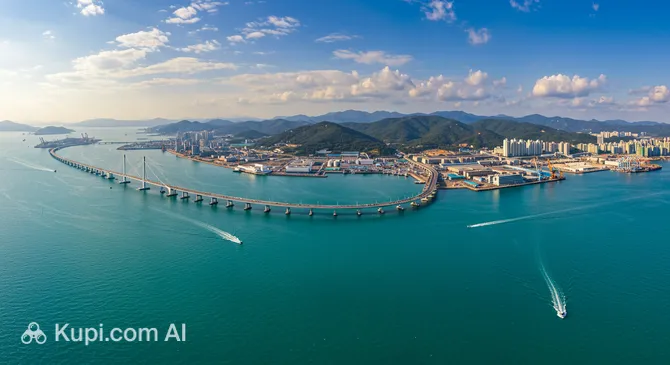
Gwangyang is a charming city nestled on the picturesque shores of a bay on the southern coast of the Korean Peninsula, in Jeollanam-do province. Its unique geographical position, where mountain ranges meet the sea, creates a distinct harmony and makes Gwangyang a true gift for nature lovers. The city is part of South Korea and attracts visitors with its calm, peaceful atmosphere.
Gwangyang. Illustration.
Source: Kupi.com AI
With a population of about 151,834 people, Gwangyang maintains an intimate atmosphere while playing an important role as an industrial and cultural center of the region. It is known for its modern port and is one of the country's key transport hubs. Thanks to its proximity to the sea, the climate here is mild and the air is always fresh, making a stay in the city particularly pleasant.
Gwangyang is a place where tradition blends harmoniously with modernity. Here you can explore ancient villages where folk crafts are still carefully preserved, or visit modern art centers full of creative energy. The city is especially beautiful in spring, when its surroundings are blanketed in magnificent plum and cherry blossoms, attracting many tourists who want to enjoy this breathtaking sight.
A visit to Gwangyang will give you peace of mind, the opportunity to enjoy stunning natural views, and a rich cultural life. It is an ideal place for those seeking a quiet holiday, an introduction to authentic Korean culture, and gastronomic discoveries. Gwangyang is waiting to share its treasures and hospitality with you!
The weather in Gwangyang is strongly seasonal. The city experiences four distinct seasons, each with its own characteristics, which is important to consider when planning a trip.
Summer in Gwangyang, lasting from June to August, is usually warm and humid. Average temperatures during this period range from 21.8°C to 26.3°C, while in August, maximum values can reach 29.4°C. Summer is also the rainiest season: July has the highest rainfall (about 10 mm) and up to 19 rainy days. Winters, from December to February, are cool and drier. Average temperatures drop to 1.3°C - 3.5°C, and nighttime temperatures often fall below zero. Precipitation in winter is minimal (1-2 mm per month). Thus, Gwangyang is characterized by warm summers with occasional rain and cool, relatively dry winters.
For more detailed information on climatic conditions and an up-to-date forecast, you can visit the weather in Gwangyang page.
Average monthly temperature
Average monthly precipitation
Interesting Facts
Beyond its picturesque landscapes and hospitality, Gwangyang hides many amazing stories and unique features that make it a truly special place. Here are just a few interesting facts about this South Korean city:
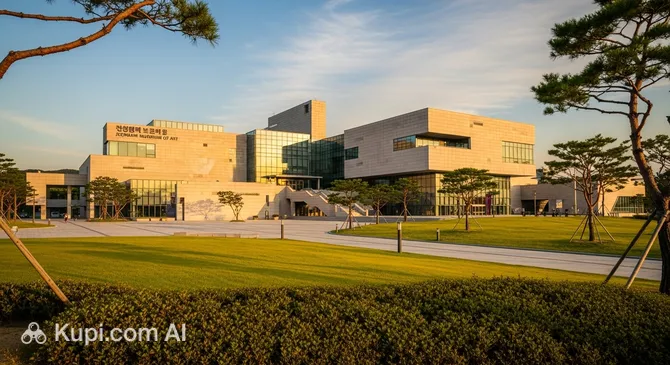
Jeonnam Museum of Art. Illustration.
Source: Kupi.com AI
Traveler photos:
Gwangyang is the true plum blossom capital of South Korea. Every spring, a grand festival takes place in Maewha Village (Maehwa Maeul), when the hillsides are covered in a white and pink carpet of millions of flowers, attracting photographers and beauty lovers from all over the country. This festival is one of the most anticipated events of spring in Korea.
The city carefully preserves the memory of Reverend Son Yang-won, a prominent figure in Korean history known for his mercy and resilience even in the face of personal tragedies. The memorial hall dedicated to him is not just a museum, but a place to reflect on important human values and the region's history.
Gwangyang is an important cultural center of Jeollanam-do province. In addition to modern art spaces like Yeulmaru, the city invites guests to visit the Jeollanamdo Museum of Art, which showcases both traditional and contemporary Korean art, introducing visitors to a rich creative heritage.
For foodies, Gwangyang has a special surprise – the city is considered the birthplace of one of the most famous variations of Korean barbecue, "Gwangyang Bulgogi." This dish consists of thinly sliced marinated beef that is traditionally grilled on a copper mesh over charcoal. You can try this delicacy on the specialized Gwangyang Bulgogi Street.
How to Get There
Gwangyang, an important industrial city in Jeollanam-do province in the south of South Korea, is accessible to travelers through a network of regional airports and railway stations located in neighboring cities. When planning a trip to Gwangyang, several arrival options should be considered.
For those who prefer air travel, several airports serve as the main gateways to Gwangyang, as there is no airport in the city itself. The closest is Yeosu Airport (RSU), located in the city of Yeosu, just 14.9 km from Gwangyang. This is a small regional airport from which Gwangyang city center can be reached by taxi or bus in about 40-45 minutes. For international flights and a wider choice of routes, consider Gimhae International Airport (PUS) in Busan. Although it is about 125.1 km away, it is a major international hub; a trip from there to Gwangyang takes about 3.5 hours by car or bus. Another convenient option is Gwangju Airport (KWJ), located in the city of Gwangju, about 73.1 km from Gwangyang. This medium-sized airport serves both domestic and some international flights, and the road to Gwangyang from there will take about 2 hours 10 minutes.
To illustrate, here is summary information for the main airports used to reach Gwangyang:
Traveling by rail is another popular way to reach Gwangyang, especially if you are already in South Korea. While there is no major railway station in the city center itself, several important hubs are nearby. Yeosu Expo Station (XYT) in the city of Yeosu is just 28.6 km from Gwangyang. This is a medium-sized station from which you can reach Gwangyang by taxi or local bus in about 50-55 minutes. Another significant option is Gwangju Songjeong Station (XNJ) in the city of Gwangju, about 75.1 km from Gwangyang. This is a major station serving high-speed KTX trains, and the trip to Gwangyang from here takes about 2 hours.
Below is information about the railway stations that can be used for a trip to Gwangyang:
From these transport hubs, Gwangyang can be reached by intercity or local buses, as well as by taxi. It is recommended to check schedules and available transfer options to Gwangyang in advance.
Main Attractions
Gwangyang, located in Jeollanam-do province, offers its guests a variety of attractions that combine culture, gastronomy, and opportunities for active recreation. This city, known for its industry, also carefully preserves its cultural traditions and natural beauty.
One of the iconic places for art lovers is the Jeollanamdo Museum of Art. It features both works by local masters and contemporary art exhibitions, allowing for a deeper understanding of the region's cultural heritage. The museum often hosts themed exhibitions, attracting visitors with a variety of genres and styles.
Jeonnam Museum of Art. Illustration.
Source: Kupi.com AI
Traveler photos:
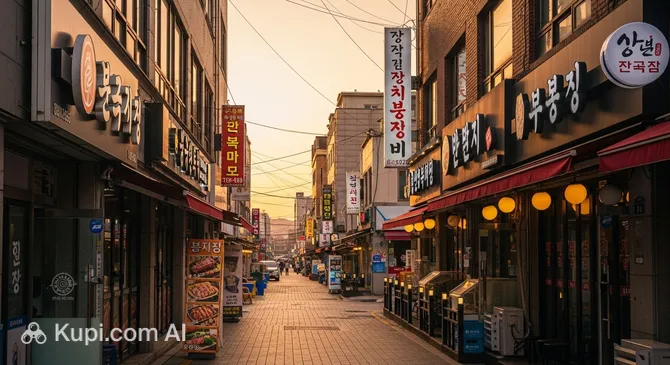
For gourmets and those who want to get acquainted with authentic Korean cuisine, a mandatory stop is Gwangyang Bulgogi Street. This is an entire street dedicated to the famous marinated beef dish – bulgogi. Here you can taste various versions of this culinary masterpiece, prepared according to traditional recipes, and experience true Korean hospitality.
Gwangyang Bulgogi Street. Illustration.
Source: Kupi.com AI
Traveler photos:
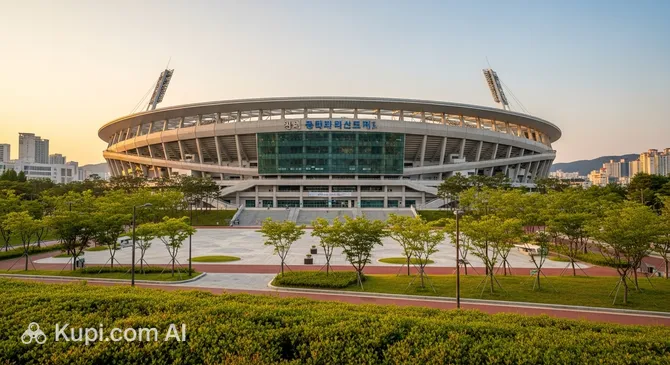
Fans of active recreation and walks in the fresh air will enjoy Seocheon Sports Park. This is a vast green area, ideal for jogging, cycling, or just a picnic in nature. The park often hosts local sports events and festivals, making it a popular spot for both residents and tourists.
Seocheon Sports Park. Illustration.
Source: Kupi.com AI
Traveler photos:
These attractions are just a small part of what Gwangyang has to offer. The city attracts with its unique atmosphere, where modern achievements are harmoniously combined with a rich cultural heritage and natural beauty.
Local Cuisine
The gastronomic scene of Gwangyang is a true discovery for lovers of Korean cuisine, where the freshest gifts of the sea play the leading role. Due to its coastal location, the city is famous for its abundance of seafood: oysters, mussels, squid, and shrimp are served here in a wide variety of ways. Be sure to try the local specialty – "Gwangyang-chim", steamed fish with vegetables and aromatic spices, prepared according to old recipes. This dish perfectly conveys the authentic taste of the region.
In addition to seafood, Gwangyang is proud of its special radish and seaweed kimchi – spicy and aromatic, it perfectly complements any dish. In the city's lively street markets, you can taste fried seaweed pies, spicy tteokbokki rice cakes, and delicate clam soup. For meat lovers, a real discovery will be the famous Gwangyang Bulgogi Street, where delicious marinated grilled meat is prepared. Farmers' markets also deserve attention: here you will find fresh seasonal vegetables, fruits, and even delicacies such as spring fern shoots.
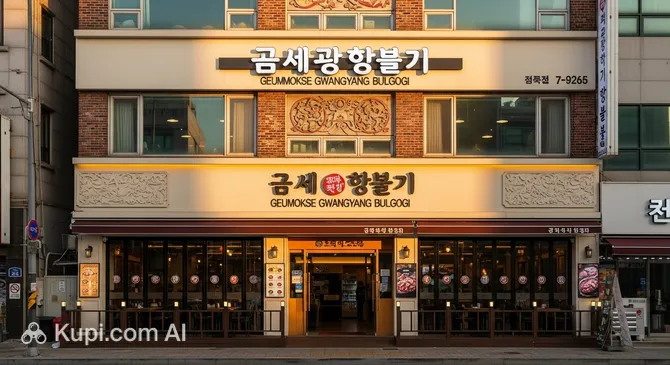
Geummokse Gwangyang Bulgogi. Illustration.
Source: Kupi.com AI
Traveler photos:
As for drinks, refreshing beverages based on local fruits are popular in Gwangyang, especially during festivals, such as the spring plum blossom festival, when guests are served drinks made from plum flowers and fruits. Among alcoholic beverages, it's worth noting traditional Korean soju or makgeolli. The food culture in Gwangyang is diverse: locals and tourists enjoy food both in cozy restaurants, such as Geummokseo Gwangyang Bulgogi, and by buying appetizing snacks at street stalls and colorful markets. City festivals often turn the streets into large gastronomic venues, offering a unique experience of getting to know the local cuisine.
Travel Tips
Planning a trip to Gwangyang? Wonderful! To make your journey through this interesting industrial and cultural center of South Korea as comfortable as possible and leave only bright impressions, we have prepared some useful tips for you.
Clothing and Essentials: The climate in Gwangyang is temperate, with four distinct seasons. In summer (June-August), it is hot and humid, so bring light, breathable clothing. Spring and autumn offer pleasant weather – layered outfits are ideal. In winter (December-February), it can be chilly; don't forget a warm jacket, hat, and gloves. Comfortable shoes are extremely important for walking around the city and its surroundings. Don't forget a universal adapter for electronics (South Korea uses Type F sockets).
City Transport: The main form of public transport in Gwangyang is buses, which cover most areas. Taxis are also widely available and relatively inexpensive; they can be hailed on the street or ordered via the popular Korean app Kakao T. If you plan to actively explore the picturesque surroundings of Jeollanam-do province, renting a car might be a good option, but it is not mandatory for getting around the city itself.
Financial Matters: The national currency is the South Korean Won (KRW). You can exchange currency at banks or exchange offices. Credit and debit cards (especially Visa and Mastercard) are accepted in most shops, restaurants, and hotels. However, it is recommended to always have some cash with you for small purchases or at markets. ATMs are easy to find, and many of them serve international cards. Tipping in South Korea is generally not practiced and may be met with surprise.
Health and Safety: Pharmacies in Gwangyang are common, and over-the-counter medicines can be purchased there. For emergency medical assistance, call 119. Gwangyang is considered a very safe city, but standard precautions, such as keeping an eye on personal belongings in crowded places, are never out of place.
Communication and Internet: The official language is Korean. English may not be as widely spoken as in Seoul, especially among the older generation, but in tourist areas and hotels, staff usually speak English. Learning a few basic Korean phrases, such as "Annyeonghaseyo" (Hello) and "Kamsahamnida" (Thank you), is greatly appreciated by locals. You can purchase a local SIM card or a portable Wi-Fi router at the airport or at telecommunications stores. Free Wi-Fi is often available in cafes, shopping centers, and public places. For navigation, it's better to use local apps like Naver Maps or KakaoMap, as Google Maps has limited functionality in South Korea.
Local Etiquette: A slight bow is the traditional form of greeting. When handing over or receiving items (e.g., money, business cards), it is customary to use both hands or the right hand supported by the left. Show respect to elders. In public places, especially on transport, try not to make noise. Observing these simple rules will help you build rapport with the locals.
Things to Avoid: Try not to discuss sensitive political topics, especially those concerning relations between North and South Korea, unless your interlocutor initiates such a conversation. It is also considered impolite to write names in red ink, as this color is traditionally associated with death.
Special Feature of Gwangyang: If your trip falls in early spring (usually March), don't miss the chance to visit the famous Gwangyang Maehwa Festival in Seomjingang Maehwa Village. This is a truly magical sight that attracts thousands of visitors and is one of the main highlights of the region.
We hope these tips help you plan your trip better and get the most out of your visit to Gwangyang. We wish you unforgettable experiences and a pleasant journey!
Entertainment & Nightlife
Evening Gwangyang invites visitors to enjoy a pleasant rest, although its nightlife differs from the bustling metropolises of South Korea. Here, the emphasis shifts to cozy dinners, heartfelt conversations in local establishments, and exploring Korea's rich gastronomic culture in the evening hours.
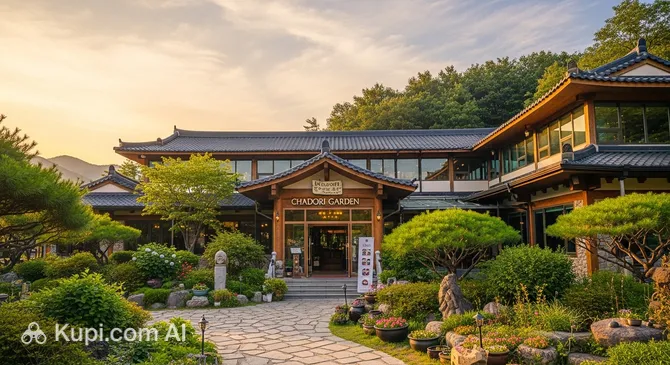
The heart of Gwangyang's evening gastronomic life is undoubtedly Gwangyang Bulgogi Street. As dusk falls, this place comes alive, filled with the tempting aromas of the famous Korean dish. Many restaurants and cafes specializing in bulgogi attract both locals and curious tourists. The atmosphere here is usually lively, yet conducive to a leisurely dinner and pleasant conversation. If you are looking for specific dinner spots, look out for restaurants like Geummokseo Gwangyang Bulgogi or Chadori Garden, where you can taste authentic Korean dishes in a pleasant setting.
Chadori Garden. Illustration.
Source: Kupi.com AI
Traveler photos:
In addition to restaurants, Gwangyang offers other traditional Korean evening entertainment. You will find many "hofs" — typical Korean pubs serving beer and various snacks, creating an ideal atmosphere for informal socializing. For those looking for livelier spots, bars with a wider selection of drinks, including cocktails, and modern music can be found in the central areas of the city. Of course, one cannot ignore "noraebangs" — karaoke bars that are immensely popular with Koreans of all ages. Regarding club life, Gwangyang does not boast large nightclubs like those in Seoul or Busan. However, especially on weekends, you can find small local venues with dance music where young people gather. Night markets, common in many Asian cities, are not as widespread here; the main focus of evening leisure is on restaurants and bars.
When planning an evening out, keep in mind that most restaurants are active from about 18:00 to 22:00-23:00. Bars and noraebangs are usually open longer, some until late at night or early morning. The dress code in most Gwangyang establishments is quite casual — neat everyday clothes will be perfectly appropriate. Drink prices in bars are generally moderate: a local beer in a "hof" can cost between 4,000-7,000 won, while cocktails in more modern bars are 8,000-15,000 won. Entry to small local clubs, if any, is often free or has a symbolic fee, sometimes including a drink. For getting around the city at night, taxis are most convenient; they can be called via mobile apps (e.g., KakaoTaxi) or hailed on the street, especially in busy areas.
Gwangyang, like most cities in South Korea, is considered quite safe for evening and night walks. Nevertheless, it is always worth following standard precautions: keep an eye on your belongings and be aware of your surroundings, especially in unfamiliar places.
During the day, Gwangyang also offers interesting leisure options. Art lovers can visit the Jeollanamdo Museum of Art, where works by Korean masters are exhibited. For those who enjoy walks in the fresh air and active recreation, Seocheon Sports Park is perfect, offering various opportunities for sports and relaxation. If you are interested in shopping, you can stop by stores like ABC Mart or explore the shopping streets in the city center.
ABC Mart. Illustration.
Source: Kupi.com AI
Traveler photos:
Parks & Museums
Gwangyang, a city in Jeollanam-do province, offers its guests not only industrial landscapes but also cozy green spots for relaxation, as well as places where you can touch the culture and history of the region. Here you will find modern parks for walking and active recreation, as well as interesting museum exhibitions that introduce the rich heritage of South Korea.
One of the notable places for outdoor recreation in Gwangyang is Seocheon Sports Park. It is not just a green zone, but a multifunctional space where locals and tourists can play sports, walk along well-kept alleys, or simply enjoy nature. The park is great for families and active pastimes, offering various playgrounds and relaxation areas.
Seocheon Sports Park. Illustration.
Source: Kupi.com AI
Traveler photos:
In addition to large parks, other pleasant walking spots can be found in Gwangyang and its surroundings. For instance, the banks of the Seomjingang River are famous for their picturesque views, especially in spring during the plum blossom season, making them a popular spot for photo shoots and leisurely strolls. These natural areas offer fresh air and an opportunity to take a break from the city bustle.
For art and history lovers, Gwangyang offers a visit to the Jeollanamdo Museum of Art. This museum is an important cultural center of the province, presenting both traditional and contemporary Korean art. The museum's exhibitions introduce visitors to the works of local and national painters, sculptors, and masters of other fields, allowing for a deeper understanding of the region's cultural heritage and its development.
Jeonnam Museum of Art. Illustration.
Source: Kupi.com AI
Traveler photos:
While Gwangyang may not be as well-known for its numerous museums as major metropolises, you can find small galleries or exhibition spaces dedicated to local crafts or the city's history here. It is worth paying attention to cultural centers, which often host temporary exhibitions showcasing various aspects of Korean culture.
Travelers interested in the past should look for local temples or historical markers that can tell stories about significant events and personalities of the region. Often such places hold a unique atmosphere and are witnesses to centuries of history.
For a more authentic experience, take a walk through Gwangyang's local markets, where you can feel the real atmosphere of the city, observe daily life, and try traditional Korean dishes. Also, do not miss the chance to visit the famous Gwangyang Bulgogi Street to enjoy one of the city's main gastronomic specialties, known far beyond its borders.
Getting Around
Public transport in Gwangyang is primarily represented by a bus network, which is the most convenient and economical way to get around the city and its surroundings. Buses run on various routes, connecting residential areas, industrial zones, and tourist sites. Types of transport such as subways, trams, or trolleybuses are not present in Gwangyang. Route taxis, as understood by some tourists, are also not a common form of transport; their function is largely performed by city and suburban buses.
To pay for bus fares in Gwangyang, as in many cities in South Korea, the T-money transport card (or similar cards like Cashbee) is widely used. The basic fare for a city bus when paying with a T-money card is usually around 1,250-1,500 South Korean won, but it can vary. This card can be purchased and topped up at most convenience stores (konbini) and at special vending machines for selling and reloading transport cards. Paying with a T-money card is often slightly cheaper than paying in cash. When entering the bus, you must tap the card against the validator, and also when exiting if required for correct fare calculation (especially relevant for routes with distance-based pricing). Cash payment directly to the driver is also possible, but it is recommended to have small change as change may be limited.
Buses in Gwangyang usually start running early in the morning and end late in the evening, but exact schedules can vary by route. Information about routes and schedules can be found at bus stops (often in Korean) or using navigation apps such as Naver Maps or KakaoMap, which are very popular in South Korea and provide up-to-date information on transport movements in real time.
In addition to buses, taxi services are easily accessible in Gwangyang. Taxis can be hailed on the street, found at special ranks, or called via an app (for example, Kakao T). The cost of the trip is calculated by the meter. In South Korea, taxi drivers usually do not expect tips. For those who prefer more independence, car rental is possible. Carsharing options should also be considered, as they are becoming increasingly available in South Korean cities; it is best to check the availability and conditions of such services in Gwangyang through popular Korean mobile apps. Bicycle rentals may be available in some areas, especially in park zones or along embankments, offering a pleasant way to see sights over short distances.
Accommodation
When planning a trip to Gwangyang, you will find a variety of accommodation options to suit different preferences and budgets. The city offers a choice ranging from cozy guesthouses and budget motels to more comfortable mid-range hotels. Apartment rental options are also available, which can be convenient for families or long stays.
When choosing a place to stay in Gwangyang, pay attention to areas with good transport accessibility and proximity to the main sites of interest to you. Central areas usually offer easy access to restaurants and shops, while the outskirts may offer a quieter atmosphere. Although specific hotels are not listed in the provided data, the city has enough options for a comfortable stay.
In Gwangyang, you can find both budget accommodation options and mid-priced hotels. There may be fewer luxury resorts here, but quality hotels with good service are present. To find and book accommodation, it is convenient to use popular online platforms that allow you to compare prices and conditions. Direct booking via hotel websites or by phone is also an option.
To guarantee the best value for money, especially if your trip falls during the peak tourist season or during major events in the region, it is recommended to book your accommodation in advance. This will allow you to choose from a larger number of available offers and avoid the last-minute rush.
Nearby Cities
For those who want to explore the surrounding area, Gwangyang serves as an excellent starting point for day trips to several interesting nearby locations:
For example, Gwangju, located just 70 km from Gwangyang, attracts with its rich history and lively cultural life, offering many museums and galleries. A bit further away, at a distance of about 100-105 km, are Jeonju, famous for its traditional Hanok Village and culinary delights like bibimbap, and Changwon, a large coastal city interesting for its parks, embankments, and modern look. These cities offer a variety of experiences for a day trip.
These nearby destinations allow for a more complete picture of the diverse culture, history, and landscapes of the South Jeolla region and beyond.
Shopping & Souvenirs
Shopping in Gwangyang offers tourists the opportunity to purchase both everyday goods and unique local products. Although the city is better known for its industry, you can find interesting shopping options here, especially if you are looking for something authentic from the Jeollanam-do region.
The main shopping areas in Gwangyang are concentrated in the central districts of the city. While there are no huge pedestrian shopping streets like in Seoul, you will find many shops, boutiques, and cafes while walking along the main streets. An interesting place to explore could be the area around Gwangyang Bulgogi Street. Although this place is primarily known for its restaurants, small shops offering local goods and souvenirs are often located nearby.
For those who prefer to do all their shopping in one place, Gwangyang also has shopping centers. One such place is ABC Mart, where you can find a variety of goods, from clothing and shoes to electronics and household items. This is a convenient option for one-stop shopping.
ABC Mart. Illustration.
Source: Kupi.com AI
Traveler photos:
It is definitely worth visiting the local markets if you want to dive deeper into the daily life of Gwangyang. Traditional markets (in Korean "sijang", 시장) offer fresh produce, the seafood for which the coastal region of Jeollanam-do is famous, as well as local delicacies, clothing, and household items. This is a great place to try street food and chat with locals.
As souvenirs from Gwangyang and the Jeollanam-do region, you can bring back high-quality local agricultural products, such as famous Korean ginseng, dried seaweed (gim), various sauces, and pastes. Also, pay attention to products made by local craftsmen, ceramics, or textiles with traditional patterns, if you come across any.
Most shops in Gwangyang are typically open from 10:00-11:00 AM until 8:00-9:00 PM. Large shopping centers may stay open longer. Traditional markets often start their work early in the morning. Credit cards are accepted almost everywhere, however, cash may be useful in markets and small private shops. ATMs are easy to find throughout the city.
For foreign tourists in South Korea, a tax refund system (Tax Free) is available. When making purchases over a certain amount in stores with the corresponding logo ("Tax Free" or "Tax Refund"), you can fill out documents for a VAT refund. The refund is usually processed at the airport when leaving the country. Keep your receipts and check the conditions in each specific store.