Support

Daejeon

About

Daejeon is one of the largest metropolises in the heart of South Korea, rightfully earning its status as the country's science and technology capital. With a population of about 1.5 million people, the city is a harmonious blend of ultra-modern architecture, innovative research centers, and picturesque natural landscapes. It is often called the "Silicon Valley of Korea" due to its high concentration of world-class universities and institutes.
\n
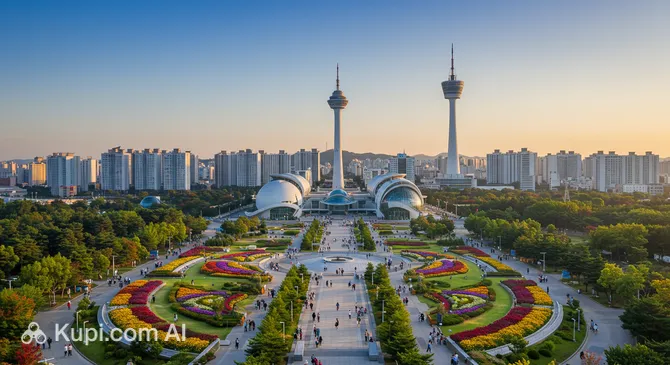
Daejeon. Illustration.
Source: Kupi.com AI
\n

The city's geographic location makes it a key link between the northern and southern regions of the country. Thanks to its developed infrastructure and abundance of park zones, there is an atmosphere of dynamic development here that nonetheless feels peaceful and cozy. Tourists are attracted by the unique combination of futuristic attractions, such as Expo Park, and opportunities for high-quality relaxation in the famous hot springs.

\n

Immersing yourself in the rich past and heritage of the region will provide a better understanding of how a small settlement transformed into a powerful intellectual and cultural center. Daejeon invites travelers to explore its science museums, stroll through the shaded alleys of its arboretums, and enjoy the hospitality of a city looking toward the future.
Weather Overview

In Daejeon, a temperate monsoon climate prevails with clearly defined seasons. Summer here is hot and quite humid: in July and August, the average temperature reaches +26°C...+30°C, and it is during this period that most of the precipitation occurs. Winter, by contrast, is cold and dry, with average temperatures around 0°C in January, although night frosts can be quite sharp.

\n

For those planning a trip, spring (April–May) and autumn (September–October) are the ideal times. During these months, the city's climate is most comfortable for long walks: mild sunny weather sets in, and nature delights with cherry blossoms in spring or vibrant foliage colors in autumn.

\n

When packing your suitcase, focus on the season: an umbrella and light clothing are essential in summer, while a warm jacket and thermal underwear will be needed in winter. In the transitional seasons, it is worth dressing in layers, as the difference between daytime and nighttime temperatures can be significant.

Average monthly temperature

Average monthly precipitation

Interesting Facts

    \n
  • Daejeon is officially called the "Silicon Valley of Korea." It is home to Daedeok Innopolis, a science town that brings together more than 50 public and private research institutes.

  • \n
  • The city hosted the prestigious Expo 1993 World's Fair. The unique Expo Bridge and the futuristic Hanbit Tower were built specifically for this event and have become symbols of the city.

  • \n
  • Daejeon is home to the National Science Museum, considered one of the most technologically advanced in Asia. Its halls feature not only achievements in robotics but also life-sized dinosaur skeletons.

  • \n
  • The city is the country's largest transportation hub. Due to its central location, you can reach Seoul or Busan by high-speed train in just 1–1.5 hours.

  • \n
  • Daejeon is famous for its Yuseong Hot Springs. This is one of Korea's oldest balneological resorts, with water rich in alkaline elements that, according to legend, heals many ailments.

  • \n

How to Get There

Due to its location in the central part of the country, Daejeon is one of the most accessible cities in South Korea. It is a major transportation hub, easily reachable from anywhere on the peninsula. Most tourists prefer high-speed trains or comfortable intercity buses, which run with high frequency.

\n

There is no major international airport within the city limits; however, the nearest Cheongju International Airport (CJJ) is located just 30 kilometers away. It mainly handles domestic flights and some destinations from neighboring Asian countries. For those arriving from abroad, the most convenient route is to travel from Incheon or Gimpo airports in Seoul, which takes 2 to 3 hours by bus or train.

\n
AirportPassenger trafficDistance
Cheongju Airport4.6 mln41 km
Gunsan Airport306 51886 km
Chungju (Jungwon AB)87 km
Osan Air Base87 km
Seosan89 km
\n

The railway connection is the pride of the region. The main Daejeon Station serves KTX high-speed trains, which bring passengers from Seoul in just 50–60 minutes. Another important station is Seo-Daejeon Station, which focuses on routes to the southwestern provinces. Trains in Korea are exceptionally punctual and comfortable.

\n
StationPassenger trafficDistance
Daejeon Station18.6 mln1 km
Dongdaegu Station20 mln124 km
Gwangmyeong Station12.4 mln126 km
Gwangju Songjeong Station3.4 mln146 km
Jinju Station149 km
Yeosu Expo Station181 km
\n

If you plan to study the ways to get to the city in detail, look into combined ticket systems that may include train travel and local transport. For trips from Seoul, using a rental car is also convenient, as the city is connected to the rest of the country by modern high-speed expressways.

Main Attractions

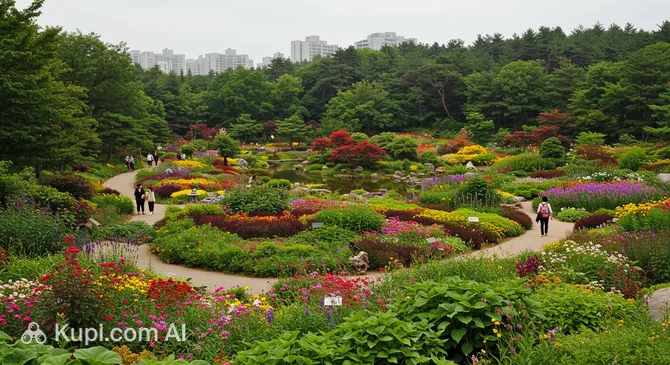
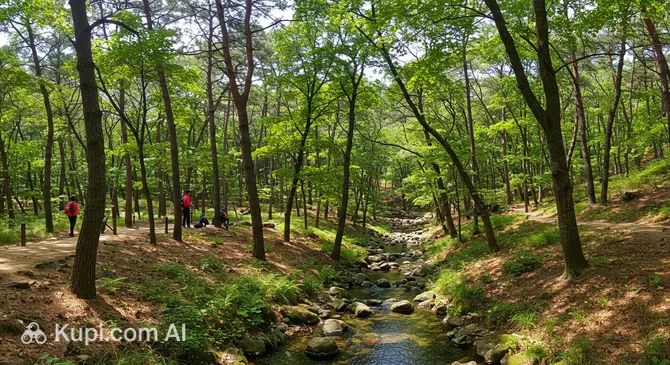
One of the city's brightest natural gems is the Hanbat Arboretum. It is the largest artificial arboretum in the country, divided into thematic zones where you can see rare plant species, walk around picturesque ponds, and enjoy the quiet in the very center of the metropolis. It is an ideal place for leisurely walks and discovering the region's flora.

\n
Hanbat Arboretum. Illustration.
Source: Kupi.com AI

Traveler photos:

\n

For those seeking seclusion with nature and breathtaking views, the Jangtaesan Recreational Forest is a must-visit. This place is famous for its majestic metasequoia forests. It features unique skyway trails at the level of the tree canopies and observation decks offering panoramas that are especially impressive in the fall, when the forest turns golden and crimson.

\n
Jangtaesan Recreational Forest. Illustration.
Source: Kupi.com AI

Traveler photos:

\n

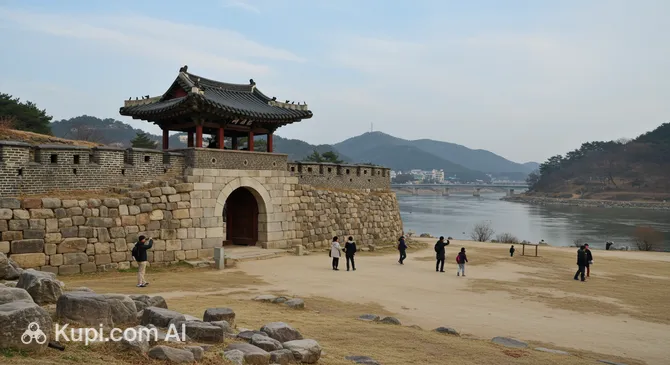
History and architecture lovers should head to the city's outskirts, where the majestic Gongsanseong Fortress is located. This ancient defensive structure from the Baekje era is included in the UNESCO World Heritage list. A walk along the fortress walls allows you not only to touch antiquity but also to admire magnificent views of the river and the adjacent valleys.

\n
Gongsanseong Fortress. Illustration.
Source: Kupi.com AI

Traveler photos:

\n

In addition to historical and natural sites, Daejeon offers a futuristic experience at Expo Park. Its signature landmark is the Hanbit Tower, a reminder of the 1993 World Expo. In the evening, the area is transformed by the illumination of bridges and fountains, creating the unique atmosphere of a city of the future.

Local Cuisine

Daejeon's culinary scene is a vibrant kaleidoscope of flavors, where traditional Korean recipes exist alongside modern culinary trends. The city is famous for its tofu dishes, as well as classics like samgyeopsal (juicy grilled pork belly) and tteokbokki. Locals are especially proud of their spicy soups and seasonal vegetable-based snacks.

\n

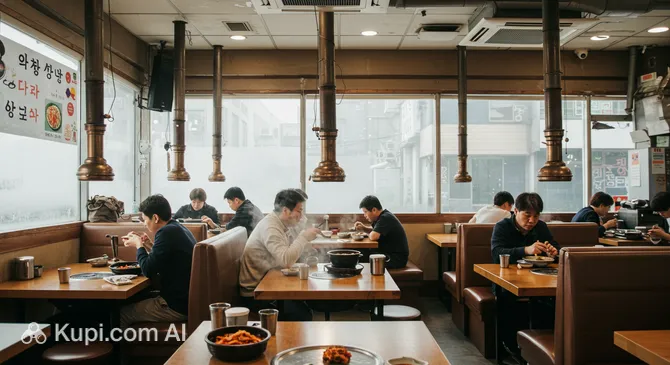
If you want to try something unusual, visit the Tea House, where you can appreciate a variety of flavors in a cozy setting. Lovers of Asian noodles and exquisite presentation should definitely visit Tomiya, which is very popular for its signature dishes and the mastery of its chefs.

\n
Tomiya. Illustration.
Source: Kupi.com AI

Traveler photos:

\n

Street food culture thrives in local markets, where fried squid, rice cakes, or sweet hotteok pancakes are prepared right in front of you. Local pubs and "pocha" (outdoor tent restaurants) are ideal for evening relaxation, where it is customary to order makgeolli (traditional rice wine) or soju accompanied by hearty snacks.

\n

Daejeon is also known for its coffee culture. The area around the university and the science town is filled with stylish coffee shops where you can try not only excellent espresso but also desserts with matcha or local fruits. The combination of high-quality products and reasonable prices makes exploring the city's cuisine a pleasant and memorable experience.

Travel Tips

Daejeon is a hospitable and safe city, but knowing a few practical nuances will make your trip much more comfortable. Here are tips from experienced travelers to help you adapt quickly in Korea's technological capital.

\n
    \n
  1. Clothing and Essentials: It is very humid and hot in the city in summer, so choose light natural fabrics. Winters are cold and dry, so a warm jacket is necessary. Be sure to bring comfortable shoes, as you will be walking a lot. No special dress code is required for visiting temples, but it is best to look neat. Don't forget a power adapter (Type F, with two round pins).
  2. \n
  3. Transport: Buy a T-money card as soon as you arrive. It works on the subway, buses, and even in taxis. For navigation, use the Naver Maps or KakaoMap apps, as Google Maps does not always work correctly in Korea.
  4. \n
  5. Finances: The official currency is the South Korean Won (KRW). Cards are accepted almost everywhere, even in small shops, but you should have a small amount of cash for street markets. ATMs labeled "Global" work with international cards without issues.
  6. \n
  7. Health and Safety: The city is very safe, even at night. Pharmacies (Yak-guk) are found at every turn. Tap water is drinkable, but most locals prefer purified water from coolers, which are available for free in any cafe or hotel.
  8. \n
  9. Communication: Young people and hotel staff often speak English, but it's useful to learn basic phrases: "Annyeong-haseyo" (Hello) and "Kamsa-hamnida" (Thank you). For internet, it's better to pre-order a SIM card or Wi-Fi router (dosirak) at the airport.
  10. \n
  11. Local Etiquette: Greet people with a slight bow. Give and receive money or business cards with two hands — it's a sign of respect. Always remove your shoes when entering a home or a traditional restaurant.
  12. \n
  13. Things to Avoid: Do not stick your chopsticks vertically into your rice — this is associated with funeral rites. Try not to speak loudly on public transport.
  14. \n
  15. Extra Tip: Visit the Yuseong Hot Springs in the evening — there are free outdoor foot baths in the center of the district where you can relax after a long day.
  16. \n
\n

Daejeon will surely show you its best side if you show a little curiosity and respect for local traditions. Enjoy your trip!

Entertainment & Nightlife

Daejeon's nightlife is most vibrant in the Eunhang-dong and Daejeon Jungang areas. There is a huge concentration of bars, clubs, and traditional Korean karaoke rooms — noraebangs. The crowd in these establishments is usually young and energetic, and the atmosphere is friendly and laid-back. Most bars stay open until the early morning, especially on weekends.

\n

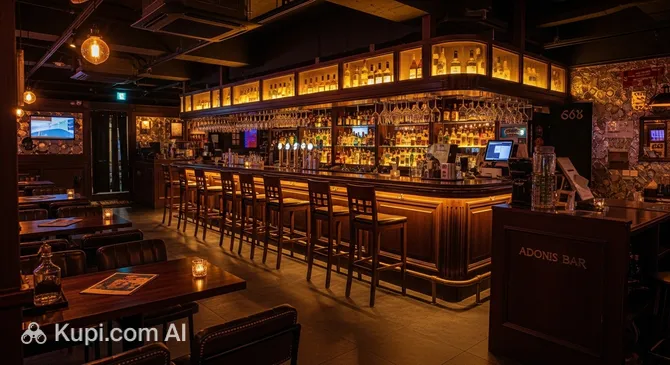
For connoisseurs of quality drinks and a cozy atmosphere, Adonis Bar is an excellent choice, known for its classic cocktail menu and calm vibe. If you prefer a more informal setting and craft beer, check out The Ranch Pub — it is a popular spot among locals and expats, often featuring live music.

\n
Adonis Bar. Illustration.
Source: Kupi.com AI

Traveler photos:

\n

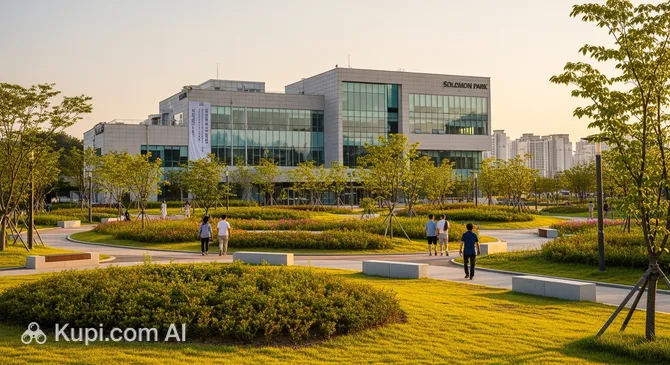
For family vacations and daytime entertainment, O-World is ideal. It is a large-scale complex combining a zoo, a theme park with rides, and a flower garden. Colorful shows and parades are often held here in the evening. If you are interested in more tranquil or educational leisure activities, you can visit Solomon Law Park, which features interactive areas for children and adults.

\n
Solomon Park. Illustration.
Source: Kupi.com AI

Traveler photos:

\n

Safety in Daejeon is very high, making walks along the central lit streets at night quite comfortable. To travel between districts at night, it is most convenient to use taxis, which are easily hailed via mobile apps. Nighttime entertainment prices remain affordable compared to Seoul.

Parks & Museums

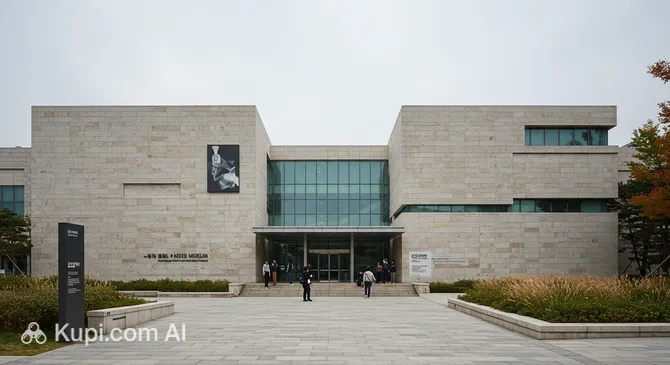
Daejeon is rightfully proud of its scientific and natural sites. A mandatory stop for any tourist is the National Science Museum. This is a grand space with interactive exhibits dedicated to space, robotics, and natural history. Nearby is Expo Park, where you can stroll among futuristic pavilions and enjoy the view of the Gapcheon River.

\n

For those interested in the planet's history, the KIGAM Geological Museum offers a unique collection of minerals, fossils, and skeletons of ancient creatures. Children and anyone who wants to learn more about the Earth's structure will particularly enjoy this place. If you are drawn to historical landscapes, visit Gyejoksan Mountain Fortress, famous for its "red clay trail," where it is customary to walk barefoot to improve health.

\n
KIGAM Geological Museum. Illustration.
Source: Kupi.com AI

Traveler photos:

\n

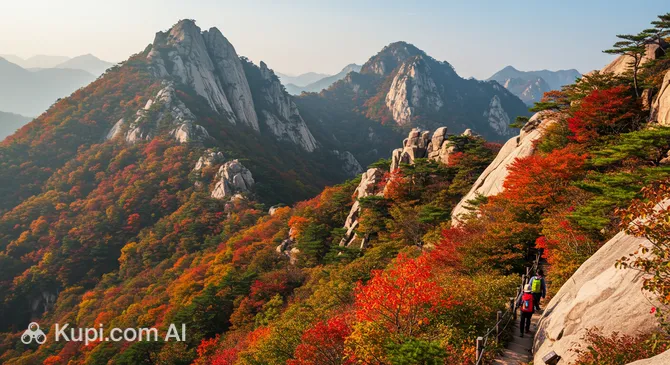
Active recreation and mountain hiking enthusiasts should head to Gyeryongsan National Park (Sutonggol area). This is one of the most revered and beautiful places in Korea, with picturesque cliffs, waterfalls, and ancient Buddhist temples. The hiking trails here are well-equipped and suitable for tourists of various fitness levels.

\n
Gyeryongsan Sutonggol District National Park. Illustration.
Source: Kupi.com AI

Traveler photos:

\n

The city also offers many cozy urban recreation zones, such as Yuseong Lake Park or Uidji-san Park. These green oases within the city limits are perfect for picnics or evening walks after a busy day of exploration, allowing you to feel the calm rhythm of life in a modern Korean metropolis.

Getting Around

The public transport system in Daejeon is meticulously planned, allowing tourists to navigate the city with ease. The backbone of the network is the subway, which quickly and comfortably connects key areas, including the train station and research zones. Trains run at intervals of 5–10 minutes, and all announcements are duplicated in English.

\n

The city's bus network is even more extensive, covering even the most remote corners. Buses are modern, equipped with air conditioning and electronic displays. To pay for travel, it is most convenient to use a single transport card like T-money or Cashbee. The card can be purchased and topped up at any convenience store (e.g., 7-Eleven or CU), and it entitles you to discounts when transferring between the bus and subway.

\n

For those who prefer private trips, inexpensive and reliable taxis operate in Daejeon. You can board at special stands or hail a car on the street. For calling a taxi via smartphone, the Kakao T app is highly recommended. The base fare is around 3,800 won, and trips within the city are rarely too expensive.

\n

Daejeon is actively developing eco-friendly modes of transport: excellent bicycle paths are laid along the rivers, and bike rental stations are available throughout the city. The city is quite compact in its central part, so many attractions, parks, and shopping areas in the Yuseong and Jung-gu districts are convenient to explore on foot, enjoying the modern architecture and clean streets.

Accommodation

Daejeon offers travelers a wide range of accommodation options, from modern international chain skyscrapers to cozy guesthouses. If your goal is business or visiting science centers, look at modern hotels like the Lotte City Hotel or Shilla Stay, which are famous for their impeccable service and city views.

\n

For those visiting for relaxation and rejuvenation, the best area is Yuseong. It is famous for its hot spring hotels, where you can enjoy spa treatments right on the hotel grounds. The central Jung-gu district is better suited for tourists who value proximity to the railway station and main shopping streets; budget options and apartments are easier to find here.

\n

Accommodation prices in Daejeon are usually lower than in the capital, starting from about 50,000 won per night for a decent guesthouse. However, it is recommended to book accommodation in advance, especially if your trip coincides with major scientific conferences or festivals, such as the science and technology exhibitions at Expo Park.

\n

Booking is easy through international platforms; however, it is worth noting that local services and Airbnb rentals are also popular in Korea, allowing you to live in a typical Korean neighborhood and experience local flavor. Most hotels offer free Wi-Fi and English-speaking staff at the front desk.

Nearby Cities

Thanks to its central location, Daejeon serves as an excellent base for exploring the surrounding areas. Using the high-speed railway or buses, you can quickly trade the atmosphere of a scientific metropolis for the charm of ancient cities or the tranquility of nature reserves.

\n

Just half an hour away is Sejong — South Korea's young administrative capital, which impresses with its modern planning and futuristic architecture. You can also reach Cheongju, known for its historical monuments and picturesque lakes, in 40 minutes. If you have more time, the KTX high-speed train will take you to the ancient capital of Gyeongju or bustling Seoul in just over an hour.

\n

For history buffs, an interesting destination is Iksan, where unique architectural monuments from the Baekje era have been preserved. These trips will allow you to see South Korea from different angles: from super-technological neighborhoods to sacred temple complexes hidden in the mountains.

\n
CityPopulationDistance
Sejong204 08828 km
Cheongju833 27631 km
Cheonan651 66155 km
Asan332 79058 km
Iksan302 31060 km
\n

Don't miss the chance to explore the region beyond Daejeon. Each of these destinations easily fits into a one-day trip format, allowing you to return to your hotel by evening, full of new impressions of the cultural and natural diversity of the Korean peninsula.

Shopping & Souvenirs

Shopping in Daejeon is an exciting mix of huge modern malls and colorful local markets. The city offers excellent opportunities for buying electronics, Korean cosmetics, and fashionable clothing. Thanks to the concentration of youth and scientists, you can always find the latest tech innovations and current K-beauty trends here.

\n

The main destination for brand lovers is the Daejeon Premium Outlet, which features collections from leading global and Korean brands at pleasant discounts. If you prefer the format of giant shopping centers, be sure to visit Lotte Department Store or the multifunctional Expo Core complex, where shopping can be combined with lunch at a restaurant or a trip to the cinema.

\n
Premium Outlet Daejeon. Illustration.
Source: Kupi.com AI

Traveler photos:

\n

For authentic souvenirs and local flavor, head to Jungang Market. Here you can purchase traditional ceramics, Korean tea, fans, and handmade items. The market is also famous for its huge selection of high-quality food products and spices, which make great gifts for foodies.

\n

Shops are usually open from 10:00 to 20:00 or 21:00, and large shopping centers stay open until 22:00. International bank cards are accepted in most places, but it's better to have some cash won for small markets. Don't forget about the Tax Free option in large malls to get a refund on some of the tax on your purchases before flying home.

Reached the end of the page?

That means the route is fully explored