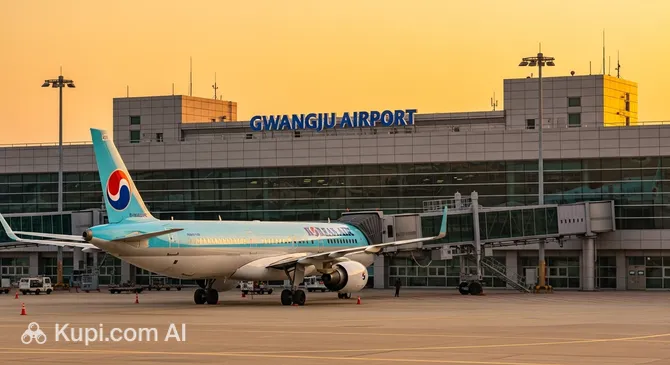
Gwangju Airport (KWJ) is not merely an air gateway to the city of the same name and the South Jeolla province; it is a dual-purpose facility shared by civil aviation and the Republic of Korea Air Force. Located within the city limits of Gwangju, it serves as a vital transport hub for domestic flights across South Korea. Having begun its commercial history in the mid-20th century, the airport today represents a modern terminal convenient for passengers. An important note: due to the airport's military status, photographing or filming the runway and military facilities is strictly prohibited.
| Characteristic | Value |
|---|---|
| IATA code | KWJ |
| ICAO code | RKJJ |
| City | Gwangju |
| Country | Korea, Republic Of |
| Time zone | Asia/Seoul |
| Popular airlines | Asiana Airlines, Korean Air, T'way Air, Jeju Air, Jin Air |
| Schedule | Online timetable |
Gwangju Airport is valued for its compactness and convenience. Passengers do not have to wander through immense terminals—all procedures are completed quickly and without unnecessary hassle. Despite its size, the airport offers all necessary amenities: there are several cafes where you can have a snack, ATMs, baby care rooms, as well as special services for passengers with reduced mobility. Excellent transport connections, including city buses and proximity to the metro, allow for easy and affordable travel to any part of the city. Thanks to its location, the airport is an ideal starting point for exploring the cultural and historical attractions of Gwangju and the entire southwestern region of Korea.