Support

Tsushima Airport

About the Airport

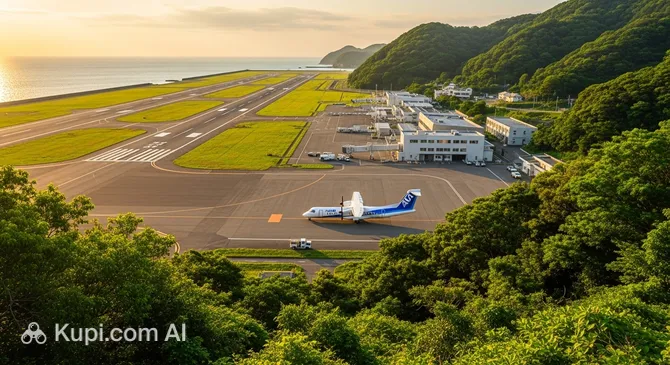
Tsushima Airport. Source: Kupi.com Binoculars

Tsushima Airport is not merely a standard transport hub, but a true aerial gateway to a world of pristine nature and ancient history on the border of Japan. This cosy aviation harbour, officially named "Tsushima Yamaneko Airport" (Tsushima Leopard Cat Airport), immerses travellers in the island's unique atmosphere from their very first minutes. Situated amidst green hills and a rugged coastline, the airport offers breathtaking views upon landing, turning arrival into the start of an exciting adventure. Here, modern comfort blends harmoniously with local charm, setting guests up for a calm and measured pace of relaxation.

IATA Code TSJ
ICAO Code RJDT
City Tsushima
Distance to Centre 10 km (to Izuhara district)
Status Domestic
Annual Passengers Approx. 270,000
Schedule Available on the official website

Airport Features and Advantages

Tsushima Airport boasts several unique features that distinguish it from other regional airports in Japan. Its main advantage is compactness and efficiency. Thanks to the small size of the terminal, all processes, from check-in to boarding, are completed as quickly as possible without queues, allowing travellers to save precious time.

The design and atmosphere deserve special attention. The airport actively incorporates the image of the Tsushima Leopard Cat (Yamaneko) in its décor, making it particularly appealing to tourists and families with children. Souvenir shops and information stands introduce guests to this rare animal, turning the wait for a flight into a small educational excursion.

Furthermore, the airport is renowned for its scenic location. The runway, laid out in complex mountainous terrain, requires skill from pilots, while offering passengers unforgettable views of the rocky coast and dense island forests during take-off and landing. This makes every flight an aesthetically pleasing beginning or conclusion to your journey.

Contact Information

  • Official Website: For the most up-to-date information on flights, services, and regulations at Tsushima Airport (TSJ), also known as Tsushima Yamaneko Airport, it is recommended to visit its official website. It can usually be found by searching for "Tsushima Airport official website" or "対馬やまねこ空港公式サイト".
  • Help Desk Phone: For information regarding airport operations, you can call the terminal administration at: +81-920-54-3395. Please note that operators may speak primarily in Japanese.
  • Airport Address: 423 Mitsushimamachi Kechi, Tsushima, Nagasaki 817-0322, Japan.
  • Email: Most airports, including regional ones, prefer to process inquiries via feedback forms on their official websites rather than via email to avoid spam.
  • Social Media: Small regional airports rarely maintain their own active social media pages. News and updates related to the airport are most often published on Nagasaki Prefecture tourism portals.
  • Lost Luggage Information: In case of lost or damaged luggage, you should contact the representative of the airline you flew with directly, not the airport administration. Their counter can be found in the arrivals hall.
  • Passenger Support Service: Primary support for passengers is provided at the information desks within the terminal building, as well as via the general airport help desk phone number.

How to Get to the Airport

There are several ways to get to Tsushima Airport (TSJ), the aerial gateway to the picturesque island of Tsushima in Japan. The choice depends on your budget, comfort preferences, and plans for further travel around the island. The airport is located approximately 10 km northwest of the island's main city, Izuhara, making the journey there quick and convenient.

Public Transport: Bus
The most budget-friendly way to reach the airport is to use the local buses operated by Tsushima Kotsu Bus. Bus routes connect the airport with key settlements on the island, including the port cities of Izuhara in the south and Hitakatsu in the north. A trip from the centre of Izuhara to the airport by bus will take approximately 20-30 minutes. The fare is around 700–800 JPY. Buses run according to a schedule that is usually coordinated with flight arrivals and departures, but it is recommended to check it in advance. This is an excellent choice for economical travellers.

Taxi and Private Transfer
For those who value comfort or are travelling with heavy luggage, a taxi is the optimal solution. A taxi rank is easily found at the terminal exit, and cars can also be booked by phone from anywhere on the island. A trip from Izuhara will take about 15-20 minutes, and the cost will be approximately 3500–4500 JPY. Although this is a more expensive option compared to the bus, it ensures convenience and "door-to-door" service. Pre-booking a transfer is also possible through hotels or travel agencies.

Car Rental and Parking
If you plan to actively explore the island, the best choice would be car rental. Several rental agencies have counters directly at the airport or in Izuhara city. By renting a car, you gain complete freedom of movement throughout Tsushima. The road to the airport by car is simple and well-signposted. For those arriving in their own or rented vehicle, the airport provides paid and free parking where you can leave your vehicle during your absence.

Terminals and Map

Tsushima Airport (TSJ) is a small and very compact regional airport, so navigating it will not cause any difficulties even for first-time visitors. Its structure is as simple as possible and focused on rapid passenger service.

Structure and Terminals

Tsushima Airport operates one passenger terminal, which serves all domestic flights. The terminal building is generally two storeys high, but all main passenger zones are within walking distance of each other. There is no complex system of walkways or need to use shuttles here — everything is located in one place.

Departure and Arrival Zones

The airport layout is extremely clear. On the ground floor, you will find the check-in counters and the arrivals zone. The Departure Zone includes several counters for flight check-in, after which passengers proceed to the second floor, where they pass through security screening and enter a small waiting lounge with a boarding gate. The Arrival Zone consists of a baggage claim hall with one belt and an exit to the general hall, where car rental counters and tourist information are located.

Processing Time and Recommendations

Thanks to the airport's compactness and low passenger traffic, all pre-flight formalities take minimal time. Flight check-in and security screening are very quick. Usually, it is sufficient to arrive at the airport 60 minutes before departure. Getting lost here is practically impossible: signs in Japanese and English will help you orient yourself easily, and all key points — from the entrance to the boarding gate — are within a one or two-minute walk.

Airport History

The history of Tsushima Airport (TSJ) is inextricably linked with the desire to connect this remote island with the main part of Japan. Although a military airfield existed on the island as far back as World War II, the modern civil air harbour was opened in 1975. From the very beginning of its existence, the airport became a key transport hub, ensuring stable communication with the mainland and playing an important role in the economic and social life of the island.

A key stage in the airport's development was its modernisation in 1983. During this period, the runway was extended, allowing it to accommodate jet aircraft. This significantly reduced travel time to major cities such as Fukuoka and Nagasaki, and opened new opportunities for the development of tourism and business ties. Thanks to this improvement, Tsushima became much more accessible to travellers.

One of the most interesting facts in the airport's recent history occurred in 2014, when it received the official nickname — Tsushima Yamaneko Airport (Tsushima Leopard Cat Airport). This name was chosen to draw attention to the unique and endangered species of wild cat that inhabits only this island. Thus, the airport not only performs a transport function but also serves as a symbol of the rich natural heritage of Tsushima, greeting guests with a reminder of its unique fauna.

Services and Facilities

Tsushima Airport (TSJ) is a compact and modern regional airport offering passengers all necessary services for a comfortable wait for their flight. Before departure, you can visit a restaurant serving Japanese cuisine or pop into a café for a cup of coffee. The terminal also houses a shop where you can buy local souvenirs, snacks, and travel goods — an excellent opportunity to purchase a keepsake from the island.

For the convenience of travellers, free Wi-Fi is available throughout the airport, allowing you to stay connected or plan your onward route. If your devices require charging, you can use the designated charging stations. The general waiting hall has ample comfortable seating for resting before boarding. Although there are no specialised VIP lounges here, the general atmosphere in the airport is calm and cosy.

ATMs are installed in the airport, but there are no currency exchange bureaux. Therefore, it is recommended to arrange for cash exchange in advance, before arriving on the island. In case of unforeseen health situations, there is a first aid station in the terminal building, as well as Automated External Defibrillators (AEDs).

The airport is well-equipped for passengers with special needs. For families with small children, there is a nursing room equipped with everything necessary. Travellers with reduced mobility can count on a barrier-free environment: there are ramps, adapted toilets, and staff assistance provided upon prior request.

There are no hotels directly within the airport building, however, many accommodation options can be found in nearby towns, which are easily accessible by public transport or taxi. Business centre services and conference rooms are not provided at the airport, as it is primarily oriented towards serving tourist and passenger flows.

Where to Eat

Tsushima Airport (TSJ) is a small regional airport, so the choice of dining establishments here is quite compact, yet it allows you to become acquainted with local cuisine. All cafés and shops are located in the single terminal before the security check zone, so it is better to have a snack or a full lunch before passing through security control.

Main Restaurant and Café

On the second floor of the terminal is the airport's main restaurant, often called "Restaurant Tsushima". This is the best place for a full meal. Here you can try authentic dishes of Tsushima Island. Look out for:

  • Iriyaki — a traditional stew made with chicken or fresh local fish and vegetables in an aromatic broth.
  • Ton-chan — a popular local dish made of pork marinated in a sweet and spicy sauce and grilled.
  • Rokube — unique noodles made from sweet potato starch.

Besides local specialities, the menu usually includes standard Japanese dishes such as curry rice, udon, or ramen. Prices here are moderate, and opening hours are tied to the flight schedule — the restaurant is open roughly from 10:00 AM until the departure of the last evening flight.

Quick Snacks and Shops

For a quick snack, next to the restaurant on the same floor, there is a souvenir shop. Here you can buy packed lunch boxes (bento), rice balls (onigiri), sandwiches, as well as various snacks, sweets, and drinks. This is an excellent option if you are short on time or want to take food with you on board the aircraft.

Information for Passengers with Special Dietary Needs

It is important to note that the selection of dishes for vegetarians, vegans, as well as those adhering to a gluten-free or Halal diet, is extremely limited. Many Japanese dishes, even vegetable ones, are prepared using fish broth (dashi). Travellers with strict dietary restrictions are advised to carry their own food.

Tips for Travellers

To ensure your journey through the airport of Tsushima city goes as smoothly as possible, take advantage of these useful tips. Tsushima Airport (TSJ) is a small regional hub serving mainly domestic flights, making it quite convenient for passengers.

Arrival Time and Check-in. For domestic flights within Japan, it is recommended to arrive at the airport 60–90 minutes before departure. This time is sufficient to check in and pass through security without rushing. Procedures in small airports generally take less time than in large hubs. To save time, use online check-in on your airline's website if such an option is available.

Security Control and Hand Luggage. Rules for carrying hand luggage are standard: liquids in containers up to 100 ml must be packed in a transparent bag, and sharp objects are prohibited. Ensure that power banks and other batteries are in your hand luggage, not in checked baggage. Screening usually proceeds quickly, but always keep your passport and boarding pass to hand.

Seat Selection and Transfers. If you want to enjoy the views, choose a window seat. When departing from Tsushima or landing on the island, picturesque panoramas of the coast and mountains open up. Since the airport is not a major transit hub, most transfers take place in larger airports such as Fukuoka or Nagasaki. Check with your airline in advance whether you will need to collect and re-check your luggage at the transfer point.

Customs Control. For flights within the country, there is no need to pass through customs control. This procedure is relevant only for international flights, which Tsushima Airport does not typically serve on a regular basis.

Savings and Flight Delays. To save money, book tickets in advance and keep an eye on airline promotions. In the event of a flight delay, contact your airline representative for information on the new departure time and possible compensation (e.g., meal vouchers). The airport has basic amenities, but they are few, so in case of a long wait, it is useful to have a book, a charged phone, or other entertainment with you.

Reached the end of the page?

That means the route is fully explored