Support

Sacheon Airport

About the Airport

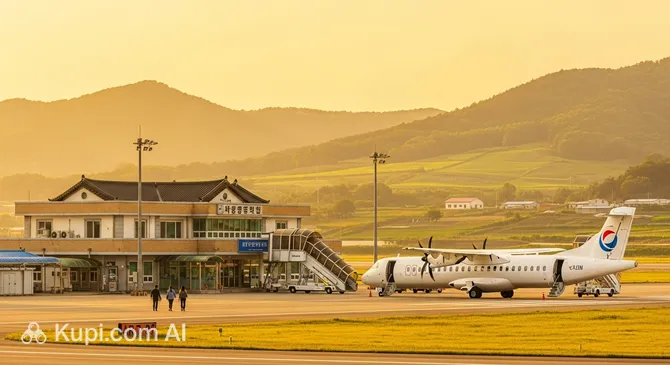
Sacheon Airport. Source: Kupi.com Binoculars

Sacheon Airport is a cosy and quiet aerial gateway, opening the path to the country's picturesque southern coast and the dynamic city of Jinju. Located in the heart of Korea's aerospace industry, this compact aviation hub offers travellers a unique combination of modern comfort and provincial hospitality. There are no endless queues or the hustle and bustle of giant terminals here, allowing you to begin your acquaintance with the region's culture and nature just minutes after landing. Thanks to its convenient location, the airport serves as an ideal starting point for trips to both historical centres and the seaside resorts of the national park.

IATA Code HIN
ICAO Code RKPS
City Sacheon (serves Jinju city)
Distance to Centre ~20 km to Jinju city centre
Status Domestic
Annual Passengers ~225,000 (based on 2023 data)
Schedule Daily flights (check airport website)

Airport Features and Benefits

The main advantage of Sacheon Airport is its intimacy and efficiency. Due to the small size of the terminal, all pre-flight formalities take minimal time. Passengers note that the journey from the building entrance to the boarding gate often takes no more than 10–15 minutes, which significantly reduces pre-flight stress levels. This makes the airport incredibly convenient for families with children and elderly travellers.

Another important feature is its strategic location. The airport serves as a convenient hub not only for visitors to Jinju but also for tourists heading to the popular coastal cities of Tongyeong, Geoje, and Namhae. From here, it is easy to reach key tourist locations by rental car or bus, bypassing the congested highways around major metropolises.

For those travelling by car, a pleasant bonus is the accessible parking located right in front of the terminal. Unlike capital city airports, there are always enough free spaces here, and the rates remain quite reasonable. Furthermore, the airport is known for its cleanliness and tidiness, creating a pleasant first impression of the Gyeongsangnam-do region.

Contact Information

Below you will find contact information for Sacheon Airport (HIN), which will help you plan your trip and resolve any potential queries.

  • Official Website: Current information on flight schedules, services, and airport regulations can be found on the official website of the Korea Airports Corporation (KAC), the airport's managing company: www.airport.co.kr/sacheon/ (site available in Korean, English, Chinese, and Japanese).
  • Help Desk Phone: For general information in English or Korean, you can call: +82-55-831-9300. General information line for Korea Airports Corporation: 1661-2626.
  • Airport Address: 1971, Sacheon-daero, Sacheon-eup, Sacheon-si, Gyeongsangnam-do, Republic of Korea.
  • Email: The airport does not provide a public email address for general inquiries. For communication, it is recommended to use the feedback form on the official website or call by phone.
  • Social Media: Follow news and updates on the official social media pages of the managing company, Korea Airports Corporation (KAC).
  • Lost and Found Information: For items lost or found within the terminal building, please contact the Lost and Found service at: +82-55-831-9333. In case of luggage loss on board the aircraft, you must contact your airline's representative office directly.
  • Passenger Support Contacts: For assistance and answers to questions related to your stay at the airport, please contact the main help desk at +82-55-831-9300.

How to Get to the Airport

Sacheon Airport (HIN) is conveniently located between the cities of Jinju and Sacheon, making it easily accessible for travellers heading to this part of South Korea. You can reach the terminal from the centre of Jinju in several ways, each with its own advantages depending on your budget and preferences.

Public Transport: Bus

The most economical way to get to the airport is to use local buses. Regular routes connect the airport with the Jinju Intercity Bus Terminal and other key points in the city. The bus journey takes approximately 40-50 minutes. This is an excellent option for those travelling light and wishing to save money. It is best to check the schedule in advance at the bus station or via local transport apps, as it is subject to change.

Taxi or Transfer

For maximum comfort and speed, you can choose a taxi. The trip from Jinju city centre to Sacheon Airport will take about 20-30 minutes depending on traffic conditions. This is the ideal choice if you have a lot of luggage or are travelling with family. The cost of the trip will be higher than the bus, but it is justified by the convenience. You can order a taxi by phone, via mobile apps (such as Kakao T), or simply hail one on the street. You can also book a private transfer in advance.

Car Rental and Parking

If you plan to travel actively around the region, renting a car is a wonderful solution. Counters for several rental companies can be found at the airport or nearby. Having your own transport gives you complete freedom of movement. For those arriving at the airport in their own car, convenient parking is provided, offering both short-term and long-term rates.

Alternative Airports

Sacheon Airport mainly serves domestic flights. For international travel, many travellers use larger airports located nearby. The closest alternatives include Yeosu Airport (about 50 km away) and, notably, Gimhae International Airport in Busan (about 80 km away), from where you can easily reach Jinju by intercity bus.

Terminals and Map

Sacheon Airport (HIN), serving the city of Jinju in South Korea, is a small regional airport that also functions as an Air Force base. This dual function defines its structure: for passengers, there is one compact and convenient terminal operating all domestic flights.

The terminal layout is extremely simple and intuitive. All key zones—check-in counters, security screening, departure lounge, and baggage claim—are located in a single building on one level. Thanks to the airport's small size, you won't have to walk far from the entrance to the boarding gate. Signs in Korean and English help you orient yourself easily, although getting lost here is practically impossible.

Since the airport has only one terminal, the issue of transfers between terminals is irrelevant—everything is within walking distance. The departure and arrival zones are located next to each other. After check-in and security screening, passengers enter a small but cosy waiting hall with several boarding gates. The arrival zone is equally compact and includes a baggage claim belt and an exit to the city.

One of the main features of the airport is the speed of completing all procedures. Flight check-in and security screening usually take no more than 15-20 minutes, even during peak periods. This makes travelling through Sacheon maximally comfortable and eliminates the stress associated with large airports. It is recommended to arrive at the airport about an hour before departure—this time will be more than sufficient.

Airport History

The history of Sacheon Airport (HIN) is closely intertwined with the military and aviation industry of South Korea. It was originally established as a military airfield (K-4 Air Base) during the Korean War in the early 1950s and played a vital strategic role for the Air Force.

The airport was opened for civil aviation significantly later. The first commercial flights began operating in 1969, connecting Jinju and nearby regions with the capital. An important stage in the development of passenger infrastructure was the opening of a new terminal in 1992, which was built to increase comfort and capacity. This allowed the airport to meet modern passenger service standards.

One of the most remarkable features of Sacheon Airport is its dual purpose. To this day, it shares its runway with a Republic of Korea Air Force base. Moreover, the airport is located in immediate proximity to the headquarters and production facilities of Korea Aerospace Industries (KAI)—the country's leading aerospace manufacturer. It is here that famous aircraft, such as the supersonic T-50 Golden Eagle trainer jet, are developed, assembled, and tested. This makes the airport not just a transport hub, but a true centre of South Korea's aviation technologies.

Throughout its history, the airport has experienced periods of both growth and temporary reduction in flights, often linked to the development of high-speed railways in the country. Nevertheless, it remains an important air port for the Gyeongsangnam-do province, serving business and tourist flows, and its unique proximity to KAI gives it a special status in the country's aviation history.

Services and Amenities

Sacheon Airport (HIN) is a regional airport serving primarily domestic flights. Despite its compact size, it provides passengers with all basic amenities for a comfortable wait before departure.

Within the terminal, you will find small cafes and snack bars where you can have a bite to eat or drink coffee before your flight, as well as a shop with necessities and souvenirs. The selection of establishments and goods corresponds to the status of a small airport, so one should not expect large restaurants or duty-free boutiques here.

General waiting areas are provided for passenger relaxation. Specialised VIP halls or business lounges are generally absent at the airport. Passengers can use free Wi-Fi, as well as find charging stations for electronic devices in the main waiting areas. Regarding financial services, ATMs are installed in the terminal, but currency exchange points may be absent as the airport focuses on domestic travel.

The airport is equipped for the needs of various categories of passengers. There is a medical point for first aid, as well as a mother and child room for travellers with small children. For passengers with reduced mobility, a barrier-free environment has been created, including ramps and specially equipped restrooms. There are no hotels directly on the airport grounds, but the nearest accommodation options can be found in the cities of Sacheon and Jinju. Dedicated conference rooms or business centres are also not provided at the airport.

Where to Eat

When planning a snack at Sacheon Airport (HIN), it is important to consider that this is a small regional airport also serving military needs, so the choice of dining establishments here is quite limited. Unlike the major international hubs of South Korea, Sacheon does not have a wide variety of restaurants and bars. Nevertheless, passengers have the opportunity to have a snack before departure.

The main and, typically, the only option for food is a small cafe or snack bar located in the general waiting hall before the security zone (landside). Since there is only one compact terminal, finding this establishment will not be difficult. Its opening hours are usually tied to the flight schedule, so it is open during the hours before departures and arrivals.

In the local cafe menu, you will most likely find a standard set for a quick snack. Here you can order coffee, tea, soft drinks, as well as purchase packaged snacks: crisps, sandwiches, pastries. Sometimes simple hot Korean dishes are offered, such as instant noodles (ramyeon) or gimbap (rice rolls). This is an excellent option to satisfy light hunger, but one should not count on a full multi-course meal.

For passengers with specific dietary requirements (vegetarians, vegans, as well as those looking for gluten-free or Halal dishes), finding suitable options will be extremely difficult. In this case, it is safer to bring food with you. If you have enough time, the best solution would be to have lunch in one of the cities served by the airport, for example, in Jinju, where the choice of restaurants and cafes is significantly wider.

Travel Tips

When planning a departure from Sacheon Airport, which serves the city of Jinju, it is worth adhering to standard recommendations. For domestic flights within South Korea, it is recommended to arrive at the airport 1.5–2 hours before departure. Although Sacheon is a small and not as busy airport as international giants, extra time will save you from rushing. To save time, use online check-in on your airline's website. This will allow you to proceed straight to the baggage drop counter or, if you are travelling light, head directly to security.

Passing security control at Sacheon Airport usually happens quickly. Keep your boarding pass and passport ready. Remember the standard rules for carrying liquids in hand luggage: all containers must be no more than 100 ml in volume and packed in a single transparent bag. Laptops and other large electronics, as well as power banks, must be removed from your bag for separate scanning. It is forbidden to bring sharp objects, weapons, and flammable substances into the cabin.

To make your trip more cost-effective, buy tickets in advance and consider using public transport to get to and from the airport. Inside the airport, prices for food and drinks are generally higher, so you can bring an empty reusable water bottle (it can be filled after security) and light snacks. Travelling with only hand luggage is a great way to save both time and money, avoiding baggage fees and waiting for it upon arrival.

When choosing a seat on the plane, be guided by your preferences: a window seat will offer beautiful views during takeoff and landing, while an aisle seat offers more legroom and freedom of movement. In case of a flight delay, first contact your airline representative for current information. Depending on the length of the delay, you may be offered vouchers for food or drinks. Sacheon Airport is small, so use this time to rest or read.

Sacheon Airport mainly serves domestic flights, so long layovers here are rare. If you do have a connection planned, check in advance if you need to collect and re-check your luggage. Customs control is only passed by passengers arriving on international flights, which is not typical for this airport. If you arrive on such a flight, be prepared to fill out a declaration and present goods subject to declaration for inspection, in accordance with South Korean customs regulations.

Reached the end of the page?

That means the route is fully explored