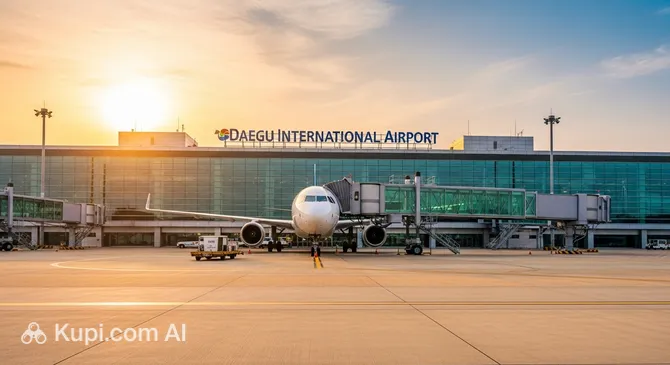
Daegu International Airport (TAE) serves as more than just the aerial gateway to the fourth largest city in South Korea; it is a vital transport hub for the entire Yeongnam region. The airport is unique due to its dual status: it caters to both civil flights and military aviation. The architectural concept of the terminal, inspired by the image of a soaring crane, creates an atmosphere of tranquillity and comfort for travellers from their very first step on Korean soil. Thanks to its location within the city limits, the airport ensures quick and convenient access to the centre of Daegu and its surroundings.
| Characteristic | Value |
|---|---|
| IATA code | TAE |
| ICAO code | RKTN |
| City | Daegu |
| Country | Korea, Republic Of |
| Time zone | Asia/Seoul |
| Popular airlines | China Eastern, VietJet Air, Asiana Airlines, Korean Air, T'way Air |
| Schedule | Online timetable |
Features and Advantages
The main advantage of Daegu Airport is its strategic location. It serves as a central hub for the Yeongnam region, from where you can easily reach tourist centres such as Gyeongju, Andong, and Pohang in no more than 90 minutes. Its proximity to the city centre—only about 4 kilometres—allows passengers to quickly reach their hotel by taxi or city bus. As a joint-use facility, it accommodates both domestic and international flights, making it a convenient starting point for journeys across South Korea. Inside the terminal, passengers will find well-developed infrastructure, including shops, cafes, and an automated car park with over 1,000 spaces.