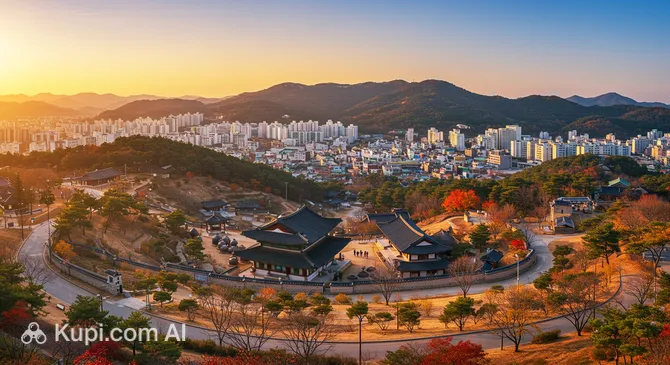
Located in the heart of Gyeonggi Province, Icheon is a remarkable blend of ancient craft traditions and the modern industrial power of South Korea. It is not just another suburb of the capital, but a globally recognized center of pottery and a member of the UNESCO Creative Cities Network. The atmosphere here is imbued with the tranquility and dignity of a city that has spent centuries perfecting the art of creating exquisite ceramics.
Icheon. Illustration.
Source: Kupi.com AI
Geographically, the city occupies a favorable position in the south-central part of the region, making it an important logistics hub. Despite being home to the headquarters of tech giants like SK hynix, Icheon retains the charm of a traditional Korean center with a population of about 230,000. Here, industrial landscapes harmoniously give way to agricultural lands where the country's most famous rice is grown.
The city's rich historical heritage is closely linked to the development of pottery kilns, some of which are centuries old. Tourists are drawn here not by the bright lights of a metropolis, but by the opportunity to experience a living craft in famous ceramic villages and enjoy the healing properties of local thermal springs. A trip to Icheon is an invitation to a contemplative holiday and an encounter with the authentic culture of the Korean Peninsula.
Weather Overview
The climate in Icheon is a moderate monsoon type, typical for the interior of the Korean Peninsula. This means the city has four distinct seasons, each lending a special charm to the local landscapes. Winter here is cold and dry, with average January temperatures around -2°C, while summer is hot and humid, with July and August temperatures often rising to +29°C.
The highest amount of precipitation occurs during the summer months, especially in July, which marks the peak of the monsoon season. If you plan a trip during this time, keep the high humidity in mind. Spring and autumn are the ideal periods for a visit, offering mild and sunny weather that allows you to comfortably explore the climate of Icheon while strolling through its parks and ceramic workshops.
Average monthly temperature
Average monthly precipitation
Interesting Facts
Icheon, together with the neighboring city of Yeoju, is considered the core of Korean pottery production, with a history in this region spanning over 1,000 years.
The city is officially recognized as a "UNESCO Creative City" in the category of Crafts and Folk Art, highlighting its international significance as a guardian of traditions.
Local "Icheon ssal" rice is considered the benchmark in Korea; during the Joseon Dynasty, it was specifically supplied to the royal table due to its exceptional quality.
Beyond crafts, the city is a powerful technological hub: it is home to the headquarters of SK hynix, one of the world's largest memory chip manufacturers.
The city hosts a large-scale International Ceramics Festival annually, attracting artists and collectors from around the globe.
How to Get There
Icheon is an easily accessible destination for travelers due to its proximity to the capital region. The city is conveniently connected to the country's major transport arteries, allowing for quick travel by both public transport and car. All ways to get to Icheon usually involve transit through Seoul or neighboring hubs in Gyeonggi Province.
The nearest international aviation hubs—Incheon and Gimpo airports—are approximately 1.5 to 2 hours away. Comfortable limousine buses run regularly from there to the city. You can also use the network of intercity buses that depart from Seoul's main terminals almost every 20–30 minutes.
Rail connections are also available, linking the city to the Seoul Metropolitan Subway and general-purpose train lines. While many tourists prefer the bus for its direct routes, a train trip allows you to enjoy the scenic views of the province. The city's main stations are equipped with everything necessary for passenger comfort.
Station
Passenger traffic
Distance
Samsan Station
5
31 km
Suwon Station
12
40 km
Seoul Grand Park Station
12
43 km
Seonbawi Station
13
44 km
Indeogwon Station
12
44 km
Main Attractions
The main magnet for travelers in Icheon is the Icheon Ceramics Village. This is not just a tourist site, but a living neighborhood of workshops where you can not only watch the process of creating clay masterpieces but also try your hand at the potter's wheel. Hundreds of kilns are concentrated here, continuing traditions that date back over a thousand years.
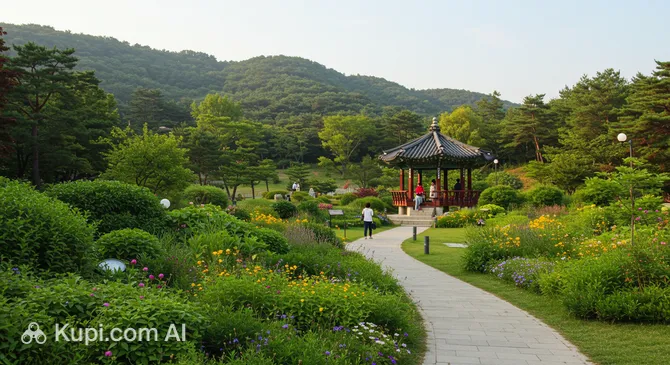
For outdoor strolls, Seolbong Park is an ideal choice. It is a picturesque location featuring a central lake surrounded by walking paths adorned with modern sculptures. The park frequently serves as a venue for ceramics festivals, blending natural beauty with art.
Seolbong Park. Illustration.
Source: Kupi.com AI
Traveller photos:
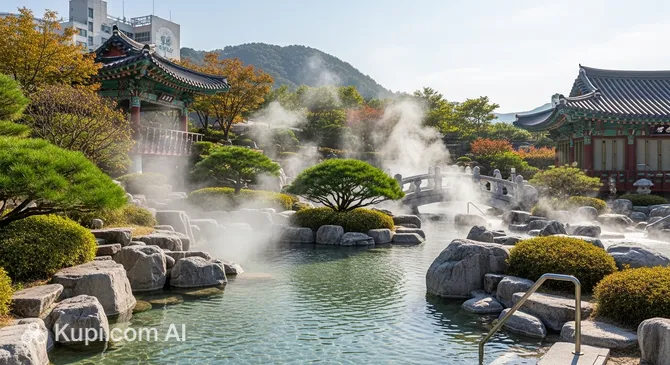
If you wish to combine cultural leisure with relaxation, a visit to the Icheon Hot Springs Park is a must. The local thermal waters have been famous for their healing properties since the Joseon Dynasty. Modern spa complexes offer a wide range of treatments, allowing you to rejuvenate after long walks around the city.
Icheon Hot Springs Park. Illustration.
Source: Kupi.com AI
Traveller photos:
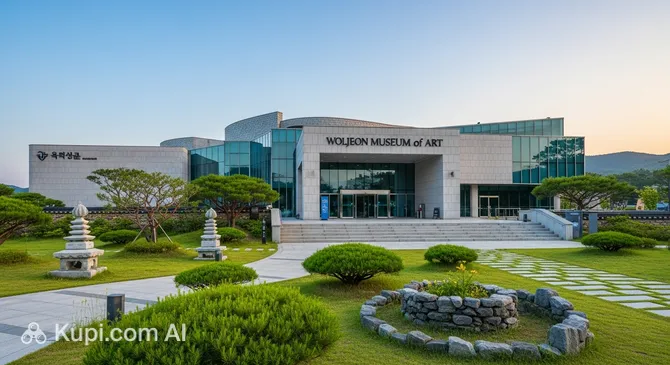
Connoisseurs of classical art will enjoy the Icheon Woljeon Museum of Art. Its walls house an impressive collection of works by Korean artists created using traditional ink techniques. The museum is located in a beautiful building whose architecture is an attraction in itself, while the exhibits help visitors gain a deeper understanding of Eastern aesthetics.
Woljeon Museum of Art Icheon. Illustration.
Source: Kupi.com AI
Traveller photos:
Local Cuisine
The gastronomic pride of Icheon is its famous rice, considered the best in the country. Local cuisine is built around this product: be sure to try Icheon-ssalbap—a full Korean meal where the centerpiece is perfectly cooked, snow-white rice in a stone pot, surrounded by dozens of different side dishes (banchan). The quality of the grain here is such that the rice has a subtle sweet flavor and a unique texture.
In addition to rice, the city is famous for its juicy peaches, which become the base for many desserts and drinks during the season. Among traditional establishments, Makpyojeo Restaurant, which serves authentic home-style dishes, and Odongchuya, known for its focus on local products and mastery of classic Korean soups and BBQ, are worth noting.
The food culture in the city is quite accessible: locals prefer family restaurants and markets where products are always fresh. Street food at the markets offers traditional Korean snacks like tteokbokki or bungeoppan. The city's gastronomic scene doesn't strive for haute cuisine in the Western sense but instead focuses on the purity of flavor from natural ingredients and centuries-old cooking traditions.
Travel Tips
Before heading to Icheon, check out these practical tips to help make your trip as comfortable and rewarding as possible.
Clothing and Essentials: Choose clothing according to the season, as winters in Gyeonggi can be quite frosty, while summers are hot and humid. Be sure to bring comfortable shoes for walking through ceramic villages and parks. Don't forget a power adapter (Type F).
Transport: Use a T-money card to pay for buses and trains. To call a taxi, install the KakaoTaxi app, as hailing a car on the street can be difficult in some areas.
Finances: The official currency is the South Korean Won. Cards are accepted almost everywhere, but it's better to have cash on hand at traditional markets and small pottery shops. Tipping is not customary in Korea.
Health and Safety: Icheon is a very safe city. Pharmacies are easy to find by the "약" (Yak) sign. Tap water is suitable for washing, but for drinking, it's better to use bottled water or purified water from dispensers.
Communication: English is common in tourist centers and major hotels. In small workshops, it's helpful to know basic phrases: "Annyeong-haseyo" (Hello) and "Kamsa-hamnida" (Thank you).
Local Etiquette: When greeting someone or passing money/items, use both hands—this is a sign of respect. It is customary to remove your shoes before entering a traditional house or some restaurants.
What to Avoid: Avoid speaking loudly on public transport. Also, avoid walking in industrial zones late at night—it's simply boring and lacks tourist infrastructure.
Extra Tip: Visit the city on weekdays if you want to avoid queues at popular spa complexes and enjoy quiet conversations with ceramic masters.
May your journey to this Korean craft center be filled with bright discoveries and peace of mind!
Entertainment & Nightlife
Nightlife in Icheon differs significantly from the dynamic rhythm of Seoul. You won't find a huge number of loud nightclubs here; however, the city offers a cozy and relaxed evening atmosphere. Most after-dark activity is concentrated in the central districts, which feature numerous karaoke rooms (noraebangs), small bars, and 24-hour cafes where locals prefer to spend their time.
For evening leisure, the walking area in Seolbong Park is perfect, as the illuminated sculptures and lake create a romantic mood. Many restaurants, such as Odongchuya, stay open until late evening, offering guests traditional Korean dishes accompanied by local drinks. This is the ideal time to experience the city's hospitality without the daytime bustle.
Daytime entertainment in the city is closely linked to craft workshops and theme parks. Visiting museums or relaxing at the Icheon Hot Springs Park are the primary activities chosen by tourists. Safety in the city is very high, so evening walks even in areas far from the center are perfectly safe, and taxis can be easily called via mobile apps at any time of day.
Parks & Museums
Icheon's cultural map is inextricably linked to its status as a craft capital. One of the main points of attraction is the Icheon Woljeon Museum of Art, which houses a unique collection of Oriental painting. This museum offers visitors not only aesthetic pleasure but also the chance to understand the philosophy and symbolism of Korean art through the works of great masters of the past and present.
For outdoor recreation, locals and tourists choose Seolbong Park. This vast complex harmoniously combines forested areas, a lake, and open exhibition spaces. It is a pleasant place to walk at any time of year: in spring, the park is shrouded in cherry blossoms, and in autumn, it is painted in the vibrant colors of maples. Works by local potters are often exhibited on the park grounds, turning a walk into a small open-air tour.
Another notable spot is the Icheon Hot Springs Park, which combines wellness functions with modern landscape art. It is an ideal space for family vacations, where you can spend the whole day enjoying water treatments and well-maintained alleys. The city's museums and parks highlight its main theme—the harmony between human labor and the region's natural riches.
Getting Around
The public transport system in Icheon is well-developed and typical for a medium-sized Korean city. The backbone of internal travel is the city bus network, which covers all residential and industrial areas, as well as tourist locations. To pay for fares, it is most convenient to use the T-money card, which is valid throughout the country; it can be purchased and topped up at any 24-hour convenience store like CU or GS25.
The city is also integrated into the suburban rail network, allowing residents and visitors to travel easily around Gyeonggi Province and reach Seoul. Subway and train stations are clean, equipped with elevators, and have clear navigation in English. Bus intervals may increase in the evening, so it is best to check schedules via mobile apps like KakaoBus or Naver Maps.
As an alternative, many tourists choose taxis, which are quite affordable in Icheon. This is particularly convenient for trips to distant ceramic workshops or thermal springs where buses run less frequently. Bicycle rental is moderately developed in the city, primarily in park areas. Overall, the city's transport network allows for comfortable exploration of its attractions without the need for a rental car.
Accommodation
The hotel infrastructure in Icheon is primarily geared toward business travelers and tourists visiting for cultural events and spa retreats. Modern mid-range hotels predominate in the city center, offering comfortable rooms at reasonable prices. These accommodation options are often chosen by those who value proximity to transport hubs and business districts.
For a more relaxed holiday, consider the resort complexes located near the thermal springs, such as the area around the Icheon Hot Springs Park. Here, you can find hotels with their own baths and an expanded range of wellness services. Cozy guesthouses can also be found in the craft districts, allowing for a deeper immersion into the local atmosphere.
It is recommended to book accommodation in advance, especially during the Ceramics Festival or on weekends when demand for thermal complexes increases. Most properties are available for booking through international online services. The price range varies from budget motels to more expensive spa resorts, making it possible to find an option for any budget.
Nearby Cities
Thanks to its location, Icheon serves as an excellent starting point for exploring other gems of Gyeonggi Province. The city's surroundings are rich in both historical monuments and modern entertainment centers, allowing you to diversify your trip with interesting day trips.
Just 17 kilometers away is the city of Yeoju, which is a natural continuation of the "ceramic route." There, you can visit ancient temples and one of Korea's largest premium outlets for shopping. Also of interest is Seongnam, which offers a more urban atmosphere with its parks and modern shopping districts, easily reachable by public transport.
Exploring neighboring cities like Anseong or Hanam will help you form a more complete picture of life in the Korean countryside. Each of these destinations has its own unique character, from traditional markets to ultra-modern recreation areas, making the region around Icheon extremely attractive for the curious traveler.
Shopping & Souvenirs
Shopping in Icheon is primarily a hunt for unique pieces of art. The city is the best place in Korea to purchase high-quality ceramics. In the specialized centers and small shops of the Icheon Ceramics Village, you can find everything from simple cups for everyday use to collectible vases made by famous masters. These items will not just be souvenirs but genuine works of art in your home.
Additionally, Icheon is famous for its agricultural brands. Local rice packaged in gift bags and peach products (jams, juices, sweets) are extremely popular. City markets or specialized cooperative stores are best for these purchases. If you are interested in modern shopping, the city has shopping streets with familiar clothing and cosmetic brands.
Typical store hours are from 10:00 AM to 8:00 PM or 9:00 PM. International credit cards are accepted in large retail outlets, but cash may be required in small craft shops or at markets. Some stores offer a Tax Free system, allowing tourists to claim a VAT refund when purchasing expensive ceramic items.
We use cookies and services to collect user information. This is essential for the functioning of the site and for marketing purposes. You can find out more in .