Support

Uiwang

About

Uiwang is a charming city nestled in the heart of South Korea, approximately 40 kilometers south of Seoul. Thanks to its strategic location between major transport arteries, Uiwang serves as a convenient base for both short stopovers and more extended explorations of the country. The city harmoniously combines modern residential quarters, well-kept parks, and traditional streets, where every turn can reveal something new and interesting.
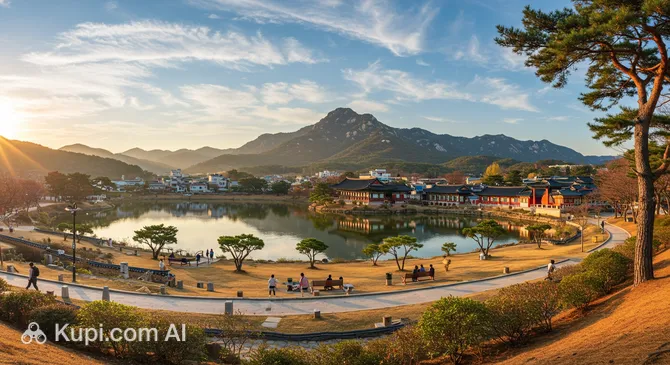
Uiwang. Illustration.
Source: Kupi.com AI

With a population of about 155,000 people, Uiwang maintains the atmosphere of an intimate yet dynamic city. It is large enough to offer guests a variety of entertainment and amenities, yet it does not lose its coziness and warmth. The city is actively developing, attracting young people, students, and creative individuals, which is reflected in the numerous cafes, art spaces, and cultural events that liven up its streets.

One of the main reasons to visit Uiwang is its unique blend of traditional Korean atmosphere and modern urban rhythms. Here, you can take a leisurely stroll along picturesque embankments, enjoy authentic local cuisine at bustling markets, or take part in one of the local festivals. For tourists, Uiwang offers the opportunity to immerse themselves in the authentic daily life of the country, away from the bustle of megacities, but with easy access to their main attractions thanks to its excellently developed transport infrastructure.

If you are looking for a place where you can feel the true spirit of South Korea, get to know its culture, and enjoy the hospitality of the locals, Uiwang will be a pleasant discovery for you. This city is waiting for you to share its little secrets and big impressions!

You can find more interesting facts on the Uiwang city history page.

Weather Overview

The weather in Uiwang has a pronounced seasonal character. Winters here are cool, with average temperatures falling below zero – for example, in January the average temperature is -1.7°C, and in December -0.4°C. There is little precipitation in the winter months, about 1 mm, and the number of rainy days is minimal.

Spring brings a gradual warming: in March the average temperature is already +6.6°C, and in May it reaches +17.0°C. Summer in Uiwang is warm, with average temperatures in June, July, and August ranging from 21.9°C to 26.2°C. July and August are also the wettest months with the most precipitation (9 mm and 8 mm respectively) and rainy days. In autumn, the temperature gradually decreases, from 21.9°C in September to 7.4°C in November, and the amount of precipitation also decreases.

Overall, in Uiwang, expect warm summers with occasional rain and cool, relatively dry winters. To get a more detailed idea of the weather conditions, you can check the information on the Uiwang Climate page.

Average monthly temperature

Average monthly precipitation

Interesting Facts

In addition to its picturesque landscapes and welcoming atmosphere, Uiwang hides many amazing stories and facts that make it a truly special place. Here are just a few of them:

  • Uiwang is often called the "gateway to the past" due to its abundance of well-preserved historical monuments from the Joseon era. Here you can see traditional Korean houses and temples where authentic rituals and colorful festivals are still held, immersing you in the atmosphere of ancient Korea.

  • Every year, the city becomes a hub for creative individuals, hosting one of the most unusual street art festivals in the country. Artists, musicians, and performers gather here to turn city streets into a real open-air gallery.

  • Uiwang is shrouded in many legends, one of which tells of a famous ceramic master born right here. According to legend, his unique creations not only adorn museums in South Korea but are also highly valued by collectors around the world.

  • The city is known as the birthplace of several prominent cultural and sports figures who have made significant contributions to the country's heritage and brought fame to Uiwang on both national and international levels.

How to Get There

Uiwang occupies a favorable strategic position in Gyeonggi Province, being in close proximity to the transport hubs of the capital region. This allows travelers to easily reach the city using the developed aviation and rail networks. You can find out more about how to get to Uiwang to choose the most convenient route and mode of transport for you.

As Uiwang itself does not have its own civil airport, the main flow of tourists arrives through the major air gateways of neighboring cities. The most popular option for international travelers is Incheon International Airport (IATA: ICN), located in Seoul (Incheon). It is approximately 47.5 km from Uiwang. This is the country's largest aviation hub, receiving flights from all over the world. A taxi or car ride from here takes about 60–90 minutes depending on traffic; you can also use comfortable limousine buses or the Airport Railroad Express (AREX) with a transfer to the metro.

Another convenient alternative, especially for domestic flights or flights from some Asian countries, is Gimpo Airport (IATA: GMP). It is also within Seoul but significantly closer to the destination — just 28.5 km away. A taxi ride from Gimpo to Uiwang takes approximately 45–60 minutes. Due to the shorter distance, transfers from here are often faster and more economical.

For clarity, here is a summary of the nearest airports in South Korea:

AirportPassenger trafficDistance
Gimpo International Airport23.0 mln28 km
Incheon International Airport71.2 mln48 km
Cheongju Airport4.6 mln84 km
Wonju Airport205 27988 km
Daegu International Airport3.3 mln221 km

Rail connections are another excellent way to reach the region. There is a metro station in Uiwang itself (Line 1), but for KTX high-speed trains, the nearest major hub is Gwangmyeong Station (IATA: XWU). This station is located just 10.8 km from the center of Uiwang. From here, you can reach your destination by taxi or bus in about 20–30 minutes. Proximity to this station makes traveling by train from other regions of the country, such as Busan or Gwangju, very convenient.

For travelers heading from the south of the country, transiting through major junction stations like Daejeon Station may also be relevant. Although it is about 117 km away, high-speed trains allow you to cover this distance quickly, after which you can transfer to a suburban train or bus to Uiwang.

Below is information about the nearest and major railway stations:

StationPassenger trafficDistance
Gwangmyeong Station12.4 mln11 km
Daejeon Station18.6 mln117 km
Dongdaegu Station20 mln220 km
Gwangju Songjeong Station3.4 mln246 km
Jinju Station265 km

Main Attractions

Uiwang, cozily situated in Gyeonggi Province, offers its guests several interesting places that will make any trip memorable. Although it is not as large a metropolis as Seoul, it has its own unique corners that attract tourists.

One of the city's main natural attractions is Baegun Lake (백운호수). This is a popular spot for relaxation where you can enjoy beautiful scenery, walk along well-maintained paths, or sit in one of the many cafes and restaurants overlooking the water. The lake is especially beautiful in the evening when the lights come on, creating a romantic atmosphere. It is an excellent place for leisurely walks and picnics.

If you are interested in transport history, be sure to visit the Korean Railroad Museum (철도박물관). Located near Uiwang Station, it offers an extensive exhibition dedicated to the development of railways in Korea. Here you can see real steam locomotives, vintage carriages, photographs, and documents telling the story of this important aspect of the country's industrial heritage. The museum will be interesting for both adults and children.

For fans of active recreation and unusual experiences, the Uiwang Rail Park (의왕레일파크), located around the picturesque Wangsong Lake (왕송호수), is perfect. The main attraction here is a rail bike ride along a specially designed route. This adventure allows you not only to have fun but also to enjoy beautiful views of nature. It is often chosen as a spot for family outings.

Those seeking peace and wanting to get acquainted with the spiritual culture of South Korea should head to Cheonggyesa Temple (청계사). This ancient Buddhist temple, located on the slopes of Cheonggyesan Mountain, is an oasis of tranquility. Visitors can admire traditional temple architecture, stroll through the beautiful grounds, and simply enjoy the silence away from the city bustle. The temple attracts both pilgrims and tourists interested in Korean culture and history.

Local Cuisine

The gastronomic map of Uiwang is a true feast for gourmets, offering both classic Korean dishes and unique local specialties. A trip to this city would not be complete without experiencing its culinary traditions, which will delight you with a variety of flavors and aromas.

Among the dishes that you should definitely try in Uiwang are hearty beef broth soups, which provide energy and warmth in any weather. An integral part of a Korean meal is spicy kimchi in all its variety, as well as the famous mandu dumplings, which are often prepared here according to old family recipes. These dishes reflect the soul of Korean cuisine and are its hallmark.

Street food occupies a special place in the gastronomic culture of Uiwang. At the central market or in small family shops, you can enjoy fragrant hotteok – sweet or savory fried pancakes with filling, try crispy dakgangjeong – chicken pieces in a spicy sweet-and-sour sauce, or choose huge stuffed peppers. This is a great way to have a quick and delicious snack while immersing yourself in the local flavor.

Locals often buy fresh produce at farmers' markets, where you can always find seasonal vegetables, fruits, and other delicacies. A popular tradition is picnicking, for example, on the riverbank, where people bring various snacks from the market. For non-alcoholic drinks, try the traditional sweet rice drink sikhye, which is great for quenching thirst. For those who want to explore local alcoholic traditions, Uiwang offers popular soju – a clear distilled drink often compared to vodka but with a milder taste, and makgeolli – a slightly sweet, milky-white fermented rice drink with low alcohol content. These drinks often accompany a meal and are an integral part of Korean hospitality culture. Throughout the year, Uiwang also hosts various gastronomic festivals where you can not only taste the region's best dishes but also learn more about the cooking culture, for example, by participating in workshops.

Travel Tips

Planning a trip to Uiwang? Great! To ensure your journey through this interesting South Korean city goes smoothly and leaves only pleasant impressions, we have prepared some practical tips.

  1. Clothing and Essentials: The climate in South Korea involves four distinct seasons. In summer, Uiwang is warm and humid, so bring light clothing. In winter it can be cold, so don't forget warm clothes. Spring and autumn will delight you with comfortable weather, but layering your clothes won't hurt. Comfortable shoes are your best friend for walking around the city. Don't forget a universal power adapter for electronics (Type F sockets are used in South Korea).
  2. Transport: Uiwang, like many Korean cities, has a well-developed public transport system. The main means of transportation are buses, and the city is also connected to the Seoul metropolitan subway system (e.g., Uiwang Station is on Line 1). We recommend purchasing a T-money transport card – it's convenient and cost-effective for paying fares. Taxis are also available; they can be hailed on the street or ordered via apps. Renting a car may be unnecessary if you plan to move mainly within the city.
  3. Finances: The local currency is the South Korean Won (KRW). You can exchange currency at banks or exchange offices. Credit and debit cards are accepted in most shops, restaurants, and hotels. However, it's always useful to have some cash on you for small purchases, such as at markets or for street food. ATMs are widely available. It is important to know that the culture of tipping is not practiced in South Korea.
  4. Health and Safety: Pharmacies (in Korean "약국" - yak-guk) are easy to find and are usually marked with a green cross. Uiwang, and South Korea in general, is considered a very safe place for tourists. However, standard precautions, such as watching your belongings in crowded places, are never out of place.
  5. Communication: The official language is Korean. In tourist zones and among young people, you may meet English speakers, but you shouldn't rely on this everywhere. Learning a few basic Korean phrases, such as "Annyeonghaseyo" (Hello) and "Kamsahamnida" (Thank you), will be very useful and appreciated by the locals. You can purchase a local SIM card or rent a portable Wi-Fi router at the airport or at communication stores. Free Wi-Fi is often available in public places, cafes, and the subway.
  6. Local Etiquette: Koreans value politeness. A slight bow when greeting or saying goodbye is the norm. When giving or receiving items (such as money or business cards), it's customary to use both hands or use the right hand while supporting it with the left at the wrist or elbow. In public places, especially on transport, try not to make noise.
  7. What to Avoid: Try not to write people's names in red ink, as in Korea this is associated with death. Also, avoid pointing at anyone with your finger – it's better to use an open palm.
  8. Additional Tip: Be sure to try the local street food – it's an important part of Korean culture! Also, if you plan to visit traditional temples, remember to dress modestly (shoulders and knees should be covered).

We hope these tips help you better prepare for your trip and enjoy every moment of your stay in Uiwang. We wish you an unforgettable journey!

Entertainment & Nightlife

Uiwang is a cozy city in Gyeonggi Province that offers travelers a slower and more measured pace of life compared to bustling Seoul. Although you won't find huge world-class nightclubs here, evening leisure in this corner representing South Korea has its own unique charm. Nightlife here focuses on socializing, delicious food, and scenic views, making the city an ideal place for relaxed rest after a busy day.

The center of evening activity is the area around Baegun Lake. This place is completely transformed as the sun sets: numerous cafes, restaurants, and lounge bars located along the shore light up, creating a romantic atmosphere. "Live Cafes" are popular here, where you can listen to live acoustic music while enjoying a cocktail or traditional tea. The crowd is respectable, often consisting of couples and groups of friends who prefer soulful conversations to loud music.

For those looking for a more casual and lively setting, head to the commercial area near Uiwang Station. Typical Korean nightlife thrives here: the streets are filled with neon signs of 24-hour barbecue restaurants and "Hof" style beer bars. In these establishments, it is customary to order "chimaek" (chicken and beer) and spend time in lively groups. There is virtually no dress code; the style is casual and comfortable.

Among the specific forms of entertainment in Uiwang, noraebangs (karaoke) are definitely worth mentioning. They are an integral part of Korean culture, and you can find many modern venues in the city with excellent soundproofing where you can sing until morning. Prices here are lower than in the capital: an hour of karaoke or an average bar bill is quite budget-friendly. Most establishments stay open until 2–3 AM, and some are open 24/7.

In terms of safety, Uiwang is an exceptionally peaceful place. You can safely walk along well-lit streets or the lakeshore even late at night. The CCTV system is well-developed, and the crime rate is extremely low. If you stay out late, getting back to your hotel is easy: taxis are simple to call via the Kakao T app, or you can just hail one on the main streets near the station.

Speaking of daytime entertainment that can smoothly transition into the evening, the Rail Bike Park at Wangsong Lake must be mentioned. A rail bike ride around the lake is especially beautiful at sunset. The city is also known for its Railroad Museum and numerous green areas where it is pleasant to spend time before diving into the lights of the night city.

Parks & Museums

Uiwang, cozily nestled in Gyeonggi Province, offers its guests a pleasant combination of natural beauty and cultural discoveries. This city is an excellent place for those who want to take a break from the hustle and bustle of metropolises and get acquainted with interesting museums and picturesque parks.

One of the main green gems of Uiwang is Wangsong Lake. It is a popular spot for walks, picnics, and family vacations. Convenient paths are laid out around the lake, and the picturesque landscapes are pleasing to the eye at any time of year. Birdwatching enthusiasts are often seen here. Frequently, themed entertainment is located nearby, such as railroad-related attractions, which adds to the lake's appeal.

For fans of active recreation and nature hiking, Baegunsan Mountain is worth noting. Its slopes are covered with forest, and the peaks offer beautiful views of the surroundings. Various trails are suitable for both beginners and experienced hikers. In addition to these large natural areas, Uiwang likely has more compact urban parks and squares where you can spend time pleasantly and enjoy the fresh air.

The main cultural magnet of Uiwang is undoubtedly the Korean Railroad Museum. This is one of the most significant places for anyone interested in the history of transport and technology in South Korea. The museum's exhibition tells the story of the development of the country's railway network, showcasing old locomotives, carriages, and many other interesting exhibits. A visit to the museum will be educational for both adults and children.

In addition to the large railway museum, Uiwang may have small art galleries or local history exhibitions that allow for a deeper understanding of the region's culture and lifestyle. Such places often hide real treasures and offer a more intimate setting for exploring art and history.

While Uiwang is actively developing as a modern city, attentive travelers can discover corners that preserve the memory of the past. These might be small traditional temples or memorial markers telling the history of these places and adding special character to city walks.

To feel the authentic atmosphere of Uiwang, step off the beaten tourist paths. Check out local markets where you can try street food, or walk through residential neighborhoods to see the daily life of the city. Sometimes the most interesting discoveries wait where you least expect them.

Getting Around

When planning a trip to Uiwang, you can count on a convenient and well-developed public transport system that is closely integrated with the capital region's transport network. The main ways to get around the city and its surroundings are by metro and bus.

Metro: A metropolitan subway line passes through Uiwang (specifically, Uiwang Station on Line 1), providing fast and convenient connections with other cities in Gyeonggi Province and Seoul. This is an excellent option for longer-distance travel. Buses: The urban and suburban bus network is well-developed, offering many routes covering almost all areas of Uiwang and connecting it with neighboring settlements. Buses come in different colors, which usually indicate the type of route (e.g., city, express).

The fare payment system in Uiwang, as in the entire capital region, is mainly based on using the T-money transport card (or similar cards like Cashbee). This card can be purchased and topped up at most 24-hour convenience stores ("pyeonuijeom"), as well as at machines in metro stations. You can also pay the fare in cash directly to the bus driver, but this is less convenient and getting change can be difficult. Using a T-money card often provides a discount on the fare and allows for free or discounted transfers between different types of transport (metro-bus, bus-bus) within a certain period. A basic trip by metro or bus using a T-money card usually costs around 1,300-1,500 South Korean Won, but the final cost depends on the distance. Overall, public transport here is quite affordable.

For tourists, it will be useful to know a few practical points. The T-money card must be tapped on the validator both when entering and exiting the metro and buses (except for some city buses where it's only on entry). This is important for correctly calculating the fare and for the possibility of a discounted transfer. Public transport usually starts operating early in the morning (around 5:00-5:30 AM) and finishes closer to midnight; some routes may run longer, especially on weekends. For route planning and real-time transport tracking, it is convenient to use local mobile apps like Naver Maps or KakaoMap, which provide information in Korean and partially in English.

In addition to public transport, other ways of getting around are available in Uiwang. Taxis are easy to find on the streets or order via mobile apps (e.g., Kakao T). Taxi rides are relatively inexpensive compared to many Western countries. Bicycle rentals may be available in some areas, providing a pleasant way for leisurely rides, especially if you want to explore the parks or the Baegun Lake embankment. Car sharing is less common as a primary mode of transport for tourists but can also be an option for those who have an international driver's license and plan for more independent trips around the region.

Accommodation

In the city of Uiwang, you will find a variety of accommodation options suitable for any budget and preference. Tourists can choose from budget options, such as guesthouses and hostels, as well as more comfortable mid-range hotels. For those seeking more space or home comfort, apartment rental options are available, offering flexibility and convenience, especially for families or long-term stays.

When choosing accommodation in Uiwang, it is worth paying attention to areas with good transport accessibility. This will allow you to easily reach interesting places both in the city itself and its surroundings, including convenient exits to other parts of Gyeonggi Province. Areas near main transport hubs or central parts of the city usually offer the most convenience for tourists, providing easy access to shops, restaurants, and local attractions.

Various types of hotels are represented in Uiwang, from small family-run inns to larger establishments with a wide range of services. While it is best to check specific well-known hotels and their availability on current travel platforms and booking sites before your trip, the city offers enough options for a comfortable stay to meet different needs and financial capabilities.

When planning a trip to Uiwang, especially during peak tourist seasons or major local events, it is recommended to book accommodation in advance. This not only guarantees the availability of rooms in your preferred hotel or apartment but often allows you to find better price offers. Early booking also gives you more time to research options and choose the most suitable one.

The price range for accommodation in Uiwang varies from very affordable options for budget-conscious travelers to mid-range and higher-class offers that provide increased comfort and additional services. Most hotels and apartments can be easily booked online through popular international and local booking platforms. Additionally, some hotels offer direct booking through their official websites, which can sometimes include special promotions or package deals.

Nearby Cities

For those who want to explore the surrounding area, Uiwang serves as an excellent starting point for day trips to several interesting nearby locations. Among them is Suwon, located just 10 kilometers away. This city, which is the administrative center of Gyeonggi Province, is famous for its majestic Hwaseong Fortress – a UNESCO World Heritage site that offers a fascinating immersion into Korean history.

Undoubtedly, one of the most popular destinations for a day trip is Seoul, the capital of South Korea. The journey to this dynamic metropolis takes little time, as it is located only 22 kilometers north of Uiwang. In Seoul, a kaleidoscope of experiences awaits you: from visiting ancient royal palaces like Gyeongbokgung and traditional villages to strolling through ultra-modern districts like Gangnam, shopping for every taste, and discovering rich Korean cuisine.

Another city worth noting is Incheon, located about 33 kilometers away. This major port city and international aviation hub attracts tourists not only with modern architectural projects like the Songdo district with its futuristic buildings and parks but also with historical monuments such as the Incheon Landing Memorial Hall. Additionally, you can enjoy the fresh sea breeze and visit fish markets here.

Below is a table with information about some cities located near Uiwang that may be interesting to visit:

CityPopulationDistance
Gunpo285 7212 km
Anyang573 2965 km
Gwacheon64 8179 km
Suwon1 234 30010 km
Seongnam948 75713 km

These nearby destinations offer a wonderful opportunity to better understand the diverse culture, history, and modern achievements of South Korea, complementing your stay in Uiwang with new experiences.

Shopping & Souvenirs

Shopping in Uiwang offers an opportunity to get acquainted with local commerce and purchase both everyday goods and some authentic Korean products. While the city is not a shopping giant like Seoul, you can find interesting shops here and experience the atmosphere of Korean daily life. The main focus is on serving the needs of local residents, but curious tourists will also be able to find something special for themselves.

The main shopping spots in Uiwang are usually concentrated along busy central streets, as well as in areas adjacent to metro stations or major bus stops. Here you will find many small boutiques offering clothes from local designers, popular Korean cosmetic brands, electronics stores, and various household goods. Walking through such commercial districts will allow you not only to shop but also to better understand the city's daily life.

In Uiwang itself, you are unlikely to find the huge multi-story shopping malls with global names characteristic of megacities. However, there may be more compact neighborhood malls or department stores offering a good selection of goods for daily needs and leisure. If your goal is large-scale shopping with a wide range of international brands, it is worth considering a trip to neighboring, larger cities in Gyeonggi Province, such as Anyang or Suwon, which are relatively close by.

For full immersion in the local atmosphere and to buy the freshest products, local delicacies, or inexpensive everyday goods, be sure to visit the traditional markets of Uiwang. Korean markets (known as "sijang") often offer a rich selection of seasonal fruits and vegetables, fresh seafood, as well as a variety of prepared street food that you can try right on the spot. Additionally, you can find household items, simple clothing, and shoes at very reasonable prices at the markets.

As for souvenirs from Uiwang, as from South Korea in general, you can bring back many interesting things. Korean cosmetics, known for their high quality and innovative ingredients, are particularly popular. You should also pay attention to products made from traditional Korean paper "hanji," elegant ceramics, beautiful fans, and sets of chopsticks. Foodies will appreciate local snacks such as cookies filled with sweet bean paste, seaweed chips, or ginseng candies. Don't forget Korean tea – green or various herbal blends.

Most shops in Uiwang, following general Korean practice, are usually open to visitors from 10:00 or 11:00 AM and work until 8:00 or 10:00 PM. Small private shops may have their own individual schedules. Large supermarkets are often open longer. Regarding payment, bank cards from international payment systems (such as Visa and Mastercard) are accepted almost everywhere. Cash Korean Won (KRW) may be useful for purchases at traditional markets or in small street stalls.

Foreign tourists in South Korea have the opportunity to use the value-added tax refund system (Tax Free) when making purchases in shops participating in this program (look for the corresponding labeling). Usually, this applies to purchases exceeding a certain minimum amount (it's best to check details directly in the shop). To process a tax refund, you must keep all receipts and then present them along with your passport and the purchased goods (in unused condition) at a special Tax Free point at the airport before departing from the country.

Reached the end of the page?

That means the route is fully explored