Support

Dongducheon

About

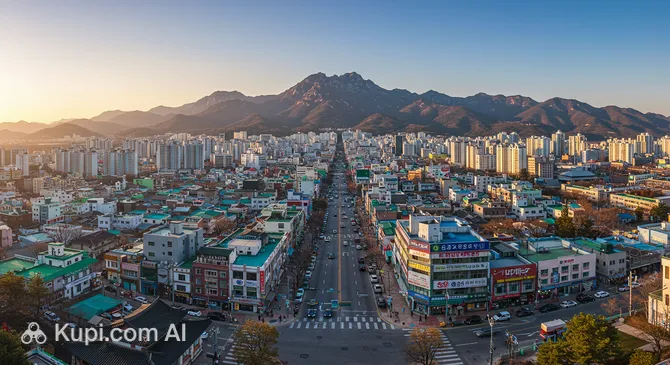
Dongducheon is a charming city nestled in the northwest of South Korea, in Gyeonggi Province, just an hour's drive from bustling Seoul. It seems hidden among picturesque hills and forests, which gives it a special atmosphere of tranquility and seclusion, despite its proximity to the capital. With a population of just under 100,000, Dongducheon remains a fairly compact yet dynamically developing city, playing an important role as an administrative and cultural center of the region.

Dongducheon. Illustration.
Source: Kupi.com AI

The city is surrounded by mountains, among which the majestic Soyosan stands out—a real magnet for nature lovers and outdoor enthusiasts. Dongducheon is an ideal place for those who want to experience authentic Korea away from the noisy tourist crowds of megacities. In addition to the magnificent hiking trails on Mount Soyosan, the city is famous for its clean air and abundance of green zones, offering guests the opportunity to immerse themselves in the world of Korean culture and history.

An atmosphere of peace and harmony prevails in Dongducheon, where everyone will find something to their liking—from exploring mountain landscapes to getting acquainted with local cuisine and crafts. If you are looking for a unique experience and want to see a different side of Korea, definitely consider Dongducheon for your next trip.

You can find more interesting facts on the Dongducheon city history page

Weather Overview

The weather in Dongducheon is characterized by clearly defined seasons. Expect warm and fairly humid summers, especially in July and August, when the average temperature is around 25.3°C and rainfall reaches its peak (up to 9 mm in July, which corresponds to about 18 rainy days). Winters here are cold and significantly drier, with an average January temperature of about -3.0°C and minimal precipitation (around 1 mm). Spring and autumn are transitional periods with gradual temperature changes and moderate precipitation levels. For more detailed information and an up-to-date forecast, you can visit the Dongducheon Climate page.

Average monthly temperature

Average monthly precipitation

Interesting Facts

In addition to its scenic mountains and cultural festivals, Dongducheon hides many surprising details and historical treasures that make it a truly unique place.

  • One of the city's main gems is the Jajaeam Buddhist Temple, founded back in the 7th century. Its special pride is an ancient library housing a rare translation of Buddhist manuscripts from Chinese dating back to the Tang Dynasty era. This manuscript is officially recognized as a national treasure of South Korea.

  • In the vicinity of Dongducheon, besides the famous Mount Soyosan, there are other peaks with interesting historical sites. For example, on Mount Machasan, you can find the ruins of a medieval fortress, while the picturesque Somok Valley attracts visitors with its lake and sculpture park.

  • Among the significant historical monuments is the stone statue of Buddha in the Tap-dong district. It is believed that this statue was created at the end of the Goryeo Dynasty, making it an important witness to that era.

  • Dongducheon is also a place where national heroes are honored. A memorial to Heo Dok-mun, one of the prominent fighters for the country's independence, is located here.

  • An unusual addition to the city's cultural landscape is the presence of a Japanese village in its surroundings. This atmospheric place allows guests to learn about the history and crafts of the region, offering a unique experience of immersion in another culture.

How to Get There

Dongducheon is conveniently located near the capital, so getting here is easy using the region's well-developed transport network. You can find out all the details and plan your route by following the link: more about how to get to Dongducheon. The main flow of travelers arrives through the country's major air hubs located in neighboring cities and then transfers to ground transport.

Since there is no civilian airport in Dongducheon itself, tourists usually fly into Incheon International Airport (IATA: ICN), located in Seoul (Incheon). This is the main air gateway to the country, located approximately 73 km from Dongducheon. The journey by taxi or rental car will take about 1.5–2 hours depending on traffic. Also, an excellent option is Gimpo Airport (IATA: GMP), which is closer—only 43.5 km away. From both airports, you can reach the city by comfortable limousine buses or by using the subway (with a transfer to Line 1, which goes directly to Dongducheon).

For clarity, here is summary information on the main airports convenient for travel:

AirportPassenger trafficDistance
Gimpo International Airport23.0 mln43 km
Incheon International Airport71.2 mln73 km
Wonju Airport205 27995 km
Cheongju Airport4.6 mln137 km
Pyongyang Sunan International Airport120 000190 km

If you prefer rail transport, please note that there is no KTX high-speed train station in Dongducheon itself, although the city is perfectly connected to Seoul by subway line No. 1 (Dongducheon, Soyosan stations, and others). The nearest major hub for high-speed trains is Gwangmyeong Station (IATA: XWU), located in the city of Gwangmyeong, about 56 km from Dongducheon. Trains from various parts of the country arrive here. From Gwangmyeong Station, you can reach your destination by taking a special shuttle bus to Seoul and transferring to the subway.

Below is information about the nearest major railway hubs:

StationPassenger trafficDistance
Gwangmyeong Station12.4 mln56 km
Daejeon Station18.6 mln175 km
Dongdaegu Station20 mln265 km

Main Attractions

Dongducheon, nestled in Gyeonggi Province, offers travelers both a touch of nature and an introduction to unique cultural aspects. This city can be an interesting point on your South Korea travel map, especially if you are looking for something beyond the standard tourist routes.

One of the main natural attractions is Mount Soyosan. It attracts hikers all year round but is especially picturesque in autumn when the slopes are painted in vibrant colors. There are various trails on the mountain suitable for both beginners and experienced hikers. During the climb or walk, you can visit the ancient Buddhist Jajaeam Temple, founded, according to legend, back in the Silla era. This place is filled with tranquility and offers an immersion into the atmosphere of Korean Buddhism, while enjoying the silence and beautiful temple architecture.

You will find a completely different atmosphere in the Bosan-dong tourist zone. This area has a rich history closely linked to the nearby American military base. Today, Bosan-dong is a colorful place where you can find shops with American goods, military-style clothing, souvenirs, as well as many restaurants and bars offering both Korean and international cuisine. A walk through Bosan-dong gives you the chance to see a unique blend of cultures and feel the special spirit of this place.

For connoisseurs of art and peaceful relaxation, the Dongducheon Complex Cultural Space - Art Hill may be of interest. This place often includes an open-air sculpture park, exhibition areas, or galleries where you can get acquainted with the works of local and Korean artists. Art Hill offers a pleasant stroll surrounded by art and nature, making it a good spot for cultural leisure and a break from the city bustle.

Local Cuisine

The gastronomy of Dongducheon is a fascinating journey into the world of Korean flavors, where traditional recipes come to life thanks to fresh local products and unique culinary approaches. If you want to truly get to know the local cuisine, be sure to try galbi—incredibly juicy grilled beef ribs that melt in your mouth. Another iconic dish is pyeonnam-guksu, thick noodles with a rich, aromatic broth, served here with homemade pickles and fresh herbs, creating a perfect balance of flavors.

Street food in Dongducheon is a separate chapter of the city's culinary book. On the busy city markets and streets, popular treats like tteokbokki (spicy rice cakes in a savory sauce), bungeoppan (cute fish-shaped pastries with various fillings), and the freshest fried seafood await you. This is a great way to have a quick and tasty snack while immersing yourself in the everyday life of the citizens. Don't forget to stop by the farmers' markets, where you can find the freshest vegetables, fruits, and homemade preserves—a wonderful gastronomic souvenir.

The dining culture in Dongducheon encourages leisurely meals in cozy family restaurants and small cafes. Here, you will be offered classic Korean dishes such as the famous kimchi in various versions and hearty bibimbap. Popular drinks include refreshing rice-based options that perfectly complement the meal. Locals and tourists alike value these establishments for their authentic atmosphere and warm welcome.

Seasonal food festivals add a special charm to Dongducheon's gastronomic scene. This is not only an opportunity to taste a variety of delicacies but also a chance to participate in masterclasses on cooking national dishes, learn the secrets of Korean culinary art, and even have a picnic against the backdrop of the picturesque mountains surrounding the city. Such events make your acquaintance with the local cuisine even more vivid and memorable.

Travel Tips

Planning a trip to Dongducheon? Wonderful! To ensure your journey through this interesting city in South Korea goes smoothly and leaves only pleasant impressions, we have prepared some practical tips for you.

  1. Seasonal clothing and essential items:

    The climate in Dongducheon, as in all of South Korea, has distinct seasons. In summer (June-August), it is hot and humid, so bring light, breathable clothing and a raincoat or umbrella for monsoon rains. Spring and autumn are the ideal times to visit with moderate temperatures; light jackets and sweaters will do. In winter, it can be cold and snowy, so dress warmly. Be sure to bring comfortable walking shoes, sunscreen, and a power adapter (types C and F are used in South Korea).

  2. Getting around the city:

    Dongducheon is convenient to explore using public transport. The city is served by the Seoul subway line (Line 1), making it easy to reach the capital and other areas. The bus network is also well-developed. Taxis are available and can be hailed on the street or ordered via the popular Kakao T app. Car rental is possible but might not be the most convenient option due to the language barrier and parking specifics; an international driving permit is required.

  3. Financial matters:

    The local currency is the South Korean Won (KRW). You can exchange currency at banks or exchange offices, but in smaller cities like Dongducheon, there may be fewer than in Seoul, so it's better to take care of this in advance. Credit and debit cards (Visa, Mastercard) are accepted in most shops, restaurants, and hotels. However, it's always useful to have some cash for small purchases or at markets. ATMs are widespread, and many serve international cards (look for the "Global ATM" icon). Tipping in South Korea is not expected and may be met with surprise.

  4. Health and safety:

    Dongducheon, like South Korea in general, is considered a very safe place. Follow usual precautions: keep an eye on your belongings in crowded areas. Pharmacies (marked with the word 약 - "yak") exist, but staff may not always speak English. If medical assistance is needed, contact local hospitals; travel insurance is recommended. The emergency number is 119.

  5. Language and communication:

    The official language is Korean. English proficiency among the local population may not be high, especially outside major tourist centers. Learn a few basic phrases in Korean: "Annyeonghaseyo" (Hello), "Kamsahamnida" (Thank you), "Joesonghamnida" (I'm sorry). For convenience, purchase a local SIM card with internet access (available at the airport or mobile stores) or use the numerous Wi-Fi hotspots. Translation apps (e.g., Papago) and maps (Naver Maps or KakaoMap, as Google Maps has limitations in South Korea) will be useful.

  6. Local etiquette:

    Koreans value politeness. When greeting, a slight bow is appropriate. Use both hands or your right hand supported by your left when giving or receiving items. Avoid loud conversations on public transport. Remove your shoes when entering private homes and some traditional restaurants or temples. Respect for elders is an important part of the culture.

  7. What to avoid:

    Do not write people's names in red ink, as it is associated with death. Also, do not stick chopsticks vertically into a bowl of rice—this resembles ritual incense at funerals. These seemingly small things will help you show respect for the local culture.

  8. Tip for nature lovers:

    Dongducheon is located in a scenic area near mountains such as the famous Soyosan. If time and weather permit, be sure to go for a hike on one of the many trails. This is an excellent opportunity to enjoy the nature of South Korea and take a break from the city bustle.

We hope these tips help you better prepare for your trip and get the most enjoyment out of exploring Dongducheon. We wish you an unforgettable journey!

Entertainment & Nightlife

Dongducheon, located in Gyeonggi Province, offers its guests and residents a variety of options for evening and night leisure. Although the city cannot boast a nightlife scale comparable to Seoul, there are certainly places where you can have a pleasant time after sunset.

The main center of night entertainment in Dongducheon is traditionally the Bosan-dong district. Historically, this area was known for its proximity to military bases, which contributed to the emergence of many bars and clubs. Today, Bosan-dong maintains its reputation: here you can find both quiet pubs for relaxed conversations and more lively venues with music. For example, you might come across a cozy American-style pub, popular with locals and expats, or a small dance club with modern K-Pop music. The atmosphere in the area is quite international, although the majority of visitors are local residents.

In addition to Bosan-dong, various bars, restaurants open late, and, of course, the ubiquitous Korean noraebang (karaoke bars) are scattered throughout other parts of the city. You can easily find a typical Korean "hof" serving beer with fried chicken, or a popular noraebang chain club for a fun time with friends. Some restaurants offer dinner accompanied by live music. As for large concert venues or permanent night markets similar to those in Seoul, they are not a characteristic feature of Dongducheon. However, keep an eye on the event listings: from time to time, local festivals or fairs with evening programs may take place in the city.

The atmosphere in Dongducheon's nightlife venues is generally relaxed and friendly. The dress code in most places is casual, and everyday clothing is quite appropriate. The main activity starts closer to Friday evening and continues through Saturday. Many establishments stay open until late at night, and some until early morning, especially on weekends.

When planning an evening out, keep in mind that the optimal time to visit bars and clubs is after 8:00–9:00 PM. Prices in Dongducheon's venues are usually more affordable compared to larger cities. For getting around the city at night, it is most convenient to use a taxi. It is recommended to have your destination address written in Korean or to use mobile taxi apps.

In terms of safety, Dongducheon is considered a fairly peaceful city. Nevertheless, as in any other place, basic precautions should be taken at night: avoid poorly lit and deserted streets, and keep an eye on your personal belongings. The main streets and the Bosan-dong area are usually well-patrolled.

As for daytime entertainment, Dongducheon offers opportunities for outdoor recreation, such as walks at the foot of the picturesque Mount Soyosan, which is especially beautiful in autumn. The city may not have large theaters or big amusement parks, but you can always explore local markets to feel the authentic atmosphere. Small local galleries or cultural centers may also offer interesting exhibitions or events, although the main focus for the evening tourist here is still shifted towards cozy bars and traditional Korean entertainment.

Parks & Museums

Dongducheon offers its guests a pleasant combination of opportunities for outdoor relaxation and acquaintance with the region's cultural heritage. The city, surrounded by picturesque landscapes, has both well-maintained green zones and places where you can gain a deeper understanding of its history and culture.

For nature lovers, Dongducheon and its surroundings offer several wonderful spots. One of the main natural attractions is Soyosan Mountain. It is a popular place for walking and hiking, especially beautiful in autumn when the slopes turn vibrant colors. There are various trails here, suitable for both beginners and experienced tourists, and breathtaking views open up from the summit. Another attractive spot for outdoor recreation is the Somok Valley. This picturesque park area with a lake and sculpture park is perfect for leisurely walks, family vacations, and enjoying art in nature. In addition to these large areas, small well-kept parks and squares can be found within the city itself, where locals and tourists can take a break from the city bustle or have a picnic.

The cultural life of Dongducheon also offers interesting discoveries. A key institution telling the history of the region is the Freedom Protection Peace Museum. This museum is dedicated to the Korean War and the role of peacekeeping forces, offering visitors a deep dive into an important period of Korean history through artifacts, dioramas, and interactive installations. For art lovers and a more modern cultural experience, it's worth visiting the Complex Cultural Space "Art Hill". This venue combines the functions of a gallery and a sculpture park, offering both indoor and outdoor exhibitions, making it attractive to a wide range of visitors. Although the city may not have many large art galleries, there is always a chance to stumble upon small local exhibitions or cultural centers where you can get acquainted with the works of Korean artists and craftsmen.

For a more authentic experience, take a walk through the city's residential areas to observe daily life or visit local markets where you can try street food and buy souvenirs. Sometimes festivals or cultural events are held in the city, which can also be an interesting addition to your trip. Pay attention to monuments and memorials you may encounter in the city—they often tell stories of local history and significant events.

Getting Around

Moving around Dongducheon and its surroundings is quite convenient thanks to a well-developed public transport system. The backbone of the transport network consists of the subway and buses, which make it easy to reach most parts of the city and neighboring settlements.

The main form of public transport in Dongducheon is the subway. The city is served by Seoul Subway Line 1, which connects it directly to the capital and other cities in Gyeonggi Province. Key stations in Dongducheon include the namesake "Dongducheon" station, as well as "Soyosan" and "Bosan." The subway is a fast and reliable way to travel, especially over long distances.

In addition to the subway, Dongducheon has an extensive network of city and intercity buses. Buses run on many routes, covering areas that the subway does not reach and providing connections to nearby settlements. Schedules and routes can be checked at stops or using navigation apps.

The most convenient way to pay for public transport in Dongducheon, as in all of South Korea, is by using a rechargeable transport card called T-money (or similar cards like Cashbee). You can purchase and top up this card at most convenience stores (e.g., GS25, CU, 7-Eleven) and at special machines in subway stations. The T-money card can be used to pay for travel on the subway, buses, and even taxis. Cash payment on buses is also possible but less convenient and may not offer transfer discounts. For single subway trips, you can buy a token or a one-way ticket at a machine, which usually requires a small deposit for the card itself, refundable after the trip.

Tourists are advised to purchase a T-money card immediately upon arrival. It is important to remember that the card must be tapped on the validator both when entering and when exiting the subway or bus—this is necessary for correct fare calculation and receiving transfer discounts. Public transport usually operates from early morning (around 5:30 AM) until late evening (around midnight or 1:00 AM), but the exact schedule should be checked for a specific route. For route planning and real-time transport tracking, Korean mobile apps like Naver Maps or KakaoMap are very useful.

Alternative ways to get around the city include taxis. They are easily available and can be hailed on the street or ordered via an app (e.g., Kakao T). Payment is by the meter. Bicycle rental may be available in some park or recreational areas, such as at the foot of Mount Soyosan, which is popular with tourists and locals, but it is not a primary form of urban transport. Car sharing is less common for short-term tourist trips around the city.

Accommodation

When planning a trip to Dongducheon, you will find various accommodation options to suit the needs of most travelers. The city offers a choice from more budget-friendly options to comfortable mid-range hotels, allowing you to choose housing according to your preferences and budget.

In Dongducheon, you can find small, cozy guest houses or motels (often called "yeogwan" (여관) in Korea, which offer basic amenities at an affordable price), as well as more standard hotels with a wide range of services. For those seeking more home comfort or planning a long stay, apartments or rooms for rent may be available, though the selection may not be as wide as in large metropolises. International-class luxury resorts are less common here; the emphasis is on practical and convenient housing.

When choosing a place to stay in Dongducheon, it is worth paying attention to areas located near the city center, main transport hubs, or sites of interest. This will provide easy access to shops and restaurants and allow for more convenient exploration of the city and its surroundings. Many tourists prefer to stay where it is easy to reach bus stops or the railway station if trips outside the city are planned.

Regarding booking, it is recommended to take care of this in advance, especially if your trip falls during the peak tourist season, holidays, or during local festivals. This will help you not only guarantee availability but also possibly find better deals. The main booking methods are popular online platforms and aggregators, as well as direct inquiries on hotel websites, if available.

The price range for housing in Dongducheon varies: you can find both quite budget options and mid-range hotels with a good set of amenities. In general, the city offers enough options for every traveler to find a suitable place for a comfortable stay.

Nearby Cities

For those who want to explore the surroundings, Dongducheon serves as an excellent starting point for day trips to several interesting nearby places:

Just 39 km away is Seoul, the dynamic capital of South Korea. This metropolis offers an incredible blend of ancient palaces, modern skyscrapers, bustling markets, and cultural centers, making it an ideal destination for a packed day trip.

The city of Goyang, located about 36 km away, attracts visitors with its picturesque parks, such as the famous Ilsan Lake Park, and numerous cultural events. It is a great choice for those seeking a more relaxed outdoor vacation and an introduction to local art.

CityPopulationDistance
Pocheon163 38813 km
Uijeongbu421 57917 km
Munsan28 88024 km
Paju415 34529 km
Guri180 06335 km

These nearby destinations provide an insight into the diverse culture and landscapes of the South Korea region.

Shopping & Souvenirs

Dongducheon might not be the primary shopping destination in South Korea compared to major megacities, but there are still interesting places for shopping and unique local goods to be found here. The city offers an authentic Korean shopping experience rather than an abundance of international brands. Here you can immerse yourself in the local atmosphere and buy something to remember your trip by.

Main shopping areas in Dongducheon are usually concentrated around the central streets and busy districts. Special attention should be paid to the Bosan-dong district, also known as "The Ville." Historically, this area is closely connected to the nearby American military base, which has created a unique retail environment with shops catering to both foreigners and locals. In Bosan-dong, you can find clothing, shoes, accessories, souvenirs, as well as numerous restaurants and bars. Walking through these streets will allow you to better feel the rhythm of this special part of the city.

While Dongducheon may not have massive world-class shopping malls, there are local department stores or small shopping complexes. Such places usually offer a wide range of goods: clothing, cosmetics, household items, and food. This is a convenient option for those who prefer to shop in one place, avoiding the bustle of open markets.

Particular attention should be paid to the traditional markets of Dongducheon, such as Jungang Market or other local "sijangs." Korean markets are colorful places where you can find fresh produce, local delicacies, ready-to-eat street food, as well as clothing, shoes, and various household goods at affordable prices. Visiting such a market is a great opportunity to get to know the local culture, haggle, and buy something truly authentic.

As souvenirs from Dongducheon and South Korea in general, you can bring back traditional Korean sweets (such as yakgwa or hangwa), ginseng products, high-quality green tea, or tea made from unusual ingredients. Korean cosmetics, known for their quality and innovative formulas, are also very popular. You can also look for ceramics, traditional Korean hanji paper, small accessories with national symbols, or handmade items by local craftsmen if you come across them.

Most shops in Dongducheon usually operate from 10:00–11:00 AM to 8:00–9:00 PM. Markets may open earlier, especially the food stalls. Bank cards are accepted almost everywhere, but at markets or in small family shops, cash (Korean Won) may come in handy. ATMs are easy to find in commercial areas and near banks.

For foreign tourists in South Korea, a Tax Free refund system is in place. When making purchases over a certain amount (usually from 30,000 won) in shops with the corresponding logo (Tax Free or Tax Refund), you can fill out documents for a partial VAT refund. This can usually be done at the airport when leaving the country or at special refund points in large cities. Don't forget to keep your receipts and clarify the procedure with the seller.
Reached the end of the page?

That means the route is fully explored