Support

Gimpo

About

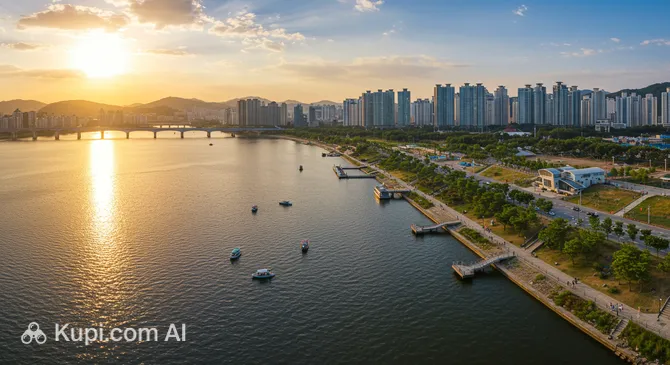
Gimpo is a city that bridges modernity and tradition, stretching across the northwest of Gyeonggi-do province. Thanks to its unique location at the confluence of the Han River and the West Sea, the city boasts picturesque views, rich flora, and a special microclimate. If your destination is South Korea, but you want to discover its authentic side without the hustle and bustle of giant megacities, this place is an excellent choice for your journey.

Gimpo. Illustration.
Source: Kupi.com AI

With a population of over 350,000, Gimpo is an important transportation and cultural hub for the region. Here, the pulsing energy of innovative neighborhoods harmoniously blends with the tranquility of nature. The long history of Gimpo has left its mark in the form of ancient fortresses and monuments, which today stand alongside modern shopping centers and art spaces.

Walking enthusiasts will appreciate the well-maintained green zones, such as Gyulpo Central Park and the famous International Sculpture Park, where works of art are displayed right under the open sky. Gimpo invites tourists to enjoy the local gastronomy, be inspired by the culture, and spend time in an atmosphere of hospitality and comfort.

Weather Overview

The climate in Gimpo is characterized by pronounced seasonality, so your trip experience will largely depend on the time of year chosen. Winters are generally cold and dry: in January, the average temperature stays around -1.9°C, and at night it can drop to -6.0°C. There is very little precipitation during the winter months, with only about 4 days of precipitation per month.

Spring brings a gradual warming, and by May, the air warms up to a comfortable 17.0°C. Summer is characterized by heat and high humidity. The warmest month is August, with an average temperature of 26.2°C, but travelers should be prepared for the rainy season: up to 17 rainy days are recorded in July and August. In autumn, the heat subsides, and by October, a pleasant coolness of about 14.6°C sets in.

In general, expect a warm summer with occasional rain and cold, dry winters. To plan the perfect trip and choose the right wardrobe, we recommend checking the detailed weather in Gimpo for your travel dates in advance.

Average monthly temperature

Average monthly precipitation

Interesting Facts

Beyond its main attractions, Gimpo holds many fascinating secrets and cultural features that only reveal themselves to curious travelers. Here are some interesting facts that allow you to look at this city from a new perspective:

  • The city is home to the unique International Sculpture Park — the only themed space of its kind in the world dedicated to the idea of unification. Hidden within a picturesque forest are 30 art objects created by masters from different countries, turning an ordinary walk into a philosophical journey.

  • Gimpo is proud of its own UNESCO World Heritage site — the Jangneung royal tomb. This site, associated with the Joseon royal dynasty, allows you not only to touch the country's deep history but also to enjoy the silence of a centuries-old forest.

  • Modern culture flourishes here in the Gimpo Art Village quarter. This space has become a center of attraction for artists and craftsmen: exhibitions and festivals regularly take place here, bringing residents and guests together in a creative atmosphere.

  • History buffs will appreciate the Munsusanseong Fortress. This ancient fortification has preserved the authentic spirit of past eras, serving as a reminder of the city's important defensive role in Korean history.

  • Despite its status as a modern satellite city, Gimpo carefully preserves its oral traditions. Many local legends about rivers and hills are still passed down from generation to generation, remaining an important part of the residents' cultural code.

How to Get There

When planning your trip, it is worth thinking through your route in advance, as the city is highly accessible due to its proximity to the capital. You can find more details on how to get to Gimpo by exploring various logistics options; however, for most foreign guests, the main method of arrival remains by air.

The most convenient and nearest hub is Gimpo Airport (IATA: GMP). Although the terminal administratively belongs to Seoul, it is located only 21 km from your destination's center. This is a major hub serving many domestic and regional flights. A trip from here by taxi or bus takes less than an hour, making it an excellent choice for a quick start to your journey.

An alternative and very popular option is the country's main gateway, Incheon International Airport (IATA: ICN). It is located about 26.5 km from the city. It is one of the best and busiest airports in the world, offering the highest level of service. The drive to Gimpo by car takes approximately 1 hour. We recommend researching information about this airport in advance to plan a convenient transfer or car rental.

Below is a summary of information on the airports convenient for reaching the region:

AirportPassenger trafficDistance
Gimpo International Airport23.0 mln21 km
Incheon International Airport71.2 mln26 km
Wonju Airport205 279123 km
Cheongju Airport4.6 mln132 km
Pyongyang Sunan International Airport120 000191 km

For those who prefer ground transport, the railway is a good solution. There is no KTX high-speed train station in Gimpo itself, but you can use Gwangmyeong Station (IATA: XWU), located in the city of the same name. It is about 37.3 km from the center of Gimpo. This is an important transport hub from which you can easily reach your destination by taxi or bus in about 1 hour and 15 minutes.

List of the nearest major railway stations for trip planning:

StationPassenger trafficDistance
Gwangmyeong Station12.4 mln37 km
Daejeon Station18.6 mln162 km
Dongdaegu Station20 mln268 km
Gwangju Songjeong Station3.4 mln280 km

Main Attractions

Gimpo's attractions offer an amazing variety: from modern walking areas reminiscent of European cities to unique historical sites and gastronomic legends. The city is ideal for those who want to combine cultural relaxation with entertainment and new culinary discoveries.

One of the most vibrant and photogenic locations is Laveniche March Avenue (Laveniche March Avenue). This is a picturesque walking area built along an artificial water canal, often called the "Venice of Korea." Numerous boutiques, cafes, and restaurants line the waterfront, and in the evening, the area is illuminated, creating an incredibly romantic atmosphere. It is an ideal spot for an evening promenade, boat rides, and beautiful souvenir photos.

Fans of maritime themes and history should visit Gimpo Marine Park (Gimpo Hamsang Park). The main exhibit here is a real landing craft that was converted into a museum after its retirement. Visitors can go on board, explore the cabins and decks, and learn about the lives of sailors. The park is located in the Daemyeong Port area, so a walk can be combined with a visit to the fish market and enjoying the fresh sea breeze.

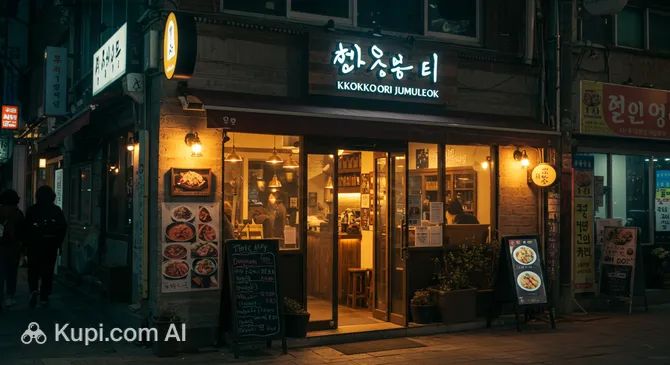
Kkokko Ori Jumulleok. Illustration.
Source: Kupi.com AI

Traveler photos:

A trip to Gimpo would be incomplete without experiencing the local cuisine, which is an attraction in its own right. Be sure to stop by Kkokko Ori Jumulreok — an iconic establishment known far beyond the city limits. This place specializes in duck dishes and is famous for its authentic approach to cooking. Here, you can experience true Korean flavor in a lively and welcoming atmosphere highly valued by locals.

Also worth noting is Gimpo Art Village (Gimpo Art Village), where traditional hanok architecture harmoniously coexists with contemporary art. This cultural space offers visitors a chance to visit craft workshops, galleries, and cozy tea houses. Walking through the village's narrow streets allows you to temporarily forget the city's bustle and immerse yourself in an atmosphere of creativity and tranquility.

Local Cuisine

Gimpo's culinary scene is a true paradise for gourmets, where Korean culinary traditions meet the exceptional freshness of local products. Thanks to the city's advantageous location at the confluence of the river and the sea, local cuisine abounds with nature's bounty. The region's trademark dishes are seafood-based: you should definitely try the grilled eel, famous for its tender texture, as well as various marinated seaweed snacks and the freshest fish caught in coastal waters.

Vegetables and rice grown on the fertile lands surrounding the city hold a special place in the locals' diet. Tourists are recommended to taste the unique flavor of young vegetable kimchi—this dish is prepared here with special care, preserving its crunchy texture and piquant aroma. Meat lovers should pay attention to specialized establishments. For example, the Kkokko Ori Jumulreok restaurant offers guests magnificent duck dishes prepared according to authentic recipes that convey the true spirit of Korean home cooking.

Street food culture in Gimpo is just as vibrant as in the capital. Popular snacks can be enjoyed quickly and deliciously at busy markets and near tourist zones. Don't miss the chance to try hotteok—sweet Korean pancakes with filling, spicy tteokbokki rice cakes, and warming odeng fish cakes on skewers. This is ideal for those who want to feel the city's rhythm and eat as the locals do between errands.

The best way to complete your gastronomic journey is at one of the cozy tea houses or cafes that abound in the city. Traditional drinks are served here with particular elegance: try aromatic Korean tea with medicinal herbs, which is a great tonic after a walk. For dessert with your tea, hangwasik—traditional Korean sweets—are often offered, making for a perfect sweet accent to your introduction to Gimpo's culinary arts.

Travel Tips

A trip to Gimpo promises to be comfortable, as it is a modern and safe city located in close proximity to the capital. However, as in all of South Korea, there are cultural norms and everyday features here, the knowledge of which will help you avoid awkward situations and save time.

  1. Clothing and Seasonality. The climate here has four distinct seasons. In summer (July–August), it is very humid and hot, so bring light, breathable clothing and an umbrella. In winter, a warm down jacket is essential, as the winds from the river can be piercing. Note that walking in parks like Laveniche requires very comfortable shoes—you will be doing a lot of walking. Don't forget a travel adapter for sockets (Type F, as in Europe).

  2. Transport and Navigation. To pay for fares in the subway (Gimpo Goldline), buses, and even taxis, you will need a T-money transport card. You can buy and top it up at any 24-hour convenience store (CU, GS25, 7-Eleven). Google Maps has limited functionality in Korea, so for routing, it's better to download the Naver Map or KakaoMap apps, which have English interfaces.

  3. Finances and Tipping. The currency is the South Korean won (KRW). Bank cards are accepted almost everywhere, even in small coffee shops. However, cash is useful for buying street food (for example, at the market) or topping up your transport card. Important: There is absolutely no tipping culture in Korea. Money left on a table might be returned to you by someone running after you, thinking you forgot it.

  4. Health and Safety. Gimpo is a very safe city; you can walk here at any time of day. Pharmacies are marked with the word "Yak" (약) and a red cross. In spring (March–May), there is often the phenomenon of "yellow dust," so we recommend having protective masks and monitoring the air quality index in apps.

  5. Communication. Many young people understand English, but it might not help in a taxi or small shop. Be sure to install the Papago translation app (which works more accurately than Google Translate for Korean) and use the photo translation feature for menus and signs. It is best to buy a SIM card immediately upon arrival at the airport or order an eSIM in advance, as although free Wi-Fi is available in many places, a stable internet connection is needed for maps and navigation.

  6. Local Etiquette. A greeting is a slight bow. When passing or receiving money, cards, or gifts, you should use two hands (or support your right arm with your left hand at the elbow)—this is a sign of respect. When entering traditional restaurants with floor seating or guesthouses, be sure to remove your shoes.

  7. What to Avoid. Never stick your chopsticks vertically into a bowl of rice—this resembles a memorial rite and is considered bad manners. Also, avoid loud phone conversations on public transport, especially on the subway—it is customary to maintain silence.

  8. Tip on the "Gold Line." The local Gimpo Goldline subway is infamous for being overcrowded during rush hours. If possible, avoid traveling toward Seoul from 7:30 to 9:00 AM and back from 6:00 to 7:30 PM. At these times, the carriages are packed so tightly that it can be uncomfortable for a tourist with luggage.

Following these simple recommendations will help you feel confident and free in Gimpo. Locals are very friendly to guests who show interest and respect for their culture, so your politeness and a smile will be the best key to great impressions from your trip!

Entertainment & Nightlife

Gimpo's nightlife is noticeably different from the noisy and never-sleeping districts of Seoul, such as Hongdae or Itaewon. Here, a more relaxed yet lively atmosphere prevails. Evening entertainment in the city is geared more toward cozy gatherings with friends, gastronomic tours of local bars, and traditional Korean karaoke rather than massive raves. It is the perfect place to feel how Koreans themselves relax after a workday: fun, tasty, and heartfelt.

The epicenter of night activity is considered to be the Gurae-dong (Guurae-dong) district. This is the city's busiest commercial quarter, where neon signs stay lit until morning. A huge number of establishments are concentrated here: from trendy lounge bars and pubs with craft beer to 24-hour PC cafes (PC-bangs) and numerous karaoke clubs (noraebangs). The crowd here is diverse—from young people to office workers—and the dress code is completely democratic: casual style is appropriate everywhere.

For those looking for a more romantic and aesthetic setting, the best choice is an evening walk along the canal at Laveniche March Avenue. As darkness falls, this place transforms thanks to beautiful lighting reflecting in the water. Dozens of open terraces line the waterfront, where you can enjoy a glass of wine or a cocktail while admiring the views of the "Venice of Korea." This is a safe and quiet area, ideal for couples and tourists wishing to avoid excessive noise.

An integral part of Korean night culture is late dinner, which smoothly transitions into a feast with soju or beer. To immerse yourself in the authentic atmosphere, be sure to visit Kkokko Ori Jumulreok. Although it is a restaurant, it stays open late and is an iconic spot for evening meetings. It is noisy, fun, and very delicious—this is what a real Korean evening looks like without embellishment. The establishment is famous for its duck dishes, which pair perfectly with local drinks.

On the practical side, nightlife in Gimpo is safe. You can calmly walk the streets even late at night. Public transport (subway and buses) usually stops running around midnight, so it is better to use a taxi for late returns. We recommend installing the Kakao T app to call a car, as catching a taxi by hailing it on the street at night can be problematic. Prices in bars and clubs here are slightly lower than in central Seoul: the average check for a cocktail is about 8,000–12,000 won.

If you want to diversify your leisure time during the day before a busy night, Gimpo offers excellent cultural programs. During the day, it's worth checking out local museums or visiting the Sculpture Park to enjoy art in the fresh air. Daytime performances at local theaters and cultural centers are also popular, often hosting festivals that introduce guests to the region's rich heritage.

Parks & Museums

Gimpo's urban landscapes are harmoniously interwoven with extensive green zones and cultural spaces, offering tourists a break from the urban rhythm. Here you can find both tranquil eco-parks, where nature is preserved in its original form, and unique museums telling stories of the region's rich heritage and contemporary art.

Among the natural attractions, the Hangang Wild Bird Ecology Park holds a special place. This is a huge protected area created to preserve biodiversity in the river delta. The park is equipped with convenient wooden walkways and observation decks passing through thickets of reeds. This place is ideal for those seeking silence and wanting to observe migratory birds in their natural habitat; the park is especially beautiful at sunset when golden light floods the river expanses.

Another gem is the Gimpo International Sculpture Park. Although already mentioned as an interesting fact, it is worth noting as a full-fledged area for hiking and relaxation. The park is located on the slopes of Mount Munsusan, and a walk here is not just about contemplating art but also active trekking along forest trails. The harmony of nature and 30 monumental sculptures creates a unique atmosphere for reflection, making this a must-visit for lovers of long walks.

The city's cultural scene is brilliantly represented by the CICA Museum (Czong Institute for Contemporary Art). This is a modern art space with unusual architecture reminiscent of an industrial loft. The museum specializes in experimental art, photography, and multimedia installations. Tourists will find it interesting for its non-standard approach to exhibitions and the opportunity to see the works of bold contemporary artists from around the world away from the capital's bustle.

To immerse yourself in traditions, you should visit the Gimpo Tea Etiquette Museum (Gimpo Tea Etiquette Museum). Here, time seems to slow down: visitors can not only learn about the history of tea culture in Korea but also take part in a real tea ceremony. This is an excellent opportunity to try on traditional hanbok clothing, learn how to brew tea correctly, and understand the philosophy of Korean hospitality.

Speaking of historical heritage, the Jangneung Royal Tomb cannot be overlooked. Included in the UNESCO World Heritage list, it is the resting place of the parents of King Injo of the Joseon dynasty. The complex is surrounded by a dense forest and features austere, majestic architecture. This place breathes history and allows you to see classic examples of Korean architecture related to ancestral worship.

As an insider tip, we recommend heading to Deokpojin (Deokpojin). This is a historical fortification with artillery batteries from the Joseon dynasty, located on the shore of the strait. The place is less known among mainstream tourists, but it is here that stunning panoramic views of the sea open up, and in spring, the hills are covered in a carpet of wildflowers, creating incredibly picturesque landscapes for photos.

Getting Around

Gimpo's transport system is integrated into the capital region's overall network, making moving around the city and trips to neighboring Seoul convenient and intuitive. The city's main artery is the Gimpo Goldline subway. These are fully automated driverless trains that connect the city's residential areas with Gimpo Airport. At the final station, you can easily transfer to lines 5 and 9 of the Seoul Metro or the AREX express heading to Incheon and the city center.

The bus network is excellently developed and covers corners where the subway does not reach. Note the color of the buses: green and yellow ones circulate within districts and take passengers to subway stations, while red express buses are intended for quick trips to central Seoul and other cities in the province. Electronic boards are installed at stops showing the arrival time of the nearest transport, allowing for precise planning.

To pay for your fare, you will need a T-money or Cashbee transport card. You can buy and top them up at any 24-hour convenience store (GS25, CU, 7-Eleven) or at machines in subway stations. The payment system in the region is unified: this means that when transferring from the subway to a bus or between buses within 30 minutes, no additional fee is charged or a minimal surcharge is taken. The base fare for a trip is about 1,250–1,500 won.

An important practical tip: be sure to tap your card against the validator not only when entering but also when exiting the transport. This rule applies to both the subway and buses. If you forget to "tap off" when exiting, the system will not be able to calculate the transfer discount, and on your next trip, you may be charged a double fare.

Taxis in Gimpo are a comfortable and affordable alternative to public transport. Cars are typically silver, white, or orange (standard fare), or black (luxury class, which is more expensive). Most drivers accept T-money and credit cards. To avoid explaining your destination with gestures, we strongly recommend installing the Kakao T app (similar to Uber), which allows you to call a car to a specific point and immediately see the cost of the trip.

For navigating the city, it is better to skip Google Maps in favor of the local apps Naver Map or KakaoMap. They build the most accurate routes based on current schedules and traffic. Tourists should also remember a peculiarity of the Gimpo Goldline: during rush hours (from 7:30 to 9:00 AM and from 6:00 to 7:30 PM), the trains can be extremely overcrowded, so it is better to choose another time for a comfortable trip with luggage.

Accommodation

The choice of accommodation in Gimpo is quite diverse and can satisfy the needs of most travelers, from transit passengers to those wanting to explore Gyeonggi-do province. In general, the city's hotel stock can be described as modern and functional. Mid-range hotels and high-quality business hotels predominate here, aimed at comfortable rest and business trips. There are fewer world-class luxury five-star resorts than in neighboring Seoul, but finding decent apartments or a boutique hotel is not difficult.

When choosing a place to stay, you should focus on proximity to the Gimpo Goldline subway stations, as this is the city's main transport artery. The most popular and convenient area for tourists is Gurae-dong (Gurae-dong). This is a new, dynamically developing center with many restaurants, shops, and direct access to the subway. Life here is in full swing 24/7, making the area ideal for those who want to be in the heart of the action.

If you are looking for a quieter and more picturesque atmosphere, look into the Unyang-dong (Unyang-dong) district. It is located near the Eco Park and walking areas, offering a more relaxed pace of life. The Sau-dong (Sau-dong) district is also convenient, being the administrative center of the city; many budget accommodation options and good transport links to the airport are concentrated here.

An important feature of the Korean housing market is the so-called motels. Don't be put off by this name: in South Korea, modern motels often offer a level of comfort comparable to good three-star hotels, but at a more affordable price. They are clean, well-equipped (large TVs, computers, toiletries), and available for booking on standard travel platforms.

Booking tips and prices:

  • Price range: Budget accommodation (hostels or inexpensive motels) will cost about 40,000 – 70,000 won per night. A comfortable room in a mid-range hotel will cost between 80,000 and 150,000 won. Higher-comfort options (for example, hotels near Ara Marina) start from 180,000 won.
  • When to book: Gimpo is a popular destination for domestic tourists, so demand spikes on weekends and holidays (especially during cherry blossom season and the golden autumn). It is recommended to book accommodation at least 2–3 weeks before your trip.
  • Booking methods: Most hotels are listed on major international aggregators. However, to find small guesthouses or specific motels, it is sometimes more advantageous to check local Korean apps if you know the language, or search on maps for reviews.

Nearby Cities

For those who want to explore the surroundings, Gimpo serves as an excellent starting point for day trips to several interesting nearby locations:

CityPopulationDistance
Yanggok713 3213 km
Goyang1 061 92917 km
Paju415 34520 km
Hwasu-dong655 35020 km
Incheon2 936 11721 km

Only half an hour's drive away is Incheon—an important port city that offers tourists a unique mix of history and futurism. Here you can walk through Korea's only official Chinatown, try the famous jajangmyeon noodles, and then head to the ultra-modern Songdo district with its skyscrapers and central park reminiscent of New York.

Of course, the main magnet for travelers remains Seoul. The capital is close enough to spend a full day there: visit the majestic Gyeongbokgung Palace, climb the N Seoul Tower for a panoramic view, or go shopping in the Myeongdong district. Convenient transport links make it easy to return to the quieter Gimpo by evening.

For lovers of nature and peaceful relaxation, Goyang is an excellent option. This city is famous for its huge Ilsan Lake Park—one of the largest artificial parks in Asia. It is an ideal place for cycling, picnics, and visiting seasonal flower exhibitions that are regularly held on the grounds.

These nearby destinations allow you to get a sense of the region's diverse culture and landscapes, harmoniously complementing the impressions of your journey.

Shopping & Souvenirs

Shopping in Gimpo is a pleasant combination of large-scale modern spaces and authentic local color. Unlike the bustling shopping districts of megacities, the process of making purchases here takes place at a more measured pace, allowing you to enjoy your vacation without extra stress. The city is especially famous for its premium outlets and high-quality agricultural products, so tourists often come here for branded items at good prices and unique gastronomic souvenirs.

If you are looking for a variety of shops within the city, head to the Gurae-dong (Gurae-dong) district. This is the commercial heart of Gimpo, where popular Korean cosmetics stores, street fashion boutiques, and large supermarket chains are concentrated. For those who appreciate atmosphere, the ideal spot is Laveniche March Avenue. Along the picturesque canal are small designer shops, accessory stores, and souvenir boutiques, a walk through which will provide true aesthetic pleasure.

The main point of attraction for fashion lovers is Hyundai Premium Outlets Gimpo. This is a huge shopping complex located near the Ara Marina terminal. Hundreds of international and Korean brands—from luxury fashion houses to sports labels—are gathered here under the open sky, and permanent discounts apply to many goods. The complex's architecture invites leisurely strolls, and the presence of food courts and relaxation areas makes it a great place to spend the whole day.

To get a real taste of local life, visit Daemyeong Port (Daemyeong Port). This is a famous fish market where the lively atmosphere of a port city prevails. You can find the freshest seafood here, and tourists often buy high-quality dried fish, shrimp, and salted jeotgal snacks. Also of interest are the traditional "five-day markets," which open every five days (dates ending in 2 and 7) and offer fresh farm products at low prices.

As gifts from Gimpo, we recommend bringing back local specialties. The region is historically famous for its "Gimpo Gold" rice, which was once served at the royal table; it can be purchased in small gift packages. Also popular as a souvenir is ginseng grown on local plantations and products made from it. At the fish market, look out for dried anchovies and gim seaweed—it's a delicious and easy-to-transport gift.

Major shopping centers and outlets are usually open from 10:30 AM to 9:00 PM every day. Markets start early in the morning and close by evening. Most stores and restaurants accept international bank cards without issues. Cash won may only be needed for buying street food or goods at small market stalls.

In South Korea, a convenient Tax Free system operates for foreign tourists. In large malls like Hyundai Premium Outlets and shops marked with a special logo, you can arrange a VAT refund for purchases over 30,000 won. In some places, the deduction is made immediately at the checkout (Instant Refund); in others, a receipt is issued for processing the refund at the airport or special kiosks in the city. Don't forget to bring your passport for processing.
Reached the end of the page?

That means the route is fully explored