Support

Uijeongbu

About

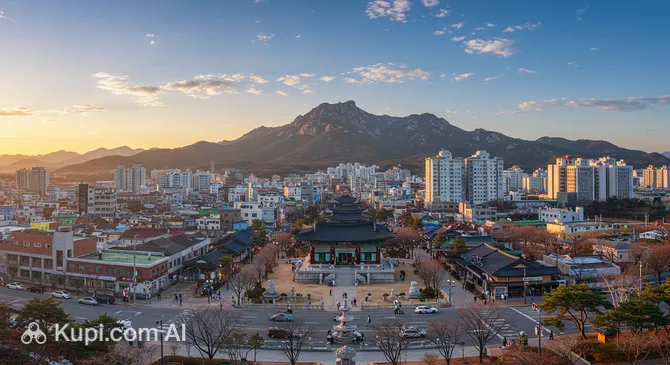
Uijeongbu is a dynamic city in Gyeonggi-do Province, located just 20 kilometers north of Seoul. As an important satellite of South Korea's capital, it combines the atmosphere of a modern industrial center with the comfort of a residential suburb. The city's name, which translates to "State Council," dates back to 1400, when the site served as a temporary residence for high-ranking officials of the Joseon dynasty.

\n

Geographically, Uijeongbu is nestled in a narrow mountain pass, which historically defined its strategic significance. Today, it is a major metropolis with a population of over 421,000. The city is known for its compact layout, where modern residential complexes stand alongside bustling traditional markets and industrial zones, creating a unique image of a Korean industrial hub.
\n
Uijeongbu. Illustration.
Source: Kupi.com AI
\n

For travelers, Uijeongbu is primarily interesting as a gateway to the magnificent nature of Bukhansan National Park and the birthplace of the famous Korean "budae-jjigae" stew. The city's rich historical heritage, which began over six centuries ago, is today complemented by a developed culture of learning and modern art.

\n

We invite you to visit Uijeongbu to feel the rhythm of the real Korea, enjoy authentic cuisine, and go hiking on the picturesque mountain trails surrounding this welcoming city.
Weather Overview

Uijeongbu is dominated by a temperate monsoon climate, characteristic of the entire Gyeonggi-do province. Four distinct seasons are clearly expressed here, each bringing its own color to the city's appearance. Expect hot, humid summers with heavy rainfall and cold, dry winters with clear skies.

\n

The winter months, especially January, can be quite harsh: average temperatures drop to -2.6°C, and night frosts down to -7°C are common. Summer brings real heat—in July and August, the thermometer consistently stays around +25–29°C. July marks the peak of the rainy season, when the maximum amount of precipitation falls (about 267 mm), so when planning your trip around the city's climate, don't forget a reliable umbrella.

\n

A feature of Uijeongbu is its location between mountains, which creates a special microclimate. The air here often feels fresher and cleaner than in the densely built-up center of Seoul. The best time to visit is spring (April-May) and autumn (September-October), when comfortable temperatures of about +14–20°C are established, and the nature around is painted in incredible colors of blossoms or crimson foliage.

Average monthly temperature

Average monthly precipitation

Interesting Facts

    \n
  • Uijeongbu is officially considered the birthplace of budae-jjigae (army stew)—an iconic dish created in the mid-20th century using American products such as SPAM and sausages.

  • \n
  • The city's name translates to "Council of State Councillors," as the highest state body of the Joseon dynasty was temporarily located here in the early 15th century.

  • \n
  • The city is mentioned in the famous American TV series M*A*S*H as the location of the 4077th Mobile Army Surgical Hospital.

  • \n
  • Thanks to its high level of educational programs and accessibility of knowledge, Uijeongbu has been part of the UNESCO Global Network of Learning Cities since 2016.

  • \n
  • The city is located in a unique strategic pass, which for centuries was considered the main "gateway" for the route from the north of the Korean Peninsula directly to the capital.

  • \n

How to Get There

Uijeongbu has excellent transport accessibility, making it a convenient destination for trips from the capital. Located within the Seoul Metropolitan Area, the city is integrated into the general public transport system, allowing tourists to plan their routes easily. Detailed information about routes can be found in the section how to get to Uijeongbu.

\n

The city does not have its own airport, so international travelers usually arrive via Incheon International Airport (ICN) or Gimpo Airport. From Incheon, the most convenient way is to take the AREX express train to Seoul Station and then transfer to Subway Line 1. The entire trip takes about 1.5–2 hours. There are also direct bus services connecting the airport to major areas of the city.

\n
AirportPassenger trafficDistance
Gimpo International Airport23.0 mln30 km
Incheon International Airport71.2 mln62 km
Osan Air Base73 km
Wonju Airport205 27987 km
Chungju (Jungwon AB)109 km
\n

Rail service is the primary way to connect with central Seoul. Uijeongbu Station is a major transport hub on Subway Line 1 (the blue line). Travel time from Seoul Station is about 40–50 minutes. Additionally, Subway Line 7 connects Uijeongbu with the eastern districts of the capital, which is very convenient for those planning to visit Seoul's parks or shopping zones.

\n
StationPassenger trafficDistance
Gwangmyeong Station12.4 mln39 km
Daejeon Station18.6 mln158 km
Dongdaegu Station20 mln251 km
Gwangju Songjeong Station3.4 mln290 km
\n

The city is also easily accessible by bus from the DongSeoul terminal. Travel time is between 40 and 60 minutes, though potential traffic jams during peak hours should be considered, as they can prolong the journey. If you prefer a taxi or a rental car, the drive from central Seoul takes about an hour under normal traffic conditions.

Main Attractions

Despite its status as an industrial suburb, Uijeongbu offers several unique locations for visitors. One of the most significant cultural spots is the Hoeryongsa Temple. Located in the foothills, this complex provides tranquility and an opportunity to explore the region's traditional architecture and spiritual practices.

\n

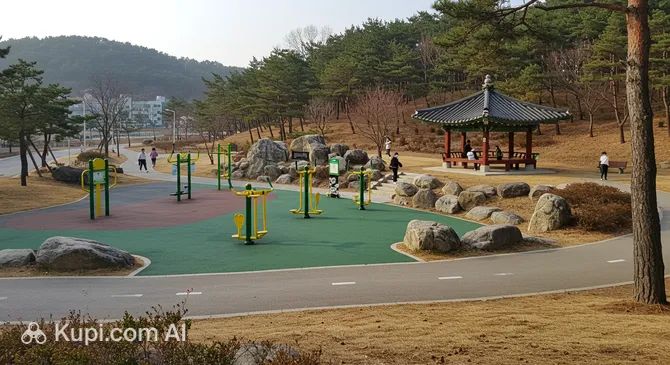
For fans of outdoor activities and fresh air, Jikdong Park is the perfect choice. This beautiful green space allows residents and tourists to take a break from the city bustle while enjoying thoughtful landscaping and silence. The park is especially popular on weekends when families gather for picnics.

\n
Jikdong Neighborhood Park. Illustration.
Source: Kupi.com AI

Traveler photos:

\n

One cannot overlook the traditional Uijeongbu Jeil Market. It is not just a place for shopping, but the true heart of the city with more than 600 stalls. Here you can find everything from fresh seafood and vegetables to textiles, but the main highlight is the endless rows of street food, conveying the true flavor of everyday Korean life. It is also worth visiting the Uijeongbu Arts Center, which regularly hosts exhibitions and theatrical performances.

Local Cuisine

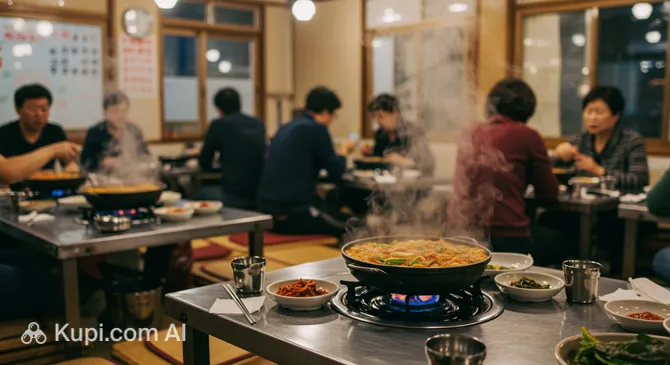
The gastronomic symbol of Uijeongbu is rightfully considered to be budae-jjigae, or "army stew." This rich, spicy dish with kimchi, ramen noodles, sausages, and ham became the culinary personification of the city's history. To try the gold-standard version, head to specialized restaurants like Gyeongwon Sikdang (Main Branch), where the recipe has been perfected for decades.

\n
Gyeongwon Sikdang Main Branch. Illustration.
Source: Kupi.com AI

Traveler photos:

\n

The city's food culture is closely linked to traditional markets. At the central Uijeongbu Jeil Market, you can find an endless variety of street food: from fried snacks like twigim and tteokbokki rice cakes to fresh Korean side dishes called banchan. It is the perfect place for those who want to try everything at once in an informal setting.

\n

In addition to Korean classics, the city also has a developed modern international cuisine. Places like O! Taco, offering Mexican dishes, are popular, reflecting the cosmopolitan nature of the suburb. For drinks, locals prefer traditional rice wine makgeolli, soju, or craft beer, which has become increasingly popular in local bars in recent years.

\n

The general character of Uijeongbu's gastro scene is simplicity, generous portions, and affordable prices. You will rarely find fine-dining establishments here, but cozy eateries with authentic flavors are on every corner. Don't forget to stop by one of the many coffee shops near the subway—Korean coffee culture is represented in all its diversity in this city.

Travel Tips

A trip to Uijeongbu will be a pleasant addition to your Korean journey if you consider a few practical nuances in advance. These tips will help you feel confident and avoid minor difficulties in this energetic city.

\n
    \n
  1. Clothing and Essentials: Dress in layers, as the climate here is changeable. In winter, warm clothing is essential due to piercing winds from the mountains, while in summer, light clothes and an umbrella are needed. If you plan to hike in Bukhansan, bring comfortable shoes with good grip. When visiting temples like Hoeryongsa, the dress code is casual, but covered shoulders are recommended.
  2. \n
  3. Transport: Be sure to purchase a T-money card—it is a universal key to the subway and buses. Install the KakaoMaps or Naver Maps app, as Google Maps does not always work correctly in Korea.
  4. \n
  5. Finances: The official currency is the South Korean won. Cards are accepted almost everywhere, but it's better to have some cash for traditional markets. ATMs marked Global ATM are easily found near subway stations.
  6. \n
  7. Health and Safety: The city is very safe, but in the evening, it's best to avoid poorly lit industrial areas on the outskirts. Pharmacies (Yak-guk) are easily recognized by their red sign.
  8. \n
  9. Communication: English is less common here than in central Seoul. Download an offline translator in advance (e.g., Papago). Learning "Annyeong-haseyo" (Hello) will immediately help win over the locals.
  10. \n
  11. Local Etiquette: Accept and give items (money, cards) with two hands—this is an important sign of respect in Korean culture. You should remove your shoes when entering private homes or some traditional restaurants.
  12. \n
  13. What to Avoid: Try not to plan important bus trips during peak hours (from 5:00 PM to 8:00 PM)—traffic jams can seriously disrupt your plans. Also, avoid talking loudly on public transport.
  14. \n
  15. Pro Tip: Try budae-jjigae specifically in Uijeongbu—here the dish is prepared according to historical recipes, and the taste will differ from the chain restaurants in Seoul.
  16. \n
\n

May your acquaintance with Uijeongbu be filled with bright discoveries and warm encounters. Have a pleasant journey!

Entertainment & Nightlife

The entertainment scene in Uijeongbu is primarily focused on locals and creating a cozy atmosphere after a workday. Nightlife is concentrated around the central Jungang-ro and Tapyong-ro streets, which are home to many karaoke bars (noraebangs), cinemas, and traditional pubs. These are ideal places to experience how Koreans relax: without unnecessary pretense, but with a lot of soul.

\n

If you are looking for gastronomic experiences in the evening, be sure to check out O! Taco or other establishments near the shopping centers. For those who prefer larger nightclubs or conceptual bars, city residents often suggest heading to neighboring Seoul—the subway ride takes only 30–40 minutes, making it easy to combine a quiet stay in Uijeongbu with the capital's vibrant parties.

\n

Daytime leisure in the city is often linked to cultural events. The Uijeongbu Arts Center is the main venue for concerts and festivals. One of the most colorful events of the year is the Hoeryong Festival, held in October. During this time, the city streets come alive with large-scale costume parades reconstructing the Joseon era and street performances by artists.

\n

For family vacations, a stroll in Jikdong Park is excellent, featuring play areas and spots for quiet nature contemplation. Despite the lack of noisy discos, Uijeongbu charms with its sincerity and the opportunity to enjoy traditional Korean entertainment at a more relaxed pace.

Parks & Museums

The main natural treasure available to residents and guests of Uijeongbu is the southwestern part of Bukhansan National Park. This grand mountain range is considered the "lungs" of the capital region. Dozens of hiking trails of varying difficulty are laid out here, leading to picturesque rocky peaks and secluded grottoes. Another popular natural area is Suraksan Mountain, offering equally breathtaking views of the city.

\n

In the very center of the city, Jikdong Park is ideal for walks. This is a well-maintained space with shady alleys, flower beds, and relaxation zones. The park is designed to be accessible to people of all ages, making it a favorite spot for morning jogs and evening strolls.

\n

The city's cultural life is centered in the Uijeongbu Arts Center. Although there are no large historical museums in the city, this center fills the gap by organizing art exhibitions, photo displays, and theatrical performances. Those interested in spiritual architecture will find Hoeryongsa Temple fascinating, as it is an open-air museum in itself, preserving Korean Buddhist traditions.

\n

It is also worth mentioning the ancient Manwolsa Temple, founded in the 7th century. Visiting such places allows you to touch history much more deeply than in classic museum halls. The combination of the rugged beauty of the surrounding mountains and cozy city squares creates a harmonious environment for relaxation and cultural enrichment in Uijeongbu.

Getting Around

The transport system of Uijeongbu is an important part of the massive machinery of the capital region. The basis of the connection consists of two subway lines: Line 1 (blue), connecting the city directly to Seoul Station and the southern suburbs, and Line 7 (olive), which is convenient for trips to the eastern part of the capital. Trains run frequently, with intervals ranging from 5 to 15 minutes, making travel predictable.

\n

Within the city, there is a developed network of bus routes, although it may seem complicated to tourists due to fragmentation and the lack of English names for stops. Nevertheless, buses are an excellent way to reach remote temples or the base of mountains. It should be noted that during peak hours (from 7 to 9 AM and from 5 to 8 PM), the city's roads are often congested, and the subway can be very crowded.

\n

A T-money or Cashbee card is required for fare payment. These can be purchased and topped up at any convenience store like 7-Eleven or CU, as well as at machines in subway stations. The card allows for free or discounted transfers between the subway and buses within a certain time frame. Simply tap the card on the validator when entering and—crucially—when exiting the vehicle.

\n

Taxis serve as an alternative to public transport and are quite affordable here. To call a car, it is most convenient to use the Kakao T app (available in English). Bicycle rentals are not very developed in the city due to the hilly terrain and heavy traffic, so walking in the center and using the subway remain the most effective ways for tourists to get around.

Accommodation

Uijeongbu primarily caters to business travelers, expats, and military personnel, so the housing market here has its own characteristics. Most accommodation options are modern apartments for long-term rent or budget motels. Nevertheless, tourists can easily find a suitable option depending on their budget.

\n

The area around Uijeongbu Station and Dongbu Plaza is considered the most convenient district to stay in. This is where the highest concentration of budget hotels and guesthouses is located. Staying in this area offers the advantage of quick transport links to Seoul and proximity to the city's main market, where inexpensive and delicious food is always available.

\n

Hotel prices in Uijeongbu are traditionally lower than in the central districts of the capital, making the city an attractive base for budget travelers. It is recommended to book accommodation in advance, especially if your trip coincides with the local festivals in October. Popular international booking services or Airbnb, which features many cozy apartments, are often used to find suitable options.

\n

If you plan to visit Buddhist sites, you might consider options near Hoeryongsa Temple, although most tourists still prefer to stay in the central part of the city for better infrastructure. Remember that proximity to the subway is a key factor for comfort in this region.

Nearby Cities

Thanks to its location in the heart of the capital region, Uijeongbu serves as an excellent starting point for exploring the northern territories of Gyeonggi-do province and the capital itself. From here, many interesting locations can be reached in just half an hour to an hour.

\n

The main destination for a day trip is certainly Seoul. Just 20–30 minutes by subway and you are in the center of a global metropolis with its palaces, futuristic skyscrapers, and endless shopping districts. It is also worth noting the city of Dongducheon, located further north and known for its natural parks and Soyosan Mountain, which is especially beautiful during the autumn leaf fall.

\n

History buffs and theme park lovers will enjoy Paju—a city known for its book districts and proximity to the DMZ. For those who prefer natural beauty, Pocheon with its famous Art Valley and picturesque lakes is an excellent choice.

\n
CityPopulationDistance
Dongducheon97 42417 km
Guri180 06318 km
Pocheon163 38822 km
Seoul23 016 00022 km
Paju415 34524 km
\n

Exploring the surroundings of Uijeongbu will give you plenty of impressions: from walking through the royal gardens of Guri to hiking the steep mountain slopes. The excellent transport network allows for spontaneous travel and returning to the city by evening.

Shopping & Souvenirs

Shopping in Uijeongbu is a fascinating mix of traditional flavor and modern convenience. While the city doesn't claim to be a luxury capital, it offers an excellent selection of everyday goods and unique local specialties at prices significantly lower than those in Seoul. Most commercial activity buzzes around the central subway station.

\n

The main shopping destination is the legendary Uijeongbu Jeil Market. This huge market, housing over 600 outlets, is open daily from early morning until evening (usually from 8:00 to 21:00). Here you can buy everything from authentic Korean clothing and household items to rare ingredients for local cuisine. The market is particularly famous for its rows of ready-made snacks and kits for making the famous budae-jjigae at home.

\n

For those who prefer a modern format, large shopping centers like Lotte Mart and Shinsegae Department Store, located directly at the railway station, operate in the city. These malls feature popular Korean and international clothing brands, cosmetics, and electronics. After a long shopping spree, you can relax in the food courts or visit the cinema here.

\n

Common souvenirs brought from Uijeongbu include high-quality Korean sauces, dried seafood, and products from local artisans often found at fairs. Most stores are open until 21:00–22:00, and major shopping malls accept international bank cards. Don't forget to check the possibility of Tax Free shopping at major department stores when making purchases over a certain amount.

Reached the end of the page?

That means the route is fully explored