Support

Pyongyang Sunan International Airport

About the Airport

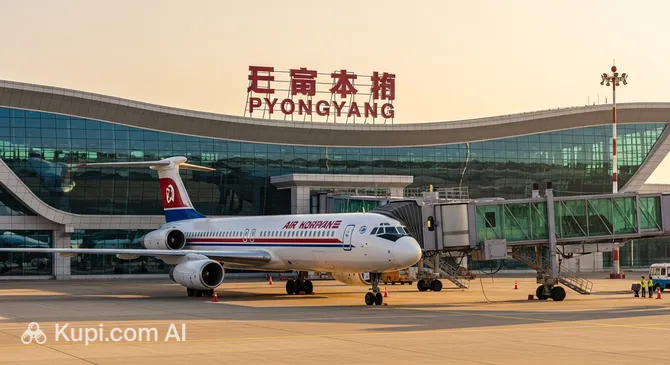
Pyongyang Sunan International Airport. Source: Kupi.com Binoculars

Arrival at Sunan International Airport is not merely a border crossing procedure, but an atmospheric introduction to one of the most secluded countries in the world. The renovated modern complex welcomes travelers with unexpected tranquility, spacious halls, and immaculate cleanliness, differing significantly from noisy and overcrowded international hubs. Here, just a few kilometers from the capital, architectural minimalism harmoniously intertwines with national character, creating a memorable first impression of Pyongyang for guests.

IATA Code FNJ
ICAO Code ZKPY
City Pyongyang
Distance to Center 24 km
Status International
Annual Passengers Official data is not published
Schedule Check with your tour operator

Features and Advantages of the Airport

The main feature of this air harbor is its exclusivity and tranquility. Due to the limited number of international flights, there are practically no queues at passport control or security checks, allowing you to complete all formalities as quickly and comfortably as possible. The staff works precisely and in an organized manner, and navigation within the terminal is intuitive even for those visiting for the first time.

Following a large-scale modernization and the opening of Terminal 2 in 2015, the airport offers passengers a level of service corresponding to modern standards. Travelers can utilize the business lounge services, visit duty-free shops featuring unique local souvenirs and beverages, and relax in coffee shops before departure. The terminal building is distinguished by a pleasant design using glass and natural lighting, creating a sense of space and airiness.

Contact Information

Obtaining standard contact information for Pyongyang Sunan International Airport (FNJ) can be difficult due to the closed nature of the country. Information is generally not published in open international sources. Communication with most services is possible only through official travel agencies organizing the trip, or directly upon arrival at the airport.

  • Official Website: Currently, Pyongyang Sunan Airport does not have an official public website. For flight schedule information, it is recommended to contact the air carrier (e.g., Air Koryo) or your travel agency.
  • Inquiry Phone Number: There is no public phone number for international calls and inquiries. All operational questions are resolved on-site.
  • Address: The airport is located in the Sunan district, approximately 24 kilometers north of the center of Pyongyang, North Korea.
  • Email: A public email address for contacting the airport is not provided.
  • Social Media: The airport does not maintain official pages on popular international social networks.
  • Lost Luggage Information: For all issues related to lost or damaged luggage, you must contact your airline representatives directly in the airport arrival hall.
  • Passenger Support Service: Passenger support is provided by airport staff and airline representatives directly in the terminal. Remote communication channels for passengers are absent.

How to Get to the Airport

It is important to understand that travel for foreign tourists to North Korea is organized within the framework of pre-approved tours. This means that the question of how to get from the airport to the city and back is usually resolved by your tour operator. Transfers are almost always included in the trip cost. Nevertheless, it is useful to know about existing options. The airport is located approximately 24 kilometers north of the center of Pyongyang, and the journey by car usually takes 30-40 minutes.

Transfer and Taxi. The main mode of transport for tourists is a pre-arranged transfer. Upon arrival, you will be met by a guide with a driver in a car or minibus. You will not have to worry about finding transport or payment, as all this is part of your tour package. Although taxi services exist in Pyongyang, their independent use by tourists for trips to the airport is not practiced.

Public Transport. Pyongyang has a public transport system, including trolleybuses and the metro, as well as a special railway line connecting the central station to the airport. However, these modes of transport are intended primarily for local residents. Foreign tourists generally do not use public transport for trips to the airport, as their movements are carried out accompanied by a guide on dedicated transport.

Car Rental and Parking. The option of independent car rental for foreign tourists in North Korea is unavailable. All movements around the country and city take place on transport with a local driver and guide. Sunan Airport has parking, but this information is not relevant for tourists, as they are brought and picked up by organized transport.

Terminals and Map

The International Airport of Pyongyang Sunan (FNJ) serves as the main air gateway to North Korea, distinguished by a modern and concise structure. The airport consists of two terminals, each with a clear purpose.

Terminal 2 is the main, new international terminal, opened in 2015. It handles all international flights. The building is constructed of glass and metal and features a modern design. Inside, you will find all zones necessary for a traveler: check-in counters, passport control points, a security screening area, as well as several shops, including Duty Free, and cafes. The space is organized logically, making navigation intuitive.

Terminal 1 is the old airport building, which is currently used to serve domestic flights. It is significantly smaller and simpler in structure than Terminal 2. Tourists arriving from abroad generally do not use this terminal.

The airport layout is quite simple. The terminals are located close to each other, but for most international travelers, only Terminal 2 is relevant. Departure and arrival zones are clearly separated. Upon arrival, passengers go through passport control, then descend to the baggage claim hall and pass through customs inspection. Upon departure, the procedure is standard: flight check-in on the first floor, followed by security and passport control on the second floor, which opens to the boarding gates.

Completing all formalities usually does not take much time due to the relatively low passenger flow compared to major international hubs. Nevertheless, it is recommended to arrive at the airport 2-3 hours before departure to go through all procedures without haste. Navigation in Terminal 2 is straightforward thanks to signs in Korean and English, and its compact size allows for easy orientation.

Airport History

The history of Pyongyang Sunan International Airport (FNJ) is closely linked to the development of civil aviation in North Korea. The airport was built after the Korean War, in the 1950s, to provide air connections for the country's capital, the city of Pyongyang. In the first decades of its existence, it mainly served flights to countries of the socialist bloc, serving as the main link to the outside world.

A key stage in the airport's history was the large-scale reconstruction in the 2010s. The old terminal was completely demolished, and a modern complex was erected in its place. In 2015, the grand opening of the new international terminal (Terminal 2) took place. This event was a significant achievement in the modernization of the country's transport infrastructure. The new terminal was designed to handle international flights and is equipped with modern amenities for passengers, including shops, restaurants, and waiting lounges.

After the opening of the new international terminal, the old but renovated terminal (Terminal 1), located nearby, began to be used for domestic flights. Thus, Sunan Airport today consists of two functional terminals separating passenger flows. The airport has two runways and serves as the main base for the national airline, Air Koryo.

Among interesting facts, it can be noted that the airport has repeatedly hosted government delegations and served as a venue for important international meetings. Its modern appearance, especially after the 2015 reconstruction, is often demonstrated as a symbol of development and openness. Despite the limited number of international flights, the airport maintains a high level of readiness and is a strategically important facility for the country.

Services and Amenities

Pyongyang Sunan International Airport (FNJ) represents the modern air gateway of North Korea, offering passengers all necessary amenities for a comfortable journey. The new terminal is designed with international standards in mind and ensures a pleasant stay while waiting for a flight.

For passengers, several dining outlets operate in the airport: from cozy cafes where you can have coffee and light snacks, to restaurants offering local and international cuisine. In the departure zone, there are Duty Free shops with a standard assortment of perfumes, beverages, and other goods, as well as souvenir stalls where you can purchase memorable gifts and locally produced items.

For comfortable waiting, the terminal provides halls with comfortable seats and charging stations for electronic devices. Passengers who value privacy and a high level of service can utilize the VIP lounges. These areas offer a quieter atmosphere, complimentary drinks, snacks, and internet access. For financial matters, there are currency exchange points and banking branches in the airport.

The airport is equipped to serve all categories of travelers. Families with small children can use the mother and child room. For passengers with limited mobility, ramps, elevators, and specially equipped restrooms are provided, and airport staff are ready to provide necessary assistance. In case of feeling unwell, you can visit the medical point. Although there are no hotels within the airport territory itself, travelers can find accommodation options in the city of Pyongyang. For business people, conditions for work and meetings are created in the business lounges.

Where to Eat

Pyongyang Sunan International Airport (FNJ), the main air hub of North Korea, offers passengers a basic but quality selection of dining establishments. Although the variety here is not comparable to major global hubs, you will be able to find a place for both a full meal and a quick snack before departing from Pyongyang.

The main place for dining is the restaurant, usually located on the upper floor in the "airside" zone of the international terminal after passing passport control. Here, travelers can order local Korean dishes—this is an excellent opportunity to try the famous Pyongyang cold noodles (naengmyeon) or bibimbap one last time. Standard European dishes may also be present on the menu. This is the best option for those who have time for a leisurely lunch or dinner.

For a quick snack, the airport has several cafes and lounges. They are located both in the general area before control (landside) and in the departure zone. You can drink coffee, tea, juices, and purchase light snacks, such as pastries or sandwiches. The atmosphere here is simpler, making it an ideal choice if there is little time left before boarding.

It is important to note that options for passengers with specific dietary needs are extremely limited. Finding vegetarian, vegan, gluten-free, or Halal dishes is practically impossible. If you follow a strict diet, it is strongly recommended to bring food with you. Opening hours of establishments are usually tied to the schedule of international flights. Payment is generally accepted in foreign currency (Euros, US Dollars, Chinese Yuan), so it is worth having cash with you.

Travel Tips

Traveling through Sunan International Airport in Pyongyang requires special attention to detail and strict adherence to the rules established in North Korea. To ensure your trip goes smoothly, follow these tips.

Arrival Time at the Airport. It is recommended to arrive at the airport at least 3-4 hours before your international flight departure. Check-in, security screening, and customs control procedures here can be very thorough and take longer than in other countries. Always follow the schedule provided by your tour guide.

Check-in and Security Control. Be prepared for the screening to be strict. Security staff may check your hand luggage and personal belongings in detail, including electronic devices, books, and any printed materials. It is important to remain calm, polite, and strictly comply with all staff requirements. Keep your passport, visa, and ticket handy.

Seat Selection on the Plane. As on any other flight, seat selection depends on your preferences. A window seat will allow you to see unique landscapes during approach or departure from Pyongyang, while an aisle seat ensures more freedom of movement during the flight.

Hand Luggage Rules. In addition to standard restrictions on liquids, there is a strict ban on importing certain items. It is strictly forbidden to import: any literature and media materials that can be construed as propaganda, religious texts (including the Bible) or pornographic materials, as well as GPS devices and two-way radios. The list of prohibited items may change, so be sure to check current rules with your tour operator before the trip.

Customs Control. This is one of the most important stages. You will need to carefully and honestly complete the customs declaration upon entry and exit. Be sure to declare all foreign currency, jewelry, as well as all electronic devices (phones, laptops, cameras, e-readers). Upon exit, data may be verified. Be prepared that the contents of your phone or camera may be checked.

Passengers with Transfers. Transit flights through Pyongyang for independent tourists are practically impossible. All trips to the country are organized as part of tour groups, and your itinerary, including all flights, will be planned in advance and monitored by the hosting party.

Saving Time. The best way to save time at Sunan Airport is complete organization and cooperation. Prepare all documents in advance, fill out all forms neatly, and follow the instructions of guides and airport staff. This will help avoid delays and unnecessary questions.

In Case of Flight Delay. If your flight is delayed, the main thing is to stay with your group and follow the guide's instructions. They are your main point of contact and will resolve all organizational issues. The airport has basic amenities such as cafes and souvenir shops, but opportunities for independent pastime are limited. Remain patient and wait for information from your escort.

Reached the end of the page?

That means the route is fully explored