Support

Langtou Airport

About the Airport

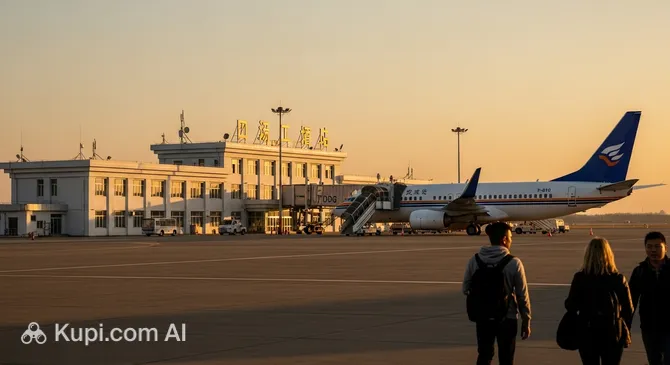
Langtou Airport. Source: Kupi.com Binoculars

Langtou Airport is not merely a transport hub, but the aerial gateway to China's largest border city. Located in a picturesque area near the Yalu River, it welcomes travellers with a tranquil atmosphere that contrasts favourably with the hustle and bustle of giant metropolises. This compact and cosy air harbour serves as the ideal starting point for exploring the distinctive culture of Liaoning Province and its amazing landscapes.

IATA Code DDG
ICAO Code ZYDD
City Dandong
Distance to City Centre ~14 km
Status International (predominantly domestic flights)
Annual Passengers Approximately 250,000
Schedule Please check airline websites

Airport Features and Advantages:

Compactness and Speed of Service. The main advantage of Langtou is its small size. There are no endless corridors or exhausting queues typical of the massive hubs in Beijing or Shanghai. The journey from the terminal entrance to the boarding gate takes mere minutes, allowing passengers to save time and conserve energy before their journey.

Unique Location. The airport is located in immediate proximity to the state border, and during takeoff or landing, the window often offers breathtaking views of the Yalu River and the famous bridges connecting the two banks. This makes the beginning or end of your trip truly memorable.

Convenient Transport Links. Thanks to its close proximity to the city centre (only 14–17 km), reaching your hotel or main attractions is very quick. A taxi journey takes about 20–30 minutes, sparing tourists from long and tiring transfers after their flight.

Contact Information

Below is the essential contact information for Dandong Langtou Airport (DDG). Please note that for regional airports, not all communication channels common to major international hubs are always available. We recommend verifying data closer to your travel date, for example, on your airline's website.

  • Official Website: Finding a dedicated official website for Dandong Airport can be difficult. For the most accurate information regarding flight schedules and carriage regulations, it is best to consult the websites of the airlines operating flights to Dandong.
  • Information Desk Phone: The main number for enquiries and consultations is: +86 415 617 6114.
  • Airport Address: Langtou Town, Zhen'an District, Dandong, Liaoning, China. In Chinese: 辽宁省丹东市振安区浪头镇. You can show this address to taxi drivers.
  • Email: A public email address for general enquiries is generally not provided. It is recommended to use the telephone for communication.
  • Social Media: The airport does not maintain active pages on international social networks (such as Facebook or Instagram).
  • Lost Luggage Information: For issues regarding lost or damaged luggage, you should first contact your airline's Lost and Found service directly at the airport. Additional information can be obtained via the general information desk phone number.
  • Customer Support Contacts: For any assistance or consultation regarding airport services (e.g., assistance for passengers with reduced mobility), please use the main information desk phone: +86 415 617 6114.

How to Get to the Airport

Langtou Airport (DDG) is located approximately 14 kilometres southwest of Dandong city centre. You can reach it in several ways, each offering its own advantages depending on your budget, time, and preferences.

Public Transport

The most economical way to get to the airport is the special shuttle bus. Routes usually start from key points in the city, such as the railway station, and proceed to the terminal. The bus journey takes about 30-40 minutes depending on traffic conditions. The ticket price is very affordable, making this an ideal option for budget travellers. We recommend checking the schedule in advance, as it may be linked to specific flights.

Taxi or Transfer

Taxis offer significantly more comfort and are the fastest way to reach the airport. The drive from central Dandong will take approximately 20-30 minutes. The metered fare will be roughly 30-50 RMB. Always use official taxis and ensure the driver activates the meter. For convenience, it is best to have the airport name written in Chinese. You can also pre-book a private transfer, which is particularly convenient for large groups or travellers with bulky luggage.

Car Rental and Parking

If you prefer to drive yourself, you can rent a car. This provides maximum freedom and allows you to plan your route without relying on schedules. The road to the airport is simple and well-signposted. Langtou Airport provides parking facilities where you can leave your car for both short and long periods. This is a convenient option if you are travelling by private vehicle or returning to Dandong after a few days.

Terminals and Map

Dandong Langtou Airport (DDG) is a modern and compact aviation hub serving both domestic and international flights. All its infrastructure is concentrated within one passenger terminal, making navigation extremely simple and convenient for travellers.

The terminal layout is intuitive. Departure and arrival zones are logically separated. At the terminal entrance, you will find check-in counters and the baggage drop-off area. After completing check-in, passengers proceed to pre-flight security screening, after which they enter the airside area — the waiting lounge with boarding gates. The arrival zone is separate and includes baggage claim belts and customs control for international flights.

Since the airport has only one terminal, there is no need to transfer between buildings. All services — from check-in to boarding — are within walking distance of each other. This significantly saves time and eliminates the stress associated with finding the right gate or building.

Check-in and security procedures at Dandong Airport generally proceed quite quickly due to its small size and moderate passenger flow. Nevertheless, it is recommended to arrive at the airport in advance: approximately 1.5-2 hours before a domestic flight and 2-3 hours before an international one. This time will be sufficient to complete all formalities without rushing, enjoy a coffee, and locate your boarding gate.

Airport History

The history of Langtou Airport (DDG) in the city of Dandong is closely intertwined with key events of the 20th century in East Asia. Its story began in the 1940s, when it was constructed as a military airfield. Its strategic location by the Yalu River, on the border, defined its importance for decades to come.

The airport played a special role in the early 1950s, during the Korean War, serving as a key base for air forces. After the end of active hostilities, it continued to function for a long time exclusively as a military facility for the People's Liberation Army of China. This legacy is still felt in its structure, as the airport retains its dual-use status today — both civilian and military.

A new chapter in the airport's life began in 1985, when it was opened to civil flights. This was a significant step for the economic development of Dandong and the entire region. Initially, the infrastructure was modest, but with the growth of passenger traffic and economic ties, the need for modernisation arose. A large-scale reconstruction was completed in 2014: a modern passenger terminal was built, and the runway was extended, allowing it to accommodate larger aircraft such as the Boeing 737 and Airbus A320.

Today, Langtou Airport represents a modern aerial gateway that not only serves domestic Chinese flights but also plays a unique role in connections with neighbouring North Korea. Its history is a vivid example of how a military airfield can transform into an important hub for civil aviation, promoting tourism and international relations.

Services and Amenities

Langtou Airport (DDG) offers passengers a range of essential services and amenities to make waiting for flights comfortable. Despite its compact size, the terminal has everything necessary for travellers departing from or arriving in Dandong.

Dining and Shopping. The airport features several cafes and small eateries where you can have coffee, a snack, or a full meal featuring local and standard cuisine. There are also shops where you can purchase souvenirs, travel essentials, and newspapers.

Comfort and Connectivity. General waiting lounges are available to all passengers. For those preferring more privacy, VIP lounges with enhanced comfort conditions are provided. Free Wi-Fi is available throughout the terminal, and charging stations for electronic devices are installed in the waiting areas.

Financial and Medical Services. ATMs and currency exchange points can be found within the airport building, which is convenient for international tourists. In case of need, a medical point is available in the terminal, ready to provide first aid.

Services for Special Categories of Passengers. The airport is equipped for the comfort of passengers with disabilities: there are ramps, accessible toilets, and the option to request staff assistance. For travellers with small children, mother and child rooms are provided.

Accommodation and Business. There are no hotels within the airport grounds; however, many accommodation options can be found in the city of Dandong, which is easily accessible by taxi. There are no specialised conference halls in the airport; for business meetings, it is better to utilise business centres in city hotels.

Where to Eat

Langtou Airport (DDG) is a small regional airport serving the city of Dandong, so the choice of dining establishments here is quite modest, yet sufficient to satisfy hunger before a flight. Do not expect the variety of a major international hub, but finding a place for a snack or lunch is certainly possible.

Landside Zone (Before Security)

The majority of establishments are located in the general area before security checks, accessible to all airport visitors. Usually, there is at least one Chinese restaurant here where you can order a full meal. The menu typically features traditional dishes: noodle soup, fried rice with various toppings, dumplings (jiaozi), and steamed buns (baozi). This is the best option for those who have ample time before their flight and wish to eat at a leisurely pace. Prices here will be higher than in the city, but more moderate than in the secure zone.

Airside Zone (After Security)

After passing security checks, the selection becomes more limited. In the departure lounge, there is usually a small cafe or buffet. Here you can grab a quick bite, such as a sandwich, pastries, snacks, or beverages. The assortment is designed for passengers waiting to board. Vending machines with drinks and light snacks may also be available.

Cuisine and Dining Recommendations

  • Local Cuisine: Although dishes at the airport are adapted and simplified, you can try basic dishes of Northeastern China. Look for noodles or rice with seafood if available on the menu, as Dandong is a coastal city.
  • Quick Snack: If time is limited, the best choice would be packaged snacks, pastries from the cafe in the departure zone, or dishes that are prepared quickly, such as steamed buns.
  • Full Meal: For a substantial lunch, the restaurant in the general area (landside) is best suited.
  • Special Dietary Needs: Finding specialised vegetarian, vegan, gluten-free, or Halal dishes at Dandong Airport is extremely difficult. Passengers with strict dietary restrictions are strongly advised to bring food with them. In a Chinese restaurant, you can attempt to order rice with vegetables, specifying no meat, but the language barrier may pose an obstacle.

Opening Hours and Prices

Most establishments at the airport operate according to the flight schedule — opening a few hours before the first departure and closing after the last plane leaves. The average bill for a full meal with a drink in the restaurant will be higher than in city establishments in Dandong. A snack in a cafe or from a vending machine will cost less.

Tips for Travellers

To ensure your journey through Langtou Airport in Dandong is as comfortable and hassle-free as possible, make use of our helpful tips. These simple recommendations will help you save time, money, and stress.

Arrival Time and Check-in. For domestic flights within China, we recommend arriving at the airport at least 2 hours before departure. This will give you enough time to calmly complete all formalities. If possible, complete online check-in for your flight — this significantly speeds up the process and allows you to avoid queues at airline counters.

Security and Hand Luggage. Security screening procedures at Chinese airports are standard but can be strict. Liquids may be carried in containers up to 100 ml, packed in a transparent bag. Pay special attention to portable batteries (power banks): they are permitted only in hand luggage, and the capacity marking must be clearly visible on the casing. Devices without markings may be confiscated by security services.

Seat Selection on the Plane. A classic choice: a window seat for beautiful views or an aisle seat for more legroom and the ability to exit quickly. Given the unique location of Dandong on the border river Yalu, a window seat during takeoff or landing can offer you truly impressive panoramas.

Transfer Passengers and Customs. If you have a connecting flight, verify in advance whether you need to collect your luggage and re-check it in Dandong. When passing through customs control (relevant for rare international flights), be prepared to present all necessary documents and declare goods if required.

Saving Time and Money. To save money, consider reaching the airport via public transport. Prices for food and beverages in the departure zone are generally higher, so you might want to eat beforehand or bring permitted snacks with you. Travelling light, with only hand luggage, will save you both time and potentially money on baggage fees.

In Case of Flight Delay. If your flight is delayed, first contact your airline representative for information regarding the new departure time and possible compensation (e.g., vouchers for water or meals). The airport has cafes and rest areas. To make the wait comfortable, have a book, a charged phone with films, and a portable battery with you.

Reached the end of the page?

That means the route is fully explored