Support

Uiju

About the Airport

Uiju
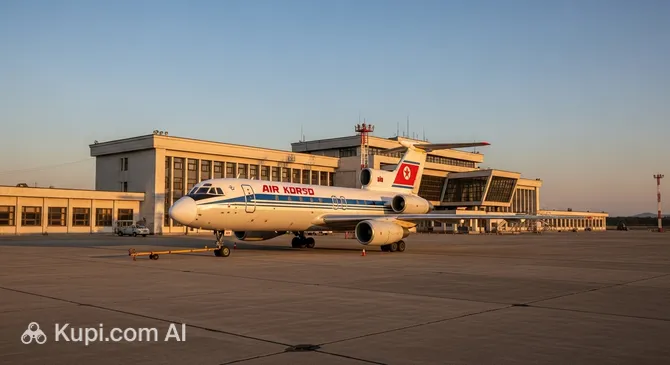
Uiju. Source: Kupi.com AI

Uiju Airport is a major strategic aviation hub located in North Pyongan Province, just a few kilometres from the city of Sinuiju and the Chinese border. Unlike typical tourist gateways, this facility is shrouded in mystery and performs primarily logistical and special functions, serving as a vital link in the region's transport system. Its massive runway and proximity to the Yalu River make it a significant point on the map, although its doors generally remain closed to ordinary travellers.

IATA CodeUJU
ICAO Code ZKUJ
City Sinuiju
Distance to Centre ~15 km
Status Military / Cargo
Passengers per Year Closed to civilian flights
ScheduleOnline board

Features and Airport Status

Uiju Airport does not serve regular commercial flights and is not an arrival point for tourists visiting North Korea (the main international hub remains the airport in Pyongyang). Nevertheless, the facility possesses several notable characteristics:

Strategic Location. The airfield is located in the immediate vicinity of the Chinese border, which historically predetermined its role as an important logistical and defensive point.

Infrastructure. The airport features a long concrete runway capable of accommodating heavy aircraft. In recent years, the territory has been actively used for cargo operations and quarantine processing of goods arriving from abroad.

Regional Transport Accessibility. Although the airport itself is closed to travellers, the city of Sinuiju is a popular destination for tourists entering the country by train from China via the Sino-Korean Friendship Bridge.

Contact Information

Given the special status of Uiju Airport as a facility performing primarily military and cargo functions, as well as the absence of regular civilian air traffic, public communication channels for tourists are limited. Below is the available factual information:

  • Airport Address: Uiju County, North Pyongan Province, Democratic People's Republic of Korea (located south of Sinuiju city).
  • Official Website: None (the airport does not have a public web resource for passengers).
  • Information Desk Phone: Contact numbers for civilians are not provided (restricted access facility).
  • Email: Public addresses for inquiries are not available.
  • Social Media: There are no official accounts.
  • Lost and Found: The service does not function, as passenger terminals do not serve commercial flights.
  • Customer Support: Interaction occurs only through special government and logistical communication channels.

How to Get to the Airport

Since Uiju Airport currently functions as a special facility and does not accept regular civilian flights, classic methods of "getting to the terminal" do not work here for independent travellers. Tourism in North Korea is organised according to special rules: all movements of foreigners within the country, including trips to North Pyongan Province and the city of Sinuiju, are carried out exclusively accompanied by guides and on pre-approved transport.

Nevertheless, it is useful to understand how logistics are arranged in this region if your tourist route passes through the border zone.

Organised Transfers and Tourist Buses

The only legal way for tourists to move around the Sinuiju area and the vicinity of the airport is transport provided by the state tourism company. Typically, these are comfortable buses or minibuses (depending on the group size).

  • Route: Transfers are organised from Sinuiju Railway Station or the customs point on the Sino-Korean Friendship Bridge.
  • Travel Time: The journey from the city centre to the airport area takes about 20–30 minutes (a distance of approximately 15 km).
  • Cost: All transport expenses are already included in the full cost of your tour (package), paid before entering the country. There is no need to pay the driver separately.

Taxi and Car Rental

Familiar taxi services, car sharing, or Rent-a-Car options in the Sinuiju area are unavailable to foreigners. You cannot rent a car or hail a ride on the street. Travelling in private cars without an escort is prohibited by the country's stay regulations.

Public Transport

Although Sinuiju has a network of trolleybuses and buses for the local population, foreign tourists generally do not use them. There are no public transport routes leading directly to the closed Uiju Airport available in the public domain.

Parking

There are no specialised parking lots for private tourist vehicles at the airport. Escort transport waits for the group in designated areas during excursions.

Important Recommendations

If you are in this area, remember the strict rules regarding photography and video recording. Uiju Airport is a strategic object, and photographing its infrastructure, runway, or personnel from a bus or train window is strictly not recommended without direct permission from your guide.

Nearest Operating Airports

Since Uiju Airport is closed for passenger transport, travellers use neighbouring aviation hubs. Most often, tourists fly into the DPRK capital or border cities in China, from where they continue their journey by land.

  • Langtou Airport (China). Located in the city of Dandong, just 23 km from Sinuiju (across the river). This is the nearest civilian airport receiving domestic flights from Chinese cities.
  • Pyongyang Sunan International Airport (DPRK). The country's main air gateway. Located 144 km from Sinuiju. This is where most international flights arrive (predominantly from Beijing and Vladivostok).
  • Anshan Teng'ao Airport (China). Located at a distance of about 175 km. Convenient for those travelling through Liaoning Province before entering Korea.
  • Yingkou Lanqi Airport (China). Located approximately 187 km from the border.
  • Shenyang Taoxian International Airport (China). A major international hub 186 km away. Often used as a transit point for transferring to a train to Dandong and subsequent travel to Sinuiju.

Terminals and Map

Structure and Infrastructure Features

Since Uiju Airport (UJU) is not a civilian passenger hub, the customary division into passenger terminals (Terminal 1, Terminal 2, etc.) is absent here. The airport is a specialised facility, the infrastructure of which is adapted exclusively for military, cargo, and, in recent years, quarantine-logistical tasks.

Instead of waiting halls, check-in counters, and Duty Free shops, the complex grounds contain:

  • Cargo Hangars and Warehouses: Massive structures for storing and processing cargo arriving from neighbouring China.
  • Quarantine Centre: A huge disinfection zone built on the site of a former taxiway for processing imported goods.
  • Technical Buildings: Premises for personnel maintaining the runway and cargo operations.

Departure and Arrival Zones

Classic "Arrival" and "Departure" zones for travellers do not exist here. The movement of aircraft and ground vehicles is subject to strict logistical schedules unrelated to passenger airline timetables. Loading and unloading zones are located within a closed, guarded territory where access to unauthorised persons is strictly forbidden.

Navigation and Transfers

Maps of Uiju Airport are not published in the public domain and are absent from navigation apps for tourists. The facility's internal logistics are organised for the efficient movement of cargo and military equipment, not for passenger convenience. There are no walkways between buildings available to civilians, as pedestrian movement on the airfield is prohibited by the safety rules of the restricted facility.

Check-in and Security Procedures

Due to the absence of passenger flights, standard pre-flight procedures are not conducted at Uiju Airport:

  • Flight Check-in: Check-in counters are absent.
  • Passport and Customs Control: For tourists, these procedures are conducted not here, but at border entry points into the country (for example, at Sinuiju Station or Pyongyang Airport).
  • Arrival Time: Recommendations to "arrive 2-3 hours before departure" are irrelevant here.

Recommendations for Travellers

If you are planning a trip to this region, consider that Uiju Airport will merely be a landmark on the map for you, not a transport hub. For flights within the country or returning home, use Pyongyang Sunan International Airport, which has a fully functional passenger terminal with all necessary infrastructure.

Airport History

The history of Uiju Airport is a chronicle of the transformation of a strategic military facility into a crucial element of the country's trade and logistics system. Unlike civilian air harbours that pride themselves on terminal opening dates and millionth passengers, Uiju's chronology is tied to geopolitics and regional economic security.

Foundation and Early Years

The exact founding date of the airfield is often not specified in open tourist sources; however, it is known that it formed as a fully-fledged aviation facility in the mid-20th century. Its emergence was dictated by the need to strengthen air borders and create a reliable outpost in immediate proximity to the Yalu River (Amnok River), which separates the Korean Peninsula and China. For decades, the airfield served as a base for the air force, providing cover for the north-western frontiers.

Stages of Development and Modernisation

For a long time, Uiju Airport remained a classic military airfield with a concrete runway and revetments for equipment. However, in the 21st century, as economic ties with China developed, its role began to change.

A key historical turning point was the massive reconstruction in the early 2020s. In response to global health challenges and the need for safe trade turnover, the airport territory underwent a radical rebuilding. The runway, which previously hosted fighter jets and bombers, was partially converted. Huge hangars and disinfection complexes rose upon it. Effectively, the airport turned into a giant "dry port" for processing cargo arriving by rail and road from neighbouring Dandong.

Interesting Historical Facts

  • Change of Profile: This is one of the rare cases in global practice where an active airfield was so radically repurposed into a quarantine-logistical centre, sacrificing its primary function for the sake of the country's economic security.
  • Geographical Paradox: The airport is often associated with the city of Sinuiju, as it serves this region, but historically and administratively it belongs to Uiju County—an ancient settlement that was once more important than Sinuiju itself.
  • Visibility: Due to its close location to the border, the historical stages of the airport's development could literally be observed from the opposite bank of the river, from Chinese territory, making it one of the most "watched" closed facilities in the country.

Today, Uiju Airport continues to write its history not as a passenger harbour, but as a key link in the supply chain connecting the DPRK with the outside world.

Services and Amenities

Since Uiju Airport (UJU) functions exclusively as a special cargo and quarantine facility and is closed to civilian passenger transport, customary service infrastructure is absent here. The terminal does not possess zones designated for serving tourists. Below is information on where travellers visiting this region (Sinuiju city and surroundings) can access relevant services.

Restaurants, Cafés, and Shops

There are no catering outlets, coffee shops, or Duty Free stores on the airfield territory. Tourist groups arriving in the region are provided with three meals a day in Sinuiju restaurants or at hotels. The purchase of souvenirs, ginseng, and local products is carried out in specialised tourist shops in the city as part of the excursion programme.

Communication and Internet

Wi-Fi services and SIM card sales points are absent at Uiju Airport. It is worth considering the general specifics of communication in the country: roaming is unavailable for most foreign operators, and access to the global internet for tourists is limited. International calls can be made from the hotel in Sinuiju.

Banking Services and Currency Exchange

There are no ATMs or exchange offices on the territory of the closed facility. Foreign tourists are recommended to carry cash (Euros, US Dollars, or Chinese Yuan) in small denominations. Currency exchange for local won, if necessary for souvenirs, is done at the hotel or in the presence of a guide at official exchange points in the city.

Medical Assistance and Services for Passengers with Reduced Mobility

There are no specialised medical points for civilians, mother and child rooms, or infrastructure for people with disabilities (ramps, specially equipped toilets) at the airport. In case of need, medical assistance is provided in Sinuiju hospitals, and issues regarding the accompaniment of tourists with reduced mobility are resolved individually through the host tourism company and assigned guides.

Hotels and Accommodation

There are no hotels directly at the airport or within walking distance. Tourists visiting North Pyongan Province stay in hotels in the city of Sinuiju, located approximately 15 km to the north:

  • Amnokgang Hotel: The most popular hotel in the region, located on the banks of the Yalu River. It offers comfortable rooms, a restaurant serving local cuisine, and views of the Sino-Korean Friendship Bridge.
  • Sinuiju Hotel: Located closer to the city centre and the railway station, often used for accommodating tourist groups.

Business Services

Conference halls and business centres are not provided on the airfield territory. Business meetings, if they are the purpose of the visit, are organised in meeting rooms of city hotels or at enterprises included in the visit programme.

Where to Eat

Since Uiju Airport (UJU) is a closed strategic facility without a passenger terminal, restaurants, cafés, bars, or vending machines for travellers are completely absent on its territory. There is no division into "airside" and "landside" zones customary for civilian airports.

However, tourists visiting this region (Sinuiju city and North Pyongan Province) will not go hungry. Dining arrangements here have their own unique features, distinct from the usual "snack before departure" format.

Where Travellers Eat in the Sinuiju Region

Instead of a terminal food court, the role of "airport restaurants" is fulfilled by establishments in the city of Sinuiju, located a 15–20 minute drive from the airfield. Meals are always organised centrally:

  • Restaurant at the Amnokgang Hotel: The main venue for breakfasts and dinners for tourist groups. Both Korean and adapted European dishes are served here. The atmosphere is calm, often with river views.
  • City Tourist Restaurants: There are several specialised establishments in Sinuiju where guides bring groups for lunch. These are separate halls where tables are set specifically for the guests' arrival.

Local Cuisine: What to Try

The cuisine of North Pyongan Province is famous for its traditions. Even if you are accustomed to South Korean food, local dishes may surprise you with a milder, "cleaner" taste with fewer spices.

  • Pyongyang Naengmyeon (Raengmyeon): Cold buckwheat noodles in meat broth. In North Korea, this is a cult dish, and in Sinuiju, it is prepared according to classic recipes.
  • Grilled Duck: A popular dish for group lunches. Slices of duck meat are grilled right at the table on gas or charcoal burners.
  • Kimchi: The local version of fermented cabbage is often less spicy than in the south of the peninsula, but more sour and refreshing.
  • Seafood from the Yalu River: Fresh fish and shellfish are often on the menu, given the proximity to the river and the West Korea Bay.

Vegetarian, Halal, and Dietary Meals

Finding a specialised vegan or Halal café "off the street" is impossible here. However, the issue of nutrition is resolved at the tour planning stage:

  • Vegetarians and Vegans: It is necessary to warn your tour operator in advance (at least 2-3 weeks before the trip). Special versions of dishes will be prepared for you: bibimbap without meat, vegetable side dishes (banchan), tofu, and rice. Strict vegans should be attentive, as fish components may be used in broths or sauces.
  • Halal: This is the most challenging category. There are no fully certified Halal kitchens in the Sinuiju region. Muslim travellers are usually offered a vegetarian or fish menu ("pescatarian").
  • Gluten-Free Diet: The basis of the diet is rice, which simplifies the task, but soy sauce often contains wheat. It is recommended to bring your own sauces or snacks, as finding specialised products locally is extremely difficult.

Prices and Payment Format

The concept of an "average bill" here differs from the usual:

  • Full Board: Breakfasts, lunches, and dinners are already included in the cost of your tour. You do not need to pay for food on-site.
  • Additional Expenses: Only beverages not included in the standard set (alcoholic drinks, extra coffee, bottled drinks) are paid for.
  • Currency: Cash Euros (EUR), Chinese Yuan (RMB), or US Dollars (USD) are accepted for payment. Local won are usually not required for foreigners for settlements.
  • Beverage Prices: A bottle of local "Taedonggang" beer may cost from 0.5 to 1.5 Euros, while coffee or tea costs about 2–3 Euros.

Operating Hours

Restaurants in Sinuiju do not operate around the clock. Breakfasts are usually served from 07:00 to 09:00, lunches from 12:00 to 14:00, and dinners from 18:00 to 20:00. The schedule is strictly tied to your group's programme. Opportunities for a "quick snack" are limited: buying food on the go at a kiosk is generally not permitted for foreigners, so a hearty breakfast at the hotel is recommended.

Traveller Tips

Since Uiju Airport is a closed facility and does not serve civilian passengers, standard aviation advice (like online check-in or choosing a seat by the emergency exit) is not applicable here. However, for tourists visiting the city of Sinuiju and this border region, special rules of logistics and safety apply. Below are recommendations adapted to the realities of travelling to this part of North Korea.

Time Planning and Arrival

Since you will not be flying out of Uiju Airport, your "arrival" in the region usually happens by train or bus from Dandong, China. The main rule here is punctuality.

  • Meeting Time: If your group is crossing the border, arrive at the train station or customs point in China at least 2 hours before departure. Document verification procedures before entering the DPRK take a lot of time.
  • Discipline on Tour: In North Korea, all movements are strictly regulated. If the guide schedules departure from the hotel at 08:00, this means you must be on the bus by 07:50. Lateness here is perceived as disrespect and can disrupt the schedule for passing through checkpoints.

Registration and Security Features (Customs Control)

The role of "pre-flight screening" here is performed by customs upon entry into Sinuiju. This is one of the strictest procedures tourists encounter.

  • Electronics: Be prepared for your smartphone, tablet, or laptop to be taken for inspection. Officials look for prohibited content (films about the DPRK, religious literature, pornography, GPS tracks). It is recommended to clear your browser history and gallery before the trip.
  • Books and Printed Materials: Any literature in a foreign language (guidebooks, magazines) will be carefully examined. It is better to leave books about the Korean War or politics at home.
  • Cameras: Ordinary cameras and DSLRs are allowed, but lenses with a focal length exceeding 150–250 mm may raise questions and require declaration or even be prohibited from entry (rules change periodically).

Luggage and Hand Luggage: Dos and Don'ts

Unlike aviation rules regarding liquids, restrictions here concern the content of the luggage.

  • Categorically Prohibited: GPS navigators, satellite phones, drones (quadcopters), walkie-talkies, religious propaganda materials, narcotics.
  • Medicines: If you take specific prescription drugs, be sure to bring a prescription in English and import the medicine only in its original packaging. Liquid medicines are allowed within reasonable limits.
  • Souvenirs for Export: When leaving the region, you cannot export local currency (won) in large quantities or any items that may be considered cultural property without a receipt from an official shop.

Tips for Choosing a Seat (Train/Bus)

Since planes do not fly to Uiju, your main transport is a tourist bus or train.

  • On the Train: When crossing the Sino-Korean Friendship Bridge, try to take a seat by the window on the right side (in the direction of travel into the DPRK). This offers the best view of the Yalu River, the Sinuiju embankment, and, in the distance, the infrastructure of the closed Uiju Airport itself.
  • On the Bus: The front rows are usually occupied by guides and escorts. For a better view and photography (where permitted), choose seats in the middle of the cabin by the window.

Recommendations for Transfer Passengers

There are no transit zones in the usual sense in Sinuiju. If your route involves further travel to Pyongyang:

  • Changing Transport: Often, the transfer from train to bus or vice versa happens in an organised manner. You do not need to find the platform yourself—follow the guide.
  • Documents: Keep your passport and migration card at hand until final arrival at the hotel. Checks may be repeated.

Tips for Saving Time and Money

  • Currency: International Visa/Mastercard cards do not work in the Sinuiju region (and in the DPRK in general). Bring cash Euros (EUR) or Chinese Yuan (RMB). US Dollars are accepted less frequently and with less enthusiasm.
  • Small Bills: Change from large banknotes (50 or 100 Euros) is often a problem. Stock up on coins and bills of 5, 10, 20 Euros/Yuan. This will save time when buying water or souvenirs.
  • Communication: Do not spend money trying to catch Chinese roaming near the border—this may be regarded as a violation of communication rules. A local SIM card is expensive (about 50–100 USD) and is justified only for long stays.

What to Do in Case of Delay

"Flight" delays at Uiju Airport are impossible due to their absence, but train or bus delays do happen.

  • Stay Calm: In North Korea, a tourist cannot solve a logistical problem independently (rebook a ticket or take a taxi).
  • Rely on Guides: Your escorts (KITC guides) bear full responsibility for you. In case of force majeure, they will contact the host party themselves, reschedule dinner, or arrange late hotel check-in. Your task is simply to wait for instructions.

Reached the end of the page?

That means the route is fully explored