Support

Anseong

About

Anseong is a charming city nestled in Gyeonggi Province in western South Korea, just an hour's drive from bustling Seoul. Its geographical location is unique: its proximity to the sea is combined with picturesque hilly landscapes, making Anseong attractive for both urban life lovers and nature enthusiasts. The city occupies a strategic position between the capital and coastal areas, providing travelers with an excellent base for exploring the region.

With a population of approximately 194,765 people, Anseong is not just a small town but a dynamically developing center with a rich infrastructure. Here you will find many restaurants, well-maintained parks, and cultural venues. Despite its modernity, the city maintains a surprisingly cozy and friendly atmosphere, where it is easy to feel "at home" from the very first day.

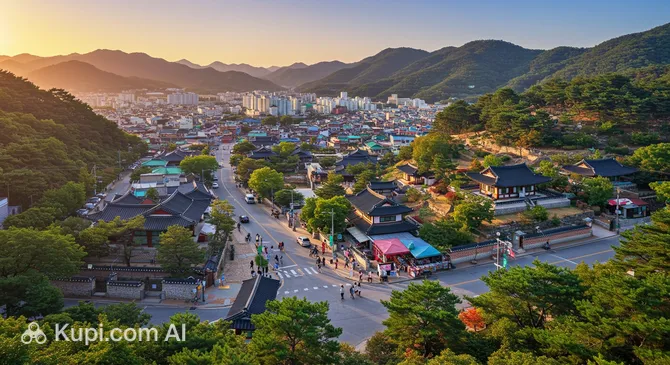
Anseong. Illustration.
Source: Kupi.com AI

Anseong often surprises guests with its originality. Unlike many other Korean cities, there is a special, leisurely rhythm of life here, which is nonetheless filled with bright events and discoveries. Among the city's attractive features are the opportunity to enjoy views from sea piers, taste the freshest seafood, and simply wander through its cozy streets, soaking up the authentic Korean atmosphere. Here, traditions are not lost in the shadow of megacities, and the hospitality of the locals leaves the warmest memories.

If you are looking for a place for leisurely walks, gastronomic discoveries, and getting to know local customs, Anseong will be a real discovery for you. This city invites you to immerse yourself in its unique atmosphere, where every day can bring small but pleasant surprises.

You can find more interesting facts on the Anseong city history page.

Weather Overview

The weather in Anseong is distinctly seasonal, which is important to consider when planning a trip. The warmest month is usually August, when the average temperature reaches +26.2°C, and maximum values can rise to +29.6°C. Conversely, the coldest month is January, with an average temperature of about -1.5°C and night frosts down to -5.9°C. The highest amount of precipitation falls in July (averaging 10 mm, with about 17 rainy days), while winter months such as January and December are characterized by minimal precipitation (about 1 mm). Overall, Anseong is characterized by warm and fairly humid summers with periodic rain and cold, relatively dry winters. For a more detailed look at weather conditions by month, you can check the information on the Anseong Climate page.

Average monthly temperature

Average monthly precipitation

Interesting Facts

In addition to its picturesque landscapes and cultural attractions, Anseong hides many curious details that make it truly special. This city in Gyeonggi Province is ready to surprise even the most seasoned traveler.

  • One of the main highlights of Anseong is its hot mineral springs. The water for them is drawn from a depth of 700 meters, and locals believe in its healing properties – they say it helps with back pain, sprains, colds, and has a beneficial effect on the skin.

  • Anseong demonstrates an amazing combination of industrial development and careful treatment of nature. Here, modern industrial parks harmoniously coexist with picturesque embankments and beaches, which in the evenings become a magnet for local artists and musicians.

  • The city has a special love for street art. Anseong regularly hosts graffiti and installation festivals, and the walls of many buildings are decorated with works by famous Korean and foreign artists, making it one of the most "creative" cities in the region.

  • Anseong is the birthplace of several famous Korean artists and athletes. Local schools and sports grounds proudly bear their names, giving the city additional fame, especially among young people.

How to Get There

Anseong is conveniently located in Gyeonggi Province, and you can get here in various ways by combining air and ground transport. Since the city itself does not have its own airport or a major railway hub, travelers usually use transit routes through neighboring metropolises. You can find out more about how to get to Anseong by exploring all available route options.

For international tourists, the main air gateways are the airports serving the capital region. The most popular option is arriving at Incheon International Airport (ICN). It is located in the city of Seoul (Incheon), about 88 km from Anseong. This is the country's largest air hub, receiving flights from all over the world. The journey from there by limousine bus or taxi will take about 2–2.5 hours depending on traffic.

Another convenient option is Gimpo Airport (GMP), also located in Seoul, at a distance of about 75 km. Flights from Asian countries and domestic flights often arrive here. Closest to the city is Cheongju Airport (CJJ) in the city of Cheongju — just 38 km away. This is an excellent choice if you are flying on a domestic flight or from some East Asian cities; the drive from here will take less than an hour.

For clarity, here is summary information on the main airports:

AirportPassenger trafficDistance
Cheongju Airport4.6 mln38 km
Gimpo International Airport23.0 mln75 km
Wonju Airport205 27978 km
Incheon International Airport71.2 mln88 km
Daegu International Airport3.3 mln175 km

Railway communication also plays an important role, although there is no KTX high-speed train station in the city of Anseong itself. The nearest major hub is Gwangmyeong Station (XWU), located in the city of Gwangmyeong, approximately 57 km from Anseong. High-speed trains from different parts of the country arrive here. From Gwangmyeong Station, you can reach Anseong by intercity bus or taxi in about an hour.

It is also worth mentioning Daejeon Station in the city of Daejeon (about 74 km from Anseong). This is a major transport hub, convenient for those traveling from the south of the country. After arriving by train, you will need to transfer to a bus to reach your destination directly.

Below is information on the nearest railway stations:

StationPassenger trafficDistance
Gwangmyeong Station12.4 mln57 km
Daejeon Station18.6 mln74 km
Dongdaegu Station20 mln175 km
Gwangju Songjeong Station3.4 mln212 km
Jinju Station220 km

Main Attractions

Anseong, a city with a rich history and culture in Gyeonggi Province, offers travelers many interesting places to visit. Here, everyone will find something for themselves, from picturesque parks to significant historical and cultural sites.

One of the most popular places, especially for families, is Anseong Farmland. This extensive agrotourism complex allows visitors to immerse themselves in rural life, interact with animals, enjoy beautiful landscapes, and seasonal flower fields. Here you can take a tractor ride, feed sheep and cows, and learn more about Korean agriculture. It is a wonderful place to relax in nature and gain vivid impressions.

For those interested in history and spirituality, the Mirinae Holy Site is a must-visit. This is one of the most important Catholic shrines in South Korea, the resting place of Saint Andrew Kim Taegon, the first Korean Catholic priest, and other Korean martyrs. The picturesque grounds of the sanctuary, with its beautiful architecture, invite peace and reflection, attracting pilgrims and tourists who wish to touch the history of Korean Catholicism.

To get closer to Anseong's traditional crafts, it is worth stopping by the Anseong Machum Museum. "Anseong Machum" refers to the famous Anseong brassware, known for its quality and the fact that it was made exactly to the customer's measurements (hence the name "machum"—meaning "perfectly fitting"). The museum presents a rich collection of these products and tells the story of their production. This is an excellent opportunity to learn about local culture and craftsmanship.

Fans of ancient architecture and Buddhist culture will find Chiljangsa Temple interesting. This ancient temple, located on a mountain slope, has a long history and houses several valuable cultural artifacts. Visitors can enjoy the peaceful atmosphere of the temple complex and admire traditional buildings and the surrounding nature. Chiljangsa Temple is also famous for being the place where, according to legend, the legendary Korean archer Byeon Gwan-hyeok trained.

Local Cuisine

The gastronomic scene in Anseong is a true immersion into the authentic flavors of South Korea, where the freshest gifts of the sea and traditional recipes take center stage. The culinary calling card of the city, without a doubt, is seafood, which can be tasted here in numerous waterside restaurants and directly at busy coastal markets. The general character of local cuisine is a combination of fresh ingredients, age-old traditions, and vibrant flavors that make every dish unforgettable.

Be sure to try hoe – Korean sashimi made from freshly caught fish, which is prepared with special skill in Anseong. Fried squid, mussels, and oysters are equally popular. Another local pride is dishes made from anchovies and other small fish. They are served as spicy snacks or added to rich soups and stews, prepared according to recipes passed down from generation to generation, often with the addition of secret spices. Street food lovers should look out for tteokbokki (spicy rice cakes), which in Anseong have their own special variation – with added seaweed and fresh vegetables.

Among the local drinks, homemade rice wine-based beverages stand out, which can be found at farmers' markets. These same markets will delight you with seasonal fruits and a variety of rice sweets. Street food in Anseong is not just a quick snack but a part of the culture. Locals and tourists alike enjoy buying food at markets and small street stalls, where you can watch the cooking process.

The dining culture in Anseong involves both visiting cozy seafood restaurants and informal lunches at markets. A special atmosphere is created by gastronomic festivals dedicated to seafood and street food, which take place in the city throughout the year. During these times, the streets turn into real food fairs where you can not only taste the best dishes of the region but also participate in masterclasses from local chefs, gaining a deeper understanding of Anseong's culinary traditions.

Travel Tips

Welcome to Anseong! To ensure your trip to this charming corner of South Korea goes smoothly and leaves only pleasant impressions, we have prepared some practical tips. They will help you better navigate and enjoy every moment of your stay in Anseong.

  1. Clothing and Essentials:

    The climate in Anseong, as in all of South Korea, is clearly divided into four seasons. In summer (June-August) it is hot and humid, so choose light, breathable clothing. Autumn (September-November) and spring (March-May) are the most comfortable times with moderate temperatures; layered outfits are ideal. In winter (December-February) it can be cold and snowy, so warm clothes, including a hat, gloves, and a scarf, are mandatory. Always bring comfortable shoes, as you will likely want to walk a lot. Don't forget an adapter for electrical appliances (South Korea uses Type F sockets, 220V voltage). When visiting temples or other religious sites, choose modest clothing that covers your shoulders and knees.

  2. Transport in the City:

    The main form of public transport in Anseong is the bus – there is an extensive network of routes throughout the city and its surroundings. Taxis are also available and can be hailed on the street or ordered via the popular Korean app Kakao T. Car rental is possible but may not always be convenient for moving around Anseong itself due to potential parking specifics and the language barrier when reading signs. If you decide to rent a car, ensure you have an International Driving Permit.

  3. Finances and Payments:

    The local currency is the South Korean Won (KRW). You can exchange money at banks or specialized exchange offices; it is recommended to do this in advance or upon arrival at a major airport, as the selection in Anseong itself may be smaller. Credit and debit cards (Visa, Mastercard) are accepted in many shops, cafes, and restaurants, but it is always useful to have some cash on hand, especially for markets or small establishments. Not all ATMs work with international cards; look for those marked "Global". Tipping in South Korea, including Anseong, is not expected and may be met with surprise.

  4. Health and Safety:

    Anseong, like South Korea as a whole, is considered a very safe city. However, standard precautions, such as keeping an eye on your belongings, are always a good idea. Pharmacies (약국 - "yakguk") are easy to find, but not all of them operate 24/7. Be sure to get medical insurance before your trip. If necessary, medical assistance can be obtained at hospitals (병원 - "pyeongwon").

  5. Communication and Internet:

    The official language is Korean. English is common among young people and in the tourism sector, but proficiency levels may be lower outside of major tourist centers. Learn a few basic phrases: "annyeonghaseyo" (안녕하세요) – hello, "kamsahamnida" (감사합니다) – thank you. For ease of communication and navigation, it is recommended to purchase a local SIM card (available at the airport or mobile shops) or use an eSIM. Wi-Fi is widely available for free in many public places, cafes, and transport. Map apps like Naver Maps or KakaoMap (Google Maps has limitations in Korea) and the Papago translator will be very useful.

  6. Local Etiquette and Traditions:

    Koreans value politeness and respect, especially towards elders. When greeting someone, especially someone older or in a higher position, it is customary to give a slight bow. It is best to give or receive items with two hands or with the right hand supported by the left. In public places, especially on transport, try not to be noisy. Respect for personal space is also important.

  7. What to Avoid:

    Try not to write people's names in red ink, as this is associated with those who have passed away. It is not polite to point at people with your finger – it is better to use an open palm. Also, do not stick your chopsticks vertically into a bowl of rice, as this resembles ritual offerings at funerals.

  8. Anseong's Specialty:

    Anseong is historically famous for its brassware (Anseong Machum Yugi) and traditional crafts. Be sure to visit local markets or workshops to see these unique items. The city is also famous for the traditional Namsadang-pae wandering troupe, and if you're lucky, you might catch a performance or festival related to this art, such as the Anseong Namsadang Baudeogi Festival.

We hope these tips make your trip to Anseong even more comfortable and memorable. Enjoy the unique atmosphere of this city, its culture, and the hospitality of the local people!

Entertainment & Nightlife

Anseong, snugly located in Gyeonggi Province, offers its guests and residents various opportunities for evening and night leisure. While the city may not boast the scale of Seoul's nightlife, you can find pleasant places here to relax after a busy day, meet friends, or soak up the local atmosphere.

Evening activity in Anseong is generally concentrated in the central areas of the city, as well as near university campuses where young people gather. Here you will find traditional Korean drinking establishments – hofs, where you can not only have a drink but also order various snacks (anju). Karaoke bars (noraebang) are very popular and are an integral part of Korean leisure culture. The city also has bars with more modern music and small clubs where you can dance. Many restaurants stay open until late in the evening, offering both Korean and international cuisine.

The atmosphere in Anseong's nightlife venues is predominantly relaxed and friendly. The crowd is mostly local – students and working city residents. The style of the establishments varies from simple and cozy to more modern. Most places come alive closer to Friday evening and on Saturday. There is usually no special dress code; a casual style is welcomed. Establishments generally stay open until late at night, and some until early morning, especially on weekends.

For those planning an evening out in Anseong, it is best to aim for a time after 7:00 PM or 8:00 PM when the venues start to fill up. Prices in Anseong's bars and restaurants are generally moderate and more affordable than in South Korea's major metropolises. The most convenient way to get around the city at night is by taxi. It is recommended to use taxi-hailing apps, such as KakaoTaxi, for convenience and fare transparency. Public transport runs less frequently or stops altogether at night.

Anseong, like most cities in South Korea, is considered a fairly safe place for night walks. Nevertheless, it is always worth observing standard precautions: stay on well-lit streets, especially if you are alone, and keep an eye on your belongings. Calling a taxi via an app or asking the establishment's staff to do so is a reliable way to reach your destination.

During the day, Anseong also offers interesting leisure options. Guests of the city can visit local parks for walks and outdoor relaxation. There are cultural sites in and around the city; for example, you can learn more about the traditional Korean art of Namsadang or visit Anseong Farmland, especially if you are traveling with children. Museums and historical sites can also be part of your daytime itinerary.

Parks & Museums

Anseong, nestled in Gyeonggi Province, invites travelers to discover a harmonious blend of picturesque green zones and a rich cultural heritage. The city offers both tranquil relaxation in nature and a fascinating immersion into the history and traditions of the region.

One of the most popular places for family recreation and enjoying nature is Anseong Farmland (안성팜랜드). This is not just a farm, but a vast theme park where you can stroll across spacious green meadows, interact with friendly animals, admire seasonal floral displays, and even participate in various workshops. It is a wonderful place to spend a whole day outdoors, especially if you are traveling with children, and get a boost of positive emotions from interacting with nature.

For connoisseurs of traditional Korean landscape architecture and a peaceful atmosphere, SeoIl Farm (서일농원) is a real find. This place is known not only for its traditional production of Korean soy sauces and pastes (jang) but also for its magnificent garden designed in a national style. A walk along its well-maintained paths, among traditional hanok buildings and picturesque ponds, will provide a sense of calm and allow for a deeper appreciation of Korean culture.

To better understand the unique culture and crafts of Anseong, be sure to visit the Anseong Machum Museum (안성맞춤박물관). It is dedicated to the famous Anseong brassware (yugi), which, due to its highest quality and perfectly fitting parts, earned the honorary name "Anseong Machum"—meaning "made in Anseong, therefore, perfect." In the museum, you can learn about the history of this traditional craft, see impressive examples of local craftsmanship, and discover why Anseong became famous as the center for producing the best brassware in Korea.

Anseong is the birthplace of the famous traditional Korean performing art of Namsadang. Although there may not be a single large museum exclusively dedicated to Namsadang, the city carefully preserves this unique cultural heritage. It is worth noting the Anseong Namsadang Performance Hall, where exciting performances by this original troupe regularly take place. These shows combine music, dance, acrobatics, puppet theater, and humorous skits, offering viewers a vibrant and authentic cultural experience.

Among the historical sights that allow you to touch the past of the city and country, Anseong Hyanggyo (안성향교) – a traditional Confucian school – stands out. This quiet and beautiful place with classic Korean architecture allows you to imagine how education was conducted in Korea in past centuries and reflect on the influence of Confucianism on Korean culture. A walk through its well-kept courtyards gives a feeling of peace and serenity.

Lovers of antiquity and Buddhist culture are recommended to visit Chiljangsa Temple (칠장사). This ancient temple, located in a picturesque mountainous area, is not only an important spiritual center but also a beautiful example of Korean temple architecture. Here you can enjoy the silence, the beauty of the surrounding nature, and get acquainted with the rich history of Buddhism in the region.

For more off-the-beaten-path experiences and to get to know Anseong's daily life, try visiting one of the local traditional markets. Here you can find fresh farm products, local delicacies, and handmade items, as well as feel the real atmosphere of a Korean city. In addition, Anseong is known for its fruit orchards, especially vineyards and pear plantations; a trip here during harvest season can be a pleasant gastronomic adventure and an opportunity to taste the freshest fruits straight from the branch.
Getting Around

Getting around Anseong is quite convenient thanks to a well-developed public transport system, primarily consisting of buses. They are the main way for both locals and tourists to move around, connecting various city districts and the surrounding areas.

The bus network in Anseong includes city routes that cover most key points. Although schedules may be posted at stops, for the most accurate and up-to-date information on routes, arrival times, and trip planning, it is recommended to use popular South Korean mobile apps such as Naver Maps or KakaoMap. They often provide real-time information and support English.

The most convenient and common way to pay for public transport in Anseong, as in all of South Korea, is the T-money transport card (or similar cards like Cashbee). This card can be purchased and topped up at most 24-hour convenience stores (편의점 - pyeon-ui-jeom), as well as at subway stations in large cities if you are arriving from there. Using T-money often provides a small discount on fares compared to paying with cash. The cost of a single trip on a city bus is usually around 1,250-1,500 KRW when paying with a T-money card. Cash payment to the driver is also possible, but it is recommended to have the exact amount. Fares are usually fixed for city routes or depend on distance for some types of buses.

Tourists should keep a few practical points in mind. When boarding a bus, you must tap your T-money card on the reader. On some routes, especially suburban or intercity ones, you may need to tap your card again when exiting for the correct fare calculation. Buses usually run from early morning until late evening, but schedules can vary depending on the route and the day of the week.

In addition to buses, other ways of getting around are available in Anseong. Taxis are a convenient, albeit more expensive option, especially for night trips, traveling with luggage, or going to places not served by public transport. Taxis can be hailed on the street or called via an app. Payment in taxis is usually accepted in both cash and bank cards, and sometimes with a T-money card. For short distances and exploring central city districts, walking is perfect. Bicycle rental options should be checked on-site; they are sometimes available in park areas or through local services.

Accommodation

When planning a trip to Anseong, you will find a variety of accommodation options to suit different preferences and budgets. The city offers a choice ranging from budget-friendly guesthouses and motels, popular in South Korea, to more comfortable hotels. You can also consider renting an apartment for a longer stay or looking for traditional Korean houses – hanoks – if you want to immerse yourself deeper in the local culture.

For the convenience of tourists, it is recommended to choose accommodation in the central districts of Anseong or near major transport hubs and attractions. This will allow you to easily reach interesting places and explore the city. While Anseong may not have the same number of large international hotel chains as major metropolises, you can find cozy and high-quality local hotels here that meet various needs.

To ensure the best accommodation option, especially if your trip coincides with local festivals or peak tourist season, it is recommended to book your accommodation in advance. This will also help you get better prices. The most common way to search and book is using popular online platforms and aggregators that offer a wide choice and reviews from other travelers. Some hotels also offer direct booking through their websites.

The price range for accommodation in Anseong varies: you can find both budget options and mid-range hotels with a good set of services. There may be fewer luxury resorts here than in major tourist centers, but high-quality and comfortable relaxation is quite accessible. Carefully study the offers and choose what fits your expectations and budget.

Nearby Cities

For those who want to explore the surroundings, Anseong serves as an excellent starting point for day trips to several interesting nearby locations.

Among them, Suwon stands out, where you can visit the majestic Hwaseong Fortress, included in the UNESCO World Heritage list, and Icheon, known as the center of Korean pottery art, where thematic festivals are held and numerous workshops operate. These cities offer a rich cultural program and are easily accessible from Anseong.

CityPopulationDistance
Osan213 84024 km
Cheonan651 66124 km
Asan332 79035 km
Icheon1 076 36935 km
Pyeongtaek457 87337 km

These nearby destinations allow for a more complete understanding of the diverse culture, history, and landscapes of the region, complementing the experience of visiting Anseong itself.

Shopping & Souvenirs

Shopping in Anseong offers an interesting combination of traditional Korean goods and modern shopping opportunities. The city is particularly famous for its brassware and rich heritage of folk arts, which is reflected in local souvenirs and products.

Main shopping areas in Anseong are generally concentrated in the central part of the city and around busy streets. Here you can find a variety of shops – from small private boutiques offering unique items to chain stores selling clothing, cosmetics, and electronics. Walking through these areas will allow you to feel the local flavor and find something interesting.

While Anseong may not boast giant shopping malls like Seoul, there are department stores and modern shopping complexes where you can find a wide range of goods under one roof. Such places offer convenient shopping, especially if you are looking for clothing from well-known brands, cosmetics, or household goods.

A special place in Anseong's shopping culture is occupied by traditional markets. The most famous is the Anseong Namsadang Market, one of the oldest and most colorful markets in Gyeonggi Province. Visiting this market is a true immersion into local life. Here you can buy fresh farm products, local delicacies, clothing, household items, and, of course, unique craft products. The atmosphere here is very lively, and it is a great place to search for authentic Korean goods.

Speaking of souvenirs, you should definitely bring back the famous "Anseong Yugi" brassware from Anseong. These products, known for their quality and durability, are the city's calling card. Also popular are souvenirs related to the traditional art of Namsadang Baudeogi – these could be figurines, masks, or other items reflecting the culture of this unique traveling theater. Don't forget local agricultural products, such as Anseong pears, famous for their taste, or high-quality rice. Of course, you can also find more standard Korean souvenirs here: hanbok (traditional clothing) or accessories for it, Korean tea, ginseng, and popular Korean cosmetics.

Most shops in Anseong operate from 10:00 AM or 11:00 AM to 8:00 PM or 9:00 PM. Traditional markets usually open earlier and may also close earlier, especially the food stalls. As for payment, credit cards (Visa, MasterCard) are widely accepted in most shops and shopping centers. However, at traditional markets or in small shops, it is preferable to have cash (Korean Won) on hand.

Foreign tourists shopping in South Korea can take advantage of the Tax Free refund system for goods purchased in stores with the corresponding markings. Usually, this requires making a purchase for a certain amount and completing special documents at the time of payment. Check the details with the sellers and keep your receipts.

Reached the end of the page?

That means the route is fully explored