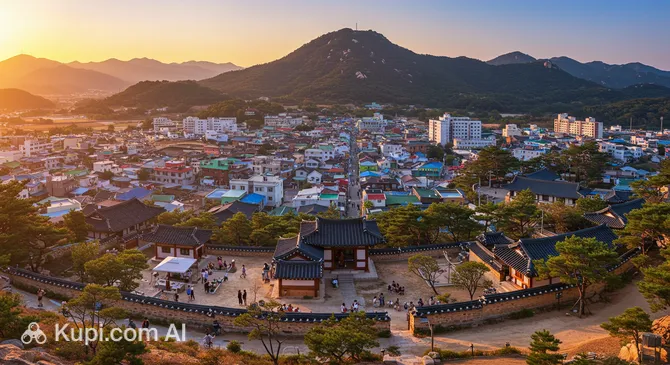
Hongseong (Kor. 홍성군, Hongseong-gun) is a charming and picturesque town-county nestled in Chungcheongnam-do Province in western South Korea, approximately 150 kilometers southwest of Seoul. Surrounded by rolling hills, emerald rice fields, and idyllic rural landscapes, Hongseong offers a unique opportunity to immerse yourself in the authentic atmosphere of the Korean countryside.
Home to about 100,000 people, Hongseong is not overly large but remains quite lively, serving as an important administrative center for the county. The atmosphere here encourages relaxation and a slow-paced exploration of local traditions, where the tranquility of the hinterland harmoniously blends with modern conveniences.
Hongseong. Illustration.
Source: Kupi.com AI
Hongseong attracts travelers looking for more than just pretty views. There are no intrusive crowds of tourists here; instead, you’ll find a rare chance to experience real Korean life, enjoy the fresh air, and encounter the hospitality of the locals. The town offers cultural centers and museums, along with the chance to sample delicious local cuisine. It is an ideal destination for those who value warmth and wish to discover Korean culture away from the hustle and bustle of megacities.
If you dream of a peaceful getaway and genuine cultural immersion, Hongseong will be a true discovery for you, leaving you with unforgettable impressions.
The weather in Hongseong is characterized by distinct seasons. The warmest months are July and August, when the average temperature reaches 25.6°C and 26.4°C respectively, with maximums rising to 28-29°C. Winter, on the other hand, is cool: in January, the average temperature is about -0.1°C, and in December, it's 1.4°C, with minimums dropping below zero.
Expect warm summers with periodic rains, especially intense in July (8 mm of precipitation, 17 rainy days) and August (7 mm, 16 days), and cold, relatively dry winters when precipitation is minimal (about 1 mm in January, February, and December). To learn more about the climatic conditions, you can explore detailed information about the climate of Hongseong.
Average monthly temperature
Average monthly precipitation
Interesting Facts
Beyond its picturesque landscapes and hospitality, Hongseong holds many curious stories and features that make it a truly unique place. Ready to learn some interesting facts about this South Korean town?
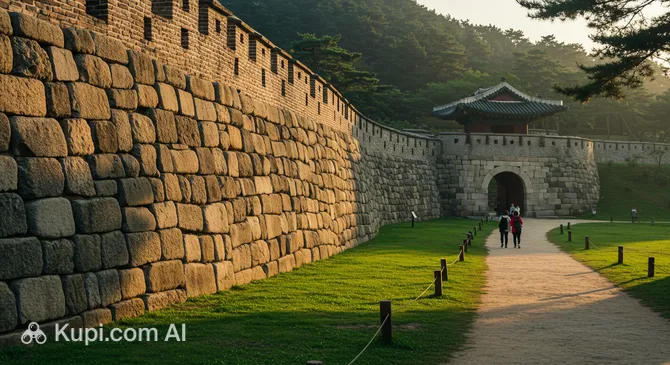
Hongju Eupseong Fortress. Illustration.
Source: Kupi.com AI
Traveler photos:
Hongseong is the birthplace of many prominent South Korean figures, including famous poets, talented artists, and influential politicians. The town takes great pride in its rich cultural heritage, and colorful festivals and commemorative events are regularly held in honor of its famous natives.
The town has carefully preserved unique traditional Korean houses (hanoks) and ancient Buddhist temples. By visiting them, you can touch history and see how Koreans lived in past eras. Additionally, Hongseong often hosts reconstructions of ancient folk rituals and seasonal fairs where you can enjoy traditional dances and see national costumes.
One of the main symbols of Hongseong is its emblem. It features a fortress, symbolizing the historical significance of the town as an important defensive point in the region. This refers to the famous Hongju Eupseong Fortress, which even today serves as a reminder of the town's glorious past.
There is a beautiful legend that the "Crane Castle" was once located in the vicinity of Hongseong. Legend has it that migratory cranes used to stop here to rest during their long and exhausting journeys. This poetic story inspired local residents to create an annual crane festival, which attracts not only ornithologists but all lovers of nature and beautiful traditions.
How to Get There
When planning a trip to Hongseong, it's important to think about your route in advance, as the town is situated away from the major megacities but has good connections to the region's transport hubs. You can find out all ways to get to the city by studying detailed route information, but the main gateways are international airports and railway hubs in neighboring cities.
There is no airport in Hongseong itself, so most travelers arrive via air hubs in neighboring regions. The most popular option is Incheon International Airport (IATA: ICN), located in Seoul (Incheon), about 96 km from Hongseong. This is the country's main aviation hub, receiving flights from all over the world. The journey from there by taxi or bus takes about 165 minutes. Another convenient option is Gimpo Airport (IATA: GMP), also located in the Seoul area, at a distance of about 108 km. The trip from there takes approximately 180 minutes. If you are looking for a closer regional option, consider Cheongju Airport (IATA: CJJ) in Cheongju, which is just 75 km from Hongseong (travel time about 135 minutes).
For clarity, here is a summary of the main airports used to reach the region:
Railway connection is another excellent way to reach the region. It's worth noting that major hub stations in neighboring cities are often used for KTX high-speed trains. For example, you can take a train to Daejeon Station in Daejeon, which is about 70 km from Hongseong. From there, you can reach your final destination by taxi or bus in about 125 minutes. Gwangmyeong Station (IATA: XWU) in Gwangmyeong, located 92.5 km away, is also popular. It is a major transport hub from which a transfer to Hongseong takes about 160 minutes.
Below is a table of the nearest major railway stations that can be used as transit points:
Hongseong, a town with a rich historical heritage in Chungcheongnam-do Province, attracts tourists with its authentic atmosphere and numerous significant cultural and historical sites. A journey here is an opportunity to dive into the past of South Korea and discover unique chapters of its history.
One of the city's main gems and its greatest pride is Hongju Eupseong Fortress. This excellently preserved walled town (eupseong) is of immense importance for understanding Korean history and defensive architecture. It not only served as the regional administrative center but also witnessed many key historical events. The fortress's powerful walls and majestic gates clearly demonstrate the fortification art of the past, allowing visitors to literally step into the atmosphere of ancient Korea.
Hongju Eupseong Fortress. Illustration.
Source: Kupi.com AI
Traveler photos:
A visit to Hongju Eupseong Fortress is a unique chance to touch history, walk along ancient walls while enjoying panoramic views of the surroundings, and imagine what life was like in a Korean town centuries ago. The fortress grounds also house historical buildings, pavilions, and monuments that make the visit even more educational and interesting. This place is perfect for leisurely walks, historical exploration, and capturing memorable photographs.
Another significant site for understanding the history of the region and the country as a whole is the Birthplace of General Kim Chwa-chin. This memorial complex is dedicated to a prominent figure in the Korean independence movement. Here, you can see a reconstructed house where the general was born, as well as an exhibition hall featuring his personal belongings and documents that tell the story of his life and struggle. This site is deeply moving and provides a better understanding of the Korean people's quest for freedom.
Another important historical and cultural landmark in Hongseong is Hongju Hyanggyo, a local Confucian school founded during the Joseon Dynasty. Such schools played a key role in education and the spread of Confucian values. The well-preserved buildings of Hongju Hyanggyo, including the Daeseongjeon (Hall of Great Achievement) and the lecture halls, allow visitors to see traditional Korean architecture and imagine how students were taught centuries ago. This site offers a unique opportunity to connect with Korea's philosophical and educational heritage.
Local Cuisine
The gastronomic profile of Hongseong is largely shaped by its proximity to the west coast of South Korea, making it a paradise for fresh seafood lovers. Be sure to try the rich clam soups, which will warm you up in any weather, and the aromatic grilled squid, prepared according to old local recipes. These dishes are hallmarks of the local cuisine and provide a true taste of the sea.
To dive deeper into the culinary traditions of Hongseong, head to the local farmers' markets. Here you will find an abundance of the freshest seasonal vegetables, and you can try homemade kimchi — the spicy fermented cabbage that accompanies every Korean meal — and the famous Korean tofu, prepared using special techniques. Don't pass by the stalls with appetizing rice cakes filled with bean paste and sweet steamed buns — they are a great way to discover traditional Korean desserts and snacks.
Street food in Hongseong is an adventure of its own. Locals and tourists alike enjoy popular tteokbokki (spicy rice cakes in a savory sauce) and traditional seafood pancakes (haemul pajeon), which are cooked right before your eyes. You can wash down all this variety with traditional Korean non-alcoholic drinks, such as refreshing barley tea or the sweet rice drink sikhye, as well as stronger options like soju or makgeolli (rice wine), which often accompany a meal.
The food culture in Hongseong is very diverse: from cozy family restaurants serving authentic dishes to bustling markets and street stalls offering quick and tasty snacks. The town is also known for its gastronomic festivals, especially rice harvest festivals and seafood festivals. These events are a wonderful opportunity not only to enjoy local delicacies but also to participate in culinary masterclasses. Tasting Hongseong means discovering another vibrant side of Korean culture.
Travel Tips
Welcome to Hongseong! To make your trip to this charming corner of South Korea as comfortable and memorable as possible, we have prepared some practical tips. They will help you better orient yourself on-site and dive deeper into the local atmosphere.
Clothing and Essentials:
The climate in Hongseong, as in all of South Korea, is characterized by four distinct seasons. In summer (June-August), it is hot and humid, so bring light, breathable clothing. In winter (December-February), it can be cold and snow is possible — you'll need warm clothes, including a jacket, hat, gloves, and scarf. Spring and autumn are the most comfortable times with moderate temperatures, ideal for layered clothing. Be sure to bring comfortable walking shoes, as you will likely want to explore the town on foot. Don't forget a universal adapter (type F sockets are used in South Korea, voltage 220V). When visiting temples or traditional sites, even if there is no strict dress code, modest clothing is appropriate.
Transportation in the Town:
Hongseong is a relatively small town, so the main form of public transport here is local buses. They cover urban routes quite efficiently. Taxis are also available and relatively inexpensive; they can be hailed on the street or called via popular Korean apps (such as Kakao T, if you have a local SIM card or a Korean phone number). Renting a car might be justified if you plan to actively explore Chungcheongnam-do Province, but for getting around Hongseong itself, it is not strictly necessary. An international driving permit is required for rentals.
Finance: Currency, Cards, Tipping:
The local currency is the South Korean Won (KRW). You can exchange money at banks in Hongseong or upon arrival at major airports in South Korea. Credit and debit cards (Visa, Mastercard) are accepted in most shops, restaurants, and hotels. However, it's always useful to have some cash on hand for small purchases at markets or in small establishments. ATMs are widespread, and many have English-language menus. Before your trip, notify your bank of your plans to visit South Korea to avoid card blocks. An approximate daily budget (excluding accommodation) can range from 70,000 to 150,000 won per person. Important to know: tipping is not practiced or expected in South Korea.
Health and Safety:
Pharmacies (in Korean "약국", yak-guk) are easy to find by the "약" sign. Most of them operate during standard hours; 24-hour ones are less common. In case of emergency medical assistance, the number is 119. It is recommended to take out travel medical insurance before your trip. Hongseong, like most cities in South Korea, is a very safe town. However, standard precautions, such as keeping an eye on your personal belongings, are always a good idea, especially in crowded places or after dark.
Communication and Internet:
The official language is Korean. English proficiency can vary; it's higher in tourist spots and among the youth, but overall you shouldn't rely on it completely. Learning a few basic Korean phrases (e.g., "Annyeonghaseyo" – Hello, "Kamsahamnida" – Thank you) will significantly facilitate your communication and earn appreciation from locals. A SIM card can be purchased at the airport upon arrival or at electronics stores/convenience stores in the cities. Wi-Fi in South Korea is available almost everywhere: in cafes, public places, and hotels. For navigation, it's recommended to use local apps like KakaoMap or Naver Maps, as Google Maps has limited functionality for walking and driving routes in South Korea. The Papago app is excellent for translation.
Local Etiquette and Communication:
When greeting, Koreans often use a slight bow. Handshakes are also common, especially in business settings. In public places, particularly on transport, try not to speak too loudly. When giving or receiving items (e.g., money, business cards), it is customary to use both hands or the right hand supported by the left from below — this is a sign of respect. Koreans are generally polite and hospitable, though they can sometimes seem reserved.
What to Avoid:
There are a couple of cultural points to keep in mind. First, never stick your chopsticks vertically into a bowl of rice — this resembles incense used at funerals and is considered a bad omen. Second, avoid writing people's names in red ink, as red color in this context is traditionally associated with death.
Extra Tip for Hongseong:
Hongseong is known for its historical landmarks related to figures like General Kim Chwa-chin. Visiting these sites will allow for a deeper understanding of local history. Also, be sure to stop by the local traditional market (sijang) to feel the authentic atmosphere and try local delicacies. Chungcheongnam-do Province is famous for its agricultural products, so look out for seasonal fruits and vegetables.
We hope these tips help you feel more confident and get the most out of your visit to Hongseong. Have a great trip!
Entertainment & Nightlife
Hongseong, a cozy town in Chungcheongnam-do Province, offers its guests a variety of options for leisure and entertainment. While it may not be as loud as the megacities of South Korea, there is certainly plenty to do both during the day and after dark. Evening Hongseong comes alive, offering local options for a pleasant pastime.
Nightlife in Hongseong centers around traditional Korean entertainment. You will find many hofs (local pubs serving beer and snacks), cozy bars where you can enjoy soju or makgeolli with friends, and, of course, karaoke bars (noraebangs), which are an integral part of Korean leisure culture. Restaurants offering late-night dinners are also popular, especially those specializing in Korean BBQ or spicy soups, perfect for ending the day. While large nightclubs with famous DJs are rare here, the atmosphere in local establishments is usually friendly and relaxed.
The majority of evening establishments are concentrated in the central areas of the town, perhaps along the main shopping streets or near the markets. The crowd here is mostly local, including students and young professionals. The dress code is usually casual unless you are attending a special event. Most bars and restaurants are open until late at night, especially on weekends, while noraebangs can stay open until the early morning hours.
For an evening out, it's best to aim for after 7:00 PM or 8:00 PM, when the town livens up. Getting around Hongseong at night is most convenient by taxi; they can be easily called via apps or found at taxi stands. The town is generally considered safe, but it's always wise to follow standard precautions, especially if you are walking alone late at night. Avoid poorly lit and deserted areas.
While specific popular bars or clubs are best discovered on the spot as their popularity can fluctuate, you will find typical Korean evening formats in Hongseong. Look for signs saying "호프" (Hof), "노래방" (Noraebang), or simply lively spots with local youth.
During the day, Hongseong also offers interesting leisure options. You can visit local markets, stroll through parks, or explore the historical heritage of the region. For example, one of the significant attractions is Hongju Eupseong Fortress, which tells the story of these lands. The town may also have small museums or cultural centers reflecting local traditions.
When planning your trip to Hongseong, be prepared to immerse yourself in an authentic Korean atmosphere where modern entertainment meets local flavor.
Parks & Museums
Hongseong, located in Chungcheongnam-do Province, offers its guests a harmonious blend of rich historical heritage and peaceful green zones, perfect for an educational and relaxing holiday.
Key Parks and Green Zones
While Hongseong might not be famous for vast national parks, there are pleasant spots for outdoor walks. Often, the areas around historical sites, such as Hongju Eupseong Fortress, include well-kept green spaces and paths where you can rest and enjoy the quiet atmosphere. These zones serve as a wonderful complement to sightseeing, allowing you to combine cultural enrichment with relaxation in nature.
Additionally, local squares and small parks favored by residents for daily relaxation can be found in the town and its surroundings. These places offer a chance to observe the steady pace of life in a Korean town and take a breather away from the bustle.
Museums and Galleries
For those seeking a deeper understanding of Hongseong's culture and history, the town offers opportunities for exploration. While there may not be large, world-renowned museum complexes, it is worth looking at smaller local museums or exhibition spaces. Often, these are the places that hold unique exhibits telling the story of the region's past, its prominent figures, and traditional way of life.
A visit to such places can be a true discovery, offering a more personal and authentic look at Hongseong's heritage. Sometimes you can find exhibitions dedicated to folk crafts, archaeological finds, or important historical events associated with this land.
Historical and Architectural Sites
The main historical jewel of Hongseong is undoubtedly Hongju Eupseong Fortress. This ancient fortification is not just stones and walls, but a living witness to the region's centuries-old history. Walking through its territory allows you to dive into the past, imagining former battles and peaceful life under the protection of these walls. The fortress ramparts often offer picturesque views of the surroundings, making the visit even more memorable.
Hongju Eupseong Fortress. Illustration.
Source: Kupi.com AI
Traveler photos:
Exploring the fortress is interesting not only for history buffs but for anyone who appreciates the authentic atmosphere of ancient places. It is a wonderful opportunity to touch the cultural heritage of South Korea.
Authentic Experiences / Insider Tips
To feel the genuine atmosphere of Hongseong, step off the beaten tourist path. Visit the local markets — they are always a bright and colorful sight where you can find not only fresh produce and unique souvenirs but also observe the daily life of the townspeople. Don't miss the chance to try local dishes in small family restaurants — it's the best way to get acquainted with the region's gastronomic traditions.
Also, take a walk through the quiet streets of the town. Sometimes the most interesting discoveries await where you least expect them: a cozy cafe, a local craftsman's workshop, or just a beautiful corner not marked in the guidebooks.
Getting Around
Getting around Hongseong is quite convenient, although the public transport system here is not as extensive as in South Korea's megacities. The primary mode of public transport in the town is buses. They cover most areas and are a reliable way to get where you need to go.
The payment system in Hongseong, as in many Korean cities, is quite modern. The most convenient way to pay is by using a T-money transport card (or similar ones like Cashbee). These cards can be purchased and topped up at most 24-hour convenience stores (konbini) and at some bus stops. Paying by card is usually slightly cheaper than cash. Cash payments directly to the driver upon entry are also accepted, but it is recommended to have small change, as change may be limited. Bus fares are usually fixed or distance-based, but within the town, they are quite affordable.
For tourists, a few points are important to know. When entering the bus, you must tap your transport card on the validator. If you plan to transfer, tap your card on the validator when exiting the bus as well — this may grant you a free or discounted transfer within a certain time frame (usually 30 minutes). Buses in Hongseong run on a schedule, which can be found at stops or in special mobile apps (such as Naver Maps or KakaoMap, which are very popular in Korea and provide real-time information on routes and bus arrival times). Public transport operating hours are typically from early morning until late evening, but can vary by route.
As an alternative to public transport, taxis are always available in Hongseong. They can be hailed on the street, called by phone, or requested via mobile apps (like Kakao T). The cost of a taxi ride is calculated by meter. For short distances in the town center, you can get around on foot. Bicycle rentals may be less developed than in major tourist centers, but local rental points can be found if desired.
Accommodation
When planning your trip to Hongseong, you will find a variety of accommodation options to suit different budgets and preferences. Small cozy hotels and guesthouses are available in the city, along with more budget-friendly options like motels, which are quite common in South Korea. You might also consider renting an apartment if you prefer more space and a home-like setting.
When choosing a place to stay in Hongseong, look at areas located near the city center or major attractions. This will provide you with convenient access to interesting sites and transport hubs. For example, searching for accommodation near iconic landmarks like Hongju Eupseong Fortress can be a good choice for those who want to be in the heart of the action. Although specific hotels are not listed in the provided data, the town offers many local hospitality options.
Hongju Eupseong Fortress. Illustration.
Source: Kupi.com AI
Traveler photos:
As for booking, in Hongseong, as in many tourist destinations, it is recommended to book accommodation in advance, especially if your trip coincides with peak season or local holidays. The price range varies from budget to mid-range options, allowing most travelers to find a suitable hotel or guesthouse. For searching and booking, it's convenient to use popular online platforms, as well as consider direct booking through hotel websites or local travel agencies.
Nearby Cities
For those who want to explore the surrounding area, Hongseong serves as an excellent starting point for day trips to several interesting nearby locations.
Among them, a few cities particularly stand out. The closest to Hongseong and convenient for a short trip is Cheonan, known for its historical attractions and lively urban atmosphere. A bit further away is Daejeon, a major science and technology hub where you can visit modern museums and stroll through well-maintained parks. It’s also worth considering a trip to Suwon, whose main gem is the magnificent Hwaseong Fortress, a UNESCO World Heritage site.
These nearby destinations provide a glimpse into the diverse culture and landscapes of the South Korea region.
Shopping & Souvenirs
Shopping in Hongseong offers tourists the chance to get acquainted with local trade and purchase both everyday goods and unique Korean souvenirs. Although the town is not a major center for fashion or luxury, you can find interesting options for purchases that reflect the culture of South Korea.
The main shopping areas in Hongseong are generally concentrated in the central part of the town. Here, you will find a variety of shops offering clothing, shoes, Korean cosmetics, accessories, and home goods. A stroll along the main streets will give you an idea of the range and prices.
While Hongseong might not boast the huge megamalls typical of Seoul or Busan, the town likely has local department stores or small shopping complexes. These places usually offer a wide selection of goods — from food to electronics and clothing, making them convenient for comprehensive shopping.
Special attention should be paid to Hongseong's traditional markets, if any are available. Korean markets are not just places for shopping, but true centers of social life. Here you can find fresh local products, ready-to-eat street food, clothing, household items, and handicrafts. Visiting a market is a great way to soak up the authentic atmosphere and perhaps find unique goods at attractive prices.
As souvenirs from Hongseong and South Korea in general, you can bring back famous Korean cosmetics, traditional tea (such as ginseng or green tea), ceramics, fans, masks, or other items of national art. Cute stationery and K-pop style accessories are also popular. Sometimes souvenir shops can be found near local attractions, such as Hongju Eupseong Fortress.
Shops in Hongseong usually operate from 10:00-11:00 AM to 8:00-10:00 PM. Markets may open earlier. Large stores and department stores often accept international bank cards (Visa, Mastercard). However, in small shops and at markets, it's preferable to have cash — Korean Won (KRW).
Tourists in South Korea can take advantage of the Tax Free system for purchases made in shops with the appropriate marking. Usually, this requires a purchase of a certain minimum amount. Keep your receipts and the special forms (tax refund slips) issued to you in the shop to process your VAT refund at the airport when leaving the country.