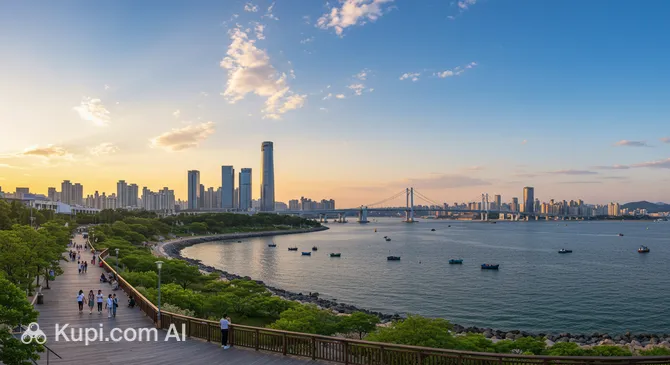
Incheon is a dynamic metropolis and the primary maritime gateway to South Korea. Located on the west coast of the Korean Peninsula, just 30 kilometers from Seoul, this city harmoniously combines the industrial power of a major port, the futuristic landscapes of "smart cities," and the charm of old quarters. With a population of about 3 million, it is the country's third-largest city and holds the status of a metropolitan city.
Incheon. Illustration.
Source: Kupi.com AI
The city's geographical position is unique: its borders encompass not only the coastal mainland but also numerous picturesque islands in the Yellow Sea. This is where Yeongjong Island is located, home to one of the world's best airports. Despite its industrial profile, the city is actively developing its tourism infrastructure, offering guests a chance to explore the rich history of Incheon, which is inextricably linked to Korea's opening to the outside world in the late 19th century.
Today, the main draws for travelers are the country's only official Chinatown and the ultra-modern Songdo International Business District. While the old center preserves the atmosphere of a last-century port city with its narrow streets and authentic shops, Songdo captures the imagination with its skyscrapers, innovative management systems, and green parks. Incheon is an ideal starting point for exploring Korean culture, offering much more than just a transit stop on the way to the capital.
Weather Overview
The city's climate is humid continental but is heavily influenced by the Yellow Sea. Expect warm and humid summers with occasional monsoon rains, and cold, windy, but mostly dry winters. The sea breeze makes the local climate slightly milder compared to the country's inland regions; however, humidity can heighten the feeling of cold in winter and heat in summer.
The hottest time of the year is July and August, when average daytime temperatures stay around +28°C and humidity peaks. This period sees the majority of the annual rainfall. In winter, especially in January, temperatures often drop below freezing, averaging -2°C, and strong coastal winds make it necessary to dress warmly. Incheon's winter climate is characterized by clear skies and little snow.
The most favorable times to visit are spring (April–May) and autumn (September–October). During these months, comfortable temperatures of around +15...+22°C are established, and the air becomes clear and fresh. In autumn, the city is painted in vibrant colors, and in spring, it delights with blossoming trees. When planning a trip, keep in mind that spring can sometimes bring periods of "yellow dust" carried by winds from the mainland, so it is useful to monitor air quality forecasts.
Average monthly temperature
Average monthly precipitation
Interesting Facts
Incheon is a city that knows how to surprise with its scale and historical achievements. Here are a few interesting facts about this Korean metropolis:
Historical Gateway: It was here in 1883 that the Port of Jemulpo was opened, through which Korea began active international trade, forever changing its developmental trajectory.
Smart City from Scratch: The Songdo district is built entirely on reclaimed artificial land. It is one of the world's largest "smart city" projects, where waste is collected by a pneumatic system and infrastructure is managed centrally.
Unique Chinatown: The city is home to the only officially recognized Chinatown in South Korea, founded over 140 years ago. It is not just an ethnic enclave but a true gastronomic hub for the region.
Grand Bridge: The city is connected to the airport on Yeongjong Island by the majestic Incheon Bridge. Its length exceeds 21 kilometers, making it one of the longest cable-stayed bridges in the world.
The First Museum: The Incheon Metropolitan City Museum, founded in 1946, is considered the very first public museum in South Korea.
How to Get There
The city's transport accessibility is among the best in Asia, as it hosts the country's main aerial gateway. Thanks to a developed network of highways and railways, planning a trip to Incheon is effortless. Most tourists arrive via Incheon International Airport (ICN), which is connected to the city and Seoul by AREX express trains, limousine buses, and the subway.
The railway service is integrated into the general metropolitan area system. The main Subway Line 1 directly connects the historic city center with central Seoul districts. Additionally, commuter train lines are actively developing, allowing for quick travel to neighboring satellite cities.
If you plan to arrive from other regions of the country, it is most convenient to take KTX high-speed trains to Seoul and then transfer to the subway or a bus. Intercity bus terminals provide regular connections to all major cities, offering comfortable travel conditions at affordable prices.
Main Attractions
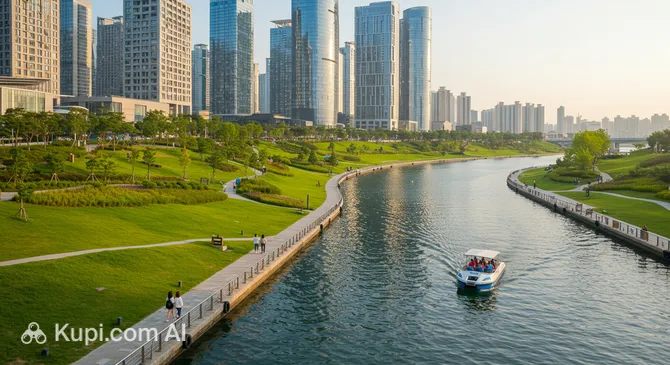
The city's main attractions are spread between the historic center and modern reclaimed lands. In the futuristic Songdo district, a must-visit is Songdo Central Park. This man-made oasis features a seawater canal with water taxis and is surrounded by impressive skyscrapers and art objects like the Tri-bowl building. Here, you can enjoy a boat ride or relax on green lawns amidst modern architecture.
Songdo Central Park. Illustration.
Source: Kupi.com AI
Traveler photos:
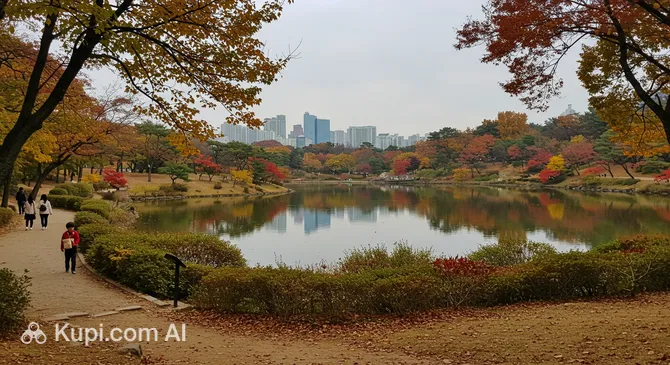
For those who prefer classic park recreation, Incheon offers a visit to Incheon Grand Park. This is the city's largest forest park complex, which is particularly beautiful during the cherry blossom season in spring or when the leaves turn fiery colors in autumn. Its grounds include a botanical garden, a small zoo, and numerous cycling paths, making it an ideal spot for family outdoor recreation.
Another interesting location is Ilsan Lake Park, which, although located in a neighboring area, is very popular with residents of the metropolitan area. It is famous for its flower exhibitions and a huge artificial lake with fountains. Additionally, tourists should check out the historic Chinatown and Jayu Park (Freedom Park), which offers panoramic views of the massive port and the waters of the Yellow Sea.
Incheon Grand Park. Illustration.
Source: Kupi.com AI
Traveler photos:
Local Cuisine
The city's culinary scene is unique due to its coastal status and close historical ties with China. The signature dish of local cuisine is jajangmyeon—noodles in a thick black bean sauce, which, legend has it, took its modern form right in the local Chinatown. Here, you should also try jjamppong, a spicy seafood soup, and tangsuyuk, crispy sweet and sour pork.
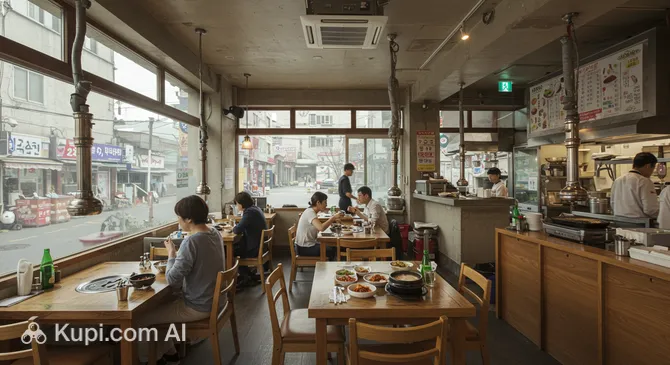
Fans of traditional Korean cuisine and hearty meals should visit Ogu Dangdang, main branch. This place is famous for its filling sets with many side dishes and traditional vegetable and meat dishes. If you want variety and fresh seafood in a buffet format, check out QooQoo, Bupyeong branch, which offers a huge selection of sushi, rolls, and Asian dishes.
Ogu Dangdang Main Branch. Illustration.
Source: Kupi.com AI
Traveler photos:
For those who prefer proven international classics, there is always a familiar McDonald's in the city. However, don't miss the chance to visit fish markets by the sea, where you can choose live fish or crabs to be prepared specifically for you in a nearby restaurant. Street food culture also thrives: at the markets, be sure to try Korean sweets like gangjeong (crispy chicken in syrup) or hotteok pancakes.
Travel Tips
Incheon is a friendly and modern city, and your visit will be much more pleasant if you know a few important practical nuances.
Dress for the Season: In summer, bring light clothes made of natural fabrics, but remember the strong air conditioning indoors. In winter, a windproof jacket is essential, as cold, biting winds blow from the sea. When visiting temples, modest clothing is appreciated.
Transport Hub: Buy a T-money card immediately upon arrival at the airport. It works on subways, buses, and taxis throughout the country. For navigation, use the KakaoMap or Naver Map apps, as Google Maps does not work at full capacity in Korea.
Finances: The official currency is the Korean Won (KRW). Cards are accepted almost everywhere, but a small amount of cash is useful for street food and topping up your transport card. Tipping is not expected—it might even confuse the staff.
Health: The city is safe, and medical care is of a high standard. During the spring, monitor the level of yellow dust (fine dust) in the air—it's better to wear a protective mask on such days.
Communication: English is common in hotels and large shopping centers, but a language barrier may arise in older districts. Learn a couple of phrases: "Annyeong-haseyo" (Hello) and "Kamsa-hamnida" (Thank you)—this always brings a smile.
Local Etiquette: When greeting someone or handing over money/a card, use both hands—it's a sign of respect. It is not polite to speak loudly on public transport.
What to Avoid: Do not leave trash on the streets—Korea has a strict waste sorting system, and street bins are rare. Also, avoid discussing sensitive political topics.
District Specifics: If you are looking for quiet and futurism, choose Songdo. For authenticity and "old Korea," head to the seaport district.
May your introduction to this amazing seaside city be filled with only pleasant discoveries and comfort!
Entertainment & Nightlife
Nightlife in the city is concentrated in several key zones, offering something for every taste—from cozy bars with an international atmosphere to modern entertainment complexes. In the Songdo district, popular with expats and business travelers, life buzzes in venues like Cinder Bar or Jet Lagged Lizard. Here, you can meet people from all over the world, enjoy quality drinks, and listen to live music in a friendly setting.
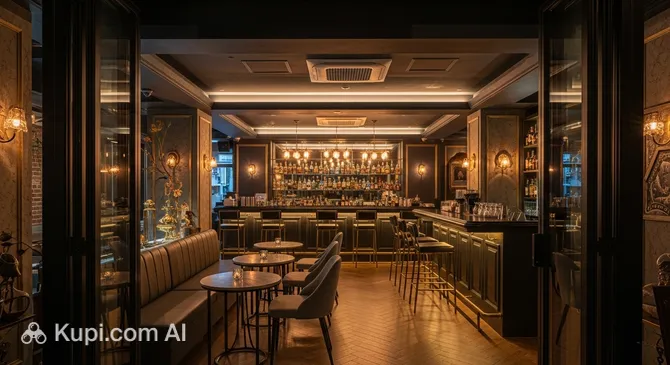
The Cinder Bar. Illustration.
Source: Kupi.com AI
Traveler photos:
For family leisure and exciting experiences during the day, Wonderbox is perfect—an indoor amusement park with a night circus atmosphere located within the Paradise City complex. This high-tech park offers rides and shows that will interest both children and adults. Also popular in the city are noraebangs (karaoke boxes) and PC-bangs (gaming centers), which are an integral part of local youth culture.
While the scale of nightlife here is somewhat smaller than in Seoul, Incheon wins with its accessibility and more relaxed pace. Safety in the city is very high, allowing for comfortable walks along well-lit central streets even late at night. For moving between bars and clubs at night, it is most convenient to use taxis, which can be easily hailed via the KakaoTaxi or Uber mobile apps.
Parks & Museums
The city's green zones are striking in their scale and design. Songdo Central Park is a masterpiece of landscape architecture, featuring a seawater canal running between skyscrapers. Here, you can walk across pedestrian bridges or see deer in a special enclosure. Another important site is Jayu Park (Freedom Park) in the old center, which was the first Western-style park in Korea and preserves the memory of historical events.
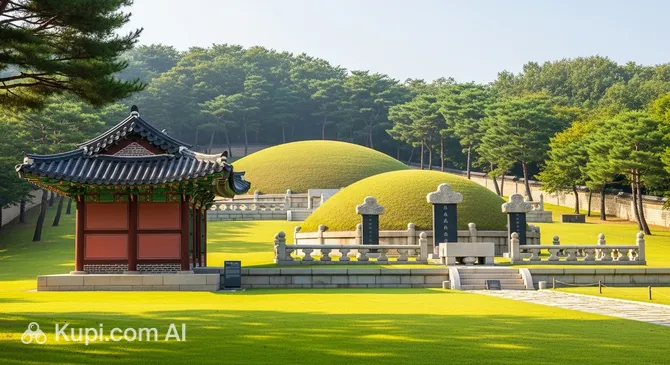
The region's historical and cultural heritage is represented by unique archaeological and religious monuments. It is worth visiting Jangneung Royal Tomb, a UNESCO World Heritage site that offers a quiet atmosphere for walks among ancient pines and traditional architecture. Also interesting is Haengju Fortress, located nearby, which serves as a reminder of the peninsula's heroic defense in the 16th century.
Jangneung Royal Tomb (Grand Internal Prince Jeongwon & Queen Inheon). Illustration.
Source: Kupi.com AI
Traveler photos:
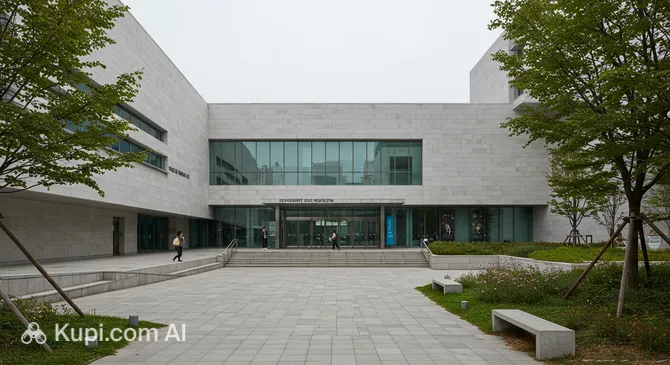
For curious travelers and families with children, the Incheon Children's Science Museum is open. This interactive space explains complex laws of physics and technology through engaging play. Also, don't forget to stop by the Incheon Metropolitan City Museum to learn how the small fishing village of Jemulpo transformed into one of the most innovative cities in the world.
Incheon Children's Science Museum. Illustration.
Source: Kupi.com AI
Traveler photos:
Getting Around
The city's transport system is fully integrated into the general metropolitan area network, making navigation simple and clear even for newcomers. The backbone is the subway system: Line 1 connects the city with central Seoul, while Incheon Lines 1 and 2 cover the main internal districts. For fare payment, it is most convenient to use the T-money card, which can be bought and topped up at any 24-hour convenience store like 7-Eleven or CU.
The city's bus network is extremely extensive and complements the subway, delivering passengers to the most remote corners, including industrial zones and coastal areas. It is important to remember that when transferring from the subway to a bus (and vice versa) within 30 minutes, a discount applies if using a transport card. On buses, it is standard practice to tap your card on the validator not only when entering but also when exiting.
In modern districts like Songdo, excellent infrastructure has been created for cyclists with wide dedicated paths. Taxis are plentiful in the city and relatively affordable; standard cars are colored gray or white. If you are in a hurry to the airport or Seoul, the AREX express train is the best choice. Despite possible peak-hour traffic jams on bridges and main highways, public transport runs strictly on schedule, usually from 5:30 AM until midnight.
Accommodation
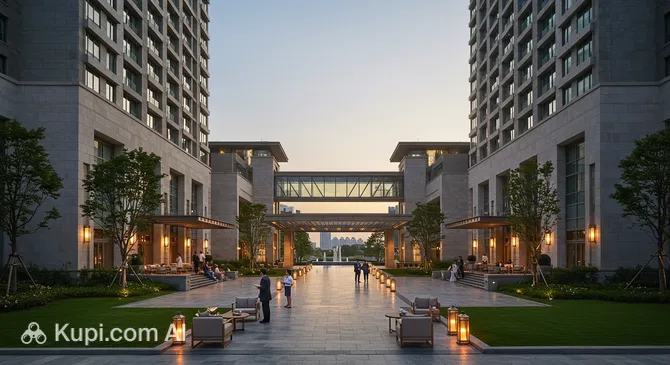
The city's accommodation market offers an impressive variety: from futuristic five-star hotels to affordable motels. Tourists arriving for a short stay or transit find it most convenient to stay in the airport area, where the luxurious Grand Hyatt Incheon is located. This is an excellent choice for those who value premium comfort and proximity to terminals.
Grand Hyatt Incheon. Illustration.
Source: Kupi.com AI
Traveler photos:
For those seeking large-scale relaxation and entertainment all in one place, the unique INSPIRE Entertainment Resort has opened on Yeongjong Island. This complex offers not only world-class accommodation but also vast recreation areas, a casino, and a concert arena. If your goal is a business visit or modern parks, you should look at the Songdo district, which features modern business hotels and apartments with panoramic bay views.
Budget travelers should consider the older districts near Incheon Station or the Bupyeong area, where there are many inexpensive guesthouses and local hotels. Prices here are significantly lower than in Seoul, while transport accessibility remains high. During peak tourist season and major exhibitions, it is recommended to book accommodation in advance through international booking services.
Nearby Cities
Incheon serves as an excellent base for exploring the surrounding areas and the entire capital region. Thanks to developed connections, city guests can easily make trips to nearby points of interest, each with its own unique character.
The main destination for a trip is, of course, Seoul, which can be reached by regular subway in an hour. Very close by is the city of Bucheon, known for its theme parks and comic book museums. Also worth noting is Siheung, where people go for beautiful coastal parks and ecological zones. If you are interested in modern urban life and cozy residential areas, you can visit Gwangmyeong or Yanggok.
Don't forget about island getaways: Ganghwado Island, which administratively belongs to the region, offers a chance to see ancient dolmens and fortresses, and ferries from the port will take you to picturesque remote islands in the Yellow Sea. The city's surroundings hide many gems worthy of careful exploration.
Shopping & Souvenirs
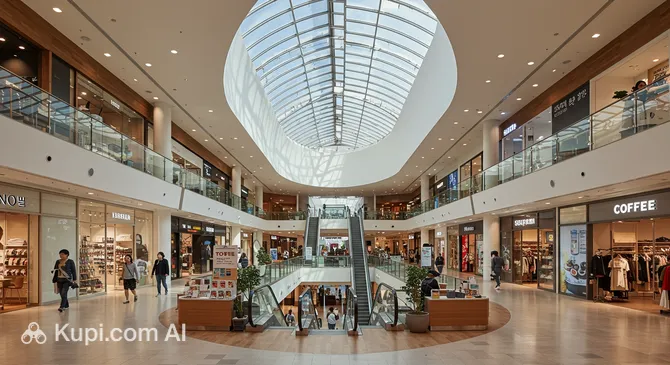
Shopping in the city is defined by comfort and a modern approach, offering a wide choice—from giant shopping malls to colorful ethnic markets. The main attraction for brand lovers is the Songdo district. Here you will find the popular Triple Street Mall D, which is an entire shopping street with famous brand stores, cafes, and open-air relaxation areas.
Triple Street Mall D. Illustration.
Source: Kupi.com AI
Traveler photos:
Another important point on a shopper's map is the SQUARE1 complex. This modern shopping center brings together hundreds of boutiques, a large supermarket, and a cinema under one roof, making it a great place for family shopping. In such malls, foreign tourists can often process Tax Free refunds right on the spot or get receipts for tax returns at the airport.
For authentic goods and souvenirs, head to Chinatown. There you can buy traditional tea, Chinese sweets, and unique handmade items. Traditional markets like Sinpo International Market are also noteworthy, where you should buy local delicacies. Shops usually operate from 10:30 AM to 8:00 PM or 10:00 PM, and cards are accepted almost everywhere, even in small stalls.