Support

Mungyeong

About

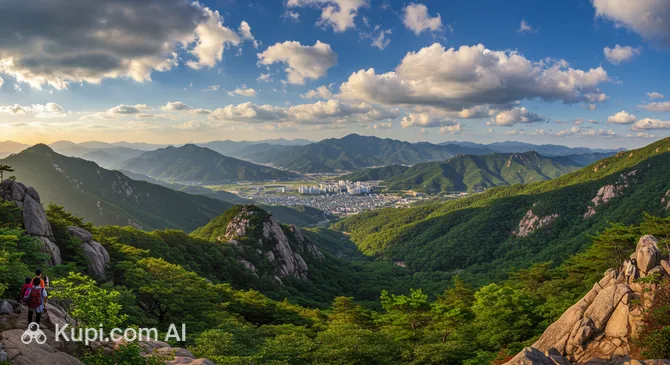
Mungyeong is a picturesque city nestled in the heart of the mountain ranges of Gyeongsangbuk-do province. This is a place where South Korea reveals its most peaceful and contemplative side to travelers. With a population of about 72,000, the city is located on a strategically important route between Seoul and the central regions, making it an excellent starting point for exploring the country.

Mungyeong. Illustration.
Source: Kupi.com AI

The area enjoys a pleasant monsoon climate, while the surrounding forests and mountains offer cool breezes and pure air. The region's landscape is shaped by majestic peaks, notably Mount Juhulsan. A special place in the region's life is held by the famous Mungyeong Saejae pass. The ancient history of Mungyeong is inextricably linked with this road, which for centuries served travelers and traders, remaining one of the most scenic routes on the peninsula.

Mungyeong is a true paradise for nature lovers and hiking enthusiasts. The city harmoniously combines modern amenities with carefully preserved traditions. The hospitality of the locals, ancient temples, and the opportunity to take a break from the hustle and bustle of megacities make a trip here an unforgettable experience for everyone who appreciates an authentic atmosphere and the beauty of mountain landscapes.

Weather Overview

The climate in this region is characterized by distinct seasonality, allowing travelers to enjoy diverse landscapes throughout the year. To pack your suitcase correctly, we recommend checking what the weather in Mungyeong will be like during your trip. Overall, the climatic pattern here is predictable: expect warm summers with occasional rain and cold, dry winters.

Winter months (December–February) are quite frosty here. The average temperature in January drops to -1.9°C, and night minimums can reach -6.0°C. However, there is very little precipitation at this time, so snowstorms are rare. With the arrival of spring, the city thaws quickly: already in April, the air warms up to an average of 11.9°C, and the number of sunny days is conducive to long walks.

Summer in Mungyeong is hot and humid. The heat peaks in August with an average temperature of 25.1°C and maximums up to 28.5°C. July and August are the rainiest months, when the number of days with precipitation can reach 17–18. Autumn brings welcome coolness and dryness: in October, the temperature settles at a comfortable mark of around 13.7°C, making this season an ideal time for mountain hiking.

Average monthly temperature

Average monthly precipitation

Interesting Facts

Помимо основных достопримечательностей, Мунгён хранит множество увлекательных секретов и культурных особенностей, которые открываются лишь любознательным путешественникам. Вот несколько фактов, которые помогут лучше понять уникальный дух этого места:
  • Capital of traditional ceramics. Mungyeong is the recognized birthplace of Korean pottery traditions. For centuries, local masters have passed down the secrets of creating exquisite tea bowls using ancient wood-fired kilns. Today, anyone can touch this art at annual festivals and workshops, trying their hand as a potter.

  • Guardian of ancient roads. The legendary Mungyeong Saejae pass runs through the city, which in ancient times served as the main strategic passage between regions. Three historical stone gates — Juhulgwan, Jogokgwan, and Joryeonggwan — have been preserved on its slopes. These monumental structures are considered symbols of resilience and the pinnacle of Joseon-era engineering.

  • Living movie sets. Mungyeong is home to one of the world's largest KBS filming locations, specializing in historical dramas. Palaces from the Goryeo period, peasant huts, and entire villages have been recreated here with striking accuracy. Walking here, it's easy to recognize the places where South Korea films its famous dramas, immersing viewers in the medieval atmosphere.

  • Royal refuge. One of the most mysterious places in the surroundings is Hyeguksa Temple. History says that in the 14th century, during a time of serious religious unrest and turmoil, King Gongmin hid here. Since then, many legends have been associated with the temple about miraculous escapes and deep spiritual insights experienced by the monarch within these walls.

How to Get There

When planning a trip to this picturesque corner of Gyeongsangbuk-do province, it's worth thinking through the logistics in advance, as the city is located away from the country's main transport hubs. You can learn more about how to get to Mungyeong by studying various routes, but most often the path lies through major airports or railway hubs of neighboring regions, followed by a transfer to a bus or taxi.

Mungyeong does not have its own airport, so most travelers arrive in the country via the air gateways of other cities. The closest is Cheongju Airport (CJJ), located in Cheongju, about 56 km from the destination. It is a regional hub with moderate passenger traffic, from which a car trip to Mungyeong will take about 1.5 hours.

For international tourists, the primary point of arrival is usually Incheon International Airport (ICN) — the main air gateway to the country. It is located in Seoul, about 171 km from Mungyeong. Despite the distance, there is an excellent transport connection: a trip by express bus or rented car will take about 2.5–3 hours. You can also consider Daegu International Airport (TAE) in Daegu (about 100 km), which is convenient for those traveling in the southern part of the peninsula.

For clarity, here is a summary of the main airports:

AirportPassenger trafficDistance
Cheongju Airport4.6 mln56 km
Wonju Airport205 27984 km
Daegu International Airport3.3 mln101 km
Pohang Airport253 703140 km
Gimpo International Airport23.0 mln152 km

Railway communication is another popular way to get closer to the destination. It's worth noting that major high-speed trains (KTX) do not stop directly in the center of Mungyeong, and you will need a transfer. A convenient option is Daejeon Station, located in the city of Daejeon. It is about 76 km from Mungyeong. This is a major transport hub where trains arrive from all over the country, and the onward journey by bus or taxi will take about 2 hours.

An alternative is Dongdaegu Station (IATA: XDK) in Daegu, 101 km from Mungyeong. It is one of the busiest stations in the region with huge passenger traffic, offering many connection options. From here, you can reach Mungyeong by intercity bus, enjoying the provincial views along the way.

Below is a table with the nearest major railway stations for planning transfers:

StationPassenger trafficDistance
Daejeon Station18.6 mln76 km
Dongdaegu Station20 mln101 km
Gwangmyeong Station12.4 mln136 km
Jinju Station171 km
Gwangju Songjeong Station3.4 mln210 km

Main Attractions

Attractions:

Mungyeong offers travelers a unique combination of historical heritage, active recreation, and natural beauty. Here, you can follow in the footsteps of ancient scholars, ride a bike along an old railroad, or descend into a mine turned into a museum. Here is a list of places you should definitely include in your itinerary.

Mungyeong Saejae Provincial Park is perhaps the main landmark of the region. The park is famous for its scenic unpaved road that stretches through the mountain pass. It is one of the few roads in the country where the atmosphere of antiquity has been preserved without asphalt or concrete. Tourists love to walk barefoot here on the soft clay soil, enjoying the healing forest air. The route passes through three majestic historical gates surrounded by dense forests and clear streams, creating ideal conditions for a peaceful and contemplative holiday.

For lovers of unusual entertainment, the Mungyeong Rail Bike is a perfect choice. This was the first attraction of its kind introduced to tourists by South Korea, laid on tracks previously used for coal transportation. Riding on a special trolley allows you to breeze through scenic valleys, cross rivers, and see the city from an unusual perspective. The route is easy and suitable for the whole family, providing plenty of positive emotions and beautiful photos.

The Mungyeong Coal Museum is not just an exhibition hall, but a real immersion into the city's industrial past. The museum building has a unique architecture shaped like a piece of coal (anthracite), symbolizing the region's history. Inside, visitors can learn about the hard work of miners, see real equipment, and even descend into a simulated mine. The exhibition vividly tells the story of how coal mining shaped the region's economy in the second half of the 20th century and will be interesting for both adults and children.

Another atmospheric spot is the Omija Tunnel. This old railway tunnel has been masterfully converted into a cultural space dedicated to the local pride — the omija berry (magnolia berry). It's pleasantly cool inside, and the walls are decorated with light installations and murals. Here you can taste and purchase the famous omija wine, as well as enjoy the unique setting of the underground gallery.

Local Cuisine

A gastronomic journey to Mungyeong is an immersion into a world of authentic flavors and centuries-old traditions, where food is considered not just a way to satisfy hunger, but a part of culture. Local cuisine is famous for its environmental friendliness and the use of products gathered in the nearby mountains. Dishes made from wild mushrooms, especially the "pyogo" (shiitake) mushroom, are the true pride of the region. In local restaurants, you will certainly be offered fragrant mushroom stew or rich soups prepared according to ancient recipes, preserving the intense forest aroma and healthy properties of the ingredients.

Tea culture occupies a special place in the city's life. Mungyeong is historically known as a center for traditional ceramics production, so tea drinking here is elevated to an art form. The famous Mungyeong tea is distinguished by its delicate aroma and deep taste, and it is usually served in elegant handmade bowls. This is an ideal way to slow down and enjoy the moment in harmony with nature after hiking in the mountains.

Street food lovers should check out the traditional markets, where life is in full swing. Here, you can try fresh buns filled with sweet red bean paste and spicy rice cakes prepared right in front of you. In the fall, stalls are bursting with sweet persimmons — they are eaten fresh or dried, which is a popular local delicacy. The region is also famous for its homemade soy products and fermented vegetables, the taste of which cannot be confused with anything else.

Speaking of drinks, one cannot fail to mention omija (magnolia berry). This region is one of the main producers of this unique "five-flavor" berry. Tourists are offered many variations: from refreshing juice to local omija wine, which has a pleasant acidity and a beautiful ruby color. Visiting gastronomic festivals, such as harvest festivals or ceramic fairs, will provide an excellent opportunity to taste all these delicacies in one place.

Travel Tips

Preparing for a trip to Mungyeong is the key to a comfortable holiday among majestic mountains and historical monuments. To ensure your trip goes smoothly and your memories are only positive, we've gathered some relevant recommendations to help you navigate the local realities of this peaceful corner of the country.

  1. Clothing and Equipment. Since the region's main attractions are the Mungyeong Saejae pass and mountain trails, be sure to bring comfortable, broken-in shoes for long walks (sneakers or light trekking boots). Even if you're traveling in summer, bring a windbreaker or sweater: the weather is changeable in mountainous terrain, and evenings can be cool.

  2. Transport. The city has no subway, so buses and taxis are the main means of transport. To get from the bus terminal to the tourist area of the pass, it is more convenient to use a taxi — the ride takes little time and is inexpensive. We recommend installing the Kakao T app to call a car, as catching a taxi "by hand" in remote areas can be difficult.

  3. Finance and Payment. The official currency is the won (KRW). While most restaurants and shops accept international cards, cash will be needed at traditional markets and small street food kiosks. ATMs are available in the city center, but it's better to withdraw money in advance at major transport hubs. Tipping is not customary.

  4. Health and Safety. Mungyeong is a very safe and quiet city. Pharmacies here are marked with the "Yak" (약) sign, but they often close by 6:00–7:00 PM. However, basic medications (bandages, pain relievers, remedies for stomach upset) can be bought 24/7 at chain convenience stores (GS25, CU, 7-Eleven).

  5. Communication and Language. Unlike the capital region, fewer people here speak English fluently. Download a translator app (like Papago) that handles Korean text and speech well. It's best to purchase a SIM card immediately upon arrival in South Korea at the airport, as finding a mobile operator's office with English-speaking staff in Mungyeong itself will be problematic.

  6. Local Etiquette. A slight bow is customary when meeting locals. If you plan to visit Buddhist temples or stay in traditional guesthouses, always remove your shoes before entering. Also, remember to pass money or business cards with both hands — this is a sign of deep respect.

  7. What to Avoid. Never stick your chopsticks vertically into a bowl of rice — this resembles a funeral rite and is considered a very bad omen. Also, try not to speak loudly on public transport and in cafes: Koreans value public peace, and noisy behavior by tourists may cause disapproval.

  8. Unique Experience. In Mungyeong Saejae Park, there is a tradition of walking barefoot on the soft clay road. This is a popular health practice called "earthing." Don't hesitate to join the locals: at the end of the route, there are special areas with taps where you can comfortably wash your feet.

Mungyeong is a place where time flows a little slower, allowing you to truly enjoy the moment. Following these simple tips, you can feel confident and focus on the main thing — the amazing nature, delicious cuisine, and sincere hospitality of this region.

Entertainment & Nightlife

Nightlife in Mungyeong is significantly different from the neon frenzy of megacities like Seoul or Busan. You won't find huge night clubs with world-class DJs here; however, the city offers a cozy and authentic atmosphere for evening relaxation. The main entertainment format here is "hofs" (Korean beer bars), karaoke rooms (norebangs), and restaurants open late where locals gather in large groups after work or mountain hikes.

The epicenter of evening activity is the Jeomchon (Jeomchon-dong) district. It is here, in the city's administrative and commercial center, that most entertainment venues are concentrated. As darkness falls, the streets in this quarter light up with bright signs. The crowd here is diverse: from young people and office workers to tourists returning from trekking. There is no dress code whatsoever — casual style or even sportswear is absolutely appropriate and common here.

Special attention should be paid to the gastronomic component of the night. In Mungyeong, you must visit local bars to try the famous omija makgeolli (traditional rice wine with added magnolia berry). The drink's pinkish hue and sweet-and-sour taste make it a signature of the region. In the evening, the area around the Jeomchon Central Market also comes alive, where you can find great snack bars serving fried chicken and grilled pork belly until late at night.

From a safety perspective, South Korea and Mungyeong in particular are among the most peaceful places in the world. You can safely walk through the lit streets of Jeomchon at any time of day or night. However, it's worth noting that public transport stops running quite early, around 10:00–11:00 PM. If you stay out late, it's best to take a taxi. Cars can be caught at main intersections or called via the Kakao T app; the average ride around the city is inexpensive.

If you're looking to diversify your leisure time during the day before your evening rest, Mungyeong offers excellent active entertainment options. The city is famous for its Mungyeong Tourist Shooting Range, where you can practice clay pigeon shooting against a backdrop of scenic mountains. The zip line (Zip Line Mungyeong) is also popular, allowing you to fly over the treetops and get an adrenaline rush before a quiet evening at a bar.

Parks & Museums

Mungyeong is famous not only for its majestic mountain landscapes but also for its rich cultural heritage, which is carefully preserved in local parks and museums. For travelers, this is an opportunity to combine active outdoor recreation with immersion in history and art, as many exhibition spaces here are harmoniously integrated into the natural landscape.

The main natural attraction of the region is undoubtedly Mungyeong Saejae Provincial Park. This is a vast protected area where history meets pristine nature. The park is known for its ecological trail with a soft clay surface, where it is customary to walk barefoot for health benefits. In addition to the famous road through the pass, there are many forest routes leading to waterfalls and pavilions hidden in the greenery. It is an ideal place for those who want to take a break from the city bustle, enjoying the sound of the wind in the pines and the singing of birds.

For family vacations and lovers of modern entertainment, Mungyeong Eco-Rala park is open. This is a unique themed complex combining ecology, media art, and mining history. The park features picnic areas, playgrounds, and interactive installations about the importance of nature conservation. You can spend a whole day here, riding the monorail and exploring themed zones dedicated to the forest and the region's ecosystem.

You should start your cultural program with the Old Road Museum, located at the entrance to Saejae Park. This is the only museum in the country dedicated to the history of paths and travel. The exhibition fascinatingly tells how people traveled during the Joseon era, what they took with them, and what significance the Mungyeong pass had for the state. It houses ancient maps, travel accessories, and documents that allow you to look at Korea's history through the eyes of a wanderer.

No less interesting is the Mungyeong Ceramic Museum. The city is historically a center for producing traditional "chasabal" porcelain bowls, and this museum is a tribute to local masters. Visitors can see unique "mangsaengi" kilns, learn about the firing technology that has remained unchanged for centuries, and admire the exquisite works of famous potters. Demonstrations are often held here, where you can watch the birth of clay masterpieces.

Insider tip: if you want to see one of the most scenic landscapes in the region, head to Jinnamgyoban. This is a place where cliffs, the river, and railway bridges create a picture of incredible beauty, called one of the "Eight Wonders of Gyeongsangbuk-do." There are far fewer tourists here than at the main pass, and the views, especially at sunset, are breathtaking.

Getting Around

The public transport system in Mungyeong is simple and straightforward, but it differs significantly from major megacities. There is no subway, and the main way to get around for locals and tourists is buses. The city's transport network connects the administrative center (Jeomchon district) with the Mungyeong Saejae tourist area and remote villages. Buses run regularly, but intervals can vary from 10–15 minutes in the center to an hour on suburban routes.

To pay for fares, it is most convenient to use universal transport cards such as T-money or Cashbee. They work throughout the country, and Mungyeong is no exception. You can purchase and top up the card at any convenience store (CU, GS25, 7-Eleven, Emart24), which are found literally at every step. Cash payment is also possible but requires small bills and coins, as the driver does not always have change for large banknotes.

Important practical tip: when entering the bus, be sure to tap your card on the validator at the front door, and when exiting, at the validator at the back door. This is necessary for correctly calculating the fare, especially if it depends on distance, and for receiving a transfer discount to another route within a certain time (usually 30 minutes).

Since many attractions are scattered around the scenic surroundings, taxis serve as an excellent alternative to buses. This is the most comfortable way to get, for example, from the Jeomchon bus terminal to Mungyeong Saejae Park if you don't want to wait for a bus. Cars can be found at stands near terminals or called via the popular Kakao T app. It eliminates the language barrier since you specify the destination on the map, and payment can be made automatically if a card is linked, or in cash to the driver.

For self-navigation, it is highly recommended to install local mapping apps like Naver Map or KakaoMap. Global services like Google Maps work with limitations here and often do not provide walking or bus routes. In local apps, you can track bus arrival times in real-time, which is critical when traveling outside the city center.

Renting a car should be considered if you plan to explore remote mountain temples or valleys where public transport is infrequent. Car-sharing is less developed in small cities than in the capital, so a classic rent-a-car will be more reliable. Bicycle rentals are also popular in tourist areas, but they serve more for recreation and walks in parks than for full-scale movement around the city.

Accommodation

The choice of accommodation in Mungyeong reflects its character — it is a peaceful, nature- and history-oriented destination. You won't find the skyscrapers of international hotel chains that abound in South Korea's major megacities here. Instead, the region offers cozy lodging options: from inexpensive motels and functional business hotels to atmospheric guesthouses ("pensions") and comfortable resorts surrounded by mountains.

Geographically, accommodation options can be divided into two main zones, each suitable for different trip purposes:

  • Jeomchon District. This is the administrative and commercial center of the city. Transport hubs (bus terminals), markets, and the main urban infrastructure are concentrated here. This area is dominated by mid-range hotels and budget motels. It's a convenient choice for those traveling without a car who want to be closer to evening entertainment and restaurants.

  • Mungyeong Saejae Area. A tourist cluster located closer to the park of the same name and the mountains. This is an ideal place for travelers seeking peace and beautiful views. Here, you'll find the best resort hotels and many private pensions. Staying here allows you to start your walk through the famous mountain pass right from your hotel doorstep.

Pensions — private country houses, often built in a European or modern style — are particularly popular in the region. They are great for families and groups, as many rooms are equipped with kitchenettes and the grounds have BBQ areas. For those who want to fully immerse themselves in the local culture, stays in traditional Korean hanok houses are available. Spending the night on a warm "ondol" floor in a wooden house with a tiled roof will be a memorable part of your journey.

Booking Tip: Mungyeong is a popular destination for domestic tourism, especially in the fall (red maple season) and summer. During these peak periods, as well as on weekends, the best accommodation options, especially near Saejae Park, sell out very quickly. We recommend booking your stay at least 2–3 weeks before your trip.

The price range here is quite reasonable. Budget motels in the city center are inexpensive, while a night in a good resort hotel or designer pension will cost more, corresponding to an "above average" level. International platforms are suitable for booking large hotels, but many small guesthouses are only listed on local Korean services. In such cases, you may need help from Korean-speaking acquaintances or use online translators to contact owners directly.

Nearby Cities

For those who want to explore the surrounding area, Mungyeong serves as an excellent starting point for day trips to several interesting nearby places:

Just an hour's drive away is Cheongju — a city with a rich historical heritage. It is known for the Sangdangsanseong Fortress, where a walk along the walls offers magnificent panoramic views, and a museum dedicated to the world's oldest book printed with metal movable type. It's a great place for a peaceful cultural holiday.

For a change of pace to something more dynamic, you can head to Daejeon. This is a major metropolis and the country's science and technology center, but it attracts tourists primarily with its famous Yuseong Hot Springs. Visiting the open-air spa complexes will be the perfect end to an active trip.

Nature lovers should look toward Gumi. The main point of attraction here is Geumosan Provincial Park. Travelers can take a cable car to see a picturesque waterfall and an ancient temple located right in the rock, without spending too much effort on the ascent.

CityPopulationDistance
Jeomchon46 45213 km
Yecheon43 00030 km
Sangju102 89231 km
Chungju211 00537 km
Yeongju109 26647 km

These nearby destinations provide an insight into the region's diverse culture and landscapes.

Shopping & Souvenirs

Shopping in Mungyeong is not a chase for the latest fashion brand collections, but a fascinating immersion into local traditions and crafts. Unlike the noisy shopping districts of megacities, there is a calm atmosphere here, and the shelves are dominated by unique handmade goods and environmentally friendly products. For tourists, this is an excellent opportunity to purchase authentic souvenirs that are hard to find in other regions for which South Korea is famous.

The main shopping activity is concentrated in two key areas. The first is the Jeomchon district, the city's administrative center. Here, on the main streets, you will find cosmetics stores, clothing boutiques, sporting goods, and chain bakeries. The second zone is the tourist street at the entrance to Mungyeong Saejae Provincial Park. It is a picturesque alley filled with souvenir shops, local delicacies, and folk crafts, specifically geared towards travelers.

There are no giant shopping malls or luxury department stores in the city. The role of main platforms for buying everyday goods is played by large supermarkets such as Homeplus. Here you can buy everything you need for your trip: from food and drinks to household chemicals and basic clothing. It's a convenient place to restock at fixed prices.

The true heart of local trade is the traditional markets. Be sure to visit the Mungyeong Central Market, which is the center of social life in the region. Here you can not only buy the freshest fruits and vegetables but also see how daily life in provincial Korea unfolds. The market is famous for its snack bars and stalls with fermented products. The "five-day market" days, ending in 2 and 7, give the place a special flavor when farmers from all the surrounding villages gather here.

When choosing souvenirs, pay attention to the main prides of the region:

  • Traditional Ceramics (Chasabal). Mungyeong is known for its tea bowls fired in wood kilns. Ceramics here are a fine art, and a small bowl will be a valuable gift.
  • Omija (Magnolia Berry) products. This is the "five-flavor berry," the city's symbol. Tourists buy omija wine, syrups, tea, jams, and even chocolate with this berry.
  • Mungyeong Apples. The region is famous for sweet and crunchy apples. They are often sold in beautiful gift boxes.

Most stores in the city center are open from 10:00 AM to 9:00 PM or 10:00 PM. Traditional markets start early in the morning, around 8:00–9:00 AM, and wind down by 7:00 PM, although food stalls may stay open longer. Payment by bank card is available almost everywhere, including convenience stores and cafes. However, for purchases at the market or small souvenir kiosks near Saejae Park, it is better to have cash won with you.

The Tax Free system (tax refund) in Mungyeong is available in a limited number of places, mostly in large chain cosmetics stores or supermarkets in the Jeomchon district. Look for "Global Tax Free" or "Tax Refund" logos on the storefronts. If you make a purchase over 30,000 won in such a store, don't forget to present your passport and ask for a tax refund receipt, which can be processed when you fly out of the country.
Reached the end of the page?

That means the route is fully explored