Support

Taebaek

About

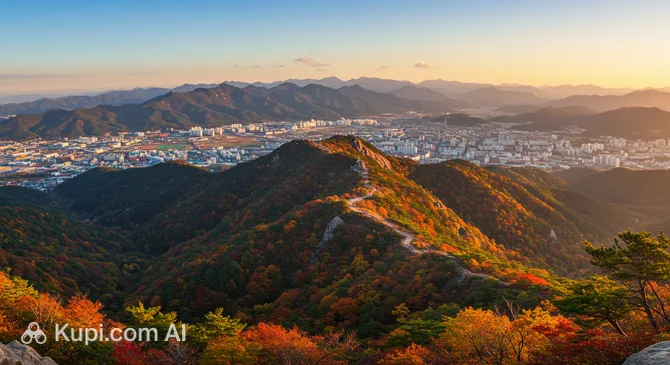
Taebaek is a fascinating city nestled in the mountains of eastern South Korea, in Gangwon Province. This true mountain oasis lies at the foot of the famous Taebaeksan Mountain, considered one of Korea's most revered peaks, which lends the entire region a special, almost mystical and inspiring atmosphere. The city is located about an hour's drive from the country's east coast, offering guests a unique blend of mountain tranquility and proximity to the sea.

With a population of around 46,000 people, Taebaek is not a bustling metropolis. Rather, it is a place where a slow pace of life and an amazing harmony with nature prevail, combining modern amenities with authentic Korean flavor. Historically, the city was a center of the mining industry, which is reflected in its cultural heritage and appearance.
Taebaek. Illustration.
Source: Kupi.com AI

Taebaek is famous for its magnificent nature: dense forests, crystal-clear mountain streams, and fresh air make it an ideal destination for outdoor enthusiasts, hikers, and those who simply appreciate peaceful landscapes. One of the main attractions is, of course, Taebaeksan Mountain itself, with its scenic trails and temples. The city is also known for its nature and culture festivals, and in winter, it transforms into a snowy fairy tale, attracting tourists with winter sports and stunning views.

A visit to Taebaek will leave you with unforgettable impressions. Here, you can feel like part of ancient legends, enjoy magnificent mountain views, learn about local history and traditions, and perhaps discover unique local dishes. It is a city that charms with its sincerity and beauty.

You can find more interesting facts on the history of Taebaek page.
Weather Overview

The weather in Taebaek is characterized by noticeable seasonal changes. Winters here are cold, with average monthly temperatures in January around -3.1°C and December around -1.9°C, while precipitation is minimal (1-2 mm). Spring brings gradual warming: in March, the average temperature is about 5.0°C, and by May it reaches 15.1°C, with a slight increase in precipitation.

Summer in Taebaek is warm and more humid. July and August are the warmest months, with average temperatures of 22.9°C and 23.2°C, respectively. This period sees the highest amount of rainfall (7-8 mm) and the most rainy days (around 19). In autumn, the temperature gradually drops, from 18.4°C in September to 12.0°C in October, and precipitation decreases. Overall, Taebaek is characterized by warm summers with occasional rain and cold, relatively dry winters. To learn more, you can view detailed information about the climate of Taebaek.

Average monthly temperature

Average monthly precipitation

Interesting Facts

In addition to its picturesque landscapes and hospitality, Taebaek holds many surprising stories and little-known details. Are you ready to see this city from an unexpected side?

Hwangji Free Market. Illustration.
Source: Kupi.com AI

Traveler photos:

  • An Ancient Name and Crossroads of Civilizations: Few know that in ancient times, modern Taebaek was called Siljik and was part of the mysterious Chin tribal union. Later, this land became an arena of influence for the powerful Korean states of Silla and Goguryeo, highlighting its long-standing strategic importance.

  • A Celestial Altar for Ancient Rites: At the summit of Taebaeksan Mountain, there isn't just a viewing platform, but an active ritual altar called Cheonjedan. According to legend, this is where ancient Koreans addressed the heavens, and the tradition of holding ceremonies, such as greeting the first sunrise of the New Year, is still alive today.

  • Diving into the "Black Gold" of the Past: Taebaek is not only about mountains and nature; it is also a city with a rich mining heritage. The unique Coal Museum offers visitors more than just an exhibition; you can literally descend into an improvised mine and learn about the hard work of miners from the inside.

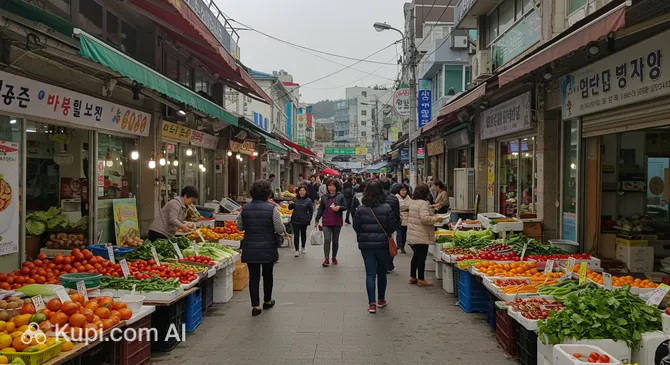
  • A Legendary Source and Bustling Trade: The sacred pond in Hwangji Park is not only considered the mystical source of one of Korea's major rivers but is also located right next to the interesting Hwangji Free Market, where you can feel the modern pulse of the city against the backdrop of ancient legends.

How to Get There

Traveling to Taebaek is a journey into the picturesque heart of the mountainous Gangwon Province. Since the city is located in a mountainous area, direct air access is limited, and the route usually involves transferring to ground transportation. You can find all the details and plan your optimal route by visiting the page with more details on how to get to Taebaek.

There is no airport in Taebaek itself, so travelers usually fly into major transport hubs in neighboring regions. One convenient option is Gimpo Airport (GMP) in Seoul. It is a large international hub that accepts many flights. It is located about 198 km from Taebaek. The journey by car or bus from there will take about 5 hours and 20 minutes, considering the mountainous terrain.

Another option is to use regional airports that are slightly closer. For example, you can fly into Daegu International Airport (TAE), located in the city of Daegu, about 144 km from Taebaek. The ground transport journey from here will take approximately 4 hours. You can also consider Cheongju Airport (CJJ) in the city of Cheongju (about 141 km away), from which the journey takes about the same time.

For convenience, here is a summary of the main airports through which you can reach the region:

AirportPassenger trafficDistance
Wonju Airport205 27996 km
Pohang Airport253 703136 km
Cheongju Airport4.6 mln141 km
Daegu International Airport3.3 mln144 km
Ulsan Airport786 739177 km

Railway travel is another popular way to get closer to Taebaek using the country's major lines. It's worth noting that the main high-speed lines pass through neighboring large cities. For example, a significant hub is Dongdaegu Station (IATA: XDK) in the city of Daegu. It is located about 146 km from Taebaek, and from there you can continue your journey by bus or local train, which takes about 4 hours.

Another important transport hub is Daejeon Station in the city of Daejeon, located 169 km from Taebaek. This is a major station with high passenger traffic, making it a convenient point for planning further travel to the country's eastern regions. The travel time by taxi or bus from the station to Taebaek is about 4.5 hours.

Below is information about the nearest major railway stations:

StationPassenger trafficDistance
Dongdaegu Station20 mln146 km
Daejeon Station18.6 mln169 km
Gwangmyeong Station12.4 mln188 km
Jinju Station237 km
Yeosu Expo Station290 km

In addition to planes and trains, Taebaek can be reached by intercity buses that run from most major cities in South Korea, including Seoul and Busan. A car trip will give you the chance to enjoy the beautiful mountain scenery of Gangwon Province.

Main Attractions

Taebaek, a city with a rich history and picturesque surroundings, offers its guests several interesting places to get closer to the local culture and daily life. Among them, the traditional market and authentic local eateries stand out.

One of the key points of interest for both tourists and locals is the Hwangji Free Market. This lively market is a wonderful place to immerse yourself in the daily life of Taebaek. Here, you will find a wide range of goods: from fresh vegetables, fruits, and seafood to traditional Korean snacks, clothing, and souvenirs. Visiting Hwangji Market is not just about shopping; it's a real cultural immersion—a chance to observe the locals, try street food, and feel the authentic atmosphere of a Korean city. The market is especially interesting for those who want to take a piece of real Korea home with them.

Hwangji Free Market. Illustration.
Source: Kupi.com AI

Traveler photos:

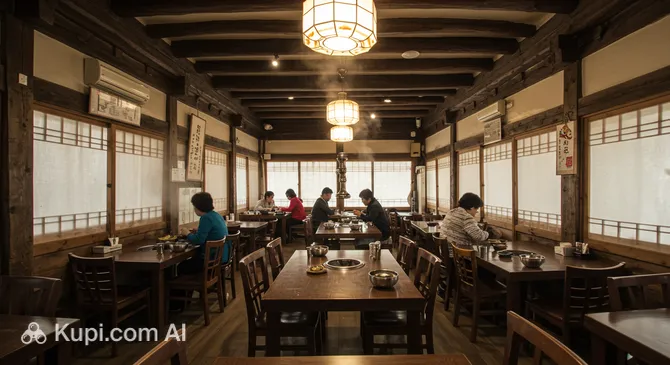
For connoisseurs of Korean gastronomy, a visit to the Taeseong Silbi Restaurant is a must. This establishment is well-known among locals and visitors alike for its authentic cuisine and cozy atmosphere. The word "Silbi" in the name often indicates a place with delicious food at reasonable prices, and Taeseong Silbi lives up to these expectations. Here, you can try traditional Korean home-style dishes. It is an excellent opportunity to experience the culinary traditions of the region and enjoy a hearty lunch or dinner after walking around the city.

Taeseong Silbi Restaurant. Illustration.
Source: Kupi.com AI

Traveler photos:

Local Cuisine

The cuisine of Taebaek is a true reflection of its mountain spirit and rich natural gifts. Gastronomic traditions here are closely linked to the use of fresh local products, such as wild herbs, mushrooms, and seasonal vegetables gathered on the slopes of the majestic Taebaeksan Mountain. This is cuisine that nourishes and warms, offering travelers a unique taste experience.

Be sure to try "sanchae-bibimbap" (산채비빔밥)—rice with an assortment of seasonal mountain herbs and vegetables, often topped with an egg and spicy gochujang sauce. The dish is not only incredibly tasty but also very healthy, providing the energy of the mountains. During the cold season, "tteokguk" is especially popular—a hearty soup with thin slices of rice cakes, traditionally eaten on Korean New Year, but in Taebaek, it's a great way to warm up on any cool day. It's also worth trying dishes made from fresh trout caught in the pure mountain streams, and local kimchi, which often includes rare herbs that give it a unique aroma.

Locals and tourists in Taebaek can enjoy food in a variety of establishments. These can range from small cozy restaurants specializing in traditional dishes to lively markets. For example, at the Hwangji Free Market, you can immerse yourself in the local lifestyle and try fragrant street snacks like bean paste pastries, roasted chestnuts, and fresh pancakes. If you are looking for a place for a more thorough introduction to local cuisine, look for establishments like Taeseong Silbi Restaurant, where you can sample the region's authentic dishes.

Taeseong Silbi Restaurant. Illustration.
Source: Kupi.com AI

Traveler photos:

For drinks in Taebaek, you should opt for traditional herbal infusions, which are not only delicious but also good for health, helping to restore strength after mountain walks. Special mention goes to tea made from azalea flowers, collected in the spring during the festival of the same name. This drink has a delicate aroma and is considered medicinal.

The gastronomic scene in Taebaek attracts tourists with its authenticity, emphasis on fresh, natural ingredients, and deep connection to nature. During certain seasons, gastronomic festivals are even held where you can discover unique local delicacies and culinary traditions. A trip to Taebaek is a wonderful opportunity not only to enjoy the beauty of the mountains but also to discover the unique flavors of Korean provincial cuisine.

Travel Tips

Welcome to Taebaek, a charming city in Gangwon Province, known for its picturesque mountains and rich history! To make your journey through this corner of South Korea as comfortable and enjoyable as possible, we have prepared some practical tips.

  1. Clothing and Essentials:

    The climate in Taebaek is continental with clearly defined seasons: summers are warm and humid, while winters are cold and snowy, especially in the mountains. Be sure to bring comfortable walking shoes, as the city is located in a mountainous area. In summer, lightweight clothing, sunscreen, and a hat will be useful, as well as a raincoat in case of monsoon rains. In winter, you can't do without warm layered clothing, including thermal underwear, a hat, gloves, and a scarf. Don't forget a universal adapter (South Korea uses type C and F sockets, 220V voltage). When visiting temples or other religious sites, choose modest clothing that covers your shoulders and knees.

  2. City Transportation:

    The main form of public transport in Taebaek is buses, which connect various parts of the city and its surroundings. For convenience, you can use taxis; a popular taxi-hailing app in South Korea is Kakao T. Renting a car can be useful if you plan to explore more remote areas of Gangwon Province, but for getting around Taebaek itself, public transport and taxis are quite sufficient.

  3. Finances:

    The local currency is the South Korean Won (KRW). You can exchange currency at banks, but it's better to do this in advance in larger cities, as the selection of exchange points in Taebaek may be limited. Credit and debit cards (Visa, Mastercard) are widely accepted, especially in hotels, restaurants, and large stores. However, in small shops or local markets, cash may be required. ATMs are available, but ensure your card is suitable for withdrawing cash abroad. Tipping is not customary in South Korea.

  4. Health and Safety:

    Taebaek, like South Korea as a whole, is a safe place for tourists. Pharmacies (약국 - yak-guk) are available in the city, but not all are open 24/7; basic medications can be found in convenience stores. It is recommended to carry a small first-aid kit with essential medicines. Be sure to get travel medical insurance before your trip. In emergencies, call 119 (ambulance, fire service). When hiking in the mountains, take precautions: have appropriate equipment, water, and inform someone of your route.

  5. Communication:

    The official language is Korean. English proficiency among the local population may not be high, especially outside tourist zones. Learn a few basic phrases in Korean, such as: "Annyeonghaseyo" (Hello), "Gamsahamnida" (Thank you), "Joesonghamnida" (Sorry). This is highly appreciated by the locals. A SIM card with internet access can be purchased at the airport upon arrival or at mobile phone shops in cities. Wi-Fi is widely available in hotels, cafes, and public places. Useful apps include Naver Maps or KakaoMap for navigation (Google Maps has limited functionality in South Korea) and Papago for translation.

  6. Local Etiquette:

    Koreans are very polite. When greeting, bow slightly. When passing or receiving items, especially from elders, use both hands or your right hand supported by the left at the elbow. Try to avoid being noisy in public places. If you are invited to someone's home, it is customary to remove your shoes at the entrance.

  7. What to Avoid:

    Do not write names of people in red ink—it is associated with those who have passed away. Also, avoid leaving chopsticks stuck vertically in a bowl of rice, as this resembles ritual incense at funerals. It is not polite to point at people or objects with one finger—it's better to use your whole palm.

  8. Special Feature of Taebaek:

    The city is famous for its Taebaeksan National Park, which is particularly beautiful in winter during the snow festival. Be sure to visit the Taebaek Coal Museum to learn about the region's industrial past. If you are a fan of Korean dramas, you might be interested to know that some scenes from the popular series "Descendants of the Sun" were filmed right here.

We hope these tips help you better prepare for your trip and get the most out of your stay in Taebaek. We wish you unforgettable impressions and bright discoveries in this amazing mountain city!

Entertainment & Nightlife

Taebaek, a charming city in Gangwon Province, offers its guests a quiet and cozy atmosphere for evening relaxation, quite different from the noisy nightlife of major metropolises. You won't find massive nightclubs or party districts here that stay open until dawn, but you can enjoy a pleasant evening in local establishments, soaking in authentic Korean hospitality.

Evening entertainment in Taebaek often revolves around gastronomy. The city is famous for its beef, and dinner at one of the local restaurants is a great way to start the evening. For example, Taeseong Silbi Restaurant is known for its meat dishes and is popular with both locals and tourists. Many establishments serving traditional Korean cuisine stay open until late evening, usually until 10:00-11:00 PM, and some even longer, especially on weekends. This allows for a leisurely meal in friendly company. Prices for dinner in such places can be described as moderate, especially if you choose set menus or popular local dishes.

After dinner, you can drop by one of the small local bars or "hofs" (Korean pubs) that serve beer and snacks. The atmosphere in these places is usually very casual and friendly. Another popular evening activity in Korea is "noraebang" (karaoke rooms), where you can have fun with friends. Most of these establishments are concentrated in the central part of the city, particularly around the Hwangji Free Market area and its lively adjacent streets. Hofs and bars are typically open until 1:00-2:00 AM, while some noraebangs may stay open until early morning, especially on Fridays and Saturdays. Prices for drinks and snacks in hofs are affordable, and the hourly rate for a noraebang varies but usually remains reasonable for a group. There is generally no dress code; comfort and a relaxed style are valued.

The most convenient way to get around Taebaek in the evening and at night is by taxi. They are relatively inexpensive and easily available, especially in central areas like the aforementioned Hwangji Market district. South Korea is generally a safe country, and Taebaek is no exception. However, as with anywhere, it is wise to take standard precautions, especially when walking after dark. It is better to stick to well-lit streets and busy areas.

During the day, Taebaek also has plenty to offer. The city is surrounded by picturesque mountains, making it attractive for nature lovers and hikers. Among the urban attractions, the Hwangji Free Market stands out, where you can browse local goods and souvenirs during the day. Additionally, the city has a rich mining past, with several museums and commemorative sites dedicated to it, such as the Taebaek Coal Museum, which is well worth a daytime visit.

Overall, evening in Taebaek is an opportunity to take a break from the hustle and bustle, enjoy delicious food, and experience the calm, friendly atmosphere of a small Korean city.

Parks & Museums

Taebaek, a city with a rich history and surrounded by picturesque mountains, offers its guests both peaceful green zones for relaxation and informative museums that tell the story of its unique past.

Among the city's green oases, Hwangji City Park stands out, built around the pond of the same name, which is considered the source of the Nakdonggang River. It is a popular spot for leisurely strolls where you can enjoy the fresh air and calm atmosphere. For those seeking grander natural experiences, a visit to Taebaeksan Provincial Park is a must. Although it is a vast mountain area, its proximity to Taebaek makes it accessible. The park is famous for its majestic peaks, ancient Buddhist shrines such as Manggyeongsa Temple, and diverse hiking trails offering breathtaking views.

The main guardian of the city's history and culture is the Taebaek Coal Museum. This landmark site details the period when Taebaek was one of South Korea's leading coal mining centers. Visitors can see real mining equipment, realistic dioramas recreating the harsh working conditions underground, and interactive exhibits that make the visit educational for children as well. The museum provides a deep understanding of how this industry influenced the city's development and the lives of its residents, serving as the primary museum complex dedicated to Taebaek's industrial heritage.

Taebaek's historical heritage is not limited to the museum. Throughout the city and its surroundings, you can find reminders of the mining past—from industrial architecture elements to monuments commemorating the hard work of miners. Additionally, on Taebaeksan Mountain, there is the Dangun Shrine, dedicated to the legendary founder of the Korean nation, giving this natural site significant cultural and historical importance.

To experience the city's lively atmosphere and perhaps pick up some unique souvenirs, visit the Hwangji Free Market. This is not just a place for shopping but a spot where you can discover the work of local craftsmen, try street food, and observe the daily life of the townspeople.

For an authentic Taebaek experience, stop by one of the small local restaurants to try dishes typical of the Gangwon mountain region. Also, don't miss the chance to explore the lesser-known hiking trails in the vicinity—it's a great way to enjoy the silence, magnificent scenery, and feel the true spirit of this unique corner of South Korea.

Getting Around

Getting around Taebaek and its surroundings is most convenient for tourists by bus. This is the primary form of public transport in the city, connecting the central areas with residential neighborhoods and popular tourist spots. Although Taebaek is a small city, the bus network is well-developed enough to provide access to the main attractions.

To pay for bus fares in Taebaek, as in most South Korean cities, the T-money transport card (or similar cards like Cashbee) is widely used. This card can be purchased and topped up at most 24-hour convenience stores and some bus terminals. The cost of a basic trip with a T-money card is usually around 1,250-1,450 won, while paying with cash may be slightly higher, approximately 1,350-1,550 won. Paying the driver in cash is also possible, but it's recommended to have the exact amount ready as change may be limited. Using a T-money card often provides a small discount compared to cash and convenience when transferring between buses.

Using the buses is quite simple. When entering the bus, tap your transport card on the reader. In some systems where the fare depends on the distance, you must also tap the card when exiting. Buses usually run from early morning until late evening, but it's best to check the exact schedule on-site, especially for routes going to more remote areas or natural sites. Route information can be found at bus stops (sometimes with English names) or using navigation apps popular in South Korea (such as Naver Maps or KakaoMap).

An alternative to public transport is taxis. They can be found at designated taxi stands or called via an app (such as Kakao T). Taxis operate by the meter, and the starting fare is usually around 3,800-4,800 won for the first few kilometers, after which the cost is based on distance and time of day. This is a convenient option for night travel or when carrying luggage. For short distances in warmer weather, you might consider renting a bike, if available, to explore the city at your own pace.

Given Taebaek's location in a mountainous area and its reputation as a starting point for visiting Taebaeksan National Park and other natural beauties, there are bus routes specifically geared towards tourists and outdoor enthusiasts. These buses can take passengers to park entrances or the start of popular hiking trails. It is recommended to check the route numbers and schedules in advance, especially if you plan to travel on weekends or holidays.

Accommodation

In the city of Taebaek, travelers will find various accommodation options to suit different preferences and budgets. Housing choices range from more economical options, such as guesthouses and motels, to comfortable mid-range hotels. You can also consider renting apartments, which can be convenient for families or longer stays.

Most accommodation options are concentrated in areas with good transport accessibility or near the city's main tourist sites. Although there are no specific hotels in the provided list of attractions, when looking for housing, it is worth paying attention to the proximity to places like the Hwangji Free Market if you plan to visit it. The choice of area may also depend on your plans—whether it's sightseeing, a business trip, or a quiet holiday.

The price range for housing in Taebaek can vary: you can find both budget options and mid-range offers. There may not be as many world-class luxury resorts here as in large metropolises, but high-quality and cozy hotels are always available. It is recommended to book accommodation in advance, especially if your trip coincides with the peak tourist season or the time of local festivals. For searching and booking, it is convenient to use popular online platforms or, in some cases, contact the hotels directly.

Nearby Cities

For those who want to explore the surrounding area, Taebaek serves as an excellent starting point for day trips to several interesting nearby locations. Among them, the following stand out:

Gangneung: Located just 66 km from Taebaek, this coastal city attracts travelers with its picturesque beaches, such as the famous Gyeongpo, and its rich cultural heritage. Here you will find Ojukheon—the birthplace of the famous Confucian scholar Yi I (Yulgok)—as well as a coffee museum, as Gangneung is famous for its coffee culture and annual coffee festival. It is a wonderful place for those seeking a combination of beach relaxation and cultural discovery.

Wonju: Approximately 95 km from Taebaek, Wonju offers a completely different experience. The city is the gateway to Chiaksan National Park, known for its breathtaking mountain scenery and Buddhist temples like Guryongsa. Wonju is also famous for traditional Korean paper art, "hanji," to which an entire museum is dedicated. This destination will appeal to lovers of nature, trekking, and traditional crafts.

Below is a table with some of the nearest cities and their characteristics:

CityPopulationDistance
Samcheok69 50935 km
Ulchin14 42637 km
Yeongju109 26650 km
Pyeongchang9 94057 km
Gangneung215 67766 km

These nearby destinations provide a glimpse into the region's diverse culture and landscapes, complementing the experience of visiting Taebaek.

Shopping & Souvenirs

Taebaek, known for its picturesque mountains and rich coal-mining history, may not be a major shopping destination in South Korea, but even here you can find interesting local goods and souvenirs. Shopping in Taebaek is more about authentic experiences and discovering local products than chasing international brands.

The main retail spots are concentrated in the central part of the city, especially around the bus terminal and traditional markets. Here you will find small shops offering clothing, daily necessities, and local delicacies. Although Taebaek is not famous for large shopping streets like major metropolises, a walk through its central blocks will allow you to experience the local character.

Taebaek does not have the massive modern shopping malls typical of big cities. Instead, you can find small local department stores or commercial buildings that feature various categories of goods. The focus should be on more traditional retail formats.

One of the main points of interest for shopping enthusiasts and those seeking authentic experiences is the Hwangji Free Market. This is a lively place where you can purchase fresh local products, traditional Korean snacks, clothing, household items, and, of course, souvenirs. The market is particularly bustling on market days, offering visitors a chance to dive into the real atmosphere of Korean trade.

For souvenirs from Taebaek, look for items related to its mining past, if available, as well as goods reflecting the natural beauty of the region, such as those related to Taebaeksan National Park. Local products like mountain honey, herbs, or traditional Korean sweets also make excellent gifts. Occasionally, you can find handmade items from local artisans.

Shops in Taebaek usually operate from morning (around 10:00-11:00 AM) until evening (7:00-8:00 PM). Markets may open earlier. Most shops and markets accept both cash (Korean Won) and bank cards. However, small market stalls may prefer cash.

For tourists in South Korea, a Tax Free refund system is available. Look for shops with the corresponding logo. When making a purchase over a certain amount, you can complete the paperwork for a VAT refund when leaving the country. Check with the sellers for details.

Reached the end of the page?

That means the route is fully explored