Gangneung is a charming coastal city in South Korea, attracting travelers with its unique blend of natural beauty, rich culture, and modern dynamics. This city offers guests unforgettable experiences, whether it is a relaxing stay on the beach or an immersion into local history and gastronomy.
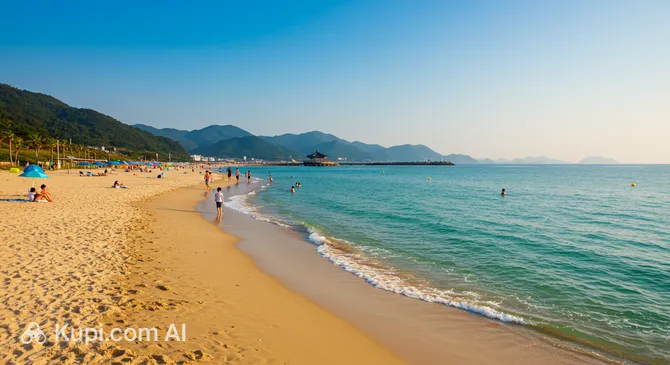
Gangneung. Illustration.
Source: Kupi.com AI
Located in Gangwon Province on the country's east coast, Gangneung faces the East Sea (also known as the Sea of Japan). With a population of 215,677 people, the city is an important cultural and tourist center of the region, known for its picturesque landscapes and hospitality.
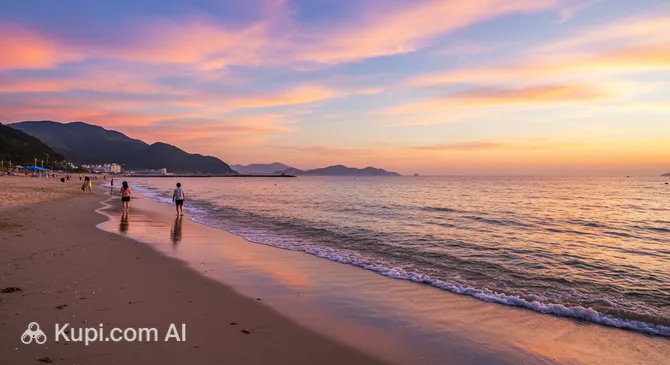
Among the main gems of Gangneung is the famous Gyeongpo Beach, an ideal place for a summer holiday and enjoying the sea breeze. The city is also famous for its coffee culture: Anmok Beach Coffee Street beckons with the aromas of freshly brewed coffee from numerous cozy cafes. Equally interesting are the historical attractions, such as Ojukheon House — the birthplace of famous Korean figures — and the scenic Gyeongpo Lake.
Gangneung is a city that can surprise and enchant everyone. If you are looking for a place where you can combine a beach holiday with cultural enrichment and gastronomic discoveries, be sure to consider Gangneung for your next trip.
The weather in Gangneung is characterized by clearly defined seasons. Expect warm summers with occasional rain and cold, relatively dry winters. In summer, especially in July and August, the average temperature stays around 23-24°C, with maximum values reaching 26-27°C. These months also see the highest amount of precipitation and rainy days. In winter, in January and December, the average temperature drops below zero, ranging from approximately -0.3°C to -1.6°C, with minimum temperatures as low as -5.5°C. Precipitation in winter is minimal. Spring and autumn offer pleasant moderate temperatures, making these seasons comfortable for visiting. More detailed information can be found on the Climate of Gangneung page.
Average monthly temperature
Average monthly precipitation
Interesting Facts
In addition to its picturesque beaches and famous landmarks, Gangneung holds many surprising stories and little-known details that make it even more attractive to curious travelers.
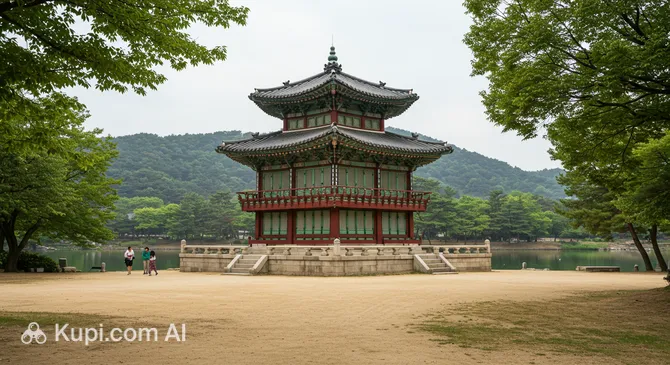
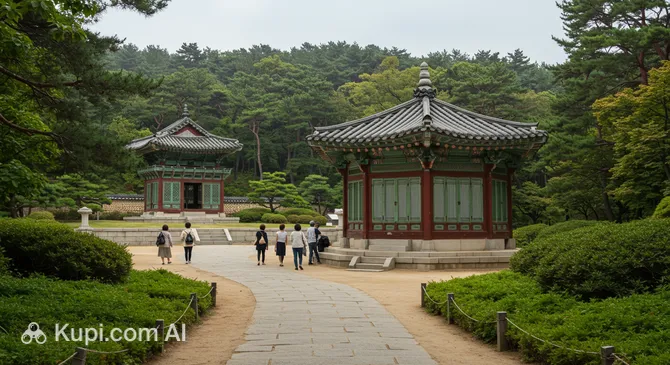
Gyeongpodae Pavilion. Illustration.
Source: Kupi.com AI
Traveler photos:
Coffee Capital:Gangneung is rightfully considered one of the coffee capitals of South Korea. It is home to the famous Anmok Coffee Street, where dozens of unique cafes offer a chance to enjoy an aromatic drink with a sea view. The city also hosts a popular annual coffee festival, attracting connoisseurs from all over the world.
Birthplace of Great People: It was in Gangneung, at the historical Ojukheon House, that two outstanding figures of Korean history were born and raised: the artist, poet, and calligrapher Shin Saimdang and her son, the famous Confucian scholar Yi I (Yulgok). Shin Saimdang’s image graces the 50,000 won banknote, while Yi I is on the 5,000 won banknote.
UNESCO-Listed Festival: The city is the guardian of a unique tradition — the Gangneung Danoje Festival. This ancient holiday, dedicated to the spirits of the mountains and seas, with its rituals, folk games, and mask dances, is recognized by UNESCO as a Masterpiece of the Oral and Intangible Heritage of Humanity and has been held for over a thousand years.
The Legend of Five Moons: The famous Gyeongpodae Pavilion, overlooking Gyeongpo Lake, is shrouded in a romantic legend. It is said that on a clear night, you can see five moons at once: the real one in the sky, its reflections in the lake, in the sea (if it is calm and visible), in your wine glass, and in the eyes of your loved one.
How to Get There
When planning a trip to the east coast of South Korea, it is important to think through the logistics in advance. Gangneung is a popular destination, and although the city does not have its own airport, it can be reached in various ways by combining flights with ground transport. You can find out more details on how to get to Gangneung on our dedicated page, and below we will look at the main transport hubs through which travelers pass.
Most travelers arrive in the country through the main air gateways of the capital region. The most significant is Incheon International Airport (IATA: ICN). This is the country's largest aviation hub with a huge passenger flow. Since there is no airport in Gangneung, tourists fly into Incheon (serving Seoul), which is approximately 218.8 km from the city. The journey by car or bus from the airport will take about 5.5–6 hours, although many prefer to use the KTX high-speed trains that connect the airport with the regions.
Another important hub is Gimpo Airport (IATA: GMP), which also serves Seoul. It is located slightly closer — at a distance of about 186.3 km from Gangneung. This airport is often used for domestic flights and flights from neighboring Asian countries. The journey by road from here will take approximately 5 hours. It is also worth mentioning Cheongju Airport (IATA: CJJ), located in the city of Cheongju (169.5 km from Gangneung), which may be convenient for those traveling from other regions of Korea.
For clarity, here is a summary of the main airports through which you can build your route:
Rail service in South Korea is excellently developed, and KTX high-speed trains make travel fast and comfortable. An important transport hub is Gwangmyeong Station (IATA: XWU). Please note that this station is not in Gangneung, but in the city of Gwangmyeong, approximately 181.9 km away. It is a major hub with a large passenger flow through which many routes pass. A car trip from this station to Gangneung will take about 5 hours, but it is often more convenient to take a direct KTX line to Gangneung station if it is available in your schedule.
Below is information on major railway stations that can serve as transfer points or landmarks when planning complex routes across the country:
Gangneung is rich in attractions capable of satisfying a wide range of tourist interests. From ancient residences to modern museums and beautiful beaches, everyone will find something for themselves here. Here are some key places that are definitely worth visiting in this charming city:
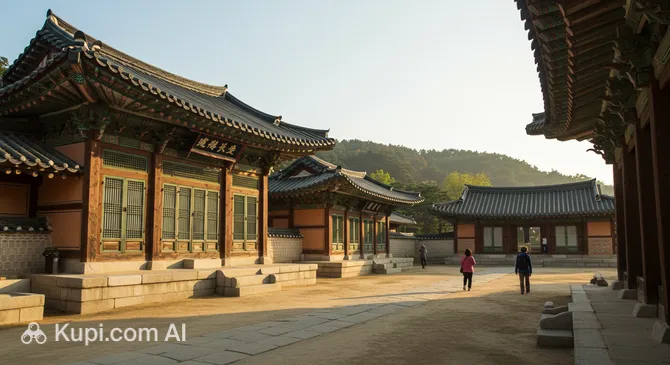
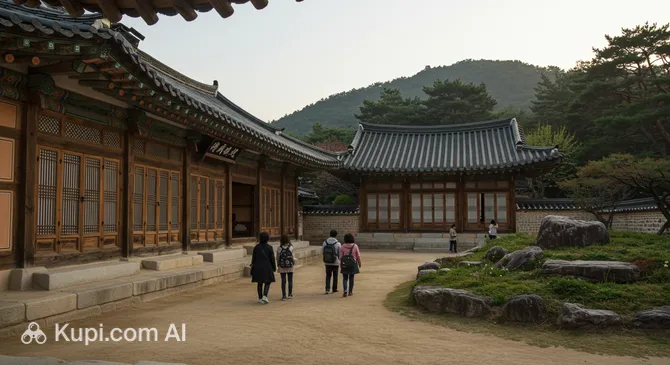
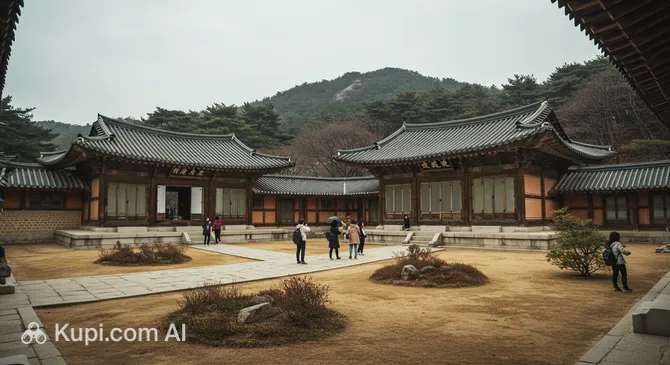
One of the most important historical sites is the Ojukheon House and Ojukheon Municipal Museum. This complex includes the famous Ojukheon House, the birthplace of the prominent Korean artist and poet Shin Saimdang and her son, the scholar Yi I (Yulgok). Visiting this place allows you to touch the history of the Joseon Dynasty, while the nearby museum details their life, legacy, and the culture of the region. This is a unique opportunity to see where the people whose portraits adorn Korean banknotes lived.
Ojukheon and Ojukheon Municipal Museum. Illustration.
Source: Kupi.com AI
Traveler photos:
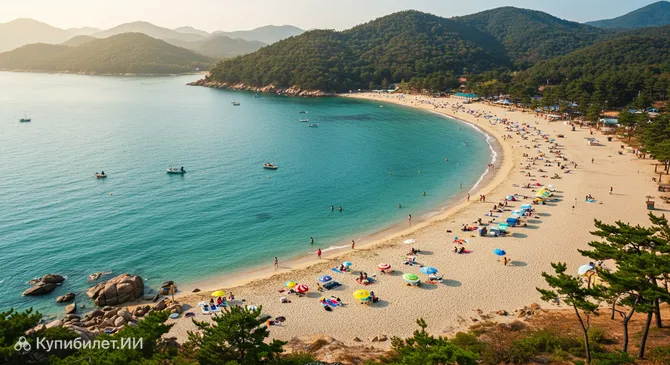
For lovers of beach holidays and picturesque landscapes, Gyeongpo Beach is a must-visit. It is one of the most popular and beautiful beaches on the east coast of South Korea, offering a long stretch of clean sand and azure sea. Here, you can not only swim and sunbathe but also engage in water sports or simply take a stroll enjoying the fresh sea breeze. Its proximity to Gyeongpo Lake and Gyeongpodae Pavilion adds to the site's appeal.
Gyeongpo Beach. Illustration.
Source: Kupi.com AI
Traveler photos:
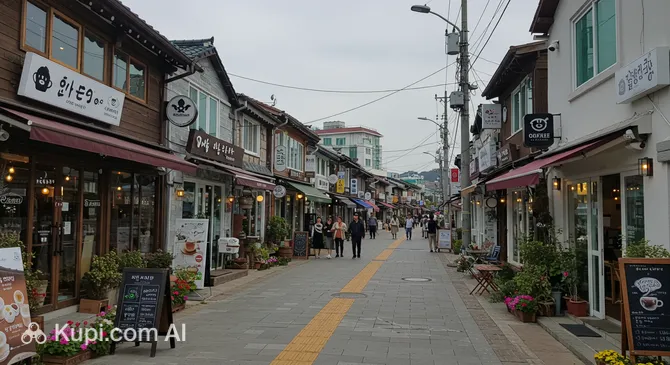
One cannot overlook Gangneung Coffee Street, also known as Anmok Beach Coffee Street. It is a true paradise for coffee lovers, where dozens of cozy coffee shops line the coast, each with its own unique style and panoramic sea view. Here, you can try various types of coffee, enjoy delicious desserts, and fully immerse yourself in the famous coffee culture of Gangneung.
Gangneung Coffee Street. Illustration.
Source: Kupi.com AI
Traveler photos:
Another iconic site for experiencing the atmosphere of old Korea is Seongyojang House. This perfectly preserved traditional estate of an aristocratic family from the Joseon era is one of the best examples of Korean residential architecture. Visitors can stroll through the complex, which includes residential buildings, elegant pavilions, and a picturesque garden with a lotus pond, feeling the harmony and beauty of this historical place.
Seongyojang House. Illustration.
Source: Kupi.com AI
Traveler photos:
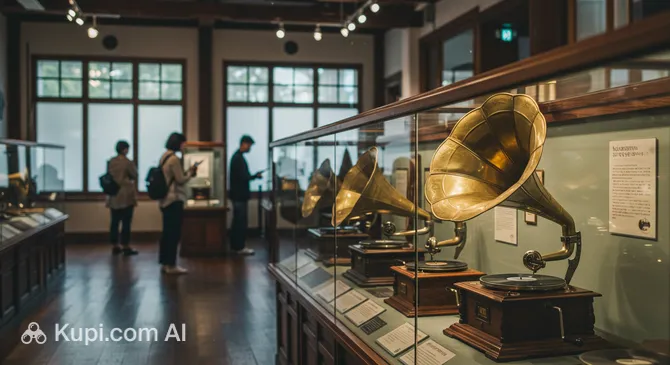
For those interested in the history of technology and inventions, the Chamsori Gramophone Museum and Edison Science Museum will be a real discovery. This unique complex presents one of the world's largest private collections of gramophones, phonographs, and other sound reproduction devices, as well as many of Thomas Edison's inventions. The museum's exhibition is truly impressive in its diversity and rare exhibits, making it interesting for visitors of all ages.
The gastronomic scene of Gangneung is a delightful combination of seafood, traditional Korean flavors, and, of course, the famous coffee culture. The city's location on the coast of the East Sea defines many culinary features, making the freshest seafood the main star of the local table. A trip to Gangneung will not be complete without experiencing its unique dishes and drinks.
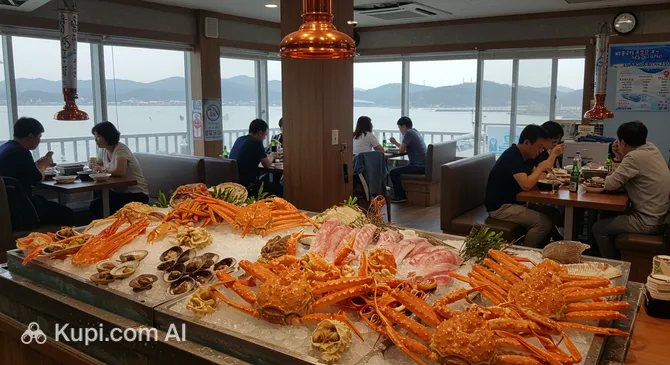
Be sure to try Chodang Sundubu — a delicate tofu prepared using seawater, which gives it a special, slightly salty taste. It is often served as a spicy soup or on its own with soy sauce. Another pride of Gangneung is the variety of dishes made from fresh fish and seafood. Hoe (Korean-style sashimi) is particularly popular. Many restaurants, such as the Fishman: King Crab & Sashimi Restaurant (Gyeongpodae Main Branch), specialize in king crab and other marine delicacies, offering visitors an unforgettable gastronomic experience.
Fishman King Crab & Sashimi Restaurant (Gyeongpodae Main Branch). Illustration.
Source: Kupi.com AI
Traveler photos:
As for drinks, Gangneung is well known as the coffee mecca of South Korea. A stroll along Gangneung Coffee Street is a must-do, where you can enjoy a cup of aromatic coffee in one of the many cafes overlooking the sea. Regarding alcoholic beverages, pay attention to traditional Korean soju and makgeolli (rice wine). Craft beer enthusiasts might be interested in the Budnamu Brewery, where original beers are brewed using local ingredients.
Budnamu Brewery. Illustration.
Source: Kupi.com AI
Traveler photos:
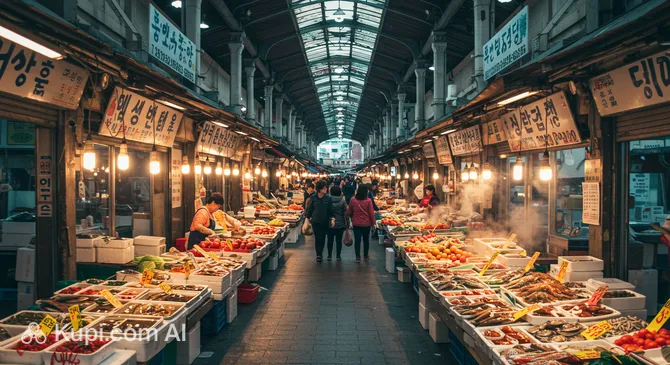
The food culture in Gangneung is diverse. Locals and tourists can choose between cozy restaurants specializing in specific dishes and lively markets. Gangneung Central Market is an excellent place to try authentic street food, fresh seafood, and local delicacies. Here you can find everything from traditional Korean snacks to hearty lunches. The markets also offer an opportunity to observe the daily life of citizens and purchase fresh produce.
Gangneung Jungang Market. Illustration.
Source: Kupi.com AI
Traveler photos:
The gastronomy of Gangneung is a vivid reflection of its coastal character and rich traditions. The freshness of the ingredients, unique local recipes, and the special atmosphere of a seaside city make every meal here truly special. Immersing yourself in the world of Gangneung's flavors will become one of the most pleasant memories of your trip to South Korea.
Travel Tips
Planning a trip to charming Gangneung? Wonderful! To ensure your journey through this coastal city in South Korea is as comfortable as possible and leaves only pleasant impressions, we have prepared some practical tips for you.
Clothing and essentials: The climate in Gangneung has four distinct seasons. In summer (June-August), it is hot and humid, so bring light clothing, swimwear, sunscreen, and a hat. In winter (December-February), it can be cold and windy, sometimes with snow — you will need warm jackets, sweaters, hats, and gloves. Spring and autumn offer pleasant moderate weather, ideal for layering. Make sure to bring comfortable shoes for walking around the city and beaches. Don't forget a universal adapter (type F sockets are used in South Korea). When visiting temples or traditional houses like Ojukheon, choose modest clothing that covers shoulders and knees.
City transport: The main mode of public transport in Gangneung is buses — they cover most areas of the city and tourist attractions. Routes and schedules can be found at stops or using navigation apps (see tip #5). There is no metro or tram in the city. Taxis are also widely available and relatively inexpensive; they can be hailed on the street or called via the Kakao T app. Car rental can be convenient if you plan to explore the surrounding Gangwon Province, but note that an international driving permit is required, and parking in popular spots can be difficult.
Finances and expenses: The local currency is the South Korean Won (KRW). You can exchange currency at banks (usually offering the best rates), authorized exchange offices, or some hotels. Credit and debit cards (Visa, Mastercard) are widely accepted in most shops, restaurants, and hotels. However, it is always useful to have some cash for small purchases at markets or small establishments. International cards usually work in ATMs marked "Global ATM". An approximate daily budget for food, transport, and small expenses (excluding accommodation) can range from 70,000 to 150,000 won. Tipping is not customary in South Korea, including Gangneung, and may even cause confusion.
Health and safety:Gangneung is a very safe city, even at night. However, standard precautions, such as keeping an eye on personal belongings in crowded places, are always relevant. Pharmacies (약국 - "yak-guk") are easy to find, but not all are open 24/7. In case of need for medical assistance, the city has hospitals with a high level of service. Travel insurance is recommended. For emergency medical assistance for tourists (with English consultation available), you can call 1339.
Communication and internet: The official language is Korean. English proficiency among the local population can be limited, especially among the older generation and outside main tourist areas. Learning a few basic phrases in Korean (for example, "Annyeong-haseyo" – hello, "Kamsa-hamnida" – thank you) is highly appreciated. A SIM card with internet access can be purchased at the airport upon arrival in South Korea or at mobile stores in the city. Wi-Fi is widely available for free in many public places, cafes, and hotels. Useful local apps: Naver Map or KakaoMap for navigation (they are more accurate than Google Maps in South Korea), Papago for translation, and Kakao T for calling a taxi.
Local etiquette: When greeting someone, especially elders, a slight bow is appropriate. When receiving or giving items (e.g., money, business cards), it is customary to use both hands or use the right hand supported by the left. In public places, especially on transport, try not to speak too loudly. Remove your shoes before entering a Korean home, some temples, and traditional restaurants. Respect for elders is an important part of Korean culture.
What to avoid: Do not stick your chopsticks vertically into a bowl of rice — this is associated with funeral rituals. Also, avoid writing people's names in red ink, as this is traditionally linked with death. It is not common to gesture actively or point fingers at people.
Special tip for Gangneung: Be sure to immerse yourself in the city's famous coffee culture! Take a walk along Anmok Coffee Street, enjoy a cup of aromatic coffee with a sea view — it's an essential part of the Gangneung experience. And if your trip coincides with the beginning of summer, try to visit the Danoje festival — a unique cultural event listed by UNESCO.
We hope these tips help you better prepare for your trip and enjoy all the beauty and unique atmosphere of Gangneung. We wish you an unforgettable journey to this hospitable corner of South Korea!
Entertainment & Nightlife
When the sun sets behind the horizon, Gangneung is in no hurry to sleep, offering its guests various options for evening and night recreation. Although the nightlife here may not be as grand as in the major metropolises of South Korea, it has its own charm and can satisfy different tastes — from lively bars to cozy cafes and traditional Korean entertainment.
Several districts can be considered the main centers of evening activity. During the summer season, the Gyeongpo Beach area is particularly popular, where numerous bars, cafes, and restaurants with sea views line the embankment, attracting both tourists and locals. A more authentic atmosphere can be found in the city center, especially around the Gangneung Central Market, where local pubs ("hofs"), karaoke bars, and small eateries that stay open late are concentrated. For a quieter evening, the famous Gangneung Coffee Street (Anmok Beach) is ideal, where many establishments are open until late at night, offering aromatic coffee or desserts to the sound of the waves.
The choice of establishments in Gangneung is quite wide. Craft beer lovers will appreciate the Budnamu Brewery, where you can try unique local brews in a stylish setting. Traditional Korean "hofs" offer beer with snacks, such as the famous Korean "chikin" (fried chicken). If you're hungry, many restaurants specializing in seafood or Korean BBQ are open late into the night. For example, at the Fishman Restaurant, you can taste the freshest seafood. Nightclubs in Gangneung do exist, but they are generally smaller and aimed at local youth, offering popular music and dancing. Don't forget the "noraebangs" (karaoke) — an essential part of Korean night culture, where you can have fun with friends. At Gangneung Central Market and its surroundings, you can find street food stalls in the evening offering delicious and affordable local snacks.
The atmosphere in Gangneung's night establishments is predominantly relaxed and friendly. The crowd is mixed: there are more visitors in the tourist zones, while the center attracts locals and students. The dress code in most places is casual, although you can dress up more for some trendier bars or clubs. Main activity starts after 9:00 PM - 10:00 PM and continues until late at night, especially on weekends. Prices are generally moderate, especially compared to the capital. Taxis are the most convenient way to get around the city at night; they are easy to call via the popular Kakao T app or hail on the street in busy areas.
As for safety, Gangneung is considered a very safe city. However, as with anywhere, you should take basic precautions, especially if walking alone late at night. Try to stick to well-lit and crowded streets.
During the day, Gangneung offers many other activities. You can visit interesting museums, such as the Chamsori Gramophone Museum and Edison Science Museum or the unique Cupper Coffee Museum, explore historical gems like Ojukheon, stroll through picturesque parks like Gangneung Unification Park, or simply relax on one of the magnificent beaches.
Coffee Cupper Museum. Illustration.
Source: Kupi.com AI
Traveler photos:
Thus, Gangneung is able to offer both active nightlife and quiet evening entertainment, harmoniously complementing a busy daytime program. This city knows how to surprise and delight its guests at any time of the day!
Parks & Museums
Gangneung is not only about picturesque beaches and the famous coffee street, but also a city rich in green spaces for relaxation and cultural sites that preserve its history and creative spirit. Here, everyone will find a spot to their liking, whether it be a quiet park or a fascinating museum.
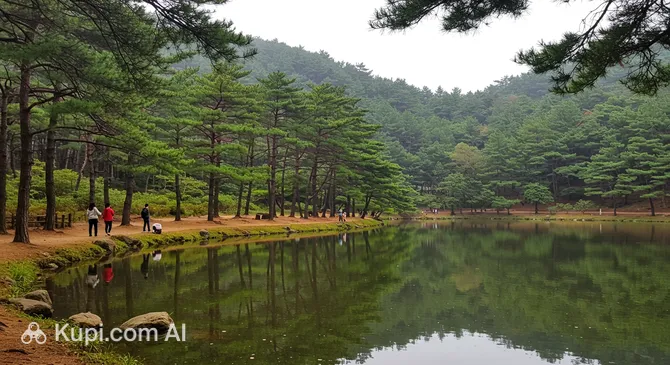
Among Gangneung's green gems, Gyeongpo Provincial Park stands out. This vast park surrounds the famous Gyeongpo Lake and includes the legendary Gyeongpodae Pavilion. It is an ideal place for leisurely walks, admiring nature, and the cherry blossoms in spring. Here, you can rent a bicycle or simply relax on the lakeshore, enjoying the tranquility.
Gyeongpo Provincial Park. Illustration.
Source: Kupi.com AI
Traveler photos:
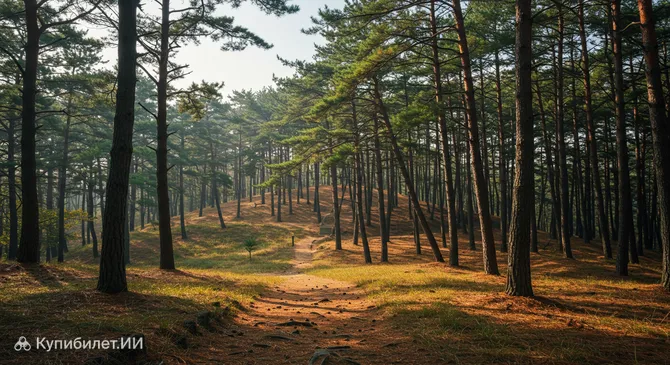
Lovers of mountain air and forest trails should head to Daegwallyeong Natural Recreation Forest. Located on the slopes of the Taebaeksan Mountains, it offers many hiking routes of varying difficulty, pure air, and magnificent panoramic views. The park is especially beautiful in autumn when the foliage turns vibrant colors.
Another noteworthy place is the Heo Gyun and Heo Nanseolheon Memorial Park. This park is dedicated to the famous Joseon-era writer Heo Gyun and his sister, the talented poet Heo Nanseolheon. In addition to beautiful walking areas, here you can learn more about their life and work, visit the memorial hall and a traditional Korean house.
Heo Gyun and Heo Nanseolheon Memorial Park. Illustration.
Source: Kupi.com AI
Traveler photos:
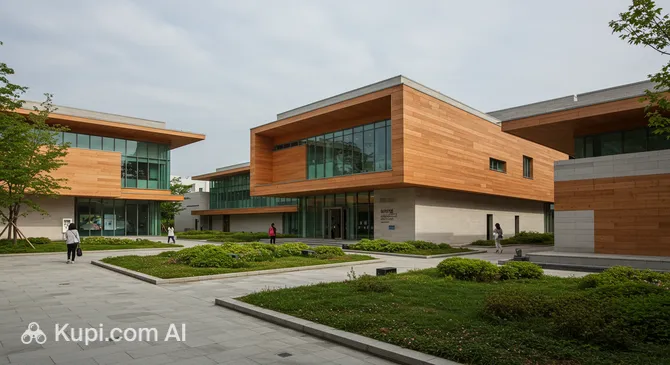
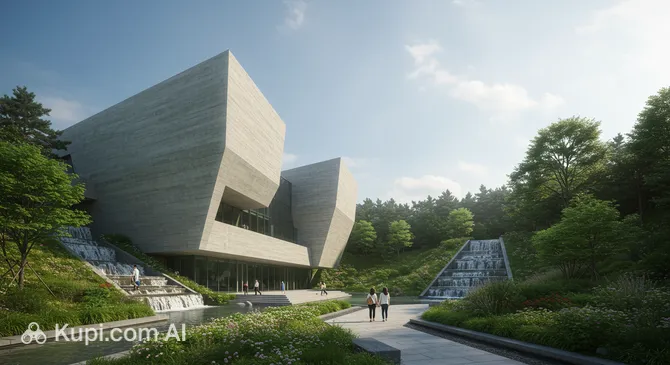
The cultural life of Gangneung is equally rich. Art lovers should definitely visit the Haslla Art World. This unique museum, with both indoor and outdoor spaces, offers an impressive collection of contemporary sculptures and installations harmoniously integrated into the coastal landscape. It offers stunning views of the East Sea.
Arte Museum Valley Gangneung. Illustration.
Source: Kupi.com AI
Traveler photos:
To touch history, head to Ojukheon — a well-preserved traditional Korean house where the famous artist Shin Saimdang and her son, the scholar Yi I (Yulgok), were born. This site allows you to immerse yourself in the atmosphere of Joseon-era Korea and learn about the lives of the country's outstanding personalities. A municipal museum is also located nearby, complementing the experience.
Ojukheon. Illustration.
Source: Kupi.com AI
Traveler photos:
One cannot ignore the Cupper Coffee Museum, which reflects the coffee fame of Gangneung. It presents the history of coffee and various brewing methods and houses a collection of coffee equipment from around the world. Visitors can not only learn many new things but also taste different coffee varieties.
In addition to the already mentioned Gyeongpodae Pavilion, which is one of the "Eight Scenic Views of Gwandong" and a symbol of Gangneung, the city preserves other architectural treasures. For example, visiting traditional Korean houses like Seongyojang House (although already mentioned, it is worth noting as an important site) allows for a better understanding of the lifestyle of the Korean nobility in the past.
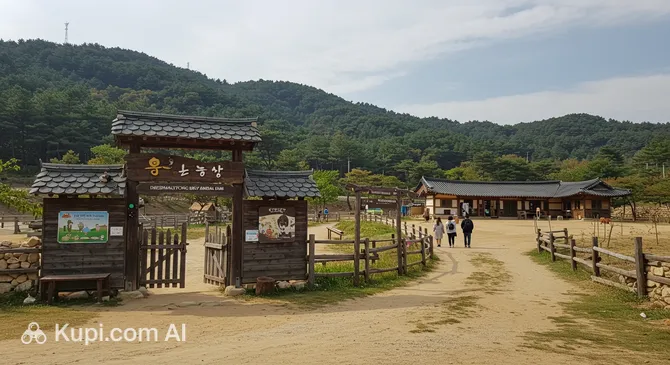
For those traveling with children or simply looking for something unusual, the Daegwallyeong Baby Animal Farm can be an interesting discovery. Here, you can interact with cute animals, feed them, and take fun photos. It is a great place for a family holiday and positive emotions away from the city bustle.
Daegwallyeong Baby Animal Farm. Illustration.
Source: Kupi.com AI
Traveler photos:
Also, while exploring the city, peek into small local galleries or craft workshops that don't always make it into major guidebooks — that's where you can find unique souvenirs and get acquainted with the work of Gangneung's contemporary artisans.
Getting Around
Getting around Gangneung is quite convenient thanks to a well-developed public transport system, primarily consisting of city buses. They cover most areas of the city and allow you to easily reach key attractions, beaches, and cultural sites. There is no metro, tram, or trolleybus system in Gangneung, so buses are the main mode of public transport for residents and tourists.
Buses in Gangneung run on numerous routes. Schedules and route maps can be found at bus stops (often information is in Korean) or, more conveniently for tourists, you can use navigation apps like Naver Map or KakaoMap, which provide up-to-date information in English. Buses usually run from early morning until late evening, but the frequency can vary depending on the route and time of day.
The payment system for buses in Gangneung, as in all of South Korea, is very convenient. The most popular method is using a T-money transport card (or similar cards like Cashbee). This card can be purchased and topped up at most convenience stores, at subway stations in large cities (if you are arriving from there), and at special vending machines. When entering the bus, you must tap the card against the validator, and it is mandatory to tap it again when exiting — this is important for the correct calculation of the fare, especially on routes with distance-based pricing or to receive a transfer discount. The base fare for a city bus is usually around 1,300-1,500 won. You can also pay in cash directly to the driver upon entry; it is advisable to have small bills or coins, though change is usually given. However, using a T-money card is not only more convenient but also allows you to enjoy discounts when transferring to another bus within a certain time (usually 30 minutes).
Practical tips for tourists:
Always have a T-money card or enough cash to pay the fare.
When entering the bus, look for the validator (usually by the front door), and when exiting, it's by the middle or back door.
To signal the driver to stop at your desired station, press the signal button in advance (usually red, located on handrails or walls of the cabin).
Bus stop announcements are mostly in Korean, but on popular tourist routes, they may be duplicated in English. Monitor your route on a navigation app.
An alternative to public transport is taxis. They are widely available in Gangneung and can be hailed on the street, found at designated taxi stands, or called via the popular Kakao T app. Taxis are equipped with meters, and payment can be made by both cash and credit card. Taxi rides are naturally more expensive than the bus but can be convenient for small groups, when traveling with luggage, or at night.
For strolls along the embankments or park areas, such as the Gyeongpo Beach area, consider renting a bicycle. Rental points are often found in tourist spots and offer both regular and electric bikes. This is an excellent way to leisurely explore the picturesque surroundings. Car sharing is less common for tourists in Gangneung compared to large metropolises.
Overall, the transport system in Gangneung is quite simple and straightforward. Using buses with a T-money card is the most economical and efficient way to get around the city for most tourists.
Accommodation
In Gangneung, travelers will find a wide range of accommodation options to suit various preferences and budgets. The city offers everything from affordable guesthouses and hostels, ideal for budget travelers and youth, to comfortable mid-range hotels offering a good balance of price and quality. For those seeking a more luxurious stay, especially along the coast, modern resorts with a full range of services are available. Additionally, renting apartments or private flats is popular, which can be a convenient option for families or long-term stays. You can also find authentic traditional Korean houses (hanok) in Gangneung, offering a unique cultural experience.
When choosing a place to stay, you should pay attention to several key areas. The area around the famous Gyeongpo Beach and the picturesque Gyeongpo Lake is particularly popular with tourists due to the beautiful views, proximity to the sea, and attractions such as Gyeongpodae Pavilion. Many hotels and resorts are concentrated here. The city center is convenient in terms of transport accessibility and proximity to the Gangneung Central Market and other urban facilities. Coffee lovers and those seeking a unique atmosphere might enjoy staying in the Anmok Coffee Street area, where stylish boutique hotels and guesthouses can be found.
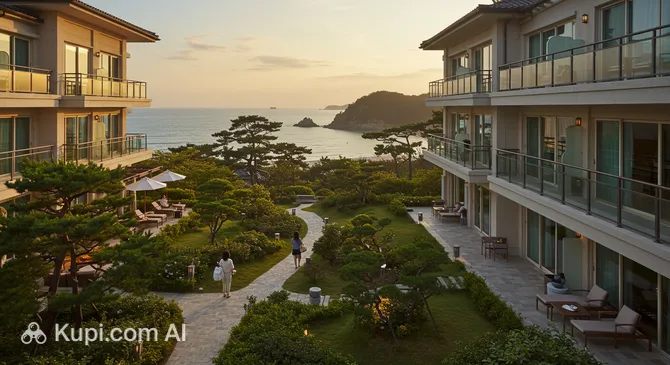
Among the well-known accommodation options, for instance, is the Lakai Sandpine Resort, offering comfortable conditions and beautiful views. The price range for housing in Gangneung varies from budget to luxury, allowing you to choose an option for any wallet. It is most convenient to book accommodation through popular online booking platforms or directly on hotel websites. This allows you to compare prices, read reviews, and choose the most suitable option.
Lakai Sandpine Resort. Illustration.
Source: Kupi.com AI
Traveler photos:
General booking tip: if you are planning a trip to Gangneung during peak tourist season (for example, in summer or during major festivals like Danoje), it is highly recommended to book your accommodation in advance. This will not only help you guarantee availability but also secure better deals. During the rest of the year, the choice is usually wider, but planning ahead never hurts, especially if you have specific preferences for location or type of accommodation.
Nearby Cities
For those who want to explore the surroundings, Gangneung serves as an excellent starting point for day trips to several interesting nearby locations:
For example, a trip to Wonju, located less than 100 km away, may interest nature lovers due to its proximity to Chiaksan National Park, known for its picturesque mountain trails and ancient temples, as well as the modern Museum SAN with its impressive architecture and art collection. Another attractive option is Chuncheon, known as the "city of lakes." It offers beautiful scenery, the opportunity to visit the famous Nami Island, and to try the local culinary specialty — dak-galbi (spicy stir-fried chicken).
These nearby destinations provide insight into the diverse culture and landscapes of the region, offering new experiences and opportunities for short trips from Gangneung.
Shopping & Souvenirs
Gangneung, known for its picturesque beaches and rich coffee culture, also offers pleasant opportunities for shopping. Although you won't find giant world-class shopping malls like in Seoul here, the city will delight you with unique local goods, fresh produce, and souvenirs reflecting the spirit of this charming seaside town. The main focus of shopping in Gangneung is on local character: from freshly roasted coffee and seafood to handmade items.
Main shopping areas are concentrated in Gangneung city center, especially on the streets adjacent to the Central Market. Here you can find various shops for clothing, Korean cosmetics, sporting goods, and electronics. The famous Gangneung Coffee Street (Anmok Beach) deserves special attention. While it is primarily a gastronomic destination, many coffee shops here sell signature coffee beans, stylish coffee accessories, and unique desserts that make excellent gifts or souvenirs.
There are no huge multi-story malls in Gangneung typical of megacities. However, major discount hypermarkets such as Homeplus or E-Mart operate here. These stores offer a wide range of goods: from food and household chemicals to clothing, electronics, and home goods. They also often house small specialized boutiques, pharmacies, and food courts, making them similar to compact shopping centers. In addition, several small department stores and shopping complexes representing local and popular Korean brands can be found in the city center.
The heart of local trade is undoubtedly the Gangneung Central Market (Gangneung Jungang Sijang). This is an incredibly lively and colorful place where you can fully immerse yourself in the authentic atmosphere of a Korean market. Here you will find rows of fresh seafood, seasonal vegetables and fruits, various traditional Korean snacks (a great opportunity to try real street food), as well as clothing, shoes, and household items. The market is also a good place to buy some local delicacies and souvenirs at very reasonable prices.
When planning what to bring back from Gangneung, look for souvenirs that reflect its uniqueness:
Coffee: Undoubtedly, freshly roasted coffee beans or ground coffee from Coffee Street is the city's main and most aromatic souvenir.
Seafood: Dried fish, squid, various types of seaweed (gim), and other seafood are popular choices. These can be found in abundance at the Central Market.
Items related to Shin Saimdang and Yi Yulgok: Since Ojukheon House, their birthplace, is in Gangneung, souvenir shops offer postcards, bookmarks, magnets, or small reproductions featuring their images or motifs of their work.
Danoje Festival related goods: If your trip coincides with this famous festival (usually in early summer), you can purchase unique themed souvenirs, masks, or amulets.
Local crafts: Look for ceramics, traditional Korean textiles (such as small "bokjumeoni" pouches), or other handmade crafts available in souvenir shops or at the market.
Most shops in Gangneung are typically open from 10:00 AM or 11:00 AM to 8:00 PM or 10:00 PM. Large hypermarkets may stay open longer, sometimes until midnight. Central Market starts its operations earlier, especially sections with fresh produce (from early morning), and may close earlier than modern stores. Credit cards (Visa, Mastercard) are widely accepted almost everywhere, including most shops, restaurants, and even many stalls at the market. However, it is always useful to have some cash (South Korean Won) for small purchases from street vendors, at small markets, or in some traditional establishments.
Foreign tourists shopping in South Korea may be eligible for a Value Added Tax (VAT) refund. Look for shops with "Tax Free" or "Tax Refund" logos. Usually, you need to make a purchase for a certain minimum amount (most often from 30,000 won, but it can vary) in one store at one time. Be sure to keep your receipts and ask the store for a special tax refund slip. The refund can be processed at special kiosks in international airports when leaving the country or, in some cases, at authorized refund points in the city. It is recommended to clarify all details and conditions with the sellers in stores participating in the Tax Free program.