Support

Yeongju

About

Yeongju is a charming city nestled in the northern part of Gyeongsangbuk-do province, South Korea. Its unique landscape is shaped by the majestic peaks of the Sobaeksan mountain range, including Birobong (1439 m), Gukmangbong (1421 m), and Yeonhwabong (1383 m), which provide a magnificent backdrop to the city's scenery. Two picturesque rivers flowing through Yeongju add a special charm and freshness to the area.

With a population of about 109,000 people, it is a compact yet vibrant community where centuries-old traditions harmoniously intertwine with a modern way of life. Yeongju plays an important administrative role in the region. Its history dates back to the Three Kingdoms of Korea period when several counties existed in the area, and it officially achieved city status in 1980.
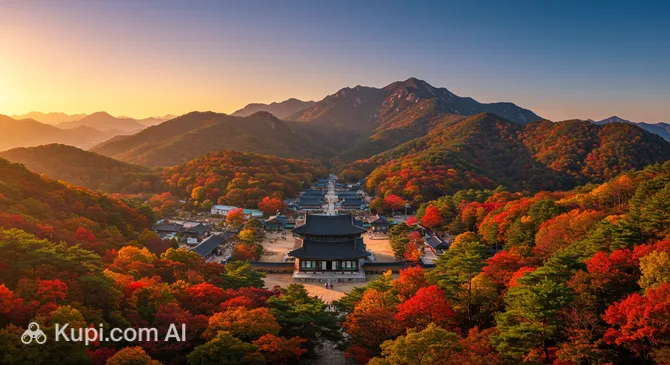
Yeongju. Illustration.
Source: Kupi.com AI

The atmosphere in Yeongju is characterized by tranquility and hospitality. It is a pleasure to stroll through its quiet streets, enjoy the beauty of the surrounding nature, and discover cultural treasures. The city is a real find for those seeking authentic Korea away from the hustle and bustle of major metropolises. Here, you can feel the slow pace of local life, get to know their traditions, and be inspired by the splendor of the mountains.

Yeongju is an excellent destination for travelers looking to explore the country's hidden corners. Guests can look forward to ancient temples, impressive nature parks with scenic waterfalls, and unique cultural events. This city carefully preserves its rich history and generously shares it with everyone who decides to visit.

You can find more interesting facts on the Yeongju city history page.
Weather Overview

The weather in Yeongju is characterized by clearly defined seasons. Summer, especially in July and August, is warm here, with average temperatures around 24-25°C, and these are also the wettest months with the most precipitation and rainy days (up to 17 per month). Winters, in contrast, are cold, with average temperatures ranging from -2.2°C in January (the coldest month) to 0.4°C in February, and significantly less precipitation. Spring and autumn are transitional seasons with moderate temperatures: in spring, the temperature gradually rises from 6.3°C in March to 16.3°C in May, while in autumn it decreases from 19.7°C in September to 6.2°C in November. Expect warm summers with periodic rains and cold, relatively dry winters. More detailed information can be found on the Yeongju Climate page.

Average monthly temperature

Average monthly precipitation

Interesting Facts

Yeongju is not only a city with a rich history and picturesque landscapes but also a place that holds many surprising secrets and little-known details. Ready to see it from a new perspective? Here are some interesting facts about Yeongju that might surprise you.

  • Historical Name Changes: Before receiving its modern name during the Joseon Dynasty, the territory where Yeongju is now located was home to ancient counties known as Naegi and Guppolsan. This testifies to the city's deep historical roots.

  • Sacred Peaks of Sobaeksan: The city is nestled at the foot of the Sobaeksan mountain range. These mountains are not just a popular natural park but also a significant site for pilgrims, considered sacred. In autumn, the slopes of Sobaeksan burst into vibrant colors, creating an unforgettable sight.

  • UNESCO Treasure – Buseoksa Temple: Yeongju is home to one of Korea's oldest and most significant Buddhist temples – Buseoksa. Founded in the 7th century, this temple is a UNESCO World Heritage site and impresses not only with its ancient architecture but also with stunning panoramic views of the surrounding landscapes.

  • Yeongju Waterfall and the Wishing Rock: Not far from the city lies the picturesque Yeongju Waterfall. Nearby, you can see an unusual rock shaped like a human footprint. According to local beliefs, this rock has the power to bring good luck in business and help fulfill cherished wishes.

How to Get There

When planning a trip to this picturesque corner of Gyeongsangbuk-do province, it is important to think about logistics in advance, as the city is located away from the capital region. You can find more details on how to get to Yeongju and explore all available routes, while below we look at the key transport hubs most convenient for planning your trip.

Yeongju does not have its own airport, so travelers will need to use one of the air hubs in neighboring large cities and then transfer to ground transport. One of the most convenient options is Daegu International Airport (IATA: TAE). It is located in the city of Daegu, about 103 km from Yeongju. This is a major regional hub that handles many flights. The journey from there by intercity bus or taxi takes about 1.5–2 hours.

Another popular option, especially for those on domestic flights or flying from certain Asian countries, is Gimpo Airport (IATA: GMP), located in Seoul. Although it is about 182 km away, the capital's excellent transport links allow you to reach Yeongju in 2.5–3 hours. It is also worth mentioning Cheongju Airport (IATA: CJJ) in Cheongju. This is physically the closest airport (about 101 km), but the number of flights here may be fewer than in Daegu or Seoul.

For convenience, here is summary information on the main airports located relatively close to the region:

AirportPassenger trafficDistance
Wonju Airport205 27990 km
Cheongju Airport4.6 mln101 km
Daegu International Airport3.3 mln103 km
Pohang Airport253 703117 km
Ulsan Airport786 739151 km

Rail service in South Korea is excellently developed, and trains are often the number one choice for tourists. Although Yeongju has its own railway station, many travelers use major high-speed train (KTX) transfer hubs to enter the region.

A key hub is Dongdaegu Station (IATA: XDK), located in Daegu, about 105 km from Yeongju. This is one of the busiest stations in the country with a huge passenger flow. High-speed trains from Seoul and Busan arrive here, after which you can transfer to a regional train or bus to Yeongju. Another important hub is Daejeon Station in Daejeon (122.7 km from Yeongju), which serves as a major junction for many of the country's rail lines.

Below is a table with information about major railway stations that can serve as transit points when traveling to Yeongju:

StationPassenger trafficDistance
Dongdaegu Station20 mln105 km
Daejeon Station18.6 mln123 km
Gwangmyeong Station12.4 mln168 km
Jinju Station191 km
Yeosu Expo Station243 km

Main Attractions

Yeongju, a city with a rich history and culture, offers travelers unique attractions that immerse them in the atmosphere of ancient Korea. Here, everyone will find something interesting, from ancient temples to picturesque villages and places where you can experience the local cuisine.

One of the places where you can taste traditional Korean dishes is the Heungbuga restaurant. This establishment attracts visitors with the opportunity to get acquainted with the region's authentic cuisine and enjoy a welcoming atmosphere. Visiting such places is a great way to understand the culture more deeply through gastronomic traditions.

Heungbuga. Illustration.
Source: Kupi.com AI

Traveler photos:

One of the main gems of Yeongju is rightfully considered Buseoksa Temple. Founded in 676, this ancient Buddhist temple is famous for its exquisite architecture and stunning views of the surrounding mountains. The temple's main hall, Muryangsujeon, is one of the oldest wooden structures in Korea and is recognized as a national treasure. Buseoksa Temple is not just a religious site, but a place of peace and contemplation, attracting pilgrims and tourists with its beauty and spiritual significance.

Another iconic site near Yeongju is Sosu Seowon, the first Confucian academy in Korea, founded in 1543. This historical site, included in the UNESCO World Heritage list as part of the "Seowon, Korean Neo-Confucian Academies," played a vital role in the education and spread of Confucian ideas. Today, visitors can walk through the academy's well-maintained grounds, explore the preserved buildings, and feel the scholarly spirit of past centuries.

For those who want to immerse themselves in the atmosphere of a traditional Korean village, Museom Village is a must-visit. This picturesque village, located on a river island, has preserved many ancient hanok-style houses. A walk through the narrow streets, surrounded by centuries-old buildings and beautiful nature, will leave an unforgettable impression and allow you to touch the lifestyle of Koreans from past centuries.

Local Cuisine

The gastronomic world of Yeongju is a true immersion into authentic Korean cuisine, capable of surprising even the most sophisticated gourmet. The city is famous for its traditional recipes passed down from generation to generation and the use of the freshest local products. If you want to get to know the true taste of South Korea, Yeongju will be a real discovery for you.

The main gastronomic celebrity of Yeongju is undoubtedly kuksu – buckwheat noodles. This dish is served both cold and hot, with rich broths and fresh seasonal vegetables. Kuksu is considered the region's signature dish and a mandatory item on any traveler's menu. It's also worth paying attention to dishes made from wild spinach and other seasonal vegetables gathered in the surrounding mountains. Local chefs masterfully turn them into spicy snacks (banchan), aromatic soups, and light salads, generously seasoning them with homemade sauces and spices. And, of course, you cannot overlook the famous kimchi, which is prepared here according to special, ancient recipes.

Street food and local markets are another important part of Yeongju's gastronomic culture. At vibrant markets, you can not only buy the freshest farm products, such as honey, mushrooms, nuts, berries, and the famous Korean ginseng, but also try various street delicacies. Among them, pyan-se – appetizing steamed buns filled with meat and vegetables – and sweet rice cakes are particularly popular, making for a great snack while walking around the city.

Locals and tourists enjoy food both in cozy traditional restaurants and at bustling street markets. One such restaurant where you can taste local cuisine is Heungbuga. Meals are usually accompanied by traditional Korean drinks, both non-alcoholic, like the sweetish rice drink sikhye, and light alcoholic ones, like makgeolli. Yeongju also regularly hosts gastronomic festivals where you can not only try many dishes but also learn the secrets of their preparation at engaging masterclasses.

Heungbuga. Illustration.
Source: Kupi.com AI

Traveler photos:

Yeongju's cuisine is a combination of centuries-old traditions, fresh seasonal products, and a sincere love for the craft. Visiting this city will give you unforgettable taste impressions and allow you to understand the region's culture more deeply.

Travel Tips

Planning a trip to the charming city of Yeongju? These practical tips will help you better prepare for your journey and enjoy every moment of your stay in this corner of South Korea, known for its rich history and natural beauty.

  1. Clothing and Essentials:

    The climate in Yeongju is continental: hot summers and cold winters. In summer (June-August), bring light, breathable clothing, sunscreen, and a hat. In winter (December-February), you will need warm layers, including a jacket, hat, gloves, and a scarf. In spring and autumn, the weather is mild, making layers ideal. Extremely important are comfortable shoes, as there are many historical sites and nature trails in Yeongju, such as when visiting Buseoksa Temple. For visiting temples, choose modest clothing that covers shoulders and knees. Don't forget an adapter for power outlets (in South Korea, types C and F are used, voltage 220V).

  2. Local Transport:

    The main form of public transport in Yeongju is buses – they are quite convenient for moving around the city and to nearby attractions. Taxis are also available and relatively inexpensive; you can try using the Kakao T app, although a local SIM card and bank account might be needed for full functionality. Car rental is possible with an International Driving Permit, but can be difficult due to the language barrier and parking specifics. Many central areas and historical sites can easily be explored on foot.

  3. Finance:

    The local currency is the South Korean Won (KRW, ₩). You can exchange money at banks or official exchange offices; the rate is usually better than at the airport. Credit and debit cards (Visa, Mastercard) are accepted almost everywhere in shops and restaurants, though small vendors may prefer cash. International cards generally work, but it is recommended to notify your bank about your trip. Look for ATMs labeled "Global ATM." An approximate daily budget (excluding accommodation) might be 70,000-150,000 won. Tipping in South Korea is not expected; a service charge is often already included in the bill.

  4. Health and Safety:

    Pharmacies (in Korean 약국, "yakguk") are easy to find, but staff may not always speak English – translation apps can help. Not all pharmacies are open 24/7. If you need medical assistance, go to a hospital (병원, "pyeongwon"). It is highly recommended to have travel insurance. The emergency number is 119. Yeongju, like most cities in South Korea, is a very safe city. Observe standard precautions: watch your belongings and be aware of your surroundings.

  5. Communication:

    The official language is Korean. English proficiency is limited, especially among the older generation and outside tourist zones. Useful phrases: "Annyeonghaseyo" (Hello), "Gamsahamnida" (Thank you), "Olmaeyo?" (How much is it?). A SIM card with internet access can be purchased at the airport or large convenience stores. Wi-Fi is widely available in cafes, public spaces, and hotels. Recommended apps: Naver Maps (for navigation, as Google Maps has limitations in Korea) and Papago (for translation).

  6. Local Etiquette:

    A slight bow is common when greeting; handshakes are also used. In public places, especially on transport, it is customary to speak quietly. Please wait your turn in line. Show politeness: when passing or receiving something (especially from elders or in official settings), use both hands. Do not point at people or objects with one finger – use an open palm. When eating, do not stick chopsticks vertically into your rice bowl. Elders usually start the meal first.

  7. What to Avoid:

    Try to avoid sensitive political topics, such as relations with North Korea or complex historical issues with Japan, unless a local resident starts the conversation themselves and you are well-informed. Also, avoid writing people's names in red ink, as it is associated with bad luck or death.

  8. Extra Tip:

    Yeongju is famous for its apples and ginseng. If your trip coincides, try to visit the Punggi Ginseng Festival (usually in October) or the Yeongju Apple Festival. Be sure to explore Sosu Seowon Confucian Academy and the majestic Buseoksa Temple to dive deeper into Korean history and culture. Also, check out the local markets – it’s a great way to feel the authentic atmosphere of the city.

We hope these tips make your trip to Yeongju even more comfortable and unforgettable. Enjoy the unique charm of this historical city!

Entertainment & Nightlife

Yeongju, a charming city in Gyeongsangbuk-do province, offers its guests a cozy and authentic evening atmosphere rather than the frantic nightlife of big metropolises. Nevertheless, you can find pleasant ways to spend the evening and get to know the local culture, especially if you are looking for a relaxing break and traditional Korean entertainment.

Main evening activities in Yeongju are concentrated around the central city streets. Here you will find numerous restaurants, cafes, and traditional Korean drinking establishments known as "hofs" – a type of pub offering beer and snacks – or "makgeolli jip," where you can try the traditional Korean rice wine, makgeolli. The atmosphere in such places is usually friendly and relaxed, attracting mostly a local crowd. Many restaurants are open until late evening, offering a great opportunity for dinner. One such place where you can enjoy a delicious evening meal is the Heungbuga restaurant, famous for its traditional Korean dishes.

As for nightclubs in the Western sense, there are few in Yeongju, and they may be geared toward specific tastes. The city is better known for other forms of leisure. A very popular type of evening entertainment in South Korea is the "noraebang" (karaoke room). It is a great place to have fun with a group by singing your favorite songs. You can find a noraebang in almost any commercial district. Sometimes in the evenings, especially during the warmer months, small night markets may operate in some parts of the city, offering street food and local goods; however, it is best to check their availability and schedule locally.

Practical tips for evening leisure in Yeongju:

  • Visiting Time: Most establishments start to liven up after 7:00 PM - 8:00 PM. Restaurants usually stay open until 10:00 PM - 11:00 PM, while some bars and noraebangs stay open longer, sometimes until the early morning, especially on weekends.
  • Prices: Prices in Yeongju are generally more moderate compared to major South Korean cities. A dinner in a restaurant or an evening at a bar will cost a reasonable amount.
  • Dress Code: There is no specific dress code in most Yeongju establishments. A neat casual style is welcomed.
  • Transport: At night, taxis are the main mode of transport. You can catch one on the street in busy areas or call one via an app (if you have a local SIM card and the appropriate app), or ask the staff at an establishment to call one for you.
  • Safety: Yeongju, like South Korea in general, is considered a safe city. However, standard precautions, especially at night, are always advisable. Try to stick to well-lit and crowded streets.

While a bustling nightlife isn't Yeongju's main draw, the city offers plenty of options for a pleasant evening, especially for those who want to dive into the local authentic atmosphere. During the day, you can explore the cultural and historical attractions the region is famous for, such as Buddhist temples or scenic parks, to get a complete impression of this corner of South Korea.

Parks & Museums

Yeongju is a city where natural beauty and rich cultural heritage harmonize, offering guests both peaceful green corners and fascinating immersions into history.

For nature lovers, the surroundings of Yeongju offer magnificent opportunities. Special mention should be made of the proximity to Sobaeksan National Park, known for its picturesque mountain ranges, ancient forests, and various hiking trails. Although the park is not directly within the city limits, visiting it will be an unforgettable experience. Within Yeongju itself, you can find cozy squares and walking zones, for example, along the river, where you can take a break from the city's hustle and bustle and enjoy the tranquility.

Speaking of the cultural heritage of Yeongju, one cannot fail to mention Buseoksa Temple. This ancient Buddhist monastery, one of the oldest in South Korea, is famous for its unique architecture, including the country's oldest surviving wooden building, and is an important center of spiritual life. Another iconic site is Sosu Seowon, the first Confucian academy (seowon) in Korea, founded in the 16th century. It played a key role in the spread of Neo-Confucianism and today is a valuable historical complex that introduces visitors to the traditions of Korean education. These sites are essentially open-air museums that preserve the spirit of the past and open pages of the region's history and culture to visitors.

In addition to these outstanding attractions, while walking through Yeongju, you can discover other interesting historical and architectural sites reflecting its rich history. Local markets also offer a unique opportunity to get acquainted with the daily life and culture of the city, purchase souvenirs, and try local delicacies.

For a more authentic experience, check out the smaller, lesser-known temples around Yeongju for solitary contemplation, or visit one of the farms where the famous apples – the pride and symbol of this region – are grown.

Getting Around

Getting around Yeongju and its surroundings is most convenient for tourists by bus and taxi. The city's bus network is well-developed and covers most areas and attractions. Yeongju is also an important railway hub, making trains a convenient way for intercity travel.

The main method of payment for public transport in South Korea, including buses in Yeongju, is the T-money transport card (or similar cards like Cashbee). These cards can be purchased and topped up at most 24-hour convenience stores (konbini), at subway stations in large cities, and at some kiosks. Cash payment on buses is also possible, but it is recommended to have the exact amount, as the driver may not always have change. The fare on city buses is usually fixed and relatively low.

To use the bus with a T-money card, simply tap the card against the validator when boarding and when exiting the bus. This is important because the system may calculate the fare based on distance or allow for a free transfer. Bus routes and schedules can be found at stops (information is often duplicated in English in tourist areas) or by using Korean navigation apps such as Naver Maps or KakaoMap. Buses typically run from early morning until late evening, but the exact schedule depends on the route.

An alternative to public transport is taxis. They are easy to find at special taxi stands or can be called by phone or through an app (for example, Kakao T). The fare is calculated by the meter. In some tourist zones or parks, bicycle rentals may be available, which is a pleasant way to see the sights in good weather.

It is worth noting that Yeongju Station is a major transport hub from which trains depart to various directions, including major cities. This makes trains an excellent choice for traveling to other regions of the country.

Accommodation

In the city of Yeongju, tourists can find a variety of accommodation options to suit different preferences and budgets. The choice of housing here allows you to find the optimal variant for both budget travelers and those looking for enhanced comfort.

In general, the following types of accommodation are available in Yeongju:

  • Hotels: Ranging from standard city hotels offering comfortable rooms and basic amenities to more modern options.
  • Motels and Guest Houses (Yeogwan/Minbak): A popular type of accommodation in South Korea, often offering good value for money. Some guest houses may have a more homelike atmosphere.
  • Traditional Korean Houses (Hanok): For those who want to immerse themselves in the local culture, staying in a hanok can be a unique experience. These houses offer an authentic setting, often with futons instead of beds.
  • Apartments and Vacation Rentals: These may be available through online platforms, especially for long-term stays or for traveling groups.

When choosing a place to stay in Yeongju, it is worth paying attention to areas located near the city's main attractions or transport hubs, which will ensure ease of movement. While specific famous hotels are not highlighted in the provided list, the city offers enough choice for a comfortable stay.

Booking Tip: It is recommended to book accommodation in advance, especially if your trip coincides with the peak tourist season or during local festivals. This will help ensure the best choice and prices. The price range varies from budget options to more expensive offerings. Booking is easily done through popular international and local online platforms, and sometimes by contacting the hotel or guest house directly.

Nearby Cities

For those who want to explore the surrounding area, Yeongju serves as an excellent starting point for day trips to several interesting nearby locations:

CityPopulationDistance
Yecheon43 00023 km
Andong162 18030 km
Jeomchon46 45246 km
Mungyeong71 86347 km
Taebaek46 71550 km

These nearby destinations provide a glimpse into the diverse culture and landscapes of the region. Especially noteworthy is Andong, known as the center of Korean traditional culture, with its famous Hahoe Folk Village. Chungju attracts with its natural beauty, including Lake Chungjuho and the mountains. Wonju offers a combination of urban life and natural parks, such as Chiaksan National Park.

Shopping & Souvenirs

Shopping in Yeongju is an immersion into the authentic atmosphere of a Korean province, where the focus is on local products and traditional goods rather than global brands. The city is famous for its agricultural products, especially apples and ginseng, making it attractive for buying unique and healthy souvenirs. Here, you will find fewer giant malls and more cozy local shops and colorful markets.

The main shopping areas in Yeongju are generally concentrated around the central city streets, as well as near the railway station or bus terminal. Here you can find small shops selling clothing, cosmetics, household goods, and, of course, many cafes and snack bars to rest at during your shopping. These are not the noisy shopping districts of metropolises, but rather places for leisurely purchases and getting to know local life.

Large modern shopping centers in the Western sense in Yeongju may be more modest than in South Korea's big cities. Instead, you may encounter local department stores or multi-story buildings with various small shops offering a variety of goods – from clothing to electronics. The main emphasis in such places is on goods for locals, but tourists will also find something interesting.

Special attention should be paid to the traditional markets of Yeongju – they are the heart of local trade and culture. One of the most famous is the Punggi Ginseng Market, located in Punggi, which is in close proximity to Yeongju and is famous for high-quality ginseng. Here you can buy ginseng in all its forms: fresh, dried, as extracts, teas, and sweets. Also, in Yeongju itself, there are local traditional markets, such as the Yeongju Traditional Market (Yeongju Sijang), where fresh fruit (including the famous Yeongju apples), vegetables, seafood, ready-to-eat street food, clothing, and household items are sold. Visiting such markets is a great opportunity to observe the daily life of Koreans and try local delicacies.

As souvenirs from Yeongju, you should primarily bring back ginseng products – it is the region's hallmark. Local apples and apple products (dried apples, apple chips, jams) are also popular. Look out for traditional Korean crafts: ceramics, hanji paper products, and small decor items. Sometimes you can also find local textiles or traditional clothing at the markets.

Most shops in Yeongju typically operate from 10:00 AM - 11:00 AM to 8:00 PM - 9:00 PM. Traditional markets may open earlier, especially the food stalls. Regarding payment, most shops and even markets accept credit cards (Visa, Mastercard). However, keep some cash with you for small purchases or at tiny stalls. Mobile payment systems are also common in South Korea.

For foreign tourists in South Korea, there is a Tax Free system. Look for shops with the corresponding logo (usually "Tax Free" or "Global Blue"). When purchasing over a certain amount (usually from 30,000 won on one receipt), you can fill out documents for a VAT refund. The refund can be obtained at the airport when leaving the country or at special refund points in major cities.

Reached the end of the page?

That means the route is fully explored