Located in the heart of North Gyeongsang Province, Gyeongsan is a fascinating blend of academic drive and traditional Korean hospitality. As a key satellite city of the Daegu metropolitan area, it is harmoniously integrated into its infrastructure while maintaining its own distinct identity as the region's largest educational center. Here in South Korea, Gyeongsan is often referred to as the "University City" due to its high concentration of educational institutions and the youthful energy that fills its streets.
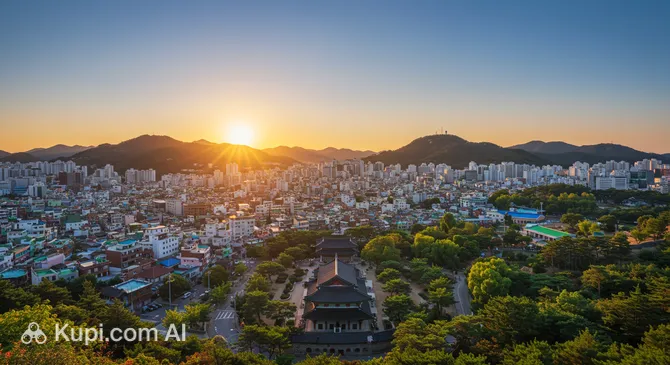
Geographically, the city sits on the eastern edge of the Daegu Basin, providing scenic views and a gentle landscape. With a population of about 278,500 people, Gyeongsan is free from the frantic pace of the capital, offering residents and visitors a peaceful suburban atmosphere with well-developed infrastructure. Gyeongsan. Illustration.
Source: Kupi.com AI
The rich history of Gyeongsan is reflected in its administrative divisions and architectural style, where modern campuses stand side-by-side with traditional neighborhoods.
For travelers, Gyeongsan is particularly interesting for its green spaces and authentic markets. Notable landmarks include the famous "Love Road" at Yeungnam University and the bustling Public Market. Gyeongsan invites those who want to see everyday life in Korea, immerse themselves in a student environment, and enjoy a comfortable getaway away from the busy tourist routes.
Weather Overview
Gyeongsan is located in a humid subtropical climate zone, which takes on continental characteristics here due to its distance from the coast. This means that summers in the city are quite hot and humid, while winters are moderately cold and dry. A pleasant feature of the region is that it receives slightly less rainfall than the national average, thanks to the protective effect of the surrounding mountains.
The hottest month is August, with average daytime temperatures around +30°C, while January brings a brisk chill with night frosts down to -4°C. Rainfall is unevenly distributed: most of it occurs during the monsoon season in July and August. If you are planning a trip, be sure to check the current Gyeongsan weather forecast to prepare for the conditions.
The best time to visit is spring (April–May) and autumn (September–October). During these periods, the temperature is a comfortable +15...+20°C, and nature delights with vibrant colors: in spring, the city is bathed in cherry blossoms, and in autumn, it turns golden-crimson. Winter, though frosty at times, usually offers many sunny and dry days.
Average monthly temperature
Average monthly precipitation
Interesting Facts
In 2006, Gyeongsan became a center of global scientific attention by hosting the 38th International Chemistry Olympiad, featuring talented students from dozens of countries.
The city holds a unique status as an "educational hub": it is home to several major universities, including Yeungnam University and Daegu University, making the youth the main driving force of the local economy.
Gyeongsan is considered the strategic "Gateway to Daegu" — all key transport arteries connecting the region with Busan, Ulsan, and Gyeongju pass through it.
The city's administrative structure is constantly evolving: as recently as 2020, the Amnyang district officially changed its status to the more prestigious "eup" (town) due to rapid population growth.
The city is situated at a unique geographical point on the eastern edge of the Daegu Basin, which creates a special microclimate with less rainfall compared to the coastal areas of the peninsula.
How to Get There
Gyeongsan boasts excellent accessibility, being an important hub on the route from Seoul to Busan. Thanks to its integration into the public transport system of the neighboring metropolis, travelers can easily combine different ways of getting around. Detailed information on routes can be found in the how to get to Gyeongsan section.
The nearest aviation hub is Daegu International Airport (TAE). It is located just a 30–40 minute drive away by taxi or bus. The airport serves both domestic flights and international destinations within Asia. For those arriving from abroad via Incheon, it is most convenient to take a high-speed train or a domestic flight to Daegu, followed by a short transfer.
The railway remains the primary mode of transport for tourists. Gyeongsan Station is located on the main Gyeongbu line. KTX high-speed trains reach Gyeongsan from Seoul in about 2 hours, while the trip from Busan takes 1 to 1.5 hours. Regular suburban trains also run, connecting the city to the center of Daegu in just 10–15 minutes, making travel between the cities incredibly fast and convenient.
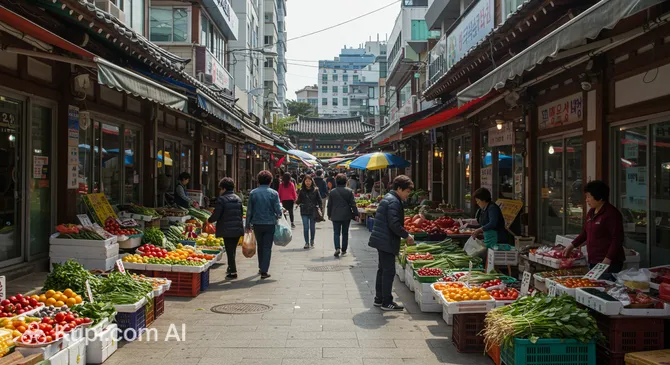
While Gyeongsan is primarily known as an educational hub, it hides several gems worth visiting. One of the most colorful spots is the Gyeongsan Public Market. This is the heart of city trade, where you can not only buy fresh local produce but also feel the genuine rhythm of life in the Korean province. The market is famous for its rows of traditional snacks and welcoming atmosphere.
Gyeongsan Public Market. Illustration.
Source: Kupi.com AI
Traveller photos:
For nature lovers and those seeking peaceful strolls, "Love Road" on the Yeungnam University campus is a must-see. This picturesque alley is especially beautiful during the cherry blossom season. It is immensely popular with students and local couples, serving as a romantic symbol of the city. Here you can enjoy the quiet, the campus architecture, and the well-kept landscapes.
Those interested in spiritual heritage should head to the famous Gatbawi Rock, located on the city's border. This is a majestic Buddha statue with a flat stone on its head that resembles a "gat," a traditional Korean hat. It is believed that a sincere prayer here will grant at least one wish, so a trail leads to the rock that is popular with both pilgrims and hikers looking to enjoy the panoramic views of the surroundings.
Local Cuisine
The culinary scene in Gyeongsan is a true paradise for those looking for honest and affordable Korean cuisine. The local menu is based on traditional dishes from North Gyeongsang Province: hearty soups, various types of kimchi, and, of course, samgyeopsal (grilled pork belly). Thanks to the massive student population, the city thrives on a culture of inexpensive but high-quality street food, where ramen, tteokbokki, and steamed buns are king.
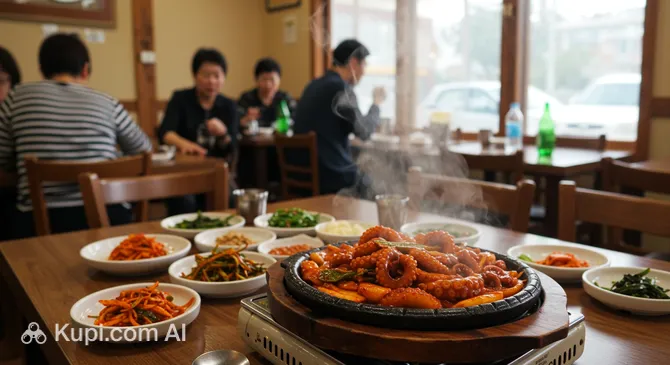
If you want to try something more refined, it's worth visiting Manbok Fried Octopus. This establishment is popular with locals for its signature spicy seafood dishes. For those missing international flavors, Taj Mahal Restaurant is an excellent choice, offering authentic Indian dishes that highlight the multicultural nature of this university city.
Manbok Stir-fried Octopus. Illustration.
Source: Kupi.com AI
Traveller photos:
Markets hold a special place in the city's culinary life, where you can taste the freshest fried fish and the seasonal fruits the region is famous for. Meals are traditionally accompanied by makgeolli (rice wine) or soju, while non-alcoholic drinkers will appreciate the variety of teas and modern coffee drinks in the numerous student cafes. In Gyeongsan, food is not just fuel, but a way to connect with the rhythm of suburban Korean life.
Travel Tips
A trip to Gyeongsan will be a pleasant and easy experience if you consider a few practical nuances of suburban Korean life beforehand.
Clothing and Seasons: Summers are hot and humid, while winters are dry and cool. Be sure to bring comfortable shoes for walking around campuses. For visiting temples or official institutions, it is better to choose a modest style of dress.
Transport Hack: Buy a T-money card as soon as you arrive. It works on buses, subways, and even in taxis. For navigation, use the Naver Maps or KakaoMap apps, as Google Maps is unreliable here.
Finances: The national currency is the Korean Won (KRW). Cards are accepted almost everywhere, but it's better to have some cash on hand for traditional markets. ATMs with a "Global" sign work with international cards.
Connectivity: Wi-Fi is available in all cafes and universities, but for freedom of movement, buy a local SIM card or rent a portable router at the airport. English is common among students, but outside of campuses, it's better to have a translator handy.
Safety and Health: The city is very safe at any time of day. Pharmacies are easy to find by the sign "약" (Yak). Tap water is fine for washing, but Koreans prefer to drink bottled or filtered water.
Etiquette: Greet people with a slight bow. When passing money or items, use both hands — this is a sign of respect. On public transport, try not to talk loudly on the phone.
What to Avoid: Do not leave chopsticks standing vertically in a bowl of rice — this is associated with funeral rites. Also, try to avoid loud arguments in the street; Koreans value saving face and maintaining composure.
Rush Hours: Try not to plan trips to Daegu from 7:30 to 9:00 and from 17:30 to 19:00 to avoid heavy crowds on buses and traffic jams on the highways.
May your time in Gyeongsan be filled with only positive emotions and interesting discoveries in this dynamic student city!
Entertainment & Nightlife
Nightlife in Gyeongsan has a distinct student character, which defines its style and pace. Most activity is concentrated in the areas adjacent to major universities, such as Yeungnam. You won't find massive, flashy clubs here, but you will discover plenty of cozy bars, themed cafes, and classic Korean karaoke rooms — noraebangs — that stay open late into the night.
Young people prefer to spend their evenings in small venues with craft beer or traditional makgeolli, discussing the latest news over a serving of snacks. If you're looking for something spicy and authentic before a night walk, stop by the Manbok Fried Octopus restaurant, which serves excellent seafood dishes. The atmosphere in the city after sunset remains very calm and safe, making a walk through the well-lit streets a pleasant end to the day.
Manbok Stir-fried Octopus. Illustration.
Source: Kupi.com AI
Traveller photos:
For those seeking large-scale clubbing or sophisticated wine bars, locals recommend heading to neighboring Daegu. Thanks to excellent transport links, the journey to the metropolis's entertainment districts takes only 15–20 minutes. However, daytime entertainment in Gyeongsan itself, such as modern cinemas near shopping centers and bowling alleys, fully satisfies the need for quality leisure.
Parks & Museums
Gyeongsan's cultural and natural landscape is closely tied to its academic heritage and the rural traditions of the province. The primary center for historical education is the Samseonghyeon History and Culture Museum. This museum is dedicated to three prominent historical figures of Korea born in this region and offers a deep dive into the philosophy and culture of the past through modern interactive exhibits.
The city's green zones are mostly concentrated around university campuses, which are open to the public and serve as full-fledged parks. The Yeungnam University grounds are an expansive space with lakes, wooded trails, and well-kept lawns, perfect for leisurely walks or picnics. Here you can find students preparing for classes as well as families enjoying nature within the city limits.
For those seeking more secluded relaxation, the city's outskirts offer picturesque walking routes in the rural areas (myeons). While there are no massive national parks within Gyeongsan itself, the abundance of greenery along the roads and small municipal parks create a comfortable environment for rest. If you crave more grand natural landscapes, city residents often choose trips to nearby mountain regions or the parks of Daegu.
Getting Around
The public transport system in Gyeongsan is highly developed, largely due to its close integration with the Daegu transport network. Buses are the backbone of local travel. An extensive network of routes connects residential districts (dongs), towns (eups), and university campuses. Buses run frequently, with intervals of 10–20 minutes, ensuring comfortable connections even with outlying parts of the city.
The most convenient way to pay for fares is using a unified transport card like T-money or its local equivalent, Cashbee. The card can be purchased and topped up at any 24-hour convenience store like 7-Eleven or CU. You must tap your card both when entering and exiting the bus — this allows the system to calculate the fare correctly and provide free or discounted transfers to other routes or the subway within a certain timeframe.
Alternatives to buses include trains departing from Gyeongsan Station and taxis, which are relatively inexpensive and very safe in Korea. Cycling is also popular among youth and students, especially for getting around the massive campus territories. It is important to remember that during rush hours (morning and evening), traffic jams are possible on key roads heading towards Daegu, so it's best to plan long-distance trips with a bit of extra time.
Accommodation
The choice of accommodation in Gyeongsan reflects its status as a student and residential center. You will rarely find massive luxury hotel chains here, but there is an abundance of quality motels, guesthouses, and apartments. Korean motels in this region are a modern and affordable lodging option, offering high levels of comfort, cleanliness, and all necessary amenities at a reasonable price.
The most convenient area for a short-term stay is the zone around Yeungnam University (Yeungnam Univ.). Due to the large number of students, all necessary infrastructure is concentrated here: inexpensive cafes, shops, and excellent transport links. This is the perfect place for those who want to be in the center of the action and have quick access to the subway and buses heading to Daegu.
For longer stays or budget travel, visitors often choose apartments or small private hotels in quiet residential neighborhoods. It is recommended to book accommodation in advance, especially during the start of the academic year or during major university events when the demand for rooms surges. Most bookings can be conveniently made through popular international or local online services.
Nearby Cities
Gyeongsan is an ideal base for exploring the southeastern part of the Korean Peninsula. Excellent transport links allow tourists to make rich day trips to neighboring cultural and industrial centers, returning to the city's peaceful atmosphere by evening.
Just 20 kilometers to the west lies the metropolis of Daegu. It is a massive city offering endless shopping opportunities in modern malls, art museums, and theme parks. A bit further away is the legendary Gyeongju — a true "museum without walls" where you can see ancient Silla dynasty tombs and magnificent Buddhist temples. Also worth noting is the charming city of Miryang, known for its picturesque river landscapes and historical pavilions.
For those who prefer shorter trips, a visit to Hayang or the quiet Angang is ideal. Exploring Gyeongsan's surroundings allows you to see different sides of Korea: from futuristic skyscrapers to ancient shrines and cozy provincial streets.
Shopping & Souvenirs
Shopping in Gyeongsan is primarily about practicality and local charm. There are no high-fashion boutique districts here, but the city offers an excellent selection of goods for everyday life. Most retail activity is concentrated around the university districts, where shops selling youth fashion, cosmetics, and stationery offer very affordable prices.
For those seeking an authentic experience, the Gyeongsan Public Market is a must-visit. It is the perfect place to buy local produce, fresh fruit, and traditional Korean sweets. You can also find inexpensive household goods and Korean-style clothing here. Markets in Gyeongsan maintain a cozy atmosphere where sellers are often happy to chat with customers.
Gyeongsan Public Market. Illustration.
Source: Kupi.com AI
Traveller photos:
For major purchases and brand-name items, locals prefer to shop at modern malls located on the border with Daegu, featuring giants like E-Mart or Lotte. Shops in Gyeongsan typically operate from 10:00 to 21:00 or 22:00, and card payments are accepted almost everywhere. Popular souvenirs from the city include high-quality Korean cosmetics, university merchandise, or local agricultural products like dried jujubes.
We use cookies and services to collect user information. This is essential for the functioning of the site and for marketing purposes. You can find out more in .