Support

Suncheon

About

Suncheon is a cozy and stunningly picturesque city located in the southwest of South Korea, in Jeollanam-do province. It lies along the coast of Suncheon Bay, where fresh and salt waters meet, creating unique ecosystems. Surrounded by green hills, rice paddies, and thick reed beds, the city is a true paradise for nature lovers. With a population of about 265,000 people, Suncheon is considered one of the region's significant cultural and transportation hubs, while still retaining the charm of a peaceful retreat.

Suncheon. Illustration.
Source: Kupi.com AI

Despite its size, Suncheon has a wonderfully relaxed and friendly atmosphere, seemingly designed for leisurely exploration and family trips. This city is an ideal place for those who want to see the real Korea without the hustle and bustle of the capital, where ancient traditions and modern conveniences harmoniously blend. Here you will find scenic parks and stunning bay views, with every corner of the city filled with its own special charm.

Among the key attractions that draw tourists are the Suncheon Bay National Garden, which impresses with its landscape design and diverse flora, and the Naganeupseong Folk Village, where you can immerse yourself in the atmosphere of Korea from past centuries while walking among traditional thatched-roof houses. The famous Suncheon Bay Wetland Reserve, known for its vast reed fields and as an important habitat for migratory birds, is also a must-visit. Suncheon is a treasure trove of experiences, inviting you to discover its natural wonders, rich cultural heritage, and the hospitality of its locals.

You can find more interesting facts on the Suncheon city history page.
Weather Overview

The weather in Suncheon is characterized by clearly defined seasons. Summer, especially July and August, is warm and humid, with average temperatures reaching 25–26°C and the highest amount of precipitation (up to 10 mm in July) and rainy days. Winter, from December to February, is cool, with average temperatures around 1–3°C, sometimes dropping below zero, and significantly less precipitation (1–2 mm). Spring and autumn offer moderate temperatures and variable weather. Expect warm summers with occasional rain and cool, drier winters. To learn more details, check out the detailed forecast: Suncheon Climate.

Average monthly temperature

Average monthly precipitation

Interesting Facts

In addition to its well-known attractions, Suncheon holds many surprising stories and features that make it a truly unique place to explore. Known for its natural beauty and cultural heritage, the city is ready to surprise even the most seasoned traveler.

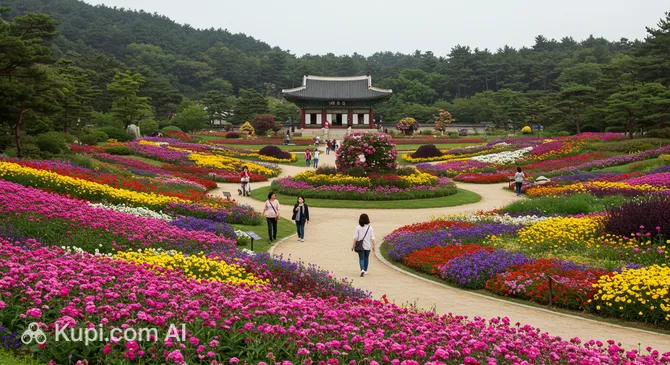
Suncheon Bay National Garden. Illustration.
Source: Kupi.com AI

Traveler photos:

  • Suncheon is home to the famous Suncheon Bay Wetlands, which feature the densest reed beds in all of Korea. This place is a true paradise for birdwatchers, as about 140 species of birds visit annually, including rare species such as cranes, storks, and spoonbills.

  • One of the city's main highlights is the Suncheon Bay National Garden. It was created to protect unique ecosystems and is currently the largest garden of its kind in the country. More than 790,000 trees of 505 different species and about 3.3 million flowers are planted across its vast territory, creating an incredible sight.

  • Suncheon boasts the Naganeupseong Folk Village, an authentic Korean historical village. The uniqueness of this place lies in the fact that people still live here, maintaining a traditional lifestyle in thatched-roof houses and allowing visitors to immerse themselves in the atmosphere of medieval Korea.

  • The city of Suncheon has long established itself as a popular filming location for many famous Korean films and TV series (K-dramas). A special "Open Film Set" has even been created here for these purposes, where you can walk through the sets and feel like a character from your favorite movie.

How to Get There

When planning a trip to this picturesque corner of Jeollanam-do province, it is important to think about your route in advance. The city has good transport accessibility, although it does not have its own airport. You can find out more details about how to get to Suncheon by studying various route options, including bus and rail connections.

Since there is no airport in Suncheon itself, travelers usually fly into neighboring cities. The closest option is Yeosu Airport (RSU), located in the city of Yeosu, just 17.6 km from Suncheon. This is a convenient regional hub that handles domestic flights. A trip from there by taxi or bus will take about 45–50 minutes, making it the fastest way to reach your destination after landing.

For international travelers, Gimhae International Airport (PUS) in Busan is often a more suitable choice. This is a major aviation hub with high passenger traffic, receiving flights from all over the world. It is located approximately 135 km from Suncheon. The journey by car or bus from here takes about 3 hours and 40 minutes. You can also consider Gwangju Airport (KWJ) in Gwangju (about 64 km away), with a travel time of approximately 2 hours.

For convenience, here is a summary of the main airports:

AirportPassenger trafficDistance
Yeosu Airport1 mln18 km
Sacheon Airport219 28955 km
Gwangju Airport2.0 mln64 km
Muan International Airport233 337101 km
Gimhae International Airport15.8 mln135 km

Rail service is another popular way to reach the region. If you are not taking a direct train to Suncheon itself, you can use major stations in neighboring cities. For example, Yeosu Expo Station is in Yeosu, about 33 km from Suncheon city center. From there, you can reach Suncheon by taxi or bus in about 1 hour and 10 minutes.

Another important transport hub is Gwangju-Songjeong Station in Gwangju. This station serves KTX high-speed trains and is 66.4 km from Suncheon. Travel time by road from this station is about 2 hours. Using these hub stations allows for flexible transfer planning if direct tickets are unavailable.

Below is a table of the nearest major railway stations:

StationPassenger trafficDistance
Yeosu Expo Station33 km
Jinju Station62 km
Gwangju Songjeong Station3.4 mln66 km
Mokpo Station1.8 mln102 km
Dongdaegu Station20 mln146 km

Main Attractions

Suncheon, nestled in Jeollanam-do province, offers its guests many interesting places to experience the nature and culture of the region. Several key attractions stand out as must-visit destinations.

One of the city's main gems is the Suncheon National Garden. It is a vast and magnificently maintained territory featuring gardens from various countries around the world, as well as unique ecological zones and themed installations. Visitors can spend hours walking along the picturesque alleys, admiring the incredible variety of plants and thoughtful landscape design. This place is perfect for nature lovers, photography enthusiasts, and those seeking quiet relaxation.

Suncheon Bay National Garden. Illustration.
Source: Kupi.com AI

Traveler photos:

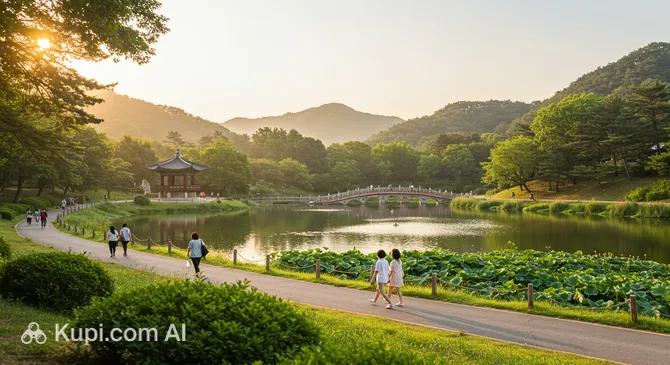
For those looking for peace and beautiful scenery, Jorye Lake Park will be a true discovery. This scenic park stretches around a calm lake and offers excellent walking routes, cozy picnic spots, and the chance to enjoy the silence and beauty of the water's surface. The park is especially charming at sunrise or sunset, when nature glows with vibrant colors.

Jorye Lake Park. Illustration.
Source: Kupi.com AI

Traveler photos:

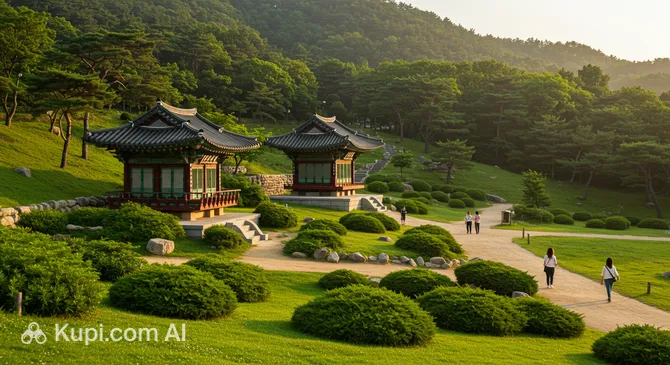
Another notable spot that should definitely be included in your itinerary is Jukdobon Park. Located on a hill, this park is famous for its breathtaking panoramic views of Suncheon and its scenic surroundings. After climbing to one of the observation decks, you will be rewarded with a magnificent sight, especially on clear days. The park is also an excellent place for leisurely strolls amidst greenery and fresh air.

Jukdobong Park. Illustration.
Source: Kupi.com AI

Traveler photos:

Local Cuisine

Suncheon is a true gastronomic paradise for lovers of authentic Korean cuisine. Thanks to its fortunate location by the sea and amidst fertile rice fields, the city is famous for dishes prepared from the freshest ingredients. A special point of pride for locals is the rice grown in these fields and the rich catch of seafood, which form the basis of many culinary masterpieces.

While traveling through Suncheon, it is definitely worth getting to know its gastronomic signatures. Try "sundae"—a traditional Korean blood sausage prepared here according to old recipes, giving it a unique taste. Another iconic dish is "kalguksu", which consists of hand-cut noodles in a rich, aromatic broth. At local markets and street stalls, an abundance of fresh oysters, mussels, and other seafood awaits you, often grilled right before your eyes. Don't forget the famous Korean kimchi—in Suncheon, it is made with special local herbs and spices, which give it a unique flavor profile.

As for drinks, traditional options are popular in Suncheon as they are throughout South Korea. "Makgeolli" deserves special attention—a slightly sweet and refreshing rice wine that perfectly complements many local dishes. You can also always find a variety of Korean teas and non-alcoholic drinks based on fruits and grains.

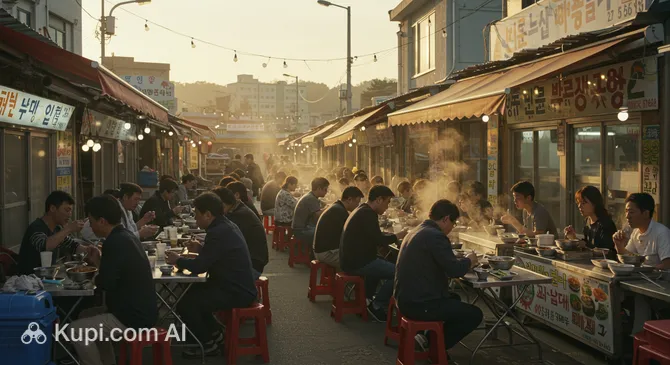
The dining culture in Suncheon is diverse, offering options for every taste and budget. Locals and tourists love to snack at bustling markets where you can try fresh produce and street food. The city is also known for its food festivals, where you can not only enjoy the region's best dishes but also participate in cooking masterclasses. For a more thorough introduction to local cuisine, you can visit one of the many restaurants, such as Namnyeokdeul Bapsang, where traditional Korean meals are served.

Namnyeokdeul Bapsang. Illustration.
Source: Kupi.com AI

Traveler photos:

Suncheon's gastronomic scene is a vibrant blend of tradition and freshness. From street delicacies to exquisite restaurant meals, the city offers every traveler an unforgettable culinary experience that allows for a deeper understanding of the culture of this amazing corner of South Korea.

Travel Tips

Welcome to Suncheon, a charming city known for its natural beauty and cultural heritage! To make your journey through this corner of South Korea as comfortable and memorable as possible, we have prepared a few practical tips.

  1. Clothing and Essentials:

    The climate in Suncheon is temperate, with four distinct seasons. In summer (June–August), it is hot and humid, so choose light, breathable clothing. Spring (April–May) and autumn (September–October) are ideal times to visit with pleasant temperatures; layered clothing works well. In winter (December–February), it can be cold, so warm clothes are a must. Don't forget comfortable shoes, as you will be walking a lot, especially if you plan to visit the Suncheonman National Garden or the wetland reserve. Bring a power adapter (types C and F are used in South Korea). When visiting temples, there is no strict dress code, but modest clothing covering shoulders and knees is recommended.

  2. City Transport:

    Getting around Suncheon is easiest using public buses—they cover most areas and attractions. Taxis are also available and relatively inexpensive; you can hail them on the street or use apps like Kakao T. Renting a car can be useful if you plan to explore the surroundings and Jeollanam-do province, but for moving within the city, it is not a strict necessity.

  3. Finances:

    The local currency is the South Korean Won (KRW). You can exchange money at banks or authorized exchange offices. Credit and debit cards (Visa, Mastercard) are widely accepted in most shops, restaurants, and hotels. International cards generally work at ATMs, but it is better to check with your bank in advance. An approximate daily budget per person (excluding accommodation) can be 60,000–100,000 won. Tipping is not expected in South Korea.

  4. Health and Safety:

    Suncheon is a very safe city. Pharmacies (약국 - yakguk) are easy to find, but not all of them are open 24/7. If you need medical assistance, go to hospitals (병원 - byeongwon); translation services are usually available for tourists. Standard precautions, such as keeping an eye on personal belongings in crowded places, are always relevant. It is recommended to carry a copy of your passport and travel insurance.

  5. Communication:

    The official language is Korean. English is common in tourist areas, hotels, and among the youth, but not everywhere. Learning a few basic phrases in Korean, such as "Annyeonghaseyo" (Hello) and "Kamsahamnida" (Thank you), is highly appreciated by locals. A SIM card with internet access can be bought at the airport or mobile phone shops. Wi-Fi is widely available in cafes, public places, and hotels. Useful apps: Naver Map or KakaoMap for navigation (Google Maps has limited functionality in South Korea for driving routes) and Papago for translation.

  6. Local Etiquette:

    Koreans value politeness. A slight bow is a common form of greeting, especially when communicating with elders. When passing or receiving items, use both hands or your right hand while supporting it with the left. In public places, especially on transport, try not to speak too loudly. Showing respect to elders is an important part of Korean culture.

  7. What to Avoid:

    Never stick your chopsticks vertically into a bowl of rice, as this is associated with funeral rituals. Also, avoid writing people's names in red ink—this is considered a bad omen.

  8. Additional Tip:

    Suncheon is famous for its Suncheon Bay National Garden and Suncheon Bay Ecological Park. Be sure to set aside enough time to visit them. If your trip is in the fall, try to catch the reed festival at Suncheon Bay—it's an unforgettable sight. Also, stop by local markets to feel the authentic atmosphere and try fresh products.

We hope these tips help you plan an unforgettable trip to Suncheon and enjoy every moment of your stay in this beautiful city!

Entertainment & Nightlife

Suncheon, a charming city in Jeollanam-do province, offers its guests not only scenic natural beauty but also plenty of options for evening and night leisure. While the nightlife here may not be as grand as in Seoul, it has its own unique local flavor and offers a cozy atmosphere for relaxing after a busy day.

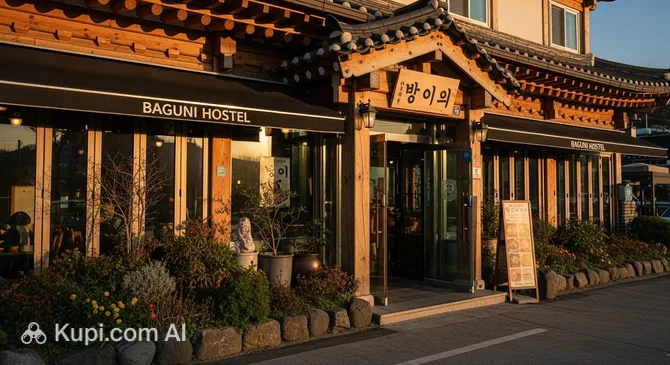
The main concentration of evening entertainment in Suncheon can be found in a few key areas. The Yeonhyang-dong district is particularly popular, considered the city's modern center with many restaurants, bars, and cafes. The area around Sunchon National University is also lively, where the youth gather. Don't forget Jungang-dong, the old city center, where you can find more traditional establishments. Here you will find a variety of venues: from Korean "hof" pubs and cozy bars to popular "noraebang" karaoke clubs, where you can have a great time with friends. Many restaurants also stay open until late evening, offering a delicious dinner. For example, you can enjoy traditional Korean cuisine at the Namnyeokdeul Bapsang restaurant or stop by Baguni Hostel, which also offers dining services, for a more informal setting before continuing your evening.

Baguni Hostel. Illustration.
Source: Kupi.com AI

Traveler photos:

The atmosphere in Suncheon's night establishments is generally relaxed and friendly. The crowd is mostly local, including students and young professionals. Most bars and restaurants start to come alive toward evening, with peak activity on late Friday and Saturday nights, usually from 8:00–9:00 PM until midnight or later, especially in popular spots. There is usually no specific dress code; casual attire is quite appropriate. Prices in Suncheon's venues are generally more affordable compared to those in the capital. Taxis are the most convenient way to get around the city at night; they can be hailed on the street in busy areas or ordered through popular Korean mobile apps.

Regarding safety, Suncheon, like most cities in South Korea, is considered a very safe place for nighttime walks. Nevertheless, it's always wise to follow basic precautions: keep an eye on your belongings, especially in crowded places, and avoid poorly lit or deserted alleys if traveling alone. Getting a taxi is usually easy, providing a reliable way to return to your hotel or accommodation late at night.

During the day, Suncheon offers many other activities, primarily related to its natural and cultural heritage. The city is famous for its parks and gardens. Be sure to visit the magnificent Suncheon National Garden, walk through the picturesque Jorye Lake Park, or climb the hill in Jukdobon Park, which offers beautiful views of the city and its surroundings. These spots are perfect for daytime relaxation and discovering the beauty of the region.

Parks & Museums

Suncheon, a city rich in natural beauty and cultural heritage, offers visitors various opportunities for relaxation and discovery. From magnificent gardens to scenic parks and river landscapes, everyone will find something for the soul here, and getting to know the local culture will complete the travel experience.

The city is famous for its green oases. One of the main treasures is the Suncheon National Garden, which is a vast territory featuring themed gardens from various countries, wetlands, and art installations. This place is ideal for long walks and enjoying nature, a true paradise for photographers and botany enthusiasts.

No less attractive is Jorye Lake Park, which charms with its calm waters and well-maintained paths. This is a great place for a solitary retreat, a picnic, or simply contemplating the scenic views, especially at sunset.

For lovers of panoramic views and active recreation, Jukdobon Park is a perfect fit. After climbing to its summit, you can enjoy a breathtaking view of the city and its surrounding green hills. The park is also a popular spot for morning jogs among locals.

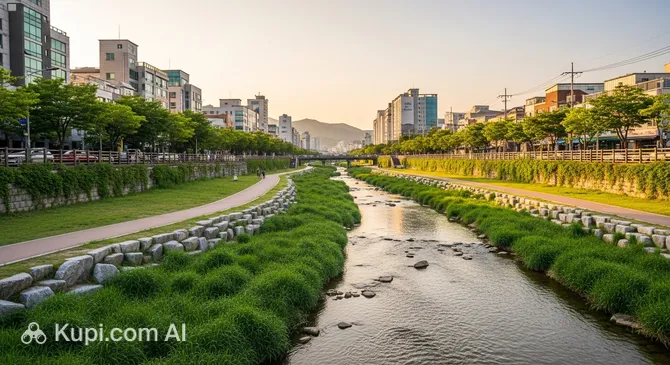
It is also worth taking a stroll along the Dongcheon River, which flows through Suncheon and creates picturesque spots for relaxation and photo shoots. Its embankments are perfect for leisurely walks or bike rides, allowing you to see the city from a different perspective.

Suncheon Dongcheon Stream. Illustration.
Source: Kupi.com AI

Traveler photos:

While detailed information on specific museums in Suncheon is currently unavailable, the city offers many ways to touch Korean culture. Look out for local festivals frequently held in the city, traditional markets where you can find unique souvenirs and try local food, and craft workshops. Historical monuments and architectural structures found in the city and its surroundings also tell of the rich past of Suncheon and the region.

To dive deeper into the atmosphere of Suncheon, step off the beaten tourist path. Visit small local eateries to try the authentic cuisine of Jeollanam-do province, or walk through residential neighborhoods to observe the daily life of the residents. Sometimes the most vivid impressions await where you least expect them, for example, in a small family temple or at a spontaneous street performance.

Getting Around

Getting around Suncheon is quite convenient thanks to a well-developed public transport system, the backbone of which is buses. They cover most areas of the city and are the primary way to travel for both locals and tourists.

The city bus network in Suncheon is quite extensive and includes routes connecting the center with the outskirts, as well as with key tourist sites. Buses run regularly, but intervals can vary depending on the route and time of day. Information about routes and schedules can often be found at bus stops, as well as in popular Korean navigation apps (such as Naver Maps or KakaoMap), which are very helpful for planning trips.

To pay for bus fares in Suncheon, as in most South Korean cities, the most convenient method is using transportation cards like T-money or Cashbee. These cards can be purchased and topped up at most convenience stores and at some bus terminals. Paying with a card is usually slightly cheaper than with cash and allows for free or discounted transfers within a certain time frame. Cash payment directly to the driver upon entry is also possible, but it is recommended to have the exact amount, as change may be limited. Fares are relatively low.

When entering the bus, you must tap your transportation card against the validator. If you plan to transfer, it is important to also tap the card against the validator when exiting the bus—this is necessary for correct trip accounting and receiving a discount on the next leg of your journey. Buses typically run from early morning until late evening, but exact operating hours depend on the specific route.

In addition to buses, taxis are always available in Suncheon. They can be hailed on the street, found at designated stands, or called via an app. Taxis are more expensive but also more comfortable and faster, especially if you are traveling with luggage or in a group. In some areas, particularly near parks and natural attractions, bicycle rentals may be available, providing an excellent alternative for leisurely strolls and sightseeing.

Accommodation

When planning a trip to Suncheon, you will find a variety of accommodation options to suit different budgets and preferences. The city offers a choice ranging from cozy guesthouses (including traditional Korean "hanok" houses that provide an authentic experience) and budget hostels to comfortable mid-range hotels. While there may not be as many luxury resorts as in larger metropolises, high-quality options for a pleasant stay are certainly available.

For the convenience of tourists, it is recommended to choose accommodation in areas close to main attractions or transport hubs. For example, staying near the famous Suncheon National Garden will make it easy to reach this popular site. Areas near the railway station or bus terminal are also convenient, making it easier to move around the city and its surroundings.

While the provided list of attractions does not include specific hotels, rest assured that various types of hotels are available in Suncheon. You can find small family-run hotels as well as larger establishments with a wide range of services. It is recommended to check reviews and ratings on popular booking platforms to find the best option.

To guarantee the best spot at a reasonable price, especially during peak tourist season or local festivals, it is recommended to book your accommodation in advance. Most hotels and guesthouses in Suncheon are available for booking through popular international online platforms as well as local Korean travel sites. Sometimes direct booking via the hotel's website or by phone is also possible. Price ranges vary from budget options to mid-range and higher, allowing every traveler to find something suitable.

Nearby Cities

For those who want to explore the surroundings, Suncheon serves as an excellent starting point for day trips to several interesting nearby locations.

Gwangju, located about 60 kilometers away, is South Korea's fifth-largest city and an important cultural and historical center. The city is known for its contribution to the country's democratic movement, a vibrant art scene, numerous museums and festivals, and rich culinary traditions, including its famous kimchi. Nature lovers can visit the nearby Mudeungsan National Park.

Another attractive destination is Jeonju, known as the cradle of Korean culture and gastronomy. Its main attraction is the beautifully preserved Jeonju Hanok Village, where you can see hundreds of traditional Korean houses and immerse yourself in the atmosphere of old Korea. Jeonju is also famous as the birthplace of bibimbap, one of the most popular Korean dishes, and hosts an International Film Festival annually.

CityPopulationDistance
Haeryong46 9948 km
Gwangyang151 83410 km
Yeosu341 99427 km
Sacheon114 55656 km
Gwangju1 490 09261 km

These and other nearby destinations presented in the table allow for a deeper acquaintance with the diverse culture, history, and scenic landscapes of South Korea.

Shopping & Souvenirs

Shopping in Suncheon offers a pleasant mix of modern stores and traditional Korean markets. While the city is not famous for any exclusive goods, you can find high-quality Korean cosmetics, fashionable clothing, as well as local products and handmade items. It is a great place to immerse yourself in the daily life of Koreans and purchase something as a memento of your trip to South Korea.

Main shopping points in Suncheon are generally concentrated in the central part of the city. Stroll along the main streets, especially in the area around the railway station or bus terminal, where many shops are usually located, from small boutiques to chain retailers. Here you will find stores for clothes, shoes, accessories, and cosmetics.

In Suncheon, as in many Korean cities, you can find department stores or shopping centers offering a wide range of goods under one roof. These can be large chain department stores or local shopping complexes. They offer clothing, electronics, home goods, and food courts where you can grab a bite after a successful shopping spree.

Special attention should be paid to Suncheon's traditional markets (called "sijang" in Korean). These are colorful places where you can not only buy fresh produce, seafood, fruits, and vegetables but also try local street food, find inexpensive clothing, household items, and authentic souvenirs. Visiting a market is a great way to feel the local atmosphere.

You can bring back various souvenirs from Suncheon. Korean cosmetics (K-beauty), known for their quality, are very popular. Also, look out for items made from traditional "hanji" paper, ceramics, ginseng products, and "kim" (dried seaweed). In souvenir shops, you might find something related to the natural beauty of the region, such as the Suncheon National Garden. Don't forget about local sweets and snacks—they make excellent gifts.

Most shops in Suncheon operate from approximately 10:00–11:00 AM until 8:00–10:00 PM. Large shopping centers may have slightly different hours. Traditional markets often open earlier in the morning. Regarding payment, credit cards (Visa, Mastercard) are accepted everywhere in South Korea. Cash (Korean Won) is also useful, especially at markets or in small shops. Mobile payment systems are also very popular.

Tourists in South Korea can take advantage of the Tax Free system. If you make purchases of a certain amount in stores with a corresponding sign ("Tax Free" or "Global Blue"), don't forget to ask for a special receipt for the VAT refund. This refund can be processed at the airport before you fly out of the country. It is a simple way to save on your purchases.

Reached the end of the page?

That means the route is fully explored