Support

Yangsan

About

Yangsan is a welcoming city located in Gyeongsangnam-do province, South Korea. It attracts visitors with its calm atmosphere and convenient geographical location, bordering major cities such as Ulsan, Miryang, and Busan. The Seoul-Busan expressway passes through Yangsan, providing excellent transport links to other regions of the country. The city's population is approximately 297,532 people, making it a significant center in the province.
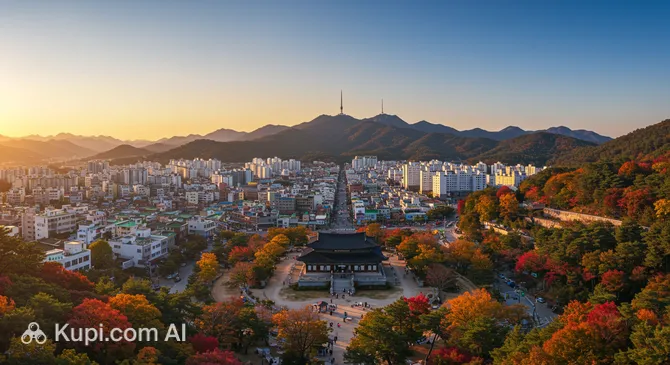
Yangsan. Illustration.
Source: Kupi.com AI

Yangsan offers its guests diverse opportunities to experience Korean culture and nature. One of the city's main gems is the Tongdosa Buddhist temple, an important cultural and historical site that attracts pilgrims and tourists from all over the world. Among modern attractions, the Yangsan Tower stands out, offering panoramic views of the city and its surroundings. It is also worth mentioning the Tongdo Fantasia theme park, the largest amusement park in Gyeongsangnam-do province, which offers many attractions (though it may be temporarily closed).

If you are interested in Korean culture, history, and picturesque nature, Yangsan will be an excellent choice for your trip. Thanks to its location, the city can also serve as a comfortable starting point for exploring nearby natural beauties, such as Gajisan Provincial Park. Discover the charm of Yangsan!

You can find more interesting facts on the history of the city of Yangsan page.
Weather Overview

The climate in Yangsan is characterized by distinct seasonality. Summer (June-August) is warm and humid, with average temperatures ranging from 21.7°C to 26.3°C and peak precipitation, especially in July and August when the number of rainy days reaches 17. Winters (December-February) are cool and drier, with average temperatures ranging from 1.7°C in January to 4.0°C in February, and minimal precipitation. Spring and autumn months offer pleasant transitional weather with moderate temperatures.

In general, when planning a trip to Yangsan, expect warm summers with occasional rain and cool, relatively dry winters. You can learn more about the weather conditions and get a detailed forecast on the Yangsan climate page.

Average monthly temperature

Average monthly precipitation

Interesting Facts

In addition to its famous attractions, Yangsan hides many interesting details and features that make it unique in its own way. Ready to learn a bit more about this South Korean city?

  • Yangsan plays an important role as a transport hub due to its strategic location near several major South Korean cities, making it a convenient starting point for traveling around the region.

  • One of the main spiritual and historical gems of not only the city but the entire country is the Tongdosa Buddhist temple. This ancient temple, part of the "Three Jewels" of Korean Buddhism, is famous for the absence of a Buddha statue in its main hall (his relics are kept there instead) and its rich centuries-old history.

  • Nature lovers will appreciate the picturesque surroundings of Yangsan, which is nestled among mountains and rivers. These places are ideal for walking, hiking, and enjoying peaceful Korean landscapes.

  • The city regularly hosts various local festivals where you can immerse yourself in the authentic atmosphere of Korean culture, see traditional performances, and taste local delicacies.

How to Get There

When planning a trip to Yangsan, it is important to think about your route in advance. Thanks to its successful location between major metropolises, getting here is quite simple. You can find all the details and alternative routes by following the link: more details on how to get to Yangsan.

The city of Yangsan does not have its own airport; however, its proximity to major transport hubs makes air travel one of the most convenient ways to reach the region. The closest and most popular option is Gimhae International Airport (IATA: PUS), located in the neighboring city of Busan. It is only 21.6 km from the center of Yangsan. This is a major aviation hub with a huge passenger flow, receiving flights from all over the world. A trip from the airport to Yangsan by taxi or bus takes approximately 50-60 minutes.

Another option could be Ulsan Airport (IATA: USN), located in the city of Ulsan, about 38.6 km from Yangsan. This is a regional airport with a smaller passenger flow, but it can be convenient for domestic flights. The journey by car from here will take about 1 hour and 20 minutes. You can also consider Daegu International Airport (IATA: TAE) in Daegu (distance about 69 km) if you are planning a complex route across the country.

For clarity, here is a summary of the main airports:

AirportPassenger trafficDistance
Gimhae International Airport15.8 mln22 km
Ulsan Airport786 73939 km
Daegu International Airport3.3 mln69 km
Pohang Airport253 70378 km
Sacheon Airport219 28993 km

Rail travel is another popular way to travel around South Korea. There are stations within Yangsan itself, but if you are coming from far away on the KTX high-speed train, you might need to transfer at a major hub. One such key hub is Dongdaegu Station (IATA: XDK), located in the city of Daegu, about 69 km from Yangsan. It is one of the busiest stations in the country. From there, you can continue your journey by regional train or bus. The travel time by car from Dongdaegu Station to Yangsan is about 2 hours.

Below is information about the nearest major railway stations that can serve as transit points:

StationPassenger trafficDistance
Dongdaegu Station20 mln69 km
Jinju Station87 km
Yeosu Expo Station136 km
Daejeon Station18.6 mln186 km
Gwangju Songjeong Station3.4 mln206 km

In addition, Yangsan is excellently connected to neighboring cities by a network of expressways and intercity buses. The Gyeongbu Expressway (Seoul — Busan) passes through the city, making a trip by car or bus fast and comfortable. The local bus terminal receives services from most major cities in the country.

Main Attractions

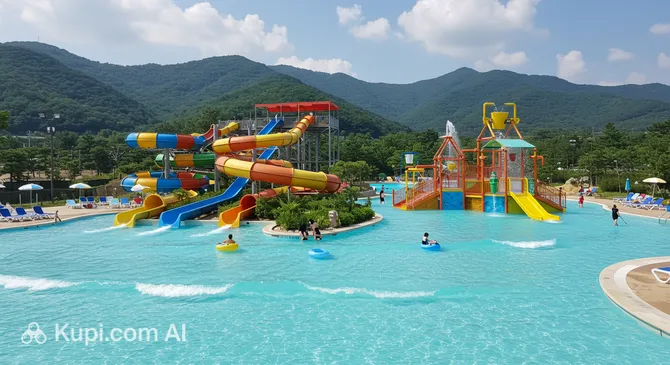
One of the popular places for relaxation in Yangsan, especially during the warm season, is Yangsan Water Park. This is an excellent spot for family leisure where you can enjoy various water attractions and pools, or simply relax by the water. The park attracts both locals and tourists with the opportunity to cool off and have fun.

Yangsan Water Park. Illustration.
Source: Kupi.com AI

Traveler photos:

For connoisseurs of history and spiritual culture, a visit to Tongdosa Temple is a must in Yangsan. It is one of the three main Buddhist temples in South Korea, housing authentic relics of Shakyamuni Buddha, which makes it unique—there are no Buddha statues in the main hall. The temple impresses with its ancient architecture, peaceful atmosphere, and picturesque location at the foot of the mountains.

The modern face of the city is reflected by Yangsan Tower. This prominent structure offers visitors a chance to climb to the observation deck, which provides breathtaking panoramic views of the entire Yangsan area and its surroundings. Visiting the tower is a wonderful opportunity to see the city from above and take memorable photos, especially at sunset.

Local Cuisine

The gastronomic scene of Yangsan is a vibrant reflection of the rich culinary traditions of South Korea, offering travelers a true immersion into the tastes and aromas of the region. Local cuisine will delight both spice seekers and connoisseurs of milder but rich dishes.

Be sure to try the classics of Korean cuisine, which are widely represented in Yangsan. These include the famous kimchi—a spicy fermented vegetable dish that is an integral part of any meal; bulgogi—tender grilled marinated meat that melts in your mouth; and bibimbap—a hearty and colorful bowl of rice with vegetables, meat, and an egg. Among the local delicacies, hoe—the freshest raw fish, and appetizing mandu—Korean dumplings with various fillings, are worth highlighting.

Street food is an important part of Yangsan's food culture. On the city's streets, you will find many stalls offering popular snacks such as tteokbokki (spicy rice cakes in a thick sauce) and various Korean hot dogs. Don't pass by the local markets—they are great places to see an abundance of fresh produce, try seasonal treats, and feel the authentic atmosphere of the city.

As for drinks, in Yangsan, as in all of South Korea, you can enjoy traditional options. Among alcoholic beverages, soju—Korean vodka—and the rice wine makgeolli are popular. For non-alcoholic options, try the refreshing boricha (barley tea) or the sweetish rice drink sikhye, which perfectly complement any meal.

The dining culture in Yangsan is diverse: from cozy family restaurants serving traditional dishes to lively street food courts and markets where you can have a quick and tasty snack. Locals often choose small eateries for everyday lunches, and for special occasions, they visit restaurants specializing in specific types of Korean cuisine, such as grilled meat dishes or seafood. Tourists can enjoy the full range of offerings, discovering new flavors at every step.

Travel Tips

Welcome to Yangsan! To make your journey to this charming city in South Korea as comfortable as possible and leave only pleasant impressions, we have prepared some practical tips. They will help you better navigate the area and avoid common mistakes.

  1. Clothing and Essentials: The climate in Yangsan, as in all of South Korea, has four distinct seasons. In summer (June-August) it is hot and humid, so bring light, breathable clothing. Spring (April-May) and autumn (September-October) are the most pleasant times with moderate temperatures, ideal for layering. In winter (November-March) it can be cold, so don't forget warm clothes. Comfortable shoes are your best friend, as you will likely want to walk a lot. Don't forget a universal adapter (South Korea uses type F sockets). When visiting temples, such as the famous Tongdosa, choose modest clothing that covers shoulders and knees.

  2. City Transport: Getting around Yangsan is quite convenient. The city has a subway (Line 2 of the Busan Metro reaches Yangsan), as well as a developed network of bus routes. Taxis are available; you can use popular Korean apps like Kakao T to call them. Renting a car can be useful if you plan to explore the surroundings, but for moving within the city itself, public transport is often a more efficient and economical option.

  3. Financial Matters: The official currency is the South Korean Won (KRW). You can exchange money at banks or specialized exchange offices. Credit and debit cards (especially Visa and Mastercard) are widely accepted in most shops, restaurants, and hotels. ATMs are common, but it's worth checking with your bank in advance about international withdrawal conditions and possible fees. Keep in mind that not all international cards may work everywhere, so a small supply of cash is always useful. An approximate daily budget (excluding accommodation) can range from 70,000 to 150,000 won. Tipping is not customary in South Korea.

  4. Health and Safety: Pharmacies (약국 - yakguk) are easy to find, and some may have English-speaking staff. In case of medical emergencies, there are clinics for foreigners; the emergency number is 119. Yangsan is considered a safe city. Nevertheless, stick to standard precautions: keep an eye on your belongings, especially in crowded places, and be aware of your surroundings. There are no specific "unsafe" neighborhoods in Yangsan, but common sense is always recommended.

  5. Communication: The main language is Korean. English may be spoken in tourist areas, hotels, and among the youth, but you shouldn't rely on it everywhere. Learn a few basic Korean phrases, such as "Annyeonghaseyo" (Hello) and "Kamsahamnida" (Thank you)—this is always appreciated by locals. A SIM card for mobile internet can be purchased at the airport or in convenience stores. Wi-Fi is widely available in cafes, shopping centers, and even on public transport. For navigation, it's better to use local apps like Naver Maps or KakaoMap, as Google Maps has limited functionality for walking and driving routes in South Korea. The Papago app will be useful for translation.

  6. Local Etiquette: When greeting someone, especially elders, it is customary to give a slight bow. When giving or receiving something (like money or a business card), use both hands or your right hand supported by your left at the elbow. In public places, especially on transport, try not to speak too loudly. When entering a Korean home, as well as some temples and traditional restaurants, you must remove your shoes.

  7. What to Avoid: Try not to write people's names in red ink—in Korea, this is associated with death. Also, do not stick chopsticks vertically into a bowl of rice, as this resembles ritual incense at funerals and is considered a bad sign.

  8. Unique Feature of Yangsan: The city is famous for Tongdosa Temple, one of the Three Jewel Temples of Korea and a UNESCO World Heritage site. The uniqueness of Tongdosa is that there are no Buddha statues inside, as it is believed that his authentic relics are kept here. Visiting this place is an opportunity to touch the deep history and spirituality of Korea.

We hope these tips will make your stay in Yangsan even more pleasant and rewarding. We wish you an unforgettable journey through this interesting corner of South Korea!

Entertainment & Nightlife

Yangsan, while not a metropolis like Seoul or Busan, offers its residents and guests various opportunities for evening and nighttime recreation. The nightlife here is more relaxed and oriented towards locals, but finding a cozy place for dinner, socializing with friends, or even dancing is quite possible.

The main centers of evening activity in Yangsan are usually concentrated in areas with a large number of restaurants and cafes, as well as near shopping zones. Although the city may not have massive world-class nightclubs, karaoke bars (noraebang) are popular here and are an integral part of Korean evening culture. You can also find various pubs and bars offering both local and imported beer and other drinks. Many restaurants stay open until late evening, serving traditional Korean dishes that are perfect for a group dinner.

The atmosphere in Yangsan's nightlife venues is generally friendly and laid-back. The dress code is usually casual unless it's a special event. Prices in bars and restaurants are moderate, especially compared to major tourist centers. The best time to visit most establishments is Friday and Saturday evenings when locals come out to relax after the work week. On weekdays, many places may close earlier.

Unfortunately, there are no specific names of bars or nightclubs in Yangsan provided to link to. However, you will easily find local "hofs" (a Korean type of pub serving beer and snacks), small cocktail bars, and, of course, the ubiquitous noraebangs simply by walking along the busy streets in the central part of the city or in the new residential areas where modern establishments often open.

Regarding getting around at night, the most convenient option is a taxi. Public transport usually stops running before midnight. You can call a taxi through popular Korean apps or simply hail one on the street in busy areas. Yangsan is generally considered a safe city, but standard precautions, especially at night, are always recommended.

During the day, there is also plenty to do in Yangsan. The city offers opportunities for outdoor recreation and cultural leisure. For example, you can visit Yangsan Water Park, which is a popular spot for family vacations, especially during the warm season. There are also parks for walking and temples throughout the city and its surroundings that reflect the rich culture of South Korea.

When planning your evening leisure in Yangsan, focus on local traditions and preferences—this will allow you to immerse yourself deeper into the city's atmosphere and have a great time.

Parks & Museums

Yangsan is a city where you can enjoy picturesque green zones as well as get acquainted with local culture through its attractions. Here you will find corners for quiet relaxation in nature and places that tell the story of the region's history and traditions.

Among the popular holiday spots, Yangsan Water Park stands out, being especially attractive for family leisure during the warm season, offering various water attractions. Another significant green space is Hwangsan Park, stretching along the Nakdong River. This vast park offers excellent opportunities for walking, picnics, cycling, and admiring nature. Also in the city is the Yangsan Design Park, which combines elements of landscape design with recreation areas, creating a pleasant space for citizens and guests.

To get acquainted with the history and culture of the city, it is worth visiting the Yangsan City Museum. Here you can learn about the stages of the region's development, see archaeological finds, and exhibits that tell about the life and traditions of local residents. Although there may not be large, world-famous art galleries in Yangsan, you can sometimes come across small private exhibitions presenting the work of contemporary Korean artists.

Yangsan and its surroundings are rich in historical and spiritual landmarks. The main one is undoubtedly Tongdosa Temple, one of the Three Jewel Temples of Korea and a UNESCO World Heritage site. Located within Yangsan, this ancient monastery does not house Buddha statues, as it is believed that his true relics rest here. It is a place of pilgrimage and an important cultural center. Also worth noting is Naewonsa Temple, located in a picturesque valley, offering peace and beautiful landscapes.

For a more authentic experience, check out the local markets—it's always a good way to feel the pulse of the city and see everyday life. Also, look out for small temples or shrines that might be hidden in residential neighborhoods; they often have a special atmosphere of tranquility and can tell you about the spiritual life of the city's residents.

Getting Around

Getting around Yangsan is quite convenient thanks to a developed public transport system that is closely integrated with the transport network of neighboring Busan. This allows tourists to easily explore the city and its surroundings.

The backbone of public transport in Yangsan is the subway. Line 2 of the Busan Metro passes through the city, connecting Yangsan directly with Busan. This is a fast and efficient way to reach many key points both within Yangsan itself and in the large metropolis nearby. Subway stations are well-marked and equipped with information boards.

In addition to the subway, Yangsan has an extensive network of city buses. Buses run on numerous routes, covering areas of the city that the subway does not reach. This is a great option for reaching more distant attractions or residential quarters. Schedules and routes are usually available at bus stops and in online applications.

To pay for travel on public transport in Yangsan and throughout South Korea, transport cards such as T-money or Cashbee are widely used. These cards can be purchased and topped up at most convenience stores and subway stations. Using a card makes trips slightly cheaper compared to buying a single-trip ticket. Single-trip tickets for the subway can be bought at machines in the stations. The approximate cost of a single trip by subway or bus is usually low but depends on the distance.

Tourists are recommended to purchase a transport card immediately upon arrival for convenience. When entering a bus or subway station, and when exiting (in the subway and some buses to correctly calculate the fare), the card must be tapped against the validator. Public transport usually starts operating early in the morning (around 5:30–6:00) and finishes closer to midnight. However, it is better to check the exact operating times of specific routes in advance, especially if late trips are planned.

As an alternative to public transport, taxis are always available in Yangsan. They can be hailed on the street, found at special stands, or called via an app. Taxis are equipped with meters, and this is a convenient option for trips with luggage, at night, or for groups. Bicycle rental may be available in some park areas but is not the primary means of transport for tourists throughout the city.

Accommodation

In the city of Yangsan, tourists are offered a diverse choice of accommodation options capable of satisfying various preferences and budgets. Here you can find everything from inexpensive guesthouses and motels to more comfortable mid-range hotels. For those seeking a more home-like environment, apartments and rental options are available.

When choosing a place to stay, it is worth paying attention to areas with good transport accessibility and proximity to the sites you are interested in. While there are no clearly defined tourist enclaves with hotels in Yangsan, many accommodation options are conveniently located relative to transport hubs, allowing for easy access to main attractions and business centers.

The price range varies from budget options to more expensive offers. It is recommended to book accommodation in advance, especially if your trip coincides with the peak tourist season or major local events. For searching and booking, it is convenient to use popular online platforms that offer a wide range of options and allow you to compare prices. Direct booking via hotel websites is also an option.

Nearby Cities

For those who want to explore the surrounding area, Yangsan serves as an excellent starting point for day trips to several interesting nearby locations:

CityPopulationDistance
Busan3 453 19820 km
Gimhae550 75820 km
Daean14 03722 km
Seosaeng8 65025 km
Miryang103 06930 km

Each of these cities offers something unique: Busan attracts with its beaches and maritime atmosphere, Daegu with its rich culture and history, Ulsan combines industrial power with natural parks, Changwon is known as a planned city with plenty of greenery, and Gimhae is proud of its heritage from the ancient Gaya state. Visiting these places will allow you to get better acquainted with the diversity of South Korea and enrich your journey.

Shopping & Souvenirs

Yangsan offers a variety of shopping opportunities, combining modern retail spaces with traditional Korean markets. While the city may not be the main fashion hub of South Korea, you will find everything you need here: from everyday goods to unique souvenirs. The city is not famous for exclusive goods, but it offers a good selection of Korean cosmetics, local brand clothing, and electronics.

Main shopping areas are concentrated in the central districts of Yangsan. Take a stroll through the main streets where numerous shops selling clothes, shoes, accessories, and cosmetics are located. Here you can find both small boutiques and shops of well-known Korean chains. These areas are usually lively, especially in the evenings and on weekends, offering a pleasant atmosphere for shopping.

In Yangsan, as in many Korean cities, you can find modern shopping centers or department stores. They usually offer a wide range of goods: from fashionable clothes and electronics to household goods and food in basement supermarkets. Often these centers have food courts and entertainment areas, making them a convenient place for shopping and family relaxation.

Be sure to visit the local markets of Yangsan to immerse yourself in the authentic atmosphere and find fresh produce, traditional Korean snacks, clothing, and various household goods at affordable prices. Markets are a great place to experience local culture and cuisine. Here you can haggle and find interesting items not available in regular stores.

As souvenirs from Yangsan and South Korea in general, you should look for Korean cosmetics (K-beauty), known for their quality and innovation. Also popular are items made of traditional Korean hanji paper, ceramics, ginseng products, dried seaweed (gim), as well as cute stationery and accessories featuring characters. Don't forget about local sweets and snacks.

Most shops in Yangsan are usually open from 10:00–11:00 AM to 8:00–10:00 PM. Large shopping centers may stay open longer, especially on weekends. Markets often start their work early in the morning. Credit cards (Visa, Mastercard) are widely accepted, and cash is also used, especially at markets. Mobile payment systems are also gaining popularity.

For foreign tourists in South Korea, a tax refund system (Tax Free) is available. If you make purchases of a certain amount at participating stores (they usually have a corresponding sticker), you can arrange a VAT refund. You will need your passport for this. Refunds can be obtained at the airport when leaving the country or at special refund points in the city.

Reached the end of the page?

That means the route is fully explored