Support

Jinhae

About

Jinhae, located in the south of South Korea, is a charming city known for its unique atmosphere and picturesque landscapes. It is nestled on the coast in a beautiful bay, surrounded by green hills and azure waters, creating a sense of harmony and tranquility. Since ancient times, Jinhae has played an important role as a regional port and trade center.
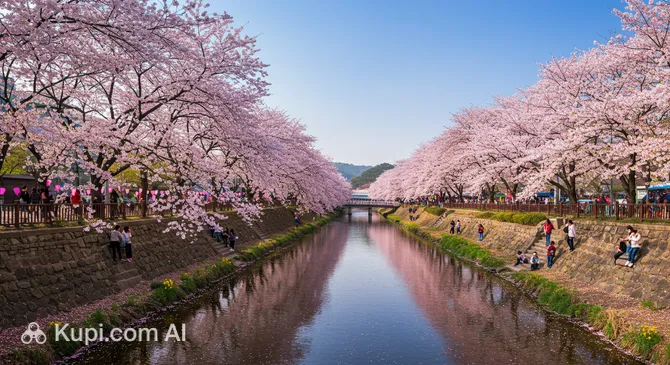
Jinhae. Illustration.
Source: Kupi.com AI

The city's population is approximately 190,000, allowing Jinhae to combine the conveniences of urban life with a relaxed coastal pace. The city serves as an administrative center and is famous for its rich maritime heritage. Here, you won't find the hustle and bustle of major metropolises; instead, there are all the conditions for leisurely walks and getting to know the local culture.

One of the main highlights of Jinhae is its incredible beauty in the spring, when the city is literally immersed in the blooming of millions of cherry trees. During this time, the famous Jinhae Gunhangje Festival (Cherry Blossom Festival) takes place here, attracting tourists from all over the world. Alleys covered with delicate pink petals create a truly fairytale-like scene. In addition, the city is famous for its parks, such as Jinhae Nesu-myeon Eco-Park, and scenic coastal areas ideal for relaxation and nature contemplation.

Jinhae is a place where you can enjoy natural beauty, explore an interesting culture, and simply find peace of mind. This hospitable city is sure to leave you with warm memories.

You can find more interesting facts on the history of Jinhae page.
Weather Overview

The weather in Jinhae is characterized by distinct seasons. Expect warm, humid summers with temperatures reaching an average of 27°C in August, and cool, relatively dry winters, with average January temperatures around 2.7°C. Spring and autumn offer mild and comfortable conditions for visiting.

The summer months, especially July and August, are the warmest and also bring the highest rainfall, with about 16 rainy days in each of these months. Winter, from December to February, is significantly colder and drier, with minimal precipitation. For example, in January and December, there is only about 1 mm of precipitation. To get a more detailed overview of weather conditions by month, you can explore the Jinhae climate.

Average monthly temperature

Average monthly precipitation

Interesting Facts

Beyond its well-known festivals and scenic views, Jinhae holds many fascinating secrets and little-known details that make it truly special. Here are some interesting facts to help you see this charming South Korean city from a new perspective:

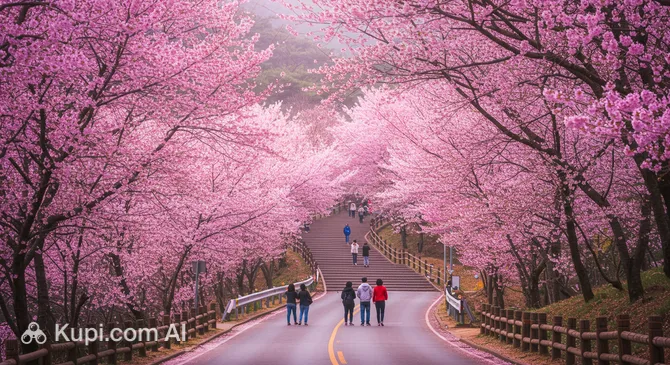
Anmin Pass Cherry Blossom Road. Illustration.
Source: Kupi.com AI

Traveler photos:

  • Jinhae is the unofficial capital of cherry blossoms in South Korea. Every spring, the grand Jinhae Gunhangje Festival takes place here, when over 360,000 cherry trees bloom simultaneously. Streets like the famous Anmin Pass Cherry Blossom Road, as well as areas near Gyeonghwa Station and Yeojwacheon Stream, transform into real pink tunnels, attracting photographers and romantics.

  • The city has its own "Road of Love," known as the Hwagae Alley or "Wedding Road." According to local belief, if lovers walk down this alley while holding hands tightly, their love will last forever. This romantic legend makes the alley especially popular among couples wishing to strengthen their feelings under the canopy of blooming cherries.

  • Jinhae has a rich maritime past and remains an important port to this day. This heritage has influenced not only the economy but also the cultural face of the city, fostering a blend of traditions visible in the local architecture and gastronomy. Echoes of this can be found, for example, while strolling through Jinhae Marine Park.

  • During the spring cherry blossom festival, the city literally explodes with energy: streets are filled with colorful parades, live music, and traditional dances. It is a unique opportunity not just to admire the blooms, but to deeply immerse yourself in Korean culture by watching performances right under the flowering trees.

How to Get There

When planning a trip to Jinhae, located in the Gyeongsangnam-do province of South Korea, there are several travel options to consider. The main transportation hubs through which tourists usually arrive in the region are nearby airports and railway stations.

The most convenient way to reach Jinhae is by air. The preferred option is Gimhae International Airport (PUS), located in Busan, just about 19.1 km from Jinhae. This is a major international airport, and the trip to Jinhae by taxi or bus takes approximately 45-60 minutes.

Another large international airport to consider is Daegu International Airport (TAE). It is located in Daegu, about 85.1 km from Jinhae. The journey from there to Jinhae by car or public transport takes about 2-2.5 hours. For domestic travel or if your route passes through other regional centers, you can also look into Sacheon Airport (HIN), located in Jinju, about 61 km from Jinhae. The trip from there takes about 1.5 hours.

For your convenience, here is a summary of the main airports from which you can reach Jinhae:

AirportPassenger trafficDistance
Gimhae International Airport15.8 mln19 km
Sacheon Airport219 28961 km
Ulsan Airport786 73976 km
Daegu International Airport3.3 mln85 km
Yeosu Airport1 mln107 km

Traveling by train is another convenient way to reach the region where Jinhae is located. Although Jinhae itself may not have a major railway station serving all long-distance routes, you can use stations in neighboring cities. The closest to Jinhae is Jinju Railway Station, located in the city of Jinju, approximately 56.5 km away. From this station, you can reach Jinhae by local bus or taxi in about 1.5 hours.

A larger and more important railway hub is Dongdaegu Station in Daegu, located about 83.8 km from Jinhae. This is a significant station served by KTX high-speed trains and many other routes connecting various parts of South Korea. The journey from Dongdaegu Station to Jinhae, including a bus or taxi transfer, takes about 2-2.5 hours.

Below is information on some railway stations that can be used for a trip to Jinhae:

StationPassenger trafficDistance
Jinju Station56 km
Dongdaegu Station20 mln84 km
Yeosu Expo Station100 km
Gwangju Songjeong Station3.4 mln177 km
Daejeon Station18.6 mln182 km

Additionally, Jinhae is connected to other cities in South Korea by a well-developed road network. Upon arrival at one of the mentioned airports or railway stations, you can easily find intercity or local buses, or use taxi services to travel directly to Jinhae. For those who prefer more freedom of movement, car rental is also an option.

Main Attractions

Jinhae, known as a city of naval glory and the cherry blossom festival, offers tourists several wonderful places to visit. Here, everyone will find something to their liking – from scenic natural spots to cultural monuments.

One of the most iconic attractions is the Anmin Pass Cherry Blossom Road. This picturesque road, stretching about 5.6 km, is especially beautiful in spring when thousands of cherry trees bloom, creating a magical pink tunnel. It is an ideal place for walking, photography, and enjoying Jinhae's famous cherry blossom festival.

Anmin Pass Cherry Blossom Road. Illustration.
Source: Kupi.com AI

Traveler photos:

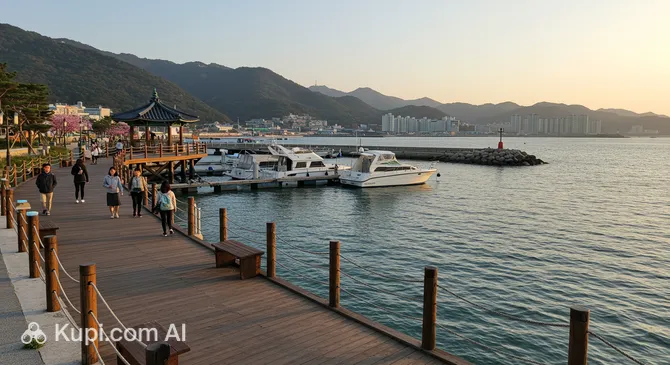
For lovers of seascapes and peaceful relaxation, Jinhae Marine Park is a must-visit. This coastal park offers magnificent sea views, well-maintained walking areas, and often serves as a venue for various events. Here, you can see museum warships, reflecting the city's rich naval history.

Jinhae Marine Park. Illustration.
Source: Kupi.com AI

Traveler photos:

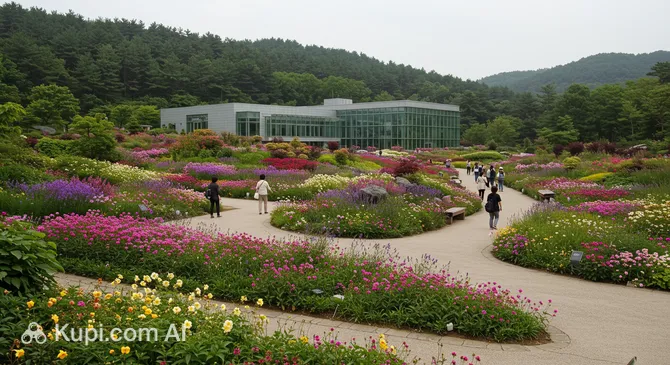
For those interested in flora, the Jinhae Botanical Museum will be a real discovery. It houses an impressive collection of various plants, both local and brought from other corners of the world. It is an excellent place for a peaceful walk and getting to know the world of plants at any time of year.

Jinhae Botanic Museum. Illustration.
Source: Kupi.com AI

Traveler photos:

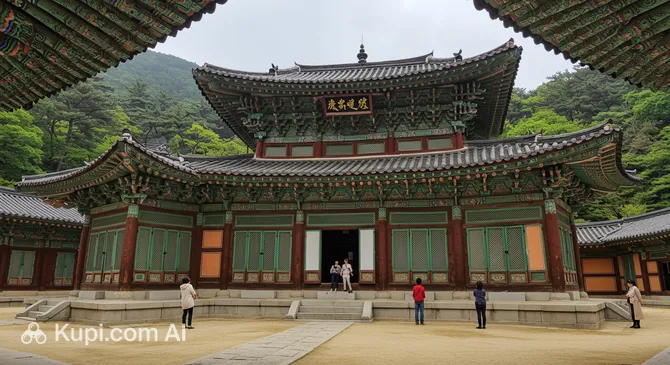
Near Jinhae, yet a significant cultural site for the region, is the Daeungjeon Hall of Seongjusa Temple. This is the main hall of an ancient Buddhist temple and is a beautiful example of traditional Korean temple architecture. Visiting this site allows you to touch Korea's spiritual culture and enjoy a tranquil atmosphere.

Daeungjeon Hall of Seongjusa Temple, Changwon. Illustration.
Source: Kupi.com AI

Traveler photos:

Local Cuisine

Jinhae is a true paradise for foodies, especially those fond of seafood. The city is famous for its fresh sea harvest: be sure to try dishes made from fish, mussels, octopus, and seaweed. Hearty *seafood soups* prepared according to old recipes, as well as appetizing fried squid and various marinated marine delicacies, are particularly popular. The city's gastronomic scene offers authentic flavors that will stay in your memory for a long time.

Street food in Jinhae is a separate pleasure and a wonderful way to get to know the local culture. In numerous stalls and markets, you can find traditional Korean snacks. It's definitely worth trying pottae-jjigae (a spicy and hearty stew), guksu (noodles in aromatic broth), or the famous tteokbokki rice cakes generously smothered in spicy sauce. The city's markets will also delight you with an abundance of fresh fruits, vegetables, and traditional sweets, including rice cakes with a delicate red bean filling.

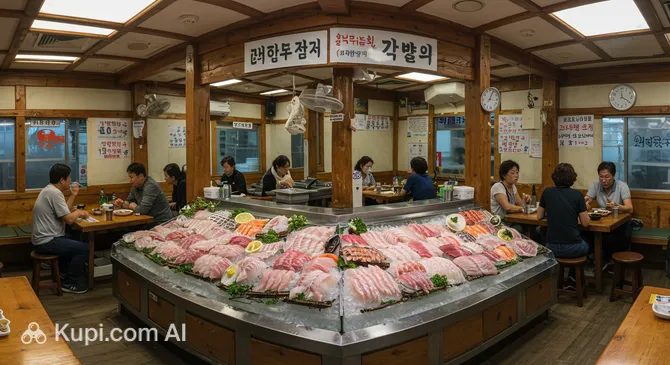
Dongbu Sashimi Center. Illustration.
Source: Kupi.com AI

Traveler photos:

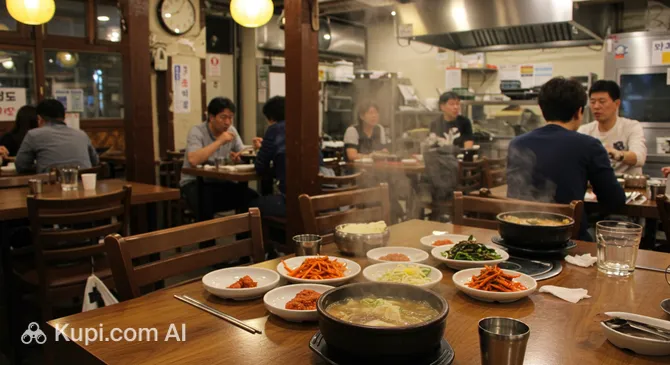
The food culture in Jinhae is diverse: locals and tourists alike enjoy visiting both seafood-focused restaurants and lively street markets. One such place to enjoy the freshest sea harvest is the Dongbu Sashimi Center. The city takes on a special gastronomic charm in the spring during the cherry blossom festival. During this period, the streets turn into real fairs where you can try seasonal dishes made from young vegetables and even cherry blossom flowers. Unique desserts and drinks based on cherry blossoms are only available during this magical time of year. Additionally, Jinhae regularly hosts culinary festivals where you can not only eat well but also learn the secrets of Korean cuisine.

As for drinks, in Jinhae, as throughout South Korea, you can try traditional alcoholic beverages such as soju (rice vodka) and makgeolli (light rice wine). For those who prefer non-alcoholic options, there is always a large selection of Korean teas, refreshing fruit drinks, or lemonades. Many establishments also offer freshly squeezed juices that perfectly complement any meal.

Travel Tips

Welcome to Jinhae! To ensure your trip to this charming South Korean city is as comfortable as possible and leaves only pleasant impressions, we have prepared some practical tips for you.

  1. Clothing and Packing for the Season:

    The climate in Jinhae is temperate with four distinct seasons. In spring (March-May), especially during the famous cherry blossom festival, you will need a light jacket or sweater and definitely comfortable shoes for long walks. In summer (June-August), it is hot and humid, so choose light, breathable clothing, and don't forget sunscreen, a hat, and perhaps an umbrella. Autumn (September-November) brings pleasant weather – an ideal time for layered clothing. In winter (December-February), it can be cool, so pack a warm jacket, hat, and gloves. Don't forget a universal power adapter (South Korea uses Type F outlets). When visiting temples, choose modest clothing that covers your shoulders and knees.

  2. Getting Around Jinhae:

    The most convenient way to move around the city is by public bus – they have a well-developed route network. Taxis are also available and can be hailed on the street or ordered through popular Korean apps like Kakao T. If you plan to explore the surroundings of Jinhae, you might consider renting a car (an international driving permit is required), but for travel within the city itself, this is not always practical, especially during festivals due to potential heavy traffic.

  3. Financial Matters:

    The local currency is the South Korean Won (KRW). You can exchange currency at banks or official exchange offices; the rate at the airport is usually less favorable. Credit and debit cards (Visa, Mastercard) are widely accepted in most establishments, but small markets or tiny cafes may prefer cash. Check with your bank regarding the terms for using cards abroad. ATMs are easy to find, and many have an English interface. Tipping in South Korea is not common practice.

  4. Health and Safety:

    Pharmacies (약국 - yak-guk) in Jinhae are easy to find and are marked with a green cross. Most of them operate on a standard schedule. If serious medical assistance is needed, head to major hospitals – they are more likely to have English-speaking staff. Be sure to get travel health insurance before your trip. Jinhae is considered a very safe city. Nonetheless, follow standard precautions: keep an eye on your belongings in crowded places and avoid walking in poorly lit or deserted areas after dark.

  5. Language and Connectivity:

    The official language is Korean. In tourist areas, hotels, and among young people, you may encounter English speakers, but knowing a few basic Korean phrases (e.g., "annyeonghaseyo" – hello, "kamsahamnida" – thank you) will be very helpful and appreciated by locals. A SIM card with mobile data can be purchased at the airport or at phone shops in the city. Wi-Fi is widely available in cafes, hotels, and many public places. For navigation, we recommend using the Naver Maps or KakaoMap apps, as Google Maps has limited functionality in South Korea.

  6. Local Etiquette and Communication:

    In South Korea, it is customary to show respect to elders. When greeting someone, especially older people, it is traditional to bow slightly. Handshakes are also common. Try not to speak too loudly in public places and on transport. When giving or receiving items (e.g., money or business cards), use both hands or your right hand while supporting it with your left hand at the wrist – this is a sign of respect.

  7. What to Avoid:

    Do not write people's names in red ink – in Korean culture, this is associated with death and is considered a very bad omen. Also, try not to point at people with your index finger; use an open palm instead.

  8. Special Tip for Jinhae:

    If your trip is in early April, don't miss the chance to visit the Jinhae Gunhangje Festival (Cherry Blossom Festival). This is the largest and most famous cherry blossom festival in South Korea, attracting huge numbers of visitors. Be sure to book accommodation in advance and be prepared for large crowds. Check the festival program to enjoy the parades, concerts, and stunning night illumination of the blooming trees.

We hope these tips help you better prepare for your trip and get the most out of your stay in beautiful Jinhae. We wish you an unforgettable journey!

Entertainment & Nightlife

Evening Jinhae offers guests a peaceful and authentic atmosphere rather than the noisy club life of major metropolises. You won't find large nightclubs, bustling night markets, or major concert venues typical of the capital here. Instead, Jinhae invites you to cozy gatherings, delicious local cuisine, and a calm way to spend time after a busy day.

The main evening activities in Jinhae are centered around gastronomic pleasures and informal socializing. You will find many restaurants serving Korean cuisine, small local bars (often called "hofs" in Korea, where beer and snacks like the famous Korean fried chicken are served), as well as the ubiquitous "noraebangs" — karaoke rooms popular with locals of all ages. These establishments are mostly located in the city center or along major commercial streets; however, Jinhae does not have dedicated "nightlife districts" in the traditional sense.

For a pleasant dinner that can be a great start to your evening, we recommend visiting places like the Dongbu Sashimi Center, where you can enjoy the freshest seafood, or the Masissimyeon Dwaeji restaurant, which offers guests authentic local dishes. These spots will allow you to immerse yourself in the region's gastronomic culture.

Masisseumyeon Dwaeji. Illustration.
Source: Kupi.com AI

Traveler photos:

The atmosphere in Jinhae's evening establishments is generally very welcoming and relaxed. Restaurants are usually busiest in the early evening, while bars and noraebangs fill up a bit later. Strict dress codes are extremely rare, so you can feel comfortable in casual clothes. Prices for food and drinks in Jinhae's local venues are typically quite moderate, especially compared to the major metropolises of South Korea, making a dinner or an evening at a bar an affordable pleasure. For getting around the city at night, it is most convenient to use taxis, which are quite common. It is recommended to have your destination address written in Korean or use a navigation app.

Jinhae, like most cities in South Korea, is considered a safe place for evening walks. However, it is always wise to follow standard precautions: stick to well-lit streets, keep an eye on your belongings, and, if possible, avoid deserted areas alone late at night.

While evening Jinhae offers a quiet retreat, the city also keeps you busy during the day. You can visit the scenic Jinhae Marine Park with its beautiful views, stroll through the Jinhae Botanical Museum enjoying the peace and beauty of nature, or admire the blossoms on the Anmin Pass Cherry Blossom Road (especially in spring). These places will perfectly complement your impressions of the city.

Parks & Museums

Jinhae, known for its picturesque landscapes and rich cultural heritage, offers tourists many opportunities for outdoor recreation and exploring history. The city is famous for its parks, especially during the cherry blossom season, as well as interesting museums and historical sites that tell the story of the local culture.

One of the city's main green gems is Jinhae Marine Park. This is a wonderful place for walks along the coast, offering magnificent views of the sea and surrounding islands. The park offers not only beautiful scenery but also opportunities for active recreation, making it popular with both locals and tourists.

One cannot forget the famous Anmin Pass Cherry Blossom Road. This picturesque road, especially during the annual Gunhangje festival, turns into a real pink tunnel. A walk or drive along this road will provide unforgettable impressions and become a highlight of your trip to Jinhae.

For those interested in the region's flora and nature, the Jinhae Botanical Museum is a must-visit. It houses a rich collection of plants, both local and from other parts of the world. The museum offers educational exhibits that will be of interest to visitors of all ages looking to deepen their knowledge of the plant world.

Although it is technically located in Changwon (of which Jinhae is now a part), a significant historical site near Jinhae is the Daeungjeon Hall of Seongjusa Temple. This temple is an important monument of Korean Buddhist architecture and history. Visiting this site allows you to touch ancient traditions and enjoy the tranquil atmosphere of an old sanctuary.

In addition to the main attractions, Jinhae is famous for its many small parks and squares that come to life during the cherry blossom festival. Explore Yeojwacheon Stream – another iconic spot for admiring the blossoms, which is especially beautiful when lit up in the evening. For a more secluded experience, try visiting the Dream Park eco-park, which offers quiet trails amidst nature.

Getting Around

When planning your movement around Jinhae, it's worth noting that it is a relatively small city, and its transport system is designed for the convenience of both residents and tourists. The main form of public transport here is the bus, covering most areas of the city and its surroundings.

The bus network in Jinhae is quite well-developed. Routes connect key points in the city, including residential areas, tourist attractions, and stations. Buses run on a schedule, which you can check at stops or using popular Korean navigation apps like Naver Maps or KakaoMap. These apps will also help you plan the best route. Fares can be paid in cash or with a T-money transport card. The estimated cost of a single bus trip when paying with a T-money card is around 1,250-1,350 KRW, while paying in cash is approximately 1,350-1,450 KRW (it's best to have the exact change). Using T-money is often more economical, as it can provide discounts and free transfers within a certain time frame.

The T-money card is a universal rechargeable transport card widely used throughout South Korea. You can purchase and top it up at most convenience stores (e.g., CU, GS25, 7-Eleven) and at metro stations in major cities (though there is no metro in Jinhae itself). When boarding a bus, you must tap the card against the validator, and do the same when exiting — this is important for correct fare calculation, especially on routes with distance-based pricing.

Taxis in Jinhae are also an affordable transportation option, especially for trips at night or with luggage. You can hail a car on the street, find one at designated stands, or call one through an app (such as Kakao T). Most taxis are equipped with meters and accept payment in cash, by credit card, or with a T-money card. The approximate starting fare for a taxi is around 3,800-4,800 KRW for the flagfall and initial distance, followed by charges based on distance (roughly 700-900 KRW per kilometer) and time. Fares may be higher at night or for out-of-town trips.

For short distances, especially in the city center or during the famous cherry blossom festival when many streets become pedestrianized, walking can be a great alternative. Bike rentals may be available in some areas, which is also convenient for sightseeing in good weather. Car-sharing in Jinhae is less common compared to major metropolises, but for trips to the surrounding areas, you can consider renting a car if you have an international driving permit.

Public transport in Jinhae typically operates from early morning until late evening, though exact hours can vary by route. During major festivals like the Jinhae Gunhangje (Naval Port Festival), additional routes may be organized or bus frequency increased for the convenience of visitors.

Accommodation

When planning a trip to Jinhae, you will find a variety of accommodation options to suit different budgets and preferences. The city offers a choice ranging from cozy guesthouses and motels to more standard hotels. While Jinhae is not famous for luxury resorts, you can find comfortable lodging for a pleasant stay, especially if you are visiting to admire the famous cherry blossoms.

When choosing a place to stay in Jinhae, pay attention to areas near the main attractions and transport hubs. Areas near key locations of the cherry blossom festival, such as Yeojwacheon Stream or Gyeonghwa Station, are particularly popular. Staying in these areas will provide easy access to the main events but requires booking well in advance. Options in the city center are also convenient, as they offer easy access to various cafes, restaurants, and shops.

Anmin Pass Cherry Blossom Road. Illustration.
Source: Kupi.com AI

Traveler photos:

Booking Tip: If your trip coincides with the annual Jinhae Gunhangje Festival (Cherry Blossom Festival), which usually takes place in late March to early April, it is highly recommended to book your accommodation several months in advance. During this period, demand for lodging is very high, and the best options are snapped up quickly. At other times of the year, finding a suitable hotel or guesthouse is easier, but pre-booking is still advisable to guarantee the best choice and price.

The price range for accommodation in Jinhae varies from budget options to mid-range levels. Costs can increase significantly during the peak tourist season. It is convenient to book accommodation through popular international and local online platforms, where you can compare prices and read reviews from other travelers. Some smaller guesthouses may offer direct booking.

Nearby Cities

For those looking to explore the surrounding area, Jinhae serves as an excellent starting point for day trips to several interesting nearby locations:

Very close by is Changwon, a modern city known for its well-maintained parks, bicycle paths, and cultural sites, offering a pleasant mix of urban life and nature. It is also worth visiting Gimhae, a city with a rich historical heritage where you can explore ancient royal tombs of the Gaya dynasty and informative museums, immersing yourself in the past of the Korean Peninsula.

A bit further away, but certainly worth a visit, is Busan, South Korea's second-largest city and a major seaport. Busan attracts visitors with its famous beaches like Haeundae and Gwangalli, vibrant fish markets including the colorful Jagalchi, as well as numerous temples, art galleries, and scenic coastal views.

CityPopulationDistance
Noksan124 24613 km
Changwon1 046 05415 km
Gimhae550 75818 km
Geoje240 00029 km
Busan3 453 19831 km

These nearby destinations provide a glimpse into the diverse culture and landscapes of the region.

Shopping & Souvenirs

Shopping in Jinhae offers tourists the chance to purchase unique local goods and souvenirs, even though the city is not a major center for fashion boutiques or massive shopping complexes. The main focus here is on products related to the city's primary attraction – the cherry blossom festival – as well as local delicacies and handicrafts.

The main shopping spots in Jinhae are concentrated around the central streets and areas popular with locals. Here you can find small shops offering a variety of goods – from clothing and accessories to household items. During the famous Jinhae Gunhangje (cherry blossom festival), numerous temporary stalls and fairs appear, selling themed souvenirs and treats.

Jinhae does not have large modern shopping centers comparable to those in the major cities of South Korea. However, the city has medium-sized department stores and supermarkets that carry a wide range of daily necessities, food products, and some local brands. For a wider selection of brand stores and entertainment complexes, it is worth heading to neighboring, larger cities.

Local markets in Jinhae are a great place to immerse yourself in the daily life of the city and purchase fresh produce, seafood, and traditional Korean snacks. While there are few specialized souvenir markets, interesting local crafts and products that make good mementos can be found at regular markets. Markets are especially lively in the morning hours.

As souvenirs from Jinhae, it is worth bringing back items with cherry blossom motifs: these could be magnets, postcards, keychains, fans, as well as sweets and drinks containing cherry blossom petals or extract. Local dried or marinated seafood and handmade items from local artisans are also popular. Don't forget to check out the small shops at tourist sites such as Jinhae Marine Park or the Jinhae Botanical Museum, which may also sell unique souvenirs.

Most shops in Jinhae are open from 10:00-11:00 to 20:00-21:00. Small private stalls may have their own schedules. Markets usually open early in the morning. Credit cards from international payment systems are accepted almost everywhere, but cash may be needed at small markets or when buying from street vendors.

Tourists shopping in South Korea can take advantage of the Tax Free system. Look for shops with the corresponding logo. To process a refund, you must make a purchase of a certain amount and receive a special receipt, which is presented at the airport upon departure from the country.

Reached the end of the page?

That means the route is fully explored