Support

Francisco Bangoy International Airport

About the Airport

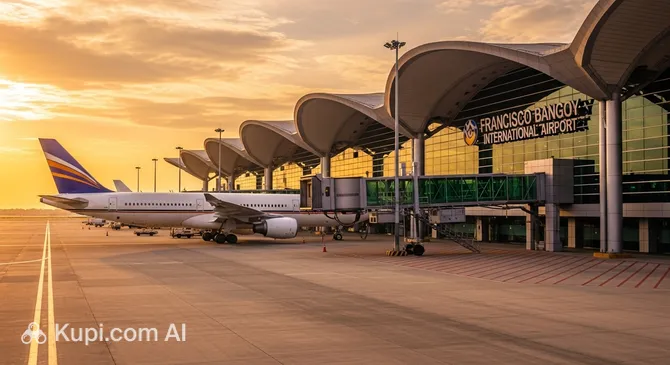
Francisco Bangoy International Airport. Source: Kupi.com Binoculars

Welcome to Francisco Bangoy International Airport, the main aerial gateway to the island of Mindanao and Davao City! This airport is not merely a transit hub, but the starting point for a journey into the "Land of Promise" of the Philippines, as this region is often called. It is from here that routes to exotic beaches, mountain peaks, and famous durian plantations begin. The airport serves as a key centre for tourism and business in the south of the country, connecting it with the rest of the world.

IATA Code DVO
ICAO Code RPMD
City Davao City
Distance to centre approx. 7 km
Status International
Annual Passengers approx. 3.8 million (2023)
Popular Airlines Cebu Pacific, Philippine Airlines, Qatar Airways.
Schedule Online Board "Francisco Bangoy International Airport"

Davao Airport, despite its status as one of the busiest in the Philippines, is notable for its compactness and convenient navigation. All infrastructure is concentrated in one modern terminal, allowing passengers to easily orient themselves between arrival, departure, and check-in zones. For a comfortable wait before your flight, there are business lounges, various cafes where you can try local cuisine, and duty-free shops.

The main advantage of the airport is its strategic location. It serves as an ideal base for exploring the entire Mindanao region, known for its natural wonders. From here, it is easy to reach the best spots for diving, set off on a trek to Mount Apo, or visit the famous Philippine Eagle Centre. For the convenience of travellers, offices of international car rental companies operate at the airport, providing complete freedom of movement around the island.

Contact Information

To contact representatives of Francisco Bangoy International Airport and obtain current information, you may use the following details:

  • Official Website: The airport does not have its own separate website. It is managed by the Civil Aviation Authority of the Philippines (CAAP); information can be found on their portal caap.gov.ph.
  • Helpline Phone: +63 82 234 0418. Please note that waiting times on the line may be significant.
  • Address: Carlos P. Garcia National Highway, Buhangin, Davao City, 8000 Davao del Sur, Philippines.
  • Social Media: Updates and news are frequently posted on the airport's official Facebook page. We recommend searching for "Davao International Airport (DVO)".
  • Lost Luggage Information: For all issues related to lost or damaged baggage, it is necessary to contact the airline representative directly for the flight you arrived on. Airport staff do not handle baggage tracing.
  • Passenger Support Contacts: Information desks are located within the terminal building. You may also use the helpline phone for general enquiries.

How to Get to the Airport

Getting to Francisco Bangoy International Airport (DVO) from the city centre of Davao City is quite simple, and travellers have several options to choose from depending on budget, time, and comfort preferences. The airport is located relatively close to the main districts of the city, but travel time can depend heavily on traffic conditions.

Taxis and Transfers. This is perhaps the most convenient and popular way to get to the airport. You can use standard city taxis with metered fares or book a car via mobile apps, such as Grab. Coupon taxis with fixed fares are also available at the terminal exit, which eliminates price surprises. The trip from the city centre usually takes between 30 to 50 minutes. This is a reliable choice, especially if you have a lot of luggage.

Public Transport. For budget travellers and those wishing to immerse themselves in the local flair of the Philippines, the famous jeepneys are an excellent choice. This is the cheapest method of transport. Jeepney routes run along the main road near the airport, from where you can walk to the terminal in a few minutes. Although this is not the most comfortable option with suitcases, it will provide you with an authentic experience. The cost of the trip will be minimal, but be prepared for the fact that jeepneys can be crowded.

Car Rental and Parking. If you prefer independence in your movements, you can rent a car. Several rental agencies operate in Davao City. This is particularly convenient if you plan to explore the city's surroundings. Parking is available directly at the airport, where you can leave a car for both short and long periods. Please consider that traffic in the city can be intense, especially during peak hours.

Terminals and Map

Francisco Bangoy International Airport, also known as Davao Airport, is a modern and well-organised complex. It consists of one main passenger terminal, which serves both domestic and international flights. Such a structure significantly simplifies navigation for travellers, as all necessary services and zones are located in one building.

The terminal features a well-thought-out two-level layout, typical of modern airports. The Departure Zone is located on the upper floor. Here you will find airline check-in counters, passport control, and pre-flight security screening points. After completing formalities, passengers enter the secure area with waiting lounges, shops, and cafes. The Arrival Zone is located on the ground floor, where baggage claim belts, customs control, and exits to the city are situated. Thanks to this organisation, the flows of arriving and departing passengers do not cross.

Since there is only one terminal at Davao Airport, there is no need for transfers between different buildings. All gates, services, and amenities are within walking distance. Navigation inside the building is intuitive thanks to clear signage in English and Filipino. The airport is not too large, which makes it cosy and easy to navigate even for those visiting for the first time.

Regarding the time required to complete procedures, it can vary. On average, it is recommended to arrive at the airport at least 2 hours before departure for domestic destinations and 3 hours before an international flight. This time is usually sufficient to check in, drop off luggage, and complete all security formalities without rushing.

Airport History

The history of Francisco Bangoy International Airport, the main transport hub for the entire island of Mindanao, began in the 1940s. At that time, it was merely a simple airstrip on land donated by Don Francisco Bangoy, an influential figure in the history of Davao City. Initially, the airfield was used for light aircraft and served as a starting point for the development of aviation in the region.

An important stage in the airport's history occurred during the years of World War II. It was seized and used by Japanese forces as their base, and subsequently liberated by the combined forces of American and Filipino troops. After the war, the facility was transferred to the management of civil aviation of the Philippines and began to gradually transform into a full-fledged commercial airport serving domestic flights.

Throughout the second half of the 20th century, the airport was reconstructed several times to meet growing passenger traffic. However, the real breakthrough was the opening of a new, modern terminal in 2003. This large-scale project, realised with the support of international financial institutions, turned Davao Airport into a modern complex capable of accommodating wide-body aircraft, including the Boeing 747 and Airbus A340. The area of the new terminal was double that of the old one, and its capacity grew to over two million passengers per year.

Today, Francisco Bangoy International Airport is not just a point on the map, but a symbol of economic growth and tourist appeal for the region. An interesting fact: its design was inspired by the architecture of Malay houses, paying tribute to the cultural heritage of Mindanao. The airport continues to play a key role in connecting this beautiful corner of the Philippines with the rest of the world, serving both domestic and international routes.

Services and Amenities

At Francisco Bangoy International Airport (DVO), all conditions have been created for a comfortable stay for passengers awaiting their flights. Here you will find several cafes and restaurants where you can try both local Filipino dishes and more familiar international snacks. Additionally, shops operate within the terminal offering souvenirs, essential goods, and products from the Duty-Free zone.

For those who value enhanced comfort, the airport features VIP lounges. Access to these is usually granted to business class passengers, airline loyalty programme members, or for an additional fee. Free Wi-Fi is available throughout the terminal, and waiting areas are equipped with power outlets and special charging stations for electronic devices, allowing you to stay connected.

Located within the airport building are currency exchange points and ATMs of several local banks, which is very convenient for arriving tourists. In case of unforeseen health situations, a medical clinic operates in the terminal to provide first aid.

The airport is equipped for the needs of various categories of travellers. For families with small children, there are nursing rooms. Passengers with reduced mobility can use ramps, lifts, and specially equipped restrooms. It is recommended to contact the airline in advance to book assistance services upon arrival or before departure.

Although there are no hotels directly on the airport grounds, there are many accommodation options for every taste and budget in the immediate vicinity, just a few minutes' drive away. Dedicated conference rooms are absent in the terminal; however, basic business services, such as workspaces and internet access, are often available in premium waiting lounges.

Where to Eat

At Francisco Bangoy International Airport (DVO), passengers will find several options for a snack or a full meal that satisfy different tastes and budgets. Most establishments are located in the main passenger terminal, both in the public area before security control and in the departure zone.

Before passing through security (landside), cafes and small eateries are usually concentrated, accessible to both departing passengers and those seeing them off. Here you can drink coffee, eat a sandwich, or try local pastries. This is a convenient option if you have plenty of time before your flight. In the departure zone after security control (airside), the selection may be slightly smaller, but it is oriented towards passengers awaiting boarding. There are coffee shops and food courts here offering both quick snacks and hot meals.

While in Davao, be sure to try something with durian, the "king of fruits". At the airport, you can find coffee with durian aroma, sweets, or chips made from this exotic fruit. Furthermore, the menus of local cafes often feature popular Filipino dishes, such as chicken adobo or siopao buns. This is a great opportunity to get acquainted with the region's gastronomy before departure.

For a quick snack, coffee shops serving fresh pastries and drinks are ideal. If you are looking for a full lunch, pay attention to the small restaurants in the food court area offering dishes of Filipino and Asian cuisine. Regarding special dietary needs, vegetarian options can generally be found in the form of vegetable dishes or salads, but it is best to verify ingredients with staff. The selection of gluten-free or Halal-certified dishes may be limited.

Prices at the airport are expectedly higher than in the city but remain within reason. Most establishments open early in the morning and operate until the last evening flight, providing passengers with food throughout the day. Plan your time so you can calmly enjoy your meal, especially if you wish to try local delicacies.

Travel Tips

To ensure your journey through Francisco Bangoy International Airport goes smoothly, make use of these proven tips. This airport serves Davao City and is a significant transport hub on the island of Mindanao, so a little preparation will make your experience much more pleasant.

Arrival Time and Check-in. For domestic flights within the Philippines, it is recommended to arrive at the airport at least 2 hours before departure, and for international flights — 3-4 hours. This will give you enough time to complete all formalities without rushing. To save time, complete online check-in on your airline's website and save the boarding pass on your phone. Remember that in many Filipino airports, the first baggage screening is conducted right at the terminal entrance.

Security Control and Hand Luggage. Standard security rules apply here: liquids in containers no larger than 100 ml must be packed in a transparent bag. Electronics, such as laptops and power banks, need to be placed in a separate tray for scanning. Important local nuance: if you plan to carry the famous durian fruit, check the airline's rules. Due to its strong odour, carrying it in the aircraft cabin is often prohibited even in airtight packaging.

Seat Selection and In-flight Comfort. If it is possible to select a seat during check-in, consider your preferences. Window seats are good for views, especially when approaching the picturesque islands. Aisle seats are convenient if you plan to stand up frequently. Passengers with long legs should pay attention to seats by emergency exits, where there is more space, though booking them may cost more.

Tips for Transfer Passengers. If you have a connecting flight in Davao, verify in advance whether you need to collect and re-check your luggage. Leave a sufficient time gap between flights, especially if you are flying with different airlines. The airport is not very large, but it is better to have time in reserve in case of unforeseen delays.

Customs Control. Upon entering the country, be prepared to complete a customs declaration. Be sure to declare cash exceeding the established limit and goods purchased for commercial purposes. Refrain from importing fresh fruits, vegetables, and meat products without appropriate permits to avoid issues with the quarantine service.

Saving Money and Actions During Flight Delays. To save money, bring an empty reusable water bottle with you — after security, it can be filled at drinking fountains. Prices for food and drinks in the departure zone are generally higher, so a light snack brought with you won't hurt. In case of a flight delay, first contact your airline's counter for information. Enquire about your rights to compensation, provision of meals, or accommodation if the delay is lengthy.

Reached the end of the page?

That means the route is fully explored