Support

Pagadian Airport

About the Airport

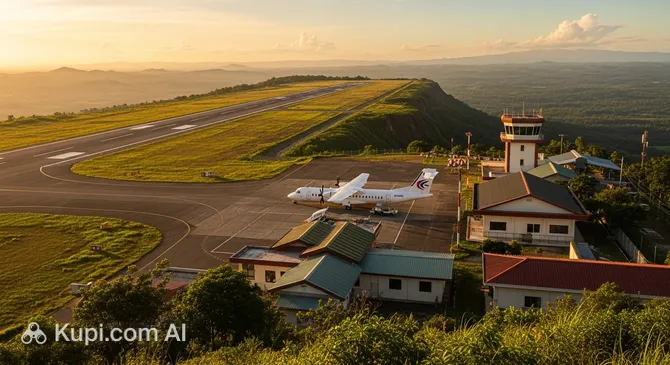
Pagadian Airport. Source: Kupi.com Binoculars

Pagadian Airport is not merely a transport hub, but a true gateway to the "Little Hong Kong of the South," as Pagadian City is often called due to its hilly landscape. Situated on elevated terrain, this airport offers passengers breathtaking views of Illana Bay and the lush green slopes of the Zamboanga del Sur province during the descent. Following extensive modernization, it has become a vital artery connecting this picturesque corner of Mindanao with the country's key metropolises, making travel here comfortable and fast.

IATA Code PAG
ICAO Code RPMP
City Pagadian
Distance to City Centre 5 km
Status Domestic
Annual Passengers approx. 300,000

Airport Features and Advantages

Pagadian Airport has undergone a significant journey of development from a small airfield to a modern Class 1 facility. One of its key features is the upgraded runway, which was widened and extended during reconstruction. This allowed the airport to accommodate medium-range jet aircraft such as the Airbus A320, significantly increasing passenger traffic and regional accessibility.

Another important advantage is the availability of a night rating system. Thanks to the installation of modern lighting equipment, the airport is capable of handling flights after dark. This gives airlines flexibility in scheduling and offers tourists the opportunity to arrive on early morning or late evening flights, maximizing their holiday time.

The convenient location of the terminal is also worth noting. It is located just a few minutes' drive from the city centre, which can be reached via unique local transport—three-wheeled motorcycle taxis with an inclined cabin, specially designed to conquer the steep city hills. The compactness of the terminal itself ensures a quick passage through all pre-flight formalities without unnecessary fuss or queues.
Contact Information

Finding accurate and up-to-date contact information for small regional airports, such as Pagadian Airport, can be challenging, as many do not have separate websites or dedicated support services. The management of such airports in the Philippines is centralized through the Civil Aviation Authority of the Philippines (CAAP). Here is the most complete information available at this time:

  • Official Website: Pagadian Airport does not have its own official website. Information regarding the status of the country's airports can be found on the website of the Civil Aviation Authority of the Philippines (CAAP).
  • Information Desk Phone: The public number for inquiries is (062) 214-1936. However, getting through can be difficult. For urgent matters related to your flight, it is recommended to contact your airline directly.
  • Airport Address: Airport Road, Muricay, Pagadian City, Zamboanga del Sur, Philippines.
  • Email: There is no dedicated email address for general passenger inquiries. All questions should be directed to the airline.
  • Social Media: Pagadian Airport does not maintain official social media pages. News and updates are usually published on the pages of the airlines operating flights to this airport.
  • Lost Luggage Information: For issues regarding lost or damaged luggage, you must contact your airline's representative exclusively. Airport staff do not handle baggage tracing.
  • Passenger Support Contacts: Passenger support regarding booking, ticket changes, flight check-in, and other topics is provided by the airlines. Please contact your carrier's support service.

How to Get to the Airport

Getting to Pagadian Airport (PAG) from the city centre of Pagadian is quite simple, as it is located just a few kilometres from the main districts. Travel in the Philippines often becomes an adventure in itself, and the trip to the airport is no exception. The main methods include local public transport, taxis, and car rentals.

Public Transport is the most authentic and budget-friendly option. In Pagadian, as in many Philippine cities, the main mode of transport is tricycles (motorcycle taxis). Local tricycles have a unique design with an inclined cabin, making the ride memorable. It is a quick way to get to the airport; the trip will take about 15-20 minutes. The cost is very low, but it is important to agree on the price with the driver in advance to avoid misunderstandings. Jeepneys also run along major routes, but they may not drive right up to the terminal.

Taxis and Private Transfers offer more comfort, especially if you have a lot of luggage. In the city, you can find private carriers or arrange a transfer through your hotel. This will cost significantly more than a tricycle but ensures door-to-door travel without extra hassle. Travel time by car is approximately 10-15 minutes depending on traffic conditions.

Car Rental and Parking. If you plan to travel actively around the region, you can rent a car. However, for a simple trip to the airport, this is not the most practical option. For those arriving in their own or rented transport, Pagadian Airport has a parking area where vehicles can be left for short or long periods.

For travellers considering alternative routes, there are other airports in the region. The nearest is Labo Airport in Ozamiz, located approximately 57 km away. Other options include Dipolog Airport (86 km), Awang Airport in Cotabato City (111 km), and the larger Laguindingan International Airport in Cagayan de Oro (140 km). Additionally, Dumaguete Airport is located at a distance of about 167 km.

Terminals and Map

Pagadian Airport (PAG) is a small regional air station with one passenger terminal that serves all domestic flights. Thanks to its compactness, navigation is intuitive and causes no difficulties even for those visiting for the first time.

The structure of the terminal is extremely simple. Upon entering, you immediately find yourself in the public area where airline check-in counters are located. After receiving a boarding pass and dropping off luggage, passengers proceed to the security screening zone, beyond which lies a small pre-departure area. The arrival zone is located in the same part of the building but is separated and consists of a baggage claim hall with a single carousel.

Since the airport has only one terminal, there is no need for transfers between terminals. All processes—from check-in to boarding—take place in one building. This significantly simplifies and speeds up pre-flight formalities.

The time required for check-in and security screening is usually minimal due to low passenger traffic. On average, all procedures take no more than 30-40 minutes. Nevertheless, it is recommended to arrive at the airport generally 1.5-2 hours before departure to avoid rushing in case of unforeseen delays.

Navigation Tips: Orienting yourself in Pagadian Airport is very easy. Signs, though few, clearly direct passengers. Due to the small size of the building, it is practically impossible to get lost. The entire path from the entrance to the boarding gate takes just a few minutes on foot.

Airport History

The history of Pagadian Airport (PAG) begins before World War II, when the American colonial government built an airstrip here. During the war, the airfield was used by Japanese forces, highlighting its strategic importance in the region. After the war ended, the facility was returned to the control of the Philippines and gradually began to develop as a civilian airport serving the city and the province of Zamboanga del Sur.

A key moment in the airport's history was the massive reconstruction that took place from 2006 to 2009. This ambitious project completely transformed the airport complex. As part of the modernization, a new modern passenger terminal was built, and the runway was significantly lengthened and widened. Thanks to these changes, Pagadian Airport gained the ability to accommodate larger aircraft, such as the Airbus A320, and conduct night flights.

The grand opening of the renovated airport took place in October 2009. This modernization was not just a technical improvement, but an important step for the economic development of the entire region. Today, Pagadian Airport serves as a modern and comfortable gateway, playing an important role in the transport infrastructure of Mindanao Island and contributing to the growth of tourism and business activity in the province.

Services and Facilities

Pagadian Airport (PAG) is a key transport hub for Pagadian City and the province of Zamboanga del Sur in the Philippines. Despite its modest size, it offers passengers a set of essential services to make waiting for flights comfortable.

For passengers, there are small cafes and eateries operating in the terminal where one can have a snack, coffee, or soft drinks. There are also several shops offering souvenirs, snacks, and travel essentials.

There are no specialized VIP lounges or business lounges at the airport. Passengers can spend time in the general waiting hall. Wi-Fi is usually available in the terminal, though terms of use (paid or free) should be checked on-site. Special sockets and stands are provided for charging electronic devices.

Financial services are limited. An ATM may be installed at the airport, but full-service bank branches and currency exchange points are absent. It is recommended to handle all financial transactions, including currency exchange, in the city beforehand. A medical station operates in the terminal building to provide first aid.

The airport is equipped with basic infrastructure for passengers with reduced mobility, including ramps and specially equipped restrooms. For families travelling with small children, mother and child rooms may be available, but it is best to verify this information with airport staff in advance.

There are no hotels within the airport itself. The nearest hotels and guesthouses are located in Pagadian City, which can be quickly reached by taxi. Conference rooms and business centres are also not provided at the airport, as it is oriented towards passenger transport services.

Where to Eat

Pagadian Airport (PAG), being a small regional airport, offers basic but convenient dining options for passengers. One should not expect a wide variety of restaurants here as in major international hubs; however, grabbing a snack or a coffee before departure is certainly possible. All establishments are concentrated in the single airport terminal.

Mostly, there are small cafes and kiosks operating here, located in the public area before security control (landside). This means it is better to eat before checking in for your flight and dropping off luggage. The assortment generally includes simple and filling Filipino dishes, such as rice with chicken or fish, as well as more universal options like sandwiches, pastries, chips, and soft drinks.

For a quick snack, local buns or a sandwich with coffee are ideal. If you have time for a more substantial lunch, you can order a hot meal at one of the local cafes. Prices here are quite moderate and correspond to the level of a regional airport. Opening hours are usually tied to the flight schedule, serving passengers of both morning and daytime flights.

Passengers with special dietary needs should be prepared for a limited selection. While finding simple vegetarian dishes (e.g., rice with vegetables) is possible, specialized vegan, gluten-free, or certified Halal options will likely be absent. Therefore, if you have strict dietary restrictions, it is recommended to bring food with you.

Travel Tips

To ensure your journey through Pagadian City Airport goes smoothly, make use of our tips. It is recommended to arrive at the airport at least 2 hours before a domestic flight departure. This will give you enough time to complete all procedures without rushing, even considering that regional airports are usually less busy.

To save time, complete online check-in if your carrier provides this option. Keep your passport or ID and boarding pass (printed or digital) ready for quick verification at the check-in counter and before the security zone. Security procedures here are standard, but it is always better to empty your pockets of all metal items and prepare electronic devices in advance.

When choosing a seat on the plane, note that a window seat will offer you magnificent views of Illana Bay during takeoff or landing. An aisle seat is more convenient if you want more legroom or plan to stand up during the flight. Regarding hand luggage, remember standard restrictions: liquids in containers no larger than 100 ml, packed in a transparent bag; no sharp objects. Power banks must be carried in hand luggage only.

If you have a connecting flight, clarify at check-in whether you will need to collect and re-check your luggage at the transit airport. Since Pagadian Airport serves mainly domestic flights, there is no full customs control here. You will undergo customs and passport control procedures at your first international arrival point in the Philippines, for example, in Manila or Cebu.

To save money, book flight tickets and airport transfers in advance. Bring an empty reusable water bottle, which can be filled after passing security, and light snacks. This will help avoid unnecessary expenses while waiting for your flight.

In case of a flight delay or cancellation, first contact your airline representative for information on flight status and possible options (rebooking, provision of food or accommodation). Keep an eye on information boards for updates. It is useful to have with you a book or a charged power bank to pass the waiting time.

Reached the end of the page?

That means the route is fully explored