Philippines

About

The Philippines is a stunning archipelago nation in Southeast Asia, consisting of more than seven thousand islands, each with its own unique charm. It is a place where Eastern culture meets Western heritage, creating a unique atmosphere. The country attracts travelers with its white-sand beaches, emerald rice terraces, active volcanoes, and rich underwater world.
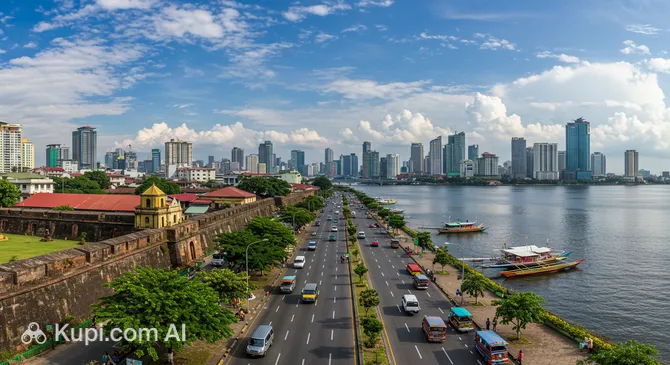
Illustration.
Source: Kupi.com AI

The Philippines is famous for its tropical climate, which makes it an attractive year-round destination. Beyond paradise islands, you will find vibrant cities, most notably the capital, Manila — a city of contrasts where modern skyscrapers stand alongside historical colonial-era quarters. The nature of the Philippines is strikingly diverse, from the famous Chocolate Hills on Bohol Island to volcanoes and coral reefs perfect for diving and snorkeling.

In addition to the capital, it is worth exploring cities such as Cebu City, the country's historical center, or enjoying the entertainment offered by Sky Ranch Tagaytay. Filipinos are known for their hospitality and friendliness, creating a warm atmosphere for tourists. A trip to the Philippines always promises vivid impressions, exotic landscapes, and the chance to experience a unique culture.


Currency

The national currency of the Philippines is the Philippine Peso (PHP). The banknotes are decorated with portraits of prominent Filipino figures and images of the country's iconic natural sites. Coins of various denominations are also in circulation. It is recommended to exchange currency at official banks or licensed exchange offices, which can be found in airports, shopping centers, and tourist areas. Avoid exchanging money with street vendors due to the risk of fraud or unfavorable rates.

Credit cards (mainly Visa and Mastercard) are widely accepted in major cities, hotels, restaurants, and shopping malls. However, in small towns and on remote islands, cash is preferred, so it is always useful to carry some local currency for small purchases and services.

Visa Requirements

When planning a trip to the Philippines, it is important to clarify visa requirements in advance. For citizens of many countries, including the EU and the USA, a visa is generally not required for short-term tourist trips. However, citizens of some other states, including certain CIS countries, may need a tourist visa, which is usually applied for in advance at a Philippine embassy or consulate in their country of residence. In some cases, an e-visa option may be available.

Regardless of whether you need a visa, a valid passport is required to enter the Philippines, and its validity should typically exceed the intended period of stay (often at least six months from the date of entry). Return tickets, proof of hotel booking, and medical insurance may also be required. Given that visa rules can change, it is strongly recommended to always check current information on the official websites of Philippine embassies or visa centers before your trip.

We'll let you know if you need a visa

Enter your destination or
Your nationality
Destination

Timezones

When planning a trip to the Philippines, you won't have to worry about changing time zones within the country. The entire territory of the Philippines operates on a single standard time zone known as Philippine Standard Time (PST). It corresponds to UTC+8, which is 8 hours ahead of Coordinated Universal Time.

This means that the time in Manila will be the same as on any other island in the archipelago, whether it's popular Boracay or remote Palawan. A single time zone significantly simplifies planning travel and activities during your Philippine adventure.

Getting There

The most convenient way to reach the Philippines, an island nation in Southeast Asia, is by air. The country has several international airports, the main one being Ninoy Aquino International Airport in Manila. This is where most international flights arrive. Direct flights or convenient connections are available from many major cities in Asia, the Middle East, Australia, North America, and Europe. Other major international airports are located in cities such as Cebu City and Clark, which receive flights from several Asian countries.

Given the geographical position of the Philippines, consisting of more than 7,000 islands, land transport from other countries is impossible. Sea connections in the form of international ferries or cruise ships exist, but they are less common for direct entry into the country compared to air travel and are more often used for travel between islands or from nearby island nations. When planning your trip, especially during the high tourist season, it is recommended to book flights in advance to ensure the best prices and availability.

AirportCityIATA
Ninoy Aquino International AirportManilaMNL
Mactan-Cebu International AirportCebu CityCEB
Boracay AirportCaticlanMPH
Francisco Bangoy International AirportDavao CityDVO
Clark International AirportMabalacatCRK

The Philippines is a country of a thousand islands, each ready to offer something unique: from bustling metropolises to secluded paradise beaches and cool mountain resorts. Here you will find ideal spots for fans of active recreation and lively parties, as well as those seeking peace and connection with nature.

Illustration.
Source: Kupi.com AI

The heart of the country is its capital, Manila — a city of contrasts where modern skyscrapers stand next to the colonial architecture of the historic Intramuros district. It is a major transport hub and cultural center offering a rich sightseeing program. Another significant urban center is Cebu City, the oldest city in the Philippines, attracting tourists with its rich history, religious shrines, and proximity to magnificent dive sites. For those dreaming of white beaches and azure seas, Malay is an ideal choice, a municipality that includes the famous island of Boracay, known for its postcard views and vibrant nightlife.

If you prefer a cooler climate and picturesque mountain scenery, consider Tagaytay. This popular resort is situated on a ridge overlooking Taal Volcano and the lake of the same name, offering fresh air, many restaurants with panoramic views, and opportunities for a relaxing getaway. Regardless of your preferences, the Philippines can offer you an unforgettable journey full of vivid impressions and discoveries.

Top Attractions

The Philippines is not just about paradise beaches; it is a country with a rich culture and many interesting sites. Everyone will find something for themselves here, from breathtaking natural wonders to historical shrines and modern entertainment complexes.

One of the popular places for family fun and exciting experiences is Sky Ranch Tagaytay. This amusement park offers rides for all tastes, and its famous Ferris wheel provides stunning panoramic views of the surroundings, including Taal Volcano.

For those interested in the spiritual side of the Philippines, a visit to the Minor Basilica of Our Lady of the Rosary of Manaoag is a must. It is one of the most revered pilgrimage sites in the country, known for its miraculous icon and beautiful architecture.

Shopping enthusiasts and those who love urban hustle and bustle will enjoy Ayala Center Cebu. This is not just a shopping mall, but an entire complex with many international and local brand stores, restaurants, cinemas, and green spaces for relaxation.

Illustration.
Source: Kupi.com AI

Traveller photos:

To immerse yourself in an authentic atmosphere and try local delicacies, stop by the Mahogany Market in Tagaytay. Here you can find the freshest fruits, vegetables, and meat, as well as try the famous Filipino soup "bulalo" served piping hot.

Best Time to Visit

When planning a trip to the Philippines, it is important to consider the two main climatic seasons that significantly affect the travel experience. The high season, or dry season, usually lasts from November to April. During this time, the weather is most favorable: plenty of sun, low humidity, and calm seas, creating ideal conditions for beach holidays, diving, snorkeling, and exploring the numerous islands. The advantages of this period include comfortable weather and an abundance of events, including colorful celebrations for Christmas and Holy Week (Semana Santa), which attract many tourists. However, be prepared for higher prices for accommodation and flights, as well as larger crowds at popular resorts.

The low season, or rainy season, in the Philippines falls between May and October. This period is characterized by hot and humid weather with frequent but often brief downpours. The highest probability of typhoons occurs between July and September. Despite this, the low season has its advantages: significantly fewer tourists, lower prices for hotels and flights, and the incredibly lush and vibrant greenery of the islands. However, some sea excursions and activities may be limited due to weather conditions, and some small establishments on the islands may temporarily close.

Given that the Philippines is an archipelago of over 7,000 islands, the climate can vary noticeably even within the same season in different regions. For example, eastern coasts may receive more rainfall while the west enjoys dry weather. Therefore, it is always recommended to check the weather forecast for the specific islands you plan to visit. Some unique natural phenomena, such as whale shark watching season in certain areas, may also fall during different months, which should be considered when planning your unforgettable journey.

Traditions

Filipinos are famous for their warmth and hospitality. When greeting locals, you will notice that handshakes are common, especially among men, along with a warm smile and a slight nod. It is important to remember that pointing directly with a finger is considered impolite; instead, Filipinos may use a lip gesture, pouting them forward in the direction of the object. Showing respect for elders is a key aspect of the culture, so using polite particles like "po" and "opo" (similar to "sir/ma'am" or a polite "yes") when speaking with them will be highly appreciated, though not strictly required of tourists. If you are invited to someone's home, it is a great honor. It is customary to bring a small gift for the hosts — sweets, fruit, or a souvenir from your country. Refusing food may be perceived as impolite, so try to taste at least a little of what is offered.

When visiting the Philippines, it is worth considering some cultural nuances in behavior and clothing. Light clothing is suitable for daily life, but for visits to churches and religious sites, choose modest attire that covers the shoulders and knees. In some establishments in large cities, such as Manila, a smart-casual dress code may apply. At the table, it is customary to wait for an invitation to eat; Filipinos often eat using a fork and spoon (spoon in the right hand, fork in the left to push food onto the spoon). Major holidays that deeply reflect the culture are Christmas (Pasko), which in the Philippines has one of the longest celebration periods in the world, starting as early as September, and Holy Week (Semana Santa), observed with great reverence and numerous religious processions. To avoid misunderstandings, try not to raise your voice in public and be patient, as the concept of "Filipino time" means things may move slowly. Respecting local traditions will make your journey even more pleasant and memorable.

Entertainment

The Philippines offers tourists an incredible variety of entertainment for every taste. Thanks to its island geography, the country is a true paradise for lovers of active recreation. Diving and snorkeling in crystal-clear waters among coral reefs, surfing at world-famous spots, kayaking, and sailing are just a few of the water activities available. On land, you can find exciting hiking trails through tropical forests, volcano climbs, and explorations of picturesque rice terraces.

The cultural program in the Philippines is equally rich. In major cities like Manila and Cebu City, you can visit numerous museums, discover colonial architecture, tour ancient churches, and see modern art galleries. Shopping here is also a delight: from massive modern malls with international brands to colorful local markets where you can purchase authentic souvenirs, pearl jewelry, handmade textiles, and exotic delicacies. Many tourists bring home items made from shells, coconut wood, and the famous Philippine rum.

As evening falls, life in the Philippines remains vibrant, especially in tourist zones and large cities. Numerous restaurants offer both local and international cuisine, while bars and clubs invite you to enjoy live music or dance until morning. For family vacations, there are also many options: from visiting theme parks and water parks to interactive museums and aquariums. Nature parks and reserves offer educational excursions that are interesting for both adults and children.

Currency rates

Planning a trip? Wonderful! To make sure the financial side of your journey holds no surprises, it's worth remembering that exchange rates are constantly changing. That's why we strongly recommend keeping an eye on current rates both before departure and throughout your trip. To help with that, you can use the data provided below — we monitor exchange rates 24/7 and strive to provide the most up-to-date information.

PHP exchange rate for 14/08/2026

1 AED
~ 16.61 PHP
6.00 AMD
~ 1 PHP
1 AUD
~ 43.05 PHP
1 AZN
~ 35.89 PHP
1 BYN
~ 20.35 PHP
1 CAD
~ 43.77 PHP
1 EUR
~ 70.34 PHP
1 GBP
~ 82.32 PHP
5.17 HUF
~ 1 PHP
1.56 INR
~ 1 PHP
1.43 KGS
~ 1 PHP
23.25 KRW
~ 1 PHP
7.63 KZT
~ 1 PHP
1 PLN
~ 16.33 PHP
1.37 RUB
~ 1 PHP
1 SAR
~ 16.22 PHP
1 SGD
~ 47.66 PHP
1 TRY
~ 1.28 PHP
1 UAH
~ 1.36 PHP
1 USD
~ 61.01 PHP
195.95 UZS
~ 1 PHP

Reached the bottom of the page?

Looks like you know this route inside out

We use cookies and services to collect user information. This is essential for the functioning of the site and for marketing purposes. You can find out more in .
