Afghanistan

About

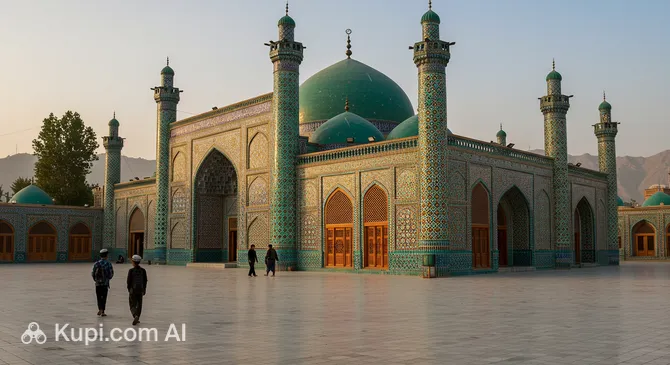
Afghanistan is a country located in the heart of Asia, at the crossroads of ancient trade routes that connected the East and the West. It is a land with a rich and layered history where various cultures and civilizations have intertwined for millennia. The mountainous terrain, dominated by the majestic ranges of the Hindu Kush, shapes the unique landscape of the country. The capital of Afghanistan, Kabul, is an ancient city that bears traces of many eras and cultural influences.
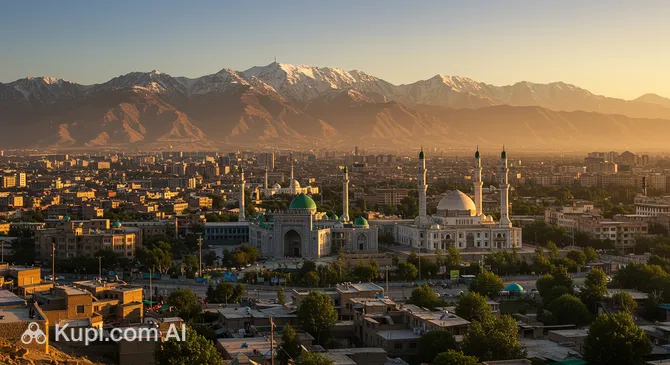
Illustration.
Source: Kupi.com AI

Afghanistan's cultural heritage is vividly displayed in its traditional art, music, poetry, and, of course, the famous hospitality of the local people. The country offers travelers a unique opportunity to touch ancient traditions and see historical monuments that testify to its past greatness. Beyond the capital, the city of Herat, known for its medieval citadel and beautiful mosques, is of significant interest to history buffs. Within Kabul itself, it is worth visiting iconic sites such as the Babur Gardens, which offer not only historical value but also a peaceful atmosphere with beautiful views.

Afghanistan is a country of amazing contrasts, where the rugged and breathtaking beauty of nature with its high mountains and fertile valleys combines with a deep historical and cultural legacy. A journey here can be a true discovery for curious tourists ready to immerse themselves in the atmosphere of an ancient land and get to know its unique character and the resilient spirit of its people.

Currency

The national currency of Afghanistan is the Afghani (AFN). Banknotes of various denominations are in circulation, typically depicting historical figures, architectural monuments, or national symbols significant to the country. Coins are also used, but primarily for small transactions.

When planning your trip, it is important to know that exchanging foreign currency for Afghanis is recommended at official banks or licensed exchange offices, which can be found in major cities, including Kabul. Try to avoid exchanging money with street money changers, as this involves risks of unfavorable rates or encountering fraud. The use of credit cards in Afghanistan is extremely limited and only possible in a very few places, such as large hotels or certain shops in the capital. Therefore, for most daily expenses, travelers need to carry a sufficient amount of cash.

Visa Requirements

To enter Afghanistan, citizens of most countries, including the EU, USA, and CIS, generally require a visa. A tourist visa is usually arranged in advance through an Afghan embassy or consulate in your country of residence. Currently, the possibility of obtaining a visa on arrival or online may be limited or unavailable, so contacting a diplomatic mission in advance is the standard procedure.

The primary document for obtaining a visa and crossing the border is a valid international passport. Standard supporting documents may also be required, such as return tickets, proof of hotel booking, and medical insurance. Given that visa rules and requirements can change, it is strongly recommended to check for current information on the official websites of Afghan embassies or consulates before planning your trip.

We'll let you know if you need a visa

Enter your destination or
Your nationality
Destination

Timezones

When planning a trip to Afghanistan, you won't have to worry about changing time zones within the country. A single time zone operates across the entire territory of Afghanistan—UTC+4:30 (Afghanistan Time, AFT). This simplifies the planning of travel and events, as the time will be the same in all regions of the country, including the capital Kabul.

Getting There

When planning a trip to Afghanistan, most tourists choose air travel, as it is the most common and often the primary way to reach the country due to its geographical location. The country's main international aviation hub is typically the airport in the capital, Kabul—the Kabul International Airport. It receives flights from various regions, especially from Middle Eastern countries and some Asian nations. Direct air links to other parts of the world may be limited, but convenient connections are usually available through major international airports in neighboring countries or regional transport hubs.

Afghanistan shares land borders with several countries, and theoretically, crossing the border by land is possible. However, such journeys can be associated with complexities, require special permits and visas, and the situation at border crossings can change. Before planning a trip by land transport, it is crucial to carefully study the current rules and conditions. There is no international passenger rail or sea connection to Afghanistan. Regardless of the chosen method of travel, it is recommended to book tickets and arrange necessary documents well in advance, especially if your trip coincides with the peak tourist season.

AirportCityIATA
Kabul International AirportKabulKBL
Herat International AirportHeratHEA
Mazar-I-Sharif AirportMazar-i-SharifMZR
Kandahar AirportKandaharKDH
KhostKhostKHT

Afghanistan, a country with a rich history and culture, offers travelers the chance to explore ancient cities, each holding its own unique treasures. Although the tourism infrastructure may be in a developmental stage, the historical heritage of these places will not leave any explorer indifferent.

Illustration.
Source: Kupi.com AI

The country's capital, Kabul, is not only the administrative but also an important cultural center where you can experience the daily life of Afghans and visit historical bazaars. The city of Mazar-i-Sharif is famous for its magnificent Blue Mosque, which attracts pilgrims and tourists alike. Ancient Herat, located in the west of the country, is known for its citadel and rich poetic heritage. And Bamyan, despite the tragic events of the past, continues to attract attention with its unique landscapes and the remains of ancient Buddhist monasteries carved into the cliffs.

Each of these cities offers its own unique perspective on the history and culture of Afghanistan. Traveling through them will allow you to deeper understand the centuries-old traditions of this land, get acquainted with its architectural monuments, and perhaps enjoy the hospitality of the local residents. Explore these destinations to discover Afghanistan from a new and unexpected side.

Top Attractions

Afghanistan, a country with ancient history and rich cultural heritage, offers travelers unique attractions, each telling its own part of a centuries-old chronicle. Getting to know them will allow for a deeper understanding of the character and soul of this land.

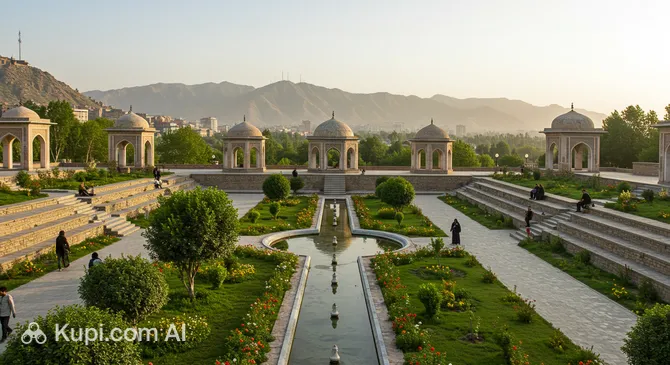
One of the gems of Kabul and all of Afghanistan is the Babur Gardens. This is a historical park complex where, according to tradition, the founder of the Mughal Empire—Babur—is buried. Today, it is a popular place for relaxation, walks, and learning about history, offering tranquility and beautiful views among terraced gardens and water channels.

Illustration.
Source: Kupi.com AI

Traveller photos:

For those who want to deeply understand the country's rich history and culture, the National Museum of Afghanistan is a must-visit. Located in Kabul, it houses thousands of unique artifacts spanning various eras—from prehistoric times to the Islamic period. The museum's exhibits tell the story of ancient civilizations, Buddhist heritage, and the rich traditions of the Afghan people.

The majestic Darul Aman Palace, located on the outskirts of Kabul, is a symbol of the country's modernization in the early 20th century. Built in a European neoclassical style, the palace was intended as the seat for a future parliament. Despite the damage sustained during years of conflict, its monumental ruins still make a strong impression and serve as a reminder of its former splendor.

In the heart of old Kabul lies the Pul-e-Kheshti Mosque—one of the largest and most significant mosques in the city. Its bright blue domes and elegant minarets are an important part of the cityscape. The mosque is not only an active religious center but also an outstanding example of Islamic architecture, attracting attention with its beauty and atmosphere.

Illustration.
Source: Kupi.com AI

Traveller photos:

Best Time to Visit

When planning a trip to Afghanistan, it is important to consider its sharply continental climate. The most comfortable times for a visit are traditionally considered to be spring (April-May) and autumn (September-October). During these periods, the weather is usually pleasantly warm with sunny days and an absence of exhausting heat or severe cold, creating excellent conditions for sightseeing and exploring the country's rich culture. This is the ideal time to visit historical centers such as Herat or Balkh, as well as for trips to mountainous areas, for example, the surroundings of Paghman. However, it is worth noting that due to these favorable conditions, these seasons can attract more travelers, and as a result, prices for the limited tourist services may be slightly higher.

Summer months, from June to August, in Afghanistan—especially in lowland cities like Mazar-i-Sharif or Jalalabad—are characterized by extreme heat, with temperatures often rising above +40°C. Winter (from November to March) brings significant cold and snowfall, particularly in high-altitude regions such as Bamyan, which can make travel difficult. These seasons are considered the low tourism period; while there may be fewer travelers and lower prices, weather conditions can be uncomfortable, and access to some areas may be restricted.

One of the highlights that may influence the timing of your trip is the celebration of Nowruz (New Year), which falls at the end of March. This is a time of colorful festivals and folk celebrations, allowing for a deeper dive into local traditions. However, remember that the climate in Afghanistan varies greatly depending on the region—from desert zones to the high mountains of the Hindu Kush. Therefore, before your trip, it is always recommended to check the weather conditions for the specific places you plan to visit, whether it's the capital Kabul or ancient Bamyan.

Traditions

The culture of Afghanistan is deeply rooted in traditions of hospitality and respect. Greetings between men usually include a handshake, often accompanied by placing the right hand over the heart as a sign of sincerity. When interacting with women, especially those you do not know, it is better to limit yourself to a verbal greeting unless the woman initiates a handshake. Hospitality, known as "Mehman Navazi," is a cornerstone of Afghan culture; a guest is considered a messenger of God. If you are invited into a home, it is a great honor. A small gift for the hosts, such as fruit or sweets, is appropriate but not required. The main thing is to show respect and accept the offered treats, as a refusal may be taken as an insult.

Adhering to a dress code is of great importance. Women are advised to wear modest clothing covering their arms and legs, as well as a headscarf, especially in public places and when visiting religious sites. Men should also avoid shorts and overly revealing tank tops. At the table, it is customary to eat with the right hand, as the left is traditionally considered unclean. Always ask for permission before photographing local residents, especially women. Showing respect for elders, being reserved in public expressions of affection, and avoiding sensitive topics unless you are sure of their appropriateness will help you avoid awkward situations and show respect for local customs.

Getting acquainted with local holidays will also help you better understand the culture of Afghanistan. One of the most vibrant and significant is Nowruz—the festival of spring and the New Year according to the solar calendar, celebrated on March 21st. It is accompanied by folk celebrations, the preparation of special dishes, and symbolizes renewal. Islamic holidays such as Eid al-Fitr, marking the end of Ramadan, and Eid al-Adha are also widely celebrated. By showing interest and respect for these traditions, you will not only enrich your travel experience but also earn the goodwill of the local people.

Entertainment

Afghanistan, a country with ancient history and expressive culture, offers travelers unique opportunities to get acquainted with its heritage. While active recreation in the conventional sense, such as developed infrastructure for extreme sports, may be limited, the country's natural landscapes, especially the mountainous areas, could theoretically interest trekking and wildlife exploration enthusiasts. However, priority should always be given to safety issues, and up-to-date information should be obtained before planning such activities. The main focus of entertainment here is shifted toward cultural immersion and studying the rich past.

Cultural entertainment in Afghanistan centers around its numerous historical monuments, ancient cities like Balkh or Herat, and museums housing artifacts of millennial history. In the capital, Kabul, you can visit, for example, the National Museum of Afghanistan or explore iconic sites like the Darul Aman Palace. Shopping in Afghanistan is primarily an introduction to local crafts: famous Afghan carpets, lapis lazuli products, traditional clothing, and jewelry make excellent souvenirs. They can be found in colorful bazaars, as well as in some retail outlets like the Gulbahar Center in Kabul.

For family vacations, consider visiting parks like the Babur Gardens in Kabul, or the Kabul Zoo, which offer opportunities for walks and outdoor relaxation. Regarding nightlife, it is not widespread here in the Western sense; evenings are usually spent in a quieter atmosphere with family or friends, or over dinner at local restaurants where you can try national cuisine. An example of such a place is the Bukhara Restaurant. It is important to note that when planning leisure activities, tourists should always consider local customs and traditions, as well as the current situation in the country.

Currency rates

Planning a trip? Wonderful! To make sure the financial side of your journey holds no surprises, it's worth remembering that exchange rates are constantly changing. That's why we strongly recommend keeping an eye on current rates both before departure and throughout your trip. To help with that, you can use the data provided below — we monitor exchange rates 24/7 and strive to provide the most up-to-date information.

Reached the bottom of the page?

Looks like you know this route inside out

We use cookies and services to collect user information. This is essential for the functioning of the site and for marketing purposes. You can find out more in .