Yemen, Republic Of

About

Yemen, a country with a thousand-year history, beckons travelers with its unique location at the southern tip of the Arabian Peninsula. This is a land of ancient kingdoms, caravan routes, and a distinct culture that has preserved its authenticity over the centuries. The heart of the country is its capital, Sana'a, one of the oldest continuously inhabited cities in the world, whose architecture captures the imagination.
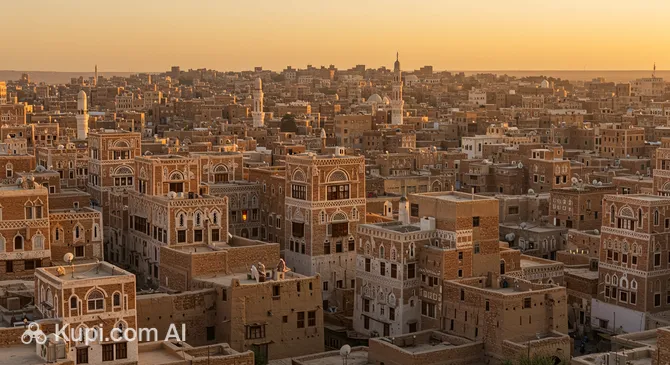
Illustration.
Source: Kupi.com AI

The architectural heritage of Yemen is truly impressive. In addition to the famous Sana'a with its gingerbread-style houses, the country boasts gems such as the ancient city of Shibam, dubbed the "Manhattan of the Desert" for its multi-story mud-brick skyscrapers. Coastal Aden, an important port city with a rich history, also offers a glimpse into a unique past. Yemen surprises with its variety of landscapes: from mountain peaks to picturesque coasts and mysterious deserts.

A journey to Yemen is an opportunity to touch living history, feel the unique atmosphere of oriental bazaars, and meet hospitable people and their centuries-old traditions. The country offers a unique experience for those seeking something more than standard tourist routes and who are ready to discover the treasures of ancient Arabia.

Currency

The national currency of Yemen is the Yemeni rial (international code YER). Banknotes of various denominations are in circulation, often depicting the country's historical and architectural monuments. Coins are also used, but to a lesser extent for large transactions. It is recommended to carry a sufficient amount of cash, as the use of credit cards in Yemen is extremely limited and possible only in some large hotels or retail outlets in the capital.

Exchanging foreign currency (predominantly US dollars or euros) for Yemeni rials is best done at official banks or licensed exchange offices found in major cities. Try to avoid exchanging money with street changers, as this involves the risk of fraud or getting an unfavorable rate. Before your trip, check current information on the rules for importing and exporting currency, as these may change.

Visa Requirements

To enter Yemen, citizens of most countries, including European Union countries, the USA, and CIS countries, generally require a visa. Most often, this is a tourist visa, which must be obtained in advance through the embassy or consulate of Yemen in your country of residence. Check the possibility of obtaining a visa on arrival or online, as these options may be limited or unavailable.

In addition to a visa, to cross the border you will need a valid passport, the validity of which should usually exceed the intended period of stay. Return tickets, proof of hotel booking, and a medical insurance policy may also be requested. Visa rules and requirements can change, so it is strongly recommended to check the most up-to-date information on the official websites of Yemeni embassies or consular sections before planning your trip.

We'll let you know if you need a visa

Enter your destination or
Your nationality
Destination

Timezones

When planning a trip to Yemen, you won't have to worry about changing time zones within the country. A single time zone applies throughout the territory of Yemen.

The country is in the UTC+3 time zone (Coordinated Universal Time +3 hours), also known as Arabia Standard Time (AST). This means that the time in Yemen is the same in all its regions, including the capital Sana'a and other cities.

Getting There

The main way to reach Yemen for most international travelers is by air. International airports operate in the country, the main one being the airport in the capital, Sana'a. Flights are generally operated from Middle Eastern countries, some African and Asian states, often with layovers in major regional hubs.

Although Yemen has land borders and a long coastline, other entry methods, such as land or sea transport, can involve significant difficulties and are not typical for tourist travel at this time. It is recommended to carefully study current information on available routes and entry rules immediately before planning a trip. We advise booking flights well in advance, especially if the trip is planned during periods of high demand, and always checking the latest official travel recommendations.

AirportCityIATA
Aden International AirportAdenADE
Seiyun AirportSayunGXF
Sana'a International AirportSanaaSAH
SocotraHadibohSCT

Yemen is a country with a very rich history and unique culture, offering travelers an introduction to ancient cities and picturesque coasts. Among the most notable places is the capital, Sana'a, one of the oldest continuously inhabited cities in the world. Its historical center, listed as a UNESCO World Heritage site, captures the imagination with its distinctive architecture—multi-story mud-brick houses decorated with complex geometric patterns.

Illustration.
Source: Kupi.com AI

No less interesting is Aden, a major port city with a thousand-year history, known for its ancient Tawila Cisterns and picturesque beaches. Lovers of unique architecture should pay attention to Shibam, which is often called the "Manhattan of the Desert" because of its impressive high mud-brick buildings, some of which are over 500 years old. This city is also a UNESCO World Heritage site.

For those who prefer coastal holidays and getting to know maritime culture, an attractive destination is Mukalla—an important port and economic center on the Arabian Sea coast, offering both historical sights and opportunities for relaxation by the water. Each of these Yemeni cities is unique in its own way and can provide unforgettable impressions, inviting you to get to know their heritage and modern life more deeply.

Top Attractions

Yemen is a country with a thousand-year history, where every stone breathes antiquity, and unique architecture and culture attract connoisseurs of authentic travel. Here, you are not just waiting for sights, but for true witnesses of bygone eras and living traditions.

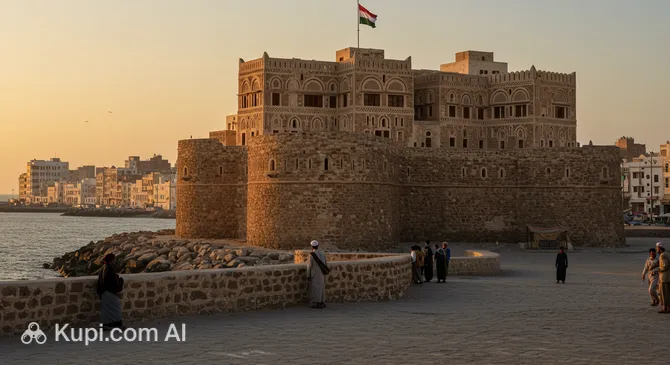
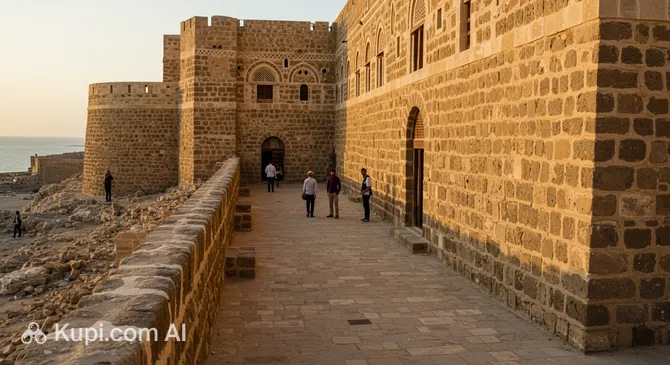
One of the gems of Yemen is the Sira Fortress, proudly towering over the Gulf of Aden. This ancient citadel, shrouded in legends, played an important role in the history of the region and today offers visitors not only a touch of the past but also breathtaking panoramic views of the city and the sea.

Illustration.
Source: Kupi.com AI

Traveller photos:

No less impressive is the Al-Ghuwayzi Fortress, located in the city of Mukalla. This monumental structure, built on a rock, served as reliable protection and is a vivid example of traditional Yemeni fortification architecture. Its walls offer magnificent views of the surroundings.

Illustration.
Source: Kupi.com AI

Traveller photos:

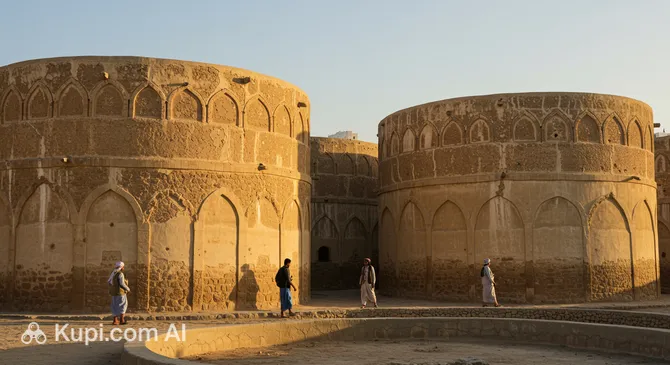
A unique engineering marvel of antiquity is the Al-Saharij Water Tanks in Aden. This complex system of cisterns, carved into the rocks, was created to collect and store rainwater and still impresses with its clever design and scale. Visiting this place allows one to appreciate the ingenuity of ancient builders.

Illustration.
Source: Kupi.com AI

Traveller photos:

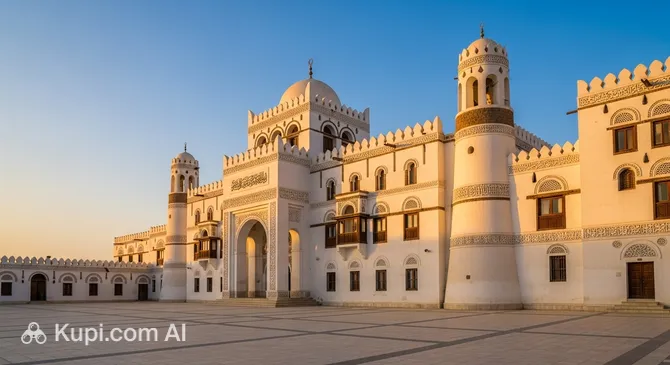
For those who want to dive deeper into the culture of the region, the Mukalla Museum is a must-visit. Located in a former sultan's palace, it houses a rich collection of artifacts telling the story of the history, traditions, and daily life of Hadramaut—one of the most unique regions of Yemen.

Illustration.
Source: Kupi.com AI

Traveller photos:

Best Time to Visit

When planning a trip to Yemen, it is important to consider its diverse climate. In general, the best time to visit most of the country, especially the mountainous regions including the capital Sana'a, is considered to be the period from October to April. During this time, the weather is most comfortable: days are warm and sunny, while evenings and nights can be cool, creating pleasant conditions for sightseeing and exploring the country's culture. In coastal areas such as Aden or Al Hudaydah, the intense summer heat also subsides during these months, although humidity can remain high. When planning, it is also worth considering the dates of Islamic holidays, which may affect the operating hours of institutions and the availability of certain services.

The summer months, from May to September, in Yemen are characterized by high temperatures, especially in desert areas and on the coast, where the heat can be grueling. Two rainy seasons should also be noted: the main one occurs in July-August, and a shorter one in March-April, although the intensity of precipitation varies greatly by region. The climate in Yemen is very heterogeneous: from hot and humid on the Red Sea coast and the Gulf of Aden to more temperate in the highlands and arid in the desert eastern regions. For example, the island of Socotra has its own unique climatic features. Therefore, it is always recommended to check the weather conditions for the specific places you plan to visit before your trip to ensure your journey is as comfortable as possible.

Traditions

The culture of Yemen is deeply permeated by Islamic traditions and famous Arabian hospitality. Greetings play an important role here: men usually exchange handshakes, sometimes accompanied by a light hug and a kiss on the cheek (between close acquaintances). When interacting with women, foreign men should wait for their initiative for a handshake; often a verbal greeting and a nod are sufficient. Yemenis are famous for their exceptional hospitality—an invitation to a home is a sign of great respect. If you are invited, a small souvenir or sweets would be a nice gesture, although the main thing is the acceptance of the invitation itself. Refusing offered food or drink may be perceived as impolite.

When visiting Yemen, it is important to consider local customs in clothing. Women are recommended to wear modest, closed clothing that covers the arms, legs, and shoulders, as well as a headscarf, especially when visiting mosques or when outside major cities. Men should also dress conservatively, preferring long trousers to shirts with sleeves. At the table, especially if you are eating from a shared dish, it is customary to use the right hand. It is considered impolite to point at anyone or anything with the sole of your foot, or to photograph people, especially women, without their prior permission. Key holidays, such as Eid al-Fitr (the end of Ramadan) and Eid al-Adha (the festival of sacrifice), are major events demonstrating the deep religiousness, family values, and community spirit of the Yemeni people.

Entertainment

Yemen offers travelers unique opportunities to immerse themselves in ancient culture and get to know original traditions, which in itself is the main entertainment. Instead of noisy tourist attractions, here you can enjoy exploring ancient cities with their unique architecture, visit local museums housing artifacts of thousand-year history, and get acquainted with the rich heritage of the country.

For lovers of active recreation, Yemen can offer hiking along picturesque mountain trails and exploring unique natural landscapes, for example, on Socotra Island with its endemic flora and fauna. Cultural entertainment is mainly concentrated around historical monuments, traditional arts, and festivals, if any are held. Nightlife in cities like Sana'a is more conducive to leisurely strolls through ancient streets and visiting traditional cafes, where you can soak up the local atmosphere and try national cuisine.

Shopping in Yemen primarily involves colorful oriental bazaars (souks), where you can find unique handmade products: the famous jambiya daggers, traditional clothing, silver jewelry, incense, spices, and, of course, the famous Yemeni coffee. For family vacations, the country offers the chance to engage with local culture, explore ancient fortresses, and enjoy the beauty of nature, which will be an educational experience for all ages. Although there are few specialized theme parks or water parks, the journey through Yemen itself, with its authentic atmosphere, can be an unforgettable adventure.

Currency rates

Planning a trip? Wonderful! To make sure the financial side of your journey holds no surprises, it's worth remembering that exchange rates are constantly changing. That's why we strongly recommend keeping an eye on current rates both before departure and throughout your trip. To help with that, you can use the data provided below — we monitor exchange rates 24/7 and strive to provide the most up-to-date information.

Reached the bottom of the page?

Looks like you know this route inside out

We use cookies and services to collect user information. This is essential for the functioning of the site and for marketing purposes. You can find out more in .