Support

Jordan

About

Jordan is an amazing country in the Middle East where ancient history meets modern Arabic culture, offering travelers an unforgettable experience. Located at the crossroads of civilizations, it holds the legacy of many eras and peoples, from the Nabataeans to the Romans and Ottomans. This is a land full of contrasts, where you can explore both bustling cities and silent deserts.
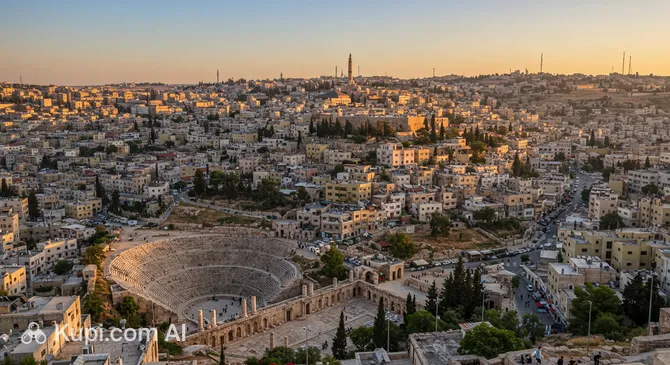
Illustration.
Source: Kupi.com AI

The heart of Jordan beats to the rhythm of its rich past. The country is famous for its world-renowned wonder — the ancient city of Petra, carved into the rocks. Other historical monuments are no less impressive, such as the perfectly preserved Jerash Archaeological City, which transports visitors back to the time of the Roman Empire. Modern life in Jordan thrives in its capital, Amman — a dynamic city where ancient ruins sit alongside trendy restaurants and galleries.

Beyond its historical treasures, Jordan captivates with its diverse nature. Here, you can embark on an exciting journey through the Martian landscapes of the Wadi Rum desert, experience the unique sensation of floating in the healing waters of the Dead Sea, or enjoy a vacation on the Red Sea coast in the resort city of Aqaba. The country's climate is predominantly desert, with hot summers and mild winters, making it an attractive destination to visit in various seasons. The hospitality of the locals and the special atmosphere of Oriental warmth will leave the fondest memories of your trip.

Currency

The currency of Jordan is the Jordanian dinar (international code: JOD). One dinar is traditionally divided into 100 piastres (also known as qirsh) or 1000 fils, although fils are rarely used today due to their low value. Jordanian dinar banknotes feature portraits of rulers from the Hashemite dynasty and significant architectural and natural sites of the country, making them something of small works of art.

Foreign currency can be exchanged for Jordanian dinars at banks, licensed exchange offices (which often offer a better rate than banks), and some hotels. Exchange offices are widely available at airports, major cities like Amman, and tourist centers. It is recommended to avoid exchanging currency with private individuals "on the street" to avoid unfavorable rates. Credit cards (mainly Visa and MasterCard) are accepted in most hotels, restaurants, and large shops, especially in tourist areas. However, for small purchases at markets, in small cafes, or for taxi fares, it is always better to have cash with you.

Visa Requirements

When planning a trip to Jordan, it is important to familiarize yourself with the visa requirements in advance. For citizens of many countries, including most EU countries, the USA, and some CIS countries, a tourist visa can generally be obtained upon arrival at international airports (for example, in Amman) or at certain land border crossings. There is also the possibility of obtaining a visa in advance through a Jordanian embassy or consulate in your country of residence.

To enter Jordan, you will definitely need a valid international passport, the validity of which should usually be at least six months from the intended date of entry. Although it is not always a strict requirement when obtaining a visa on arrival, it is also recommended to have proof of hotel booking, return tickets, and a travel insurance policy. Given that visa rules can change, we strongly advise checking the most up-to-date information on the official website of the Jordanian Ministry of Foreign Affairs, or the Jordanian embassy or consulate in your country before your trip.

We'll let you know if you need a visa

Enter your destination or
Your nationality
Destination

Timezones

When planning a trip to Jordan, you won't have to worry about changing time zones within the country. Throughout the territory of Jordan, a single time zone applies, which corresponds to UTC+3 (Coordinated Universal Time +3 hours). This means the time in Amman, Petra, and on the Red or Dead Sea coasts will be the same.

This unified time significantly simplifies the planning of transfers and excursions around the country, allowing you to focus on enjoying the rich history and culture of Jordan without constantly checking your watch when moving from one region to another.

Getting There

The easiest way to reach Jordan is by air. The main gateway to the country is Queen Alia International Airport (AMM), located near the capital, Amman. It receives flights from many cities across Europe, the Middle East, Asia, and North Africa. Many airlines offer direct flights, and convenient connecting flights through major international hubs are also available. Another important airport is located in the resort city of AqabaKing Hussein International Airport (AQJ), which primarily serves charter and seasonal flights, as well as flights from neighboring countries.

For those who prefer overland travel or are combining a visit to Jordan with trips to neighboring countries, there are land border crossings. You can enter by bus or car from neighboring countries such as Israel and Saudi Arabia. There are also border crossings with Iraq and Syria; however, before planning such a route, it is critically important to check the latest information on border operations, security, and visa rules. Sea travel is also available: the port of Aqaba on the Red Sea receives ferries, particularly from Egypt (Nuweiba), which can be an interesting option for travelers exploring the region.

When planning your trip, especially during popular tourist seasons (spring and autumn), it is recommended to book flights in advance. This will not only help you save money but also guarantee seats on your preferred flights. The same applies to certain international bus routes or ferry crossings if you choose this method of travel.

AirportCityIATA
Queen Alia International AirportAmmanAMM
King Hussein International AirportAqabaAQJ

Jordan offers travelers an amazing variety of cities and resorts, each with its own unique look and atmosphere. From ancient ruins to modern metropolises and picturesque coastlines — there is something for everyone here. The heart of the country is undoubtedly its capital, Amman, a dynamic city where ancient history is harmoniously interwoven with modern life. Here you will find impressive Roman amphitheaters and citadels alongside lively markets, galleries, and restaurants.

Illustration.
Source: Kupi.com AI

For fans of beach holidays and scuba diving, the real gem is Aqaba — Jordan's only seaside resort on the Red Sea, famous for its coral reefs and crystal-clear water. If history calls to you, be sure to visit Jerash, one of the best-preserved Roman cities outside of Italy, which impresses with its colonnades, temples, and theaters. The city of Madaba is equally interesting, known as the "City of Mosaics," where you can see the famous 6th-century mosaic map of the Holy Land.

These and many other cities and resorts in Jordan await their explorers, offering a unique experience of immersion into the rich culture and history of the Middle East. Each of these destinations is capable of providing unforgettable impressions and opening up new facets of this amazing country.

Top Attractions

Jordan is a country with a rich history, and its attractions are capable of transporting you thousands of years into the past. Here, every stone breathes antiquity, and modern cities coexist harmoniously with monuments of bygone eras.

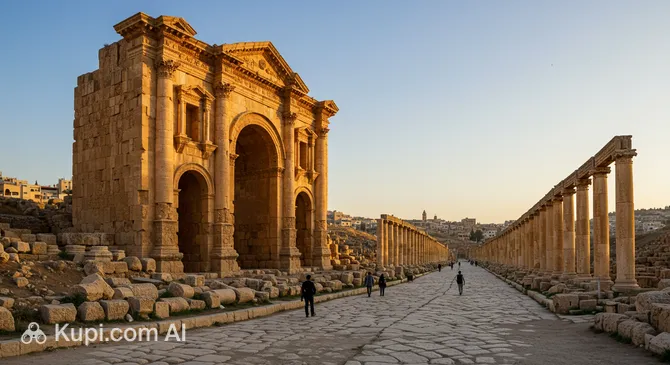
One of the main gems of Jordan is the Jerash Archaeological City. This is one of the best-preserved Roman cities outside of Italy. Walking along its paved streets, you will see majestic colonnades, temples, theaters, and triumphal arches that will amaze you with their scale and the skillful work of ancient masters. Jerash literally allows you to touch history and imagine life during the time of the Roman Empire.

Illustration.
Source: Kupi.com AI

Traveller photos:

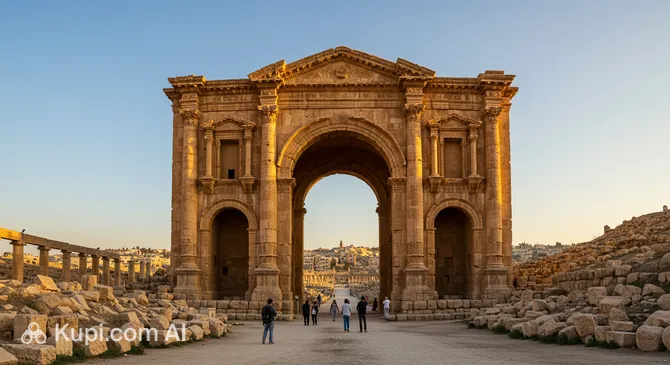
Not far from the main Jerash complex stands the famous Hadrian's Arch. This monumental arch was built to honor the visit of the Roman Emperor Hadrian in 129 AD. Its impressive size and detailed reliefs serve as a reminder of the grandeur and power of Rome, as well as the importance of Jerash as a major trade and cultural center of that time.

Illustration.
Source: Kupi.com AI

Traveller photos:

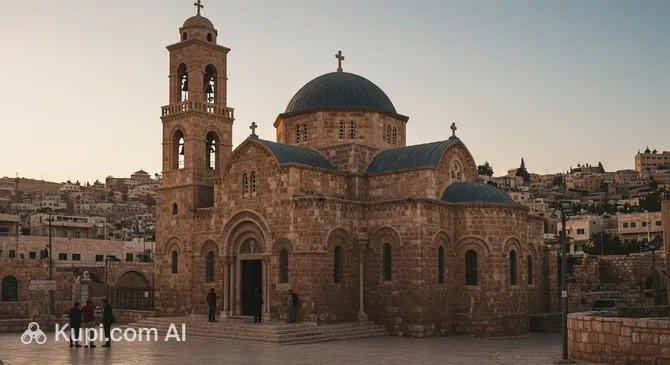
In the city of Madaba, you will find the unique Saint George's Greek Orthodox Church. Its primary treasure is the famous 6th-century mosaic map of the Holy Land. This ancient mosaic, laid on the floor of the church, depicts Jerusalem and other biblical sites, representing a priceless historical and religious artifact. Visiting the church is an opportunity to see one of the most significant cartographic works of the early Christian era.

Illustration.
Source: Kupi.com AI

Traveller photos:

Best Time to Visit

The best time to visit Jordan is during the spring (March to May) and autumn (September to November). During these periods, the weather is most comfortable for traveling around the country: days are warm and sunny, and evenings are pleasant and cool. This is the ideal time to explore attractions such as Petra, Jerash, or the Wadi Rum desert, as well as for outdoor activities. However, keep in mind that the high season attracts more tourists, which may affect the prices of accommodation and services, as well as the crowdedness of popular sites.

Summer (June to August) in Jordan is hot, especially in the central and southern regions, including Petra and Wadi Rum, where temperatures can rise very high. During this time, it may be more comfortable on the Red Sea coast in Aqaba. Winter (December to February) is the low season. The weather becomes cool, especially in Amman and the northern regions, where rain and even snow in the mountains are possible. However, in the south, in Aqaba and at the Dead Sea, the weather remains mild. The advantages of the low season are fewer tourists and lower prices, though some tourist sites may have shorter operating hours. It is also worth noting that the dates of Ramadan (the holy month of fasting) change annually and may affect the opening hours of establishments and the availability of certain services.

Traditions

Jordan is a country with deep traditions of hospitality and respect, where etiquette is given great attention. Greetings play an important role here: a standard handshake, which may be longer than is customary in the West, is the norm. When interacting with locals, it is customary to use the right hand for greetings, eating, and passing objects. You may often be invited for tea or coffee — this is a sign of special favor, and refusing is considered impolite. If you are invited to a home, a small gift such as sweets or pastries (avoid alcohol unless you are sure of the host's preferences) will be a nice gesture, though not strictly required. Jordanians highly value politeness and a sincere interest in their culture, always responding with warmth.

When visiting Jordan, it is important to remember clothing norms, especially when entering religious sites like mosques: women are recommended to cover their heads, shoulders, and knees, while men should wear long trousers and shirts that cover the shoulders. Modest clothing is also preferred in public places. At the table, especially if dishes are served on a shared tray, it is customary to eat with the right hand, as the left is traditionally considered unclean. Avoid public displays of affection and always ask for permission before photographing people, especially women and the elderly. The most important holidays reflecting cultural values are Eid al-Fitr (the festival of breaking the fast after Ramadan) and Eid al-Adha (the festival of sacrifice). Following these simple rules and showing respect for local customs will make your trip truly comfortable and help you gain a deeper understanding of this amazing country.

Entertainment

Jordan offers a variety of leisure opportunities capable of satisfying diverse interests. Fans of active recreation will find impressive hiking routes through desert canyons, especially in the Wadi Rum area, as well as excellent conditions for diving and snorkeling in the crystal-clear waters of the Red Sea off the coast of Aqaba. The cultural program is rich with visits to ancient cities and archaeological monuments of global significance, such as the well-preserved Jerash Archaeological City. Numerous museums, especially in the capital Amman, will introduce you to the rich history and traditions of the country, while theaters and galleries offer a look at the region's contemporary art.

Evening life in Jordan is concentrated mainly in large cities like Amman, where you can find many restaurants offering both local and international cuisine, such as the popular Jubran Restaurant, as well as cozy cafes and hookah bars. While noisy nightclubs are not as common as in some other countries, an atmosphere of hospitality and the opportunity for a pleasant evening are guaranteed. Shopping in Jordan is a chance to purchase unique souvenirs: handmade goods, Bedouin jewelry, the famous Dead Sea mineral cosmetics, spices, and oriental sweets. Modern shopping centers, such as City Mall in the capital or Irbid City Centre, offer a wide selection of well-known brands.

For family vacations, Jordan also offers interesting options. Many hotels cater to guests with children, providing appropriate amenities and entertainment programs. Exciting jeep tours through the desert, learning about Bedouin life, and the chance to swim in the unique waters of the Dead Sea can be an unforgettable experience for the whole family. Visiting historical sites, if the information is presented in an engaging way, will also interest young travelers, and some resort areas offer water parks and other entertainment for children.

Currency rates

Planning a trip? Wonderful! To make sure the financial side of your journey holds no surprises, it's worth remembering that exchange rates are constantly changing. That's why we strongly recommend keeping an eye on current rates both before departure and throughout your trip. To help with that, you can use the data provided below — we monitor exchange rates 24/7 and strive to provide the most up-to-date information.

Reached the bottom of the page?

Looks like you know this route inside out

We use cookies for your convenience.