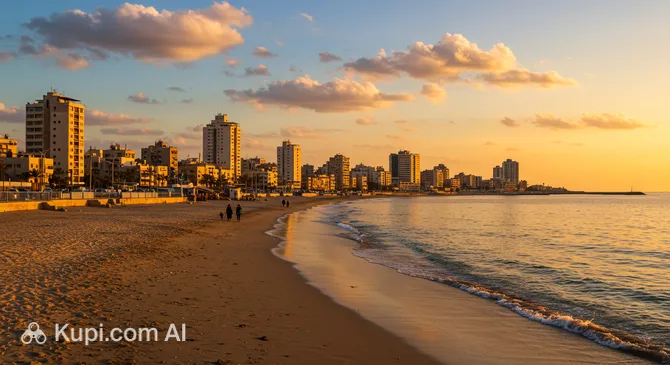
Palestine is a land with a multi-layered history, where every stone is steeped in antiquity. Located at the crossroads of major trade routes between Asia and Africa, this territory attracts travelers with its unique cultural heritage and hospitality. The region's geography is diverse: from fertile valleys and olive groves to rugged desert landscapes and the Mediterranean coast.
Illustration.
Source: Kupi.com AI
An important cultural and historical center of the region is Gaza, a city with a centuries-old history that once served as a key port on the caravan route. The overall atmosphere of the region is permeated with traditions carefully preserved by the locals, creating a unique character that is impossible to forget.
Currency
The official currency in Palestine is the New Israeli Shekel (ILS), although Jordanian Dinars and US Dollars are also frequently used in daily transactions, especially for larger deals. Shekel banknotes feature a vibrant design depicting prominent figures. You can exchange currency at banks or numerous exchange offices, which usually offer better rates and have longer opening hours.
In major cities like Gaza, bank cards are accepted in shopping malls, hotels, and some restaurants, but for purchases at traditional markets or paying for transport, it is essential to carry cash. ATMs are widely available in urban areas, but it is better to ensure you have a supply of cash before traveling to more remote villages.
Visa Requirements
Entry into Palestine for tourists is usually conducted through border points controlled by neighboring countries, so visa rules directly depend on the entry conditions for those states. For citizens of many countries, including the EU and the US, a visa is often issued upon arrival at the airport or land border; however, citizens of CIS countries should check in advance if a visa is required at the appropriate embassy.
To successfully cross the border, you must have a passport with at least six months of validity, proof of accommodation booking, and return tickets. It is also recommended to obtain medical insurance. Before your trip, be sure to check for up-to-date information on official government resources, as rules may change depending on the current international situation.
We'll let you know if you need a visa
Enter your destination or
Your nationality
Destination
Timezones
The territory of Palestine is located in the EET (Eastern European Time) time zone, which corresponds to UTC+2. During the summer period, the region switches to Daylight Saving Time (EEST), and the clocks are set forward by one hour to UTC+3.
The transition between summer and winter time usually occurs in spring and autumn, synchronized with most countries in the region. Travelers should take this into account when planning trips and transport connections to stay on schedule.
Getting There
There are several ways to get to Palestine, although there are currently no direct international flights to the region itself. Most travelers arrive via international airports in neighboring countries and continue by land through border crossings. Tourists most often use major aviation hubs like Ben Gurion International Airport or Amman Airport in Jordan.
For crossing borders and traveling between cities, it is convenient to use buses or the famous collective taxis — "servis", which are the most popular and authentic way to get around for locals. When planning a trip, it is recommended to check the current operating hours of border points in advance and account for potential document checks, which are a standard procedure in the region.
Popular Places
A journey through Palestine reveals a kaleidoscope of ancient cities and unique landscapes to tourists. One of the key destinations is Gaza — a city with a rich past, located on the coast, where historical monuments stand alongside coastal views. Visiting such places allows you to touch living history preserved in the architecture and way of life.
In addition to major centers, cozy settlements in the hilly terrain, known for their vineyards and olive groves, are well worth a visit. The region offers a variety of destinations: from spiritual centers to places ideal for gastronomic tourism, where you can sample authentic Levantine cuisine.
Top Attractions
One of the most significant attractions is the Church of the Nativity in Bethlehem—one of the oldest functioning churches in the world and a UNESCO World Heritage site. This majestic structure impresses with its massive architecture and ancient mosaics preserved on the walls.
No less interesting is the ancient city of Jericho, considered one of the oldest continuously inhabited cities on the planet. Here you can see the ruins of Canaanite walls and take a cable car up to the Mount of Temptation, which offers breathtaking views of the Jordan Valley and the Dead Sea.
In the city of Nablus, it is worth visiting the Old City, famous for its narrow streets, traditional soap factories, and markets where the region's best dessert — kunafa — is made. The architecture of this place is a unique blend of Ottoman style and earlier eras, creating the atmosphere of a true Eastern adventure.
Best Time to Visit
For a trip to Palestine, it is best to choose spring (March to May) or autumn (September and October). During these periods, the temperature is most comfortable, ideal for long walks and exploring ancient monuments. In spring, the hills are covered with greenery and wildflowers, while autumn brings mild warmth and the olive harvest season.
The high season traditionally coincides with major religious holidays, when pilgrims from all over the world flock to cities like Bethlehem. Prices may be higher during this time, and the streets become crowded. The low season falls during the winter months (January and February), which can be quite cool and rainy, and the hot month of August, when temperatures in some areas, especially Jericho, can be extremely high.
Traditions
The culture of Palestine is deeply rooted in traditions of hospitality. It is considered an honor to host a guest, and you will likely be offered a cup of strong coffee with cardamom or fragrant tea. Courtesy and respect are important when communicating: greetings are usually accompanied by a handshake, and restraint and attentiveness to the interlocutor are valued in conversation.
Special attention should be paid to appearance when visiting religious sites and conservative areas. It is recommended to choose modest clothing that covers the shoulders and knees to show respect for local customs. In daily life, Palestinians highly value family ties, so many holidays and meals take place among numerous relatives, turning into vibrant and lively events with an abundance of traditional dishes.
Entertainment
Entertainment in Palestine is closely linked to its rich culture and natural features. Outdoor enthusiasts will enjoy hiking trails such as the Abraham Path, which winds through picturesque valleys and traditional villages, offering views of the landscapes and rural life. For those who prefer cultural leisure, major cities regularly host folk music and dabke dance festivals, while local galleries showcase contemporary Palestinian art.
Shopping here is a pleasure in its own right. Traditional markets (souks) offer unique souvenirs: olive wood carvings, the famous Hebron ceramics, handmade embroidery, and natural olive oil soap from Nablus. Family vacations can include visits to parks and interactive museums that tell the region's history in an accessible and engaging way.
Currency rates
Planning a trip? Wonderful! To make sure the financial side of your journey holds no surprises, it's worth remembering that exchange rates are constantly changing. That's why we strongly recommend keeping an eye on current rates both before departure and throughout your trip. To help with that, you can use the data provided below — we monitor exchange rates 24/7 and strive to provide the most up-to-date information.
We use cookies and services to collect user information. This is essential for the functioning of the site and for marketing purposes. You can find out more in .