Nepal

About

Nepal is a stunning country nestled in the heart of the Himalayas between India and China. It is a place where ancient traditions blend harmoniously with breathtaking mountain landscapes, offering travelers a truly unique experience. Nepal is famous for having the world's highest peaks, including the legendary Mount Everest, and serves as a cradle of centuries-old culture deeply rooted in Hinduism and Buddhism.
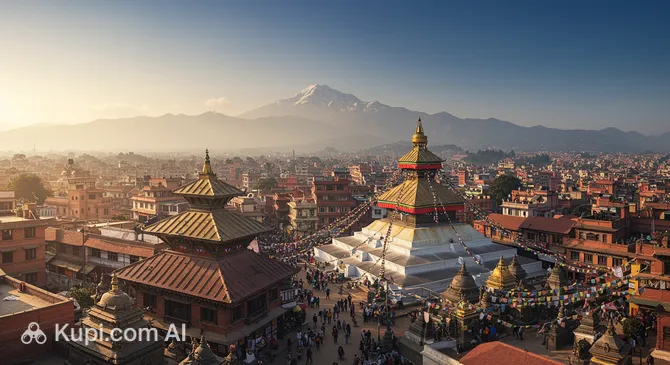
Illustration.
Source: Kupi.com AI

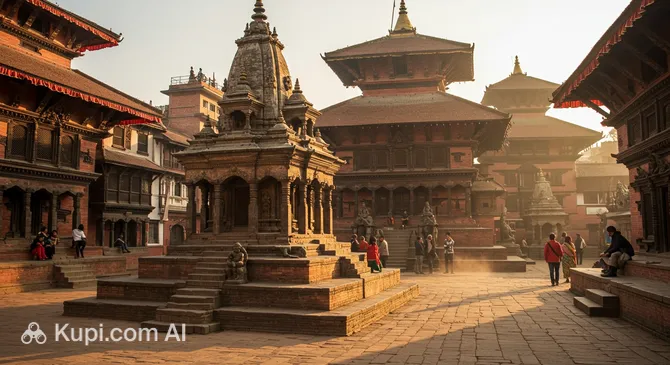
The capital, colorful Kathmandu, is essentially an open-air museum. Here, ancient temples, majestic stupas, and historic palaces are found at every turn, with Kathmandu Durbar Square being one of the most prominent examples. Beyond the hustle and bustle of the capital, travelers are drawn to the picturesque city of Pokhara, situated at the foot of the magnificent Annapurna massif and famous for its serene lakes. The atmosphere of Nepal is a unique combination of deep spirituality, sincere hospitality, and a spirit of adventure, whether it is trekking along legendary mountain trails, rafting down rushing rivers, or peaceful meditation in secluded monasteries.

Nepal's climate is surprisingly diverse, ranging from humid subtropical on the southern Terai plains to harsh alpine in the high mountain regions. This climatic variety allows for visits to the country almost year-round, choosing the most suitable region based on travel goals and personal preferences. Nepal leaves a lasting impression with its pristine natural beauty, rich cultural heritage, and the incredible warmth of the local people, making every trip here an unforgettable event.

Currency

The national currency of Nepal is the Nepalese Rupee (international code NPR). Banknotes of various denominations are in circulation, often depicting the country's iconic landmarks, mountains, and diverse local wildlife such as yaks or rhinos. Coins are also used, but primarily for small transactions.

Foreign currency can be exchanged for Nepalese rupees at banks and licensed exchange offices, which are widely available in tourist hubs like Kathmandu and Pokhara. It is recommended to avoid exchanging money with street changers due to the risk of fraud or poor rates. Credit cards (mainly Visa and Mastercard) are accepted in major hotels, restaurants, and shops in tourist areas; however, for purchases at markets, in small shops, and during trekking in remote regions, it is preferable to carry enough cash.

Visa Requirements

To visit Nepal, most foreign citizens, including citizens of the EU, USA, and CIS countries, require a visa. Usually, this refers to a tourist visa. It can be obtained in several ways: directly upon arrival at Tribhuvan International Airport in Kathmandu and at some land border crossings, in advance online via Nepal's immigration portal, or at a Nepalese embassy or consulate in your country of residence.

To apply for a visa and enter the country, you will definitely need a valid passport (usually with at least 6 months validity at the time of entry). Return tickets, proof of hotel reservation, and medical insurance may also be required. Visa rules and requirements can change, so it is strongly recommended to check for up-to-date information on the official website of the Department of Immigration of Nepal or at the nearest Nepalese embassy or consulate before your trip.

We'll let you know if you need a visa

Enter your destination or
Your nationality
Destination

Timezones

When planning a trip to Nepal, you won't have to worry about changing time zones within the country. A single time zone applies across all of Nepal, known as Nepal Standard Time (NPT). It is 5 hours and 45 minutes ahead of Coordinated Universal Time (UTC+5:45).

This unique time zone, which differs from the standard hourly shifts used in most countries, means you only need to set your watch once upon arrival. This simplifies planning travel and activities, as the time in Kathmandu will be the same as in any other part of Nepal.

Getting There

Reaching Nepal, the land of the majestic Himalayas and ancient culture, can be done in several ways, though air travel is the most common for most international tourists. The country's main air gateway is Tribhuvan International Airport (KTM), located in the capital, Kathmandu. Direct flights to Nepal operate from several countries in Asia (including India, Thailand, Malaysia, Singapore, and China), the Middle East (such as the UAE and Qatar), and some European cities. For travelers from other regions like North and South America or Australia, convenient connecting flights are usually offered through major Asian or Middle Eastern hubs.

Since Nepal is landlocked, sea transport is not an option for arriving in the country. However, for those traveling from neighboring India, it is possible to cross the border by land. Several border crossings are open to tourists, with the most popular being Sunauli (India side) – Belahiya/Bhairahawa (Nepal side), Raxaul (India) – Birgunj (Nepal), and Kakarbhitta (Nepal) – Panitanki (India). Buses run regularly through these points, and taxi services are also available. There is no direct international passenger rail service to Nepal. Regardless of the chosen method, it is highly recommended to book tickets in advance, especially if your trip falls during the peak tourist seasons (spring and autumn), to secure the best prices and availability.

AirportCityIATA
Tribhuvan International AirportKathmanduKTM
Biratnagar AirportBiratnagarBIR
Nepalganj AirportNepalganjKEP
Bhadrapur AirportBhadrapurBDP
SimaraSimaraSIF

Nepal is a country that captures the imagination with the diversity of its travel destinations. Here, you can find both bustling, life-filled cities and peaceful mountain villages offering incredible views and unique trekking opportunities. Travelers are drawn by ancient temples, a rich culture, and, of course, the majestic Himalayas, which create an unparalleled atmosphere of adventure and spiritual discovery.

Among the most popular destinations, the capital—Kathmandu—holds a special place. This city is the true heart of Nepal, where ancient traditions are harmoniously interwoven with modern life. Here, you will find many historical monuments, lively squares, and impressive temple complexes that immerse you in an ancient atmosphere.

Illustration.
Source: Kupi.com AI

No less attractive is Pokhara, picturesquely situated at the foot of the Annapurna mountain range. This city is famous for its serene lakes, especially Phewa Lake, and serves as the starting point for many famous trekking routes. For those who want to experience the atmosphere of medieval Nepal, a visit to Bhaktapur is a must—an ancient museum-city with beautifully preserved architecture and the unique culture of the Newar people. It is also worth visiting Janakpur, an important religious and cultural center, and Jomsom, popular among hikers and adventure seekers in the Mustang region.

Top Attractions

Nepal, a country of rich culture and breathtaking landscapes, offers travelers many amazing places. From ancient temples to picturesque lakes, everyone will find something for themselves here. Here are just a few must-see attractions.

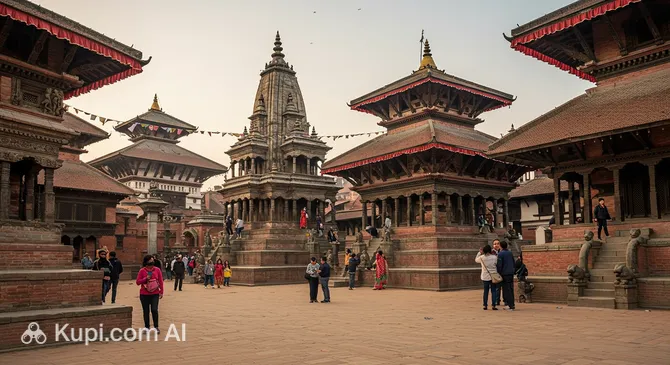
One of the most iconic sites is Kathmandu Durbar Square. This is the heart of the old city, where ancient palaces, temples, and pagodas showcasing the unique art and architecture of the Newars are concentrated. The square is listed as a UNESCO World Heritage site and allows you to immerse yourself in the history and culture of Nepal.

Illustration.
Source: Kupi.com AI

Traveller photos:

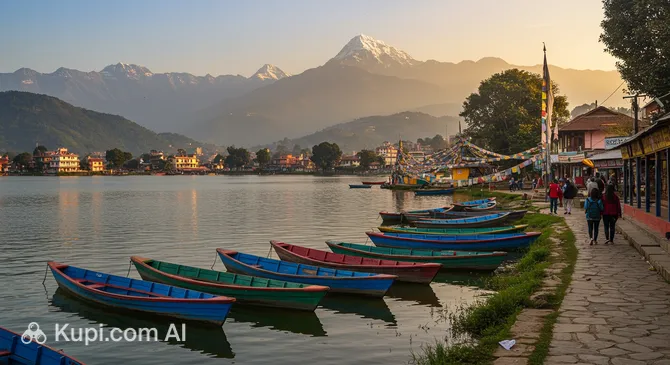
For nature lovers and those seeking peaceful relaxation, Pokhara Lakeside is a must-visit. This is a picturesque area on the shores of Phewa Lake, offering stunning views of the Himalayan peaks, including the famous Annapurna. Here you can go boating, stroll along the promenade, or simply enjoy the tranquil atmosphere.

Illustration.
Source: Kupi.com AI

Traveller photos:

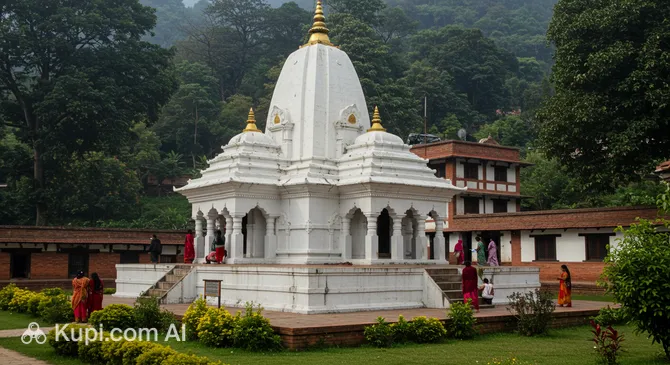
Another important sanctuary is the Bageshwari Temple. This ancient temple dedicated to the goddess Bageshwari is one of the most revered sites in Nepalgunj and attracts pilgrims from all over the country. It is known for its unique architecture and spiritual atmosphere.

Illustration.
Source: Kupi.com AI

Traveller photos:

It is also worth noting Patan Durbar Square (Lalitpur). Like its namesake in Kathmandu, this square is the historical center of the city and impresses with its beauty and abundance of ancient structures. You can spend hours here admiring the exquisite wood and stone carvings.

Illustration.
Source: Kupi.com AI

Traveller photos:

Best Time to Visit

Choosing the best time to visit Nepal largely depends on your plans. High season traditionally falls into two periods: autumn (October to November) and spring (March to May). In autumn, after the monsoons, the sky becomes crystal clear, revealing spectacular views of the Himalayas, and the weather remains warm and pleasant—ideal for trekking and climbing. Spring also sees comfortable temperatures as nature comes to life and mountain slopes are covered with blooming rhododendrons. However, during these periods, expect more tourists and, consequently, higher prices for accommodation and services.

Low season, or the off-season, includes summer (June to September), when the monsoon dominates Nepal, and winter (December to February). Heavy rains are common in summer, especially in the foothills and the Kathmandu Valley, which can make travel difficult and trekking less comfortable due to high humidity and washed-out trails. Nevertheless, this is when nature is at its lushest and greenest, and there are significantly fewer tourists. In winter, the mountains are cold, and snow falls at high altitudes, making some high-mountain routes impassable. However, in valleys like Kathmandu and Pokhara, the weather can be sunny and pleasant during the day, though nights are chilly. The advantages of the low season are fewer travelers and lower prices.

When planning your trip, consider important Nepalese festivals. The biggest holidays, Dashain and Tihar, take place in the autumn, offering a unique opportunity to immerse yourself in local culture. The colorful Holi festival is celebrated in the spring. The climate in Nepal varies greatly with altitude, from subtropical on the southern plains (Terai) to arctic in the high Himalayas. Therefore, it is recommended to check weather conditions for the specific region you plan to visit before your trip.

Traditions

Nepal is a country with a rich culture and ancient traditions; respecting them will make your trip more pleasant and meaningful. When greeting locals, use the traditional "Namaste" by placing your palms together at chest level and bowing slightly. This gesture expresses deep respect. In conversation, try to be reserved; direct and prolonged eye contact, especially with elders, can be perceived as a challenge. Nepalese people are famous for their hospitality; if you are invited into a home, a small symbolic gift (fruit or sweets) is appropriate, but your sincerity is most important. It is vital to remember that the left hand is considered "unclean," so always use your right hand to pass objects, food, or money. Also, avoid pointing at people or shrines with a finger—it is better to use an open palm or your chin. Try not to step over people's outstretched legs and do not touch anyone with your feet, as feet are considered the lowest and "dirtiest" part of the body.

When visiting temples, monasteries, and other religious sites in Nepal, dress modestly: shoulders and knees should be covered for both men and women. Be sure to remove your shoes before entering a temple or a private home. Walk around stupas and other sacred structures in a clockwise direction. You should only photograph people, especially monks or during rituals, with their permission. At the table, if you are eating with your hands (which is common, especially for traditional dishes like dal bhat), use only your right hand. Major holidays include Dashain—the longest and most significant festival, symbolizing the victory of good over evil, when families gather, exchange gifts, and receive blessings from elders—and Tihar, a colorful festival of lights dedicated to the goddess Lakshmi, as well as to brothers, sisters, and animals like crows, dogs, and cows. Knowing and observing these simple rules will help you avoid awkward situations and show respect for the unique culture of Nepal, making your interactions with locals warm and open.

Entertainment

Nepal offers travelers a unique spectrum of entertainment, where active recreation set against the majestic Himalayas predominates. It is a true paradise for trekking and mountaineering enthusiasts, with routes of varying difficulty ranging from leisurely walks to expeditions to the base camps of the world's highest peaks. Besides hiking, white-water rafting, canyoning, paragliding (especially around Pokhara), and safaris in the Terai national parks are popular here.

The cultural program in Nepal is rich and authentic. Guests can immerse themselves in the atmosphere of ancient Hindu and Buddhist traditions by visiting numerous temples, monasteries, and stupas, many of which are UNESCO World Heritage sites, particularly in the Kathmandu Valley. Museums and art galleries showcase the country's rich historical and cultural heritage. Regarding shopping, visitors usually bring home handmade items from Nepal: warm cashmere shawls (pashminas), Tibetan singing bowls, ritual masks, silver and stone jewelry, traditional clothing, and, of course, fragrant Nepalese tea. The main shopping streets and markets are concentrated in the tourist districts of large cities like the capital.

Nightlife in Nepal is most vibrant in tourist quarters, such as the Thamel district in Kathmandu. Here, you can find many bars, restaurants with live music ranging from traditional Nepalese to modern Western hits, and cozy cafes perfect for spending an evening. For family vacations, Nepal offers a peaceful and educational experience: walks through scenic natural spots, learning about local culture and customs, and visiting temple complexes, which is an exciting adventure for all ages.

Currency rates

Planning a trip? Wonderful! To make sure the financial side of your journey holds no surprises, it's worth remembering that exchange rates are constantly changing. That's why we strongly recommend keeping an eye on current rates both before departure and throughout your trip. To help with that, you can use the data provided below — we monitor exchange rates 24/7 and strive to provide the most up-to-date information.

NPR exchange rate for 14/08/2026

1 AED
~ 41.35 NPR
2.41 AMD
~ 1 NPR
1 AUD
~ 107.15 NPR
1 AZN
~ 89.33 NPR
1 BYN
~ 50.64 NPR
1 CAD
~ 108.92 NPR
1 EUR
~ 175.10 NPR
1 GBP
~ 204.88 NPR
2.08 HUF
~ 1 NPR
1 INR
~ 1.59 NPR
1 KGS
~ 1.74 NPR
9.34 KRW
~ 1 NPR
3.07 KZT
~ 1 NPR
1 PLN
~ 40.65 NPR
1 RUB
~ 1.82 NPR
1 SAR
~ 40.37 NPR
1 SGD
~ 118.61 NPR
1 TRY
~ 3.18 NPR
1 UAH
~ 3.39 NPR
1 USD
~ 151.84 NPR
78.73 UZS
~ 1 NPR

Reached the bottom of the page?

Looks like you know this route inside out

We use cookies and services to collect user information. This is essential for the functioning of the site and for marketing purposes. You can find out more in .