Vietnam

About

Vietnam is an amazing land in Southeast Asia, where ancient traditions harmoniously intertwine with the rhythm of modern metropolises. Stretching as a narrow strip along the South China Sea coast, the country impresses with its diverse landscapes: from emerald rice terraces in the north to the white-sand beaches of southern resorts. Every traveler will find something for themselves here, whether it's exploring colonial architecture or immersing themselves in exotic gastronomy.

The heart of the country is the majestic Hanoi, a city where legends come to life on the shores of picturesque lakes. While traveling through Vietnam, it is impossible to overlook dynamic Ho Chi Minh City or the cozy, lantern-lit Hoi An. The atmosphere of this country is filled with the hospitality of local people and the aromas of street food, creating a unique sense of a life-long celebration.
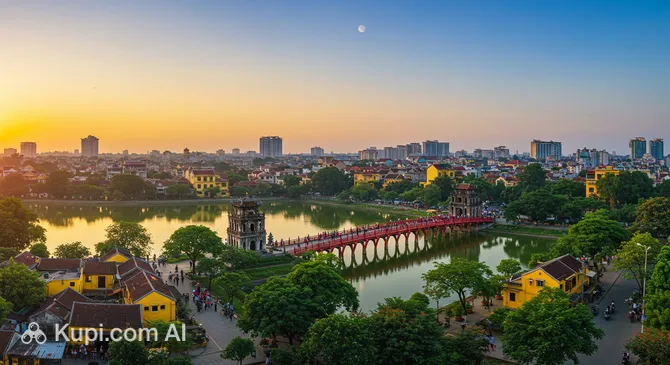

Illustration.
Source: Kupi.com AI

Currency

The official currency of the country is the Vietnamese Dong (international code — VND). Vietnamese banknotes are made of a special polymer, making them durable and moisture-resistant — a useful feature in tropical conditions. Each bill invariably features a portrait of Ho Chi Minh. Tourists should be careful, as the large number of zeros makes it easy to confuse banknotes of different denominations.

It is best to exchange currency at official banks, licensed exchange offices, or large jewelry stores, which often offer favorable rates. In major cities like Ho Chi Minh City, bank cards are accepted in almost all shopping centers, hotels, and restaurants. However, you should always carry cash dongs when visiting markets or traveling to the provinces.

Visa Requirements

When planning a trip to Vietnam, it is important to familiarize yourself with the current entry rules in advance. Citizens of many countries, including Russia and several European nations, are entitled to a visa-free stay for a certain period (usually up to 45 days). If you are planning a longer journey, you must apply for a tourist visa. Currently, the most convenient method is obtaining an electronic visa (e-visa) online, which allows you to stay in the country for up to 90 days.

To cross the border, you will definitely need a passport valid for at least six months at the time of entry. It is also recommended to have copies of your return tickets and confirmation of accommodation bookings. As visa policies can change, we strongly advise checking for the latest information on the official resources of Vietnamese embassies or consulates immediately before departure.

We'll let you know if you need a visa

Enter your destination or
Your nationality
Destination

Timezones

The territory of Vietnam is located in a single time zone, which significantly simplifies itinerary planning within the country. Standard time corresponds to the international designation GMT+7 (Indochina Time, ICT). The entire country lives by a single rhythm, from the northern borders to the southernmost islands.

When flying from Europe or the Americas, tourists should consider the time difference to avoid severe jet lag. However, the absence of internal time zones makes it easy to calculate departure times for trains and planes when moving between cities, whether traveling from the capital to resorts or back.

Getting There

The main way to reach Vietnam is by air. The country has several major aviation hubs capable of receiving flights from all over the world. The main gateways are the capital's Noi Bai International Airport in the north and Tan Son Nhat International Airport in the south. Most travelers arrive here using direct flights or convenient connections through major airports in Asia and the Middle East.

Due to its location, Vietnam is also accessible for overland travel from neighboring countries. There are regular bus services between Laos, Cambodia, and China, and you can even arrive by train from China. If you prefer sea travel, many cruise ships include stops at the ports of Da Nang or Ho Chi Minh City in their itineraries. It is recommended to plan your trip and book flights in advance, especially if your vacation falls during the winter holidays.

AirportCityIATA
Tan Son Nhat International AirportHo Chi Minh CitySGN
Noi Bai International AirportHanoiHAN
Da Nang International AirportDa NangDAD
Cam Ranh International AirportNha TrangCXR
Phu Quoc AirportPhu QuocPQC

Traveling through Vietnam is an opportunity to see an amazing variety of regions. In the north, tourists will find majestic Hanoi, which combines French charm and ancient Asian culture. Those looking for perfect beaches and sea breezes should head to Phan Thiet, known for its picturesque dunes and excellent conditions for water sports.

Illustration.
Source: Kupi.com AI

History lovers and those seeking a unique atmosphere of the past will surely enjoy Hoi An, whose old town is recognized as a UNESCO World Heritage site. For those who prefer cool mountain air and romance, the highland Da Lat is open, surrounded by coniferous forests and waterfalls. Meanwhile, the southern metropolis of Ho Chi Minh City will amaze you with its energy, skyscrapers, and bustling business life.

Top Attractions

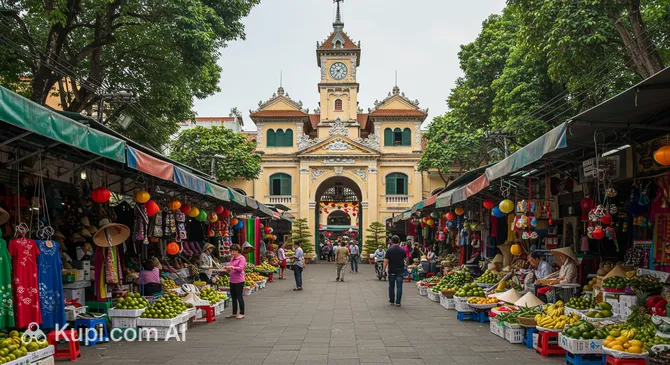
One of the most recognizable attractions in the south is Ben Thanh Market in Ho Chi Minh City. This is not just a marketplace, but a true symbol of the city, where under a massive clock tower you can find everything from exotic fruits to traditional ao dai costumes. Life here is bustling from early morning until late at night, when the evening bazaar unfolds in the square.

Illustration.
Source: Kupi.com AI

Traveller photos:

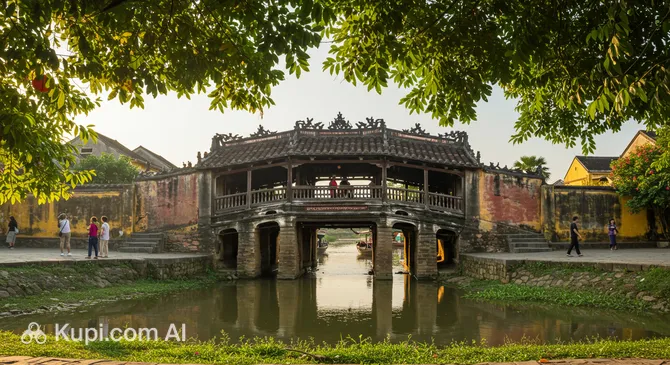
In the center of the country, in charming Hoi An, lies the famous Japanese Covered Bridge. Built in the 16th century, this architectural masterpiece connected the Japanese and Chinese quarters. The bridge is topped with a small pagoda and guarded by statues of dogs and monkeys, creating a unique historical look for the old town.

Illustration.
Source: Kupi.com AI

Traveller photos:

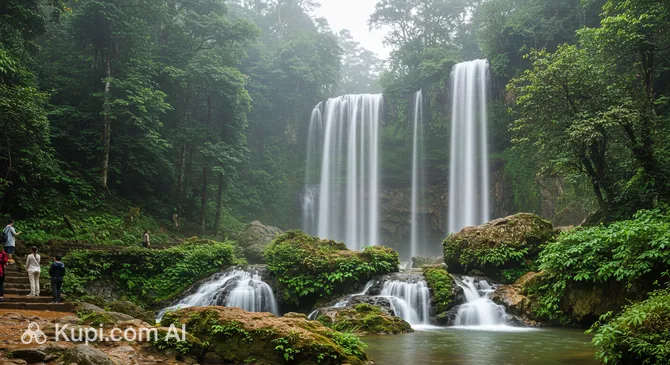
Nature lovers should visit the surroundings of Da Lat, home to the impressive Datanla Waterfall. This place attracts visitors not only with the beauty of its cascading waters but also with the opportunity to ride unique "alpine coasters" through the jungle. A walk to the base of the waterfall among tropical greenery will be one of the brightest impressions of your trip.

Illustration.
Source: Kupi.com AI

Traveller photos:

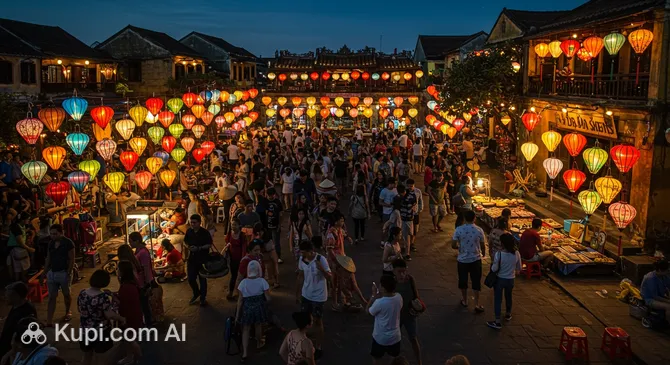
The atmosphere of the night city is best experienced at a place like the Hoi An Night Market. Hundreds of colorful silk lanterns illuminate stalls with souvenirs, street food, and handmade products, turning an ordinary walk into a fairy-tale event.

Illustration.
Source: Kupi.com AI

Traveller photos:

Best Time to Visit

Choosing the ideal time to visit Vietnam depends on the region, as the climate in the north, center, and south of the country varies significantly. The high season for most tourist destinations lasts from November to April. This period offers the most comfortable dry weather, ideal for beach holidays in Phan Thiet or walks around Hanoi. However, it is worth considering that during popular periods, accommodation prices can be higher, and major attractions will be more crowded.

The low season, which falls during the summer and early autumn months, brings moist monsoons. Despite periodic rain, this time has its advantages: nature becomes incredibly vibrant and green, and hotels offer significant discounts. This is an excellent time for those who prefer a secluded getaway without the extra bustle. If your goal is to see the famous blossoms or experience national holidays like Tet (Vietnamese New Year), plan your trip for late January or early February, but keep in mind that during these days, life in the country virtually comes to a standstill.

Traditions

The culture of Vietnam is deeply rooted in respect for elders and family values. When interacting with locals, you will notice their restraint and politeness. A traditional greeting is often accompanied by a slight bow, and boisterous displays of emotion in public are considered undesirable. Hospitality is an important trait: if you are invited into a home, it is good manners to bring a small gift, such as fruit or sweets.

Special attention should be paid to rules of conduct in religious places. When visiting temples and pagodas, it is necessary to choose clothing that covers shoulders and knees, and it is customary to remove shoes before entering the temple. At the table, Vietnamese people often use chopsticks, and there are nuances here: for example, you should not stick them vertically into a bowl of rice, as this resembles a memorial rite for the deceased.

The main holiday of the country is Tet — the Vietnamese New Year according to the lunar calendar. This is a time of renewal when families gather together, prepare traditional banh chung cakes, and decorate their homes with blossoming peach branches or mandarin trees. Respecting these simple rules and traditions will help you feel the spirit of the country more deeply and experience the warmest welcome from the Vietnamese people.

Entertainment

Vietnam offers guests a kaleidoscope of entertainment for every taste. Fans of active recreation will appreciate trekking through rice fields in the northern provinces or kitesurfing in Phan Thiet. For those who prefer a cultural program, a visit to the traditional water puppet theater in Hanoi or exploring the historical exhibits of numerous museums is a must.

The country's nightlife is particularly vibrant in Ho Chi Minh City, where entire streets turn into endless rows of bars and clubs with live music. Shopping in Vietnam is an adventure in itself: here you can purchase everything from exquisite silk and pearls to unique products by local artisans at colorful venues such as Ben Thanh Market. Families with children will find plenty of interest in modern entertainment centers and water parks, which are available in almost every major resort city.

Currency rates

Planning a trip? Wonderful! To make sure the financial side of your journey holds no surprises, it's worth remembering that exchange rates are constantly changing. That's why we strongly recommend keeping an eye on current rates both before departure and throughout your trip. To help with that, you can use the data provided below — we monitor exchange rates 24/7 and strive to provide the most up-to-date information.

VND exchange rate for 15/08/2026

1 AED
~ 7042.25 VND
1 AMD
~ 71.10 VND
1 AUD
~ 18518.52 VND
1 AZN
~ 15384.62 VND
1 BYN
~ 8547.01 VND
1 CAD
~ 18867.92 VND
1 EUR
~ 30303.03 VND
1 GBP
~ 35714.29 VND
1 HUF
~ 82.74 VND
1 INR
~ 272.26 VND
1 KGS
~ 297.27 VND
1 KRW
~ 18.38 VND
1 KZT
~ 55.97 VND
1 PLN
~ 6944.44 VND
1 RUB
~ 309.89 VND
1 SAR
~ 6896.55 VND
1 SGD
~ 20408.16 VND
1 TRY
~ 543.18 VND
1 UAH
~ 581.06 VND
1 USD
~ 26315.79 VND
1 UZS
~ 2.18 VND

Reached the bottom of the page?

Looks like you know this route inside out

We use cookies and services to collect user information. This is essential for the functioning of the site and for marketing purposes. You can find out more in .