Support

Surigao Airport

About the Airport

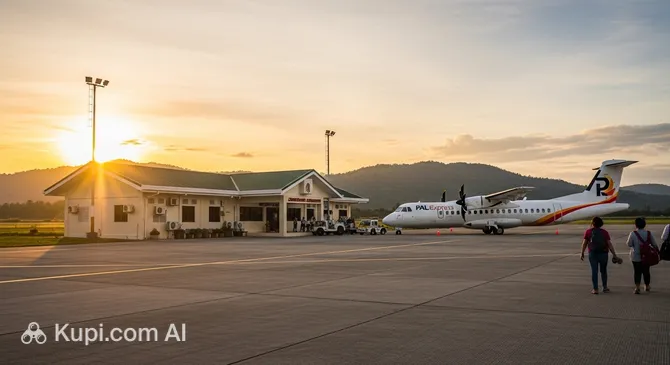
Surigao Airport. Source: Kupi.com Binoculars

Surigao Airport (SUG) is not merely a transport hub, but the first welcoming gateway to the world of the "City of Island Adventures". This compact air harbour greets travellers with the relaxed atmosphere of the Philippine countryside, where time flows a little slower and the smiles of the staff set the mood for the entire holiday. The airport serves as the ideal starting point for those wishing to explore not only the mainland of the Surigao del Norte province but also to venture towards the mysterious Dinagat Islands or the southern shores of Leyte.

IATA Code SUG
ICAO Code RPMS
City Surigao
Distance to City Centre 4 km
Status Domestic
Annual Passengers Approx. 100,000
Schedule Regular domestic flights

Features and Advantages of the Airport

Despite its modest size, Surigao Airport boasts a range of advantages appreciated by experienced travellers. Its main asset is its exceptional accessibility: the terminal is located literally just a few minutes' drive from the city centre and the ferry port. This allows tourists to transfer from the aircraft to maritime transport as quickly as possible and continue their journey across the archipelago without long transfers.

Another important feature is the speed of service. Thanks to the low passenger volume and simple terminal layout, check-in and baggage claim procedures here are much faster than in major hubs like Manila or Cebu. There are practically no queues, which eliminates unnecessary stress. Furthermore, following the recent reconstruction of the runway, the airport has improved its safety levels and reliability for receiving aircraft.

Contact Information

To ensure your journey to Surigao is as comfortable as possible, we recommend saving the airport's contact details. Below you will find current information for contacting Surigao Airport (SUG), which is managed by the Civil Aviation Authority of the Philippines (CAAP).

  • Official Website: Surigao Airport does not have a separate website. The main source of official information is the Civil Aviation Authority of the Philippines (CAAP) portal: caap.gov.ph.
  • Inquiry Hotline: For direct communication with the airport administration, you can use the telephone number: +63 (86) 826-1293.
  • Airport Address: The airport is located at: Barangay Luna, Surigao City, 8400 Surigao del Norte, Philippines.
  • Email: For official inquiries, please use the email of the CAAP regional office to which the airport belongs: r13_surigao@caap.gov.ph.
  • Social Media: It is convenient to follow the official "CAAP Surigao Airport" Facebook page for operational updates, including schedule changes due to weather conditions.
  • Lost Luggage Information: In case of loss or damage to luggage, you should first contact your airline representative. Their counters are usually located in the arrival hall.
  • Passenger Support: For general questions related to your stay at the airport, please contact the information desk in the terminal or call the main contact number.

How to Get to the Airport

Getting to Surigao Airport (SUG) from the city centre is quite simple, as it is located just a few kilometres away. The journey typically takes no more than 10–20 minutes depending on traffic, making it one of the most accessible regional airports in the Philippines.

The most common and authentic way to get around Surigao is by tricycle (a motorcycle taxi with a sidecar). They are everywhere, and a trip to the airport will be inexpensive, estimated at 50–150 Philippine Pesos (PHP). It is extremely important to agree on the fare with the driver before the journey begins to avoid misunderstandings. This is a quick and convenient option, especially if you are travelling light.

For greater comfort, particularly if you have a lot of luggage, you can use a taxi or book a private transfer. Many hotels and resorts offer airport transfer services, which is the most reliable option for early morning or late flights. The cost of a taxi ride will be higher than a tricycle, potentially around 200–500 PHP. A pre-booked transfer ensures peace of mind and a fixed price.

If you plan to actively explore the surroundings of Surigao, it makes sense to rent a car. Several local companies offer rental services. In this case, you can drive to the airport yourself and leave the car in the parking lot. The airport has a car park where you can leave a vehicle for both short and long terms, though the number of spaces may be limited.

Multicabs (small jitney-style buses) also operate as public transport. This is the most budget-friendly option, but it may not be the most convenient, as their routes do not always pass directly by the terminal entrance, and you may need to walk a short distance. This method is better suited for experienced travellers without bulky luggage.

Terminals and Map

Surigao Airport (SUG) is a small regional airport, so its structure is extremely simple and understandable for any traveller. You will not find complex multi-level complexes here, making navigation quick and easy.

The airport consists of one passenger terminal, which serves both arriving and departing flights. The terminal building is compact, and all key zones are within walking distance of each other. Consequently, no transit between zones is required—everything is located in one space.

The airport layout is intuitive. Upon entering, you find yourself in the public area where airline check-in counters are located. After checking in and dropping off luggage, passengers proceed to pre-flight security screening, followed by a small waiting area (pre-departure area). The arrival zone is equally simple: after disembarking the aircraft, passengers enter a small hall for baggage claim, which is located next to the airport exit.

Check-in and security procedures at Surigao Airport usually go very quickly thanks to the low passenger flow. Nevertheless, it is recommended to arrive at the airport 1.5-2 hours before departure to complete all formalities without rushing. It is practically impossible to get lost here—follow the few signs, and you will easily find the zone you need. Everything is laid out clearly and does not require long walks.

Airport History

The history of Surigao Airport (SUG) is closely intertwined with key events in the history of the Philippines. The air harbour was built before World War II by American engineers as a landing strip for military purposes. Its strategic location made it an important facility during the Pacific theatre of operations. The airport played a significant role in events related to the Battle of Surigao Strait in 1944—one of the largest naval battles in history.

After the war, the airfield was converted into a civil airport to serve domestic flights. For decades, it served as the main air gateway for the province of Surigao del Norte, facilitating the development of trade and tourism in the region. The airport received regular flights from Manila and Cebu, connecting this remote corner of the country with major economic centres.

One of the most dramatic moments in the airport's modern history was the 2017 earthquake. Powerful tremors seriously damaged the runway, leading to the complete closure of the airport for several months. This event became a real challenge for the region. However, thanks to large-scale and prompt restoration works, which included a full reconstruction of the runway, the airport was reopened for flights. The successful and rapid restoration of infrastructure is considered an important achievement, demonstrating the resilience and coordination of local authorities and aviation services.

An interesting fact: despite its modest size, Surigao Airport was for many years the starting point for travellers heading to the world-famous island of Siargao. Although Siargao now has its own airport, Surigao's air harbour continues to play an important role in the region's transport system, serving both locals and tourists wishing to explore the natural beauty and rich history of the mainland province.

Services and Facilities

Surigao Airport (SUG) is a small regional airport serving domestic flights. The infrastructure here is quite simple and designed to meet the basic needs of passengers before departure.

Restaurants, Cafés, and Shops. The choice of dining establishments within the terminal is limited. Typically, these are small eateries or kiosks where you can buy drinks, light snacks, and refreshments. Shops mainly offer souvenirs, daily necessities, and local products. Do not expect large duty-free shops here.

Lounges and VIP Service. The airport has a general waiting area for all passengers. Specialised VIP halls or business lounges are generally absent due to the small size and status of the airport.

Wi-Fi and Charging Stations. Access to free Wi-Fi may be limited or unstable. Power outlets for charging electronic devices can be found in waiting areas, but their number may be small, so it is recommended to carry a portable power bank.

Financial Services. There is usually an ATM on the terminal premises for cash withdrawals. Currency exchange offices are rare in small regional airports, so it is better to exchange money in advance at city banks.

Medical Assistance. The airport has a first aid station in case of emergencies. Please contact airport staff for assistance.

Services for Passengers with Children and Reduced Mobility. Dedicated mother and child rooms may be absent, but restrooms usually have basic facilities. For passengers with reduced mobility, ramps and an accessible environment are provided. If you require assistance or a wheelchair, it is recommended to notify your airline in advance.

Hotels and Business Centres. There are no hotels directly on the airport grounds. The nearest hotels and guesthouses are located in Surigao City itself, which is easily accessible by taxi or tricycle. Conference rooms or specialised business centres are not provided at the airport.

Where to Eat

Surigao Airport (SUG) is a small regional hub, so the choice of dining establishments here is quite modest, though it allows for a taste of local cuisine. Do not expect major restaurant chains or extensive food courts. Instead, you will find a few small cafés and kiosks offering simple but filling dishes. Almost all are located in the public area before security control (landside), so it is better to have a meal before checking in for your flight.

In the departure hall, there are usually several snack bars where you can enjoy a coffee, buy soft drinks, or get light snacks. For a full meal, you can find a café offering hot dishes. After passing security (airside), the selection is typically very limited, so plan your main meal before entering the sterile area.

If you wish to try something from the local cuisine, look for simple Filipino dishes. Often on the menu, you can find Silog (fried garlic rice, egg, and meat or fish)—an excellent option for a hearty breakfast or lunch. For a quick snack, local Pandesal buns or other fresh pastries are suitable. This is a wonderful opportunity to experience the authentic tastes of the Philippines even while waiting for your flight.

Specialised dietary options, such as vegetarian, vegan, or gluten-free dishes, will be difficult to find here. It is recommended to check the ingredients with staff in advance—they may be able to offer simple options, such as rice with vegetables. Prices in local cafés are very accessible and budget-friendly. Regarding opening hours, establishments open a few hours before the first flight and close shortly after the departure of the last aircraft of the day.

Our Advice: If you have specific dietary requirements (such as Halal) or are looking for more variety, we recommend eating at one of the restaurants in Surigao City before travelling to the airport. At the airport itself, you can then leisurely enjoy a coffee and the calm atmosphere of this small hub while awaiting your journey.

Tips for Travellers

To ensure your journey through Surigao City airport goes as smoothly as possible, we have prepared several useful tips. Although this is a small and not the busiest airport in the Philippines, knowing certain nuances will help save time and reduce stress.

Arrival Time at the Airport. For domestic flights, which Surigao Airport primarily serves, it is recommended to arrive 1.5–2 hours before departure. This time is quite sufficient to pass check-in, baggage drop, and pre-flight security without rushing.

Check-in and Security. Procedures in regional airports usually go faster than in major hubs. Nevertheless, always keep your passport (or other identification) and ticket ready. To speed up the process, use online check-in if your airline provides this option.

Seat Selection on the Plane. When flying into or out of this region, try to choose a window seat. From the height, stunning views of numerous islands and turquoise waters open up, which will be an excellent start or finish to your journey. For greater comfort and legroom, choose an aisle seat.

Hand Luggage. Standard security rules apply here as well: liquids in containers no larger than 100 ml (total volume up to 1 litre), packed in a transparent bag. Sharp objects and flammable substances are prohibited. Always take valuable electronics, power banks, documents, and money with you into the cabin.

Connecting Passengers. Surigao Airport rarely acts as a transit hub. Most likely, your connection will be in a larger airport, such as Manila or Cebu. When checking in for a flight in Surigao, clarify whether you will need to collect and re-check your luggage at the transit point.

Customs Control. If you arrive in Surigao on a domestic flight from another Philippine city (e.g., from Manila), you have already passed customs control at your first airport of arrival in the country. You will not need to declare anything on a domestic flight.

Saving Time and Money. Book a transfer from the airport to your hotel in advance to avoid inflated prices from private drivers. Food options at the airport may be few, so you can bring a light snack and a water bottle, which can be filled after security.

In Case of Flight Delay. First, contact your airline representative for information on the flight status and possible options (rescheduling, compensation). Given the modest size of the airport, be prepared that leisure opportunities will be limited during a long wait. Download movies or bring a book with you in advance.

Reached the end of the page?

That means the route is fully explored