Support

Awang Airport

About the Airport

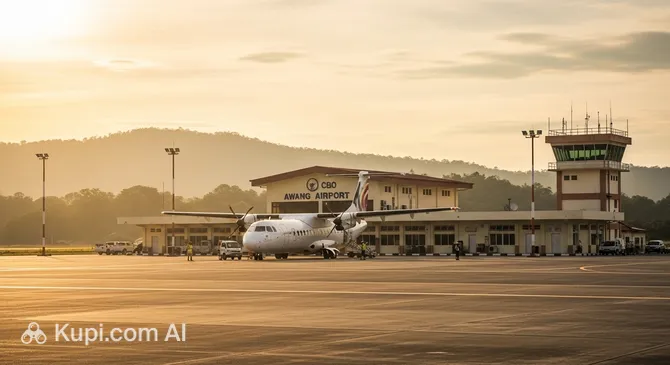
Awang Airport. Source: Kupi.com Binoculars

Awang Airport (CBO), also known as Cotabato Airport, is not merely a transport hub but the main aerial gateway to the heart of the distinctive Bangsamoro region in the southern Philippines. Located amidst the picturesque landscapes of Maguindanao province, it is the first to welcome travellers wishing to touch the rich culture and history of this part of the archipelago. The airport is distinguished by a cosy, almost home-like atmosphere, allowing guests to immediately feel the rhythm of local life the moment they step off the plane.

IATA Code CBO
ICAO Code RPWC
City Cotabato City (territorially located in the municipality of Datu Odin Sinsuat)
Distance to Centre About 8 km
Status Domestic
Annual Passengers Over 295,000 (based on 2022 data)
Schedule Check with airlines

Features and Advantages of the Airport

Awang Airport is classified as a Principal Class 1 domestic airport and plays a strategically important role in the transport system of Mindanao island. Despite the compact size of its single terminal, everything necessary for a comfortable wait is available here, and check-in and security procedures are quite swift due to the moderate passenger flow.

One of the main advantages of the airport is its favourable location. It is situated just a few minutes' drive from the famous Sultan Haji Hassanal Bolkiah Mosque (Grand Mosque) — the largest mosque in the Philippines and a landmark of the region. In recent years, modernization works have been carried out at the airport, including the expansion of the runway and the installation of equipment for servicing night flights, making travel to this unique corner of the country even more accessible.

Contact Information

To obtain the most up-to-date information regarding the operations of Awang Airport (CBO), it is recommended to use official communication channels. Please note that, as with many regional airports, some services, such as baggage tracing, are provided directly by the airlines.

  • Official Website: Awang Airport does not have its own separate website. Information about its status and operations is usually published on the portal of the Civil Aviation Authority of the Philippines (CAAP).
  • Inquiry Hotline: For information regarding airport operations, you may call: +63 (64) 431-00-81.
  • Airport Address: Barangay Awang, Datu Odin Sinsuat, Maguindanao, 9601, Philippines. The airport serves Cotabato City and the surrounding areas.
  • Email: There is no specialised email address for general passenger inquiries. It is recommended to use telephone communication.
  • Social Media: There are no official social media pages for Awang Airport. For flight-related updates, please follow the pages of your airline.
  • Lost Luggage Information: Issues regarding lost or damaged luggage are handled by airline representatives. Please contact your carrier's support service directly (e.g., Philippine Airlines or Cebu Pacific).
  • Passenger Support Contacts: For general questions regarding airport infrastructure, please contact the main phone number. For anything related to tickets, schedules, and in-flight service, contact your airline.

How to Get to the Airport

Getting to Awang Airport (CBO) from the centre of Cotabato City is straightforward, as it is located just a few kilometres away. Travellers have access to several transport options, varying in cost and comfort level. On average, the trip from the city centre to the airport takes between 20 to 40 minutes depending on traffic conditions.

Public Transport. The most budget-friendly way to get to the airport is via local shared taxis — jeepneys. They do not always go directly to the terminal but can drop you off at the intersection, from where you can walk to the airport entrance or take a tricycle. Another popular option is tricycles (motorcycles with a sidecar). This is a faster and more convenient method than jeepneys, as the driver will take you right to the terminal entrance. The cost of a tricycle ride should be negotiated in advance, before the journey begins.

Taxis and Transfers. The most comfortable method is to order a taxi or use ride-sharing apps such as Grab. This guarantees a trip at a fixed or metered rate and eliminates the need for transfers. A taxi ride will cost significantly more than public transport but ensures maximum convenience, especially if you have a lot of luggage. Many hotels also offer transfer services for their guests, which can be a convenient solution.

Car Rental and Parking. If you prefer independence when moving around the Philippines, you can rent a car. Awang Airport provides parking where vehicles can be left for both short and long periods. Renting a car gives you the freedom to explore the surroundings, but local traffic conditions should be taken into account. It is recommended to book a car in advance, especially during the tourist season.

Terminals and Map

Awang Airport (CBO), serving Cotabato City, is a small and compact aviation hub. Its structure is maximally simple and clear for passengers, making navigation intuitive and fast.

The airport operates with just one terminal, which serves both departing and arriving flights. It is a single-storey building where all key zones are located within walking distance of each other, so there are no transfers between terminals. The airport layout is extremely simple: after entering the building, you immediately find yourself in the general area where the airline check-in counters are located.

The Departure Zone includes check-in counters, a security screening point, and a small waiting lounge for passengers who have passed control. The Arrival Zone is a separate hall with a baggage claim belt and an exit to the general area, where you can meet arrivals or order a taxi.

Thanks to the terminal's compact size, the time required to complete all pre-flight formalities, such as check-in and screening, is usually minimal. On average, all procedures take no more than 30-45 minutes. Nevertheless, it is recommended to arrive at the airport 1.5–2 hours before departure to avoid rushing in case of unforeseen delays.

The main advice for navigation is that it is practically impossible to get lost here. All zones are clearly marked with signs. Airport staff are always ready to help and suggest directions. Simply follow the standard procedure: check-in, security check, waiting for boarding — all of this happens within one small space.

Airport History

Awang Airport (CBO), officially known as Cotabato Airport, is a key air hub serving Cotabato City and the surrounding provinces on the island of Mindanao, Philippines. Its history is closely intertwined with the development of the region and reflects the journey from a military airfield to an important civil transport centre.

The history of the airport began in the 1930s, when it was established as a military airfield. Its strategic location made it an important facility during World War II, when it was used by the US Army Air Forces. After the war, with the growing need for civil aviation, the airfield was gradually converted for commercial use, becoming the main air gateway for the entire region.

Over the decades, Awang Airport has undergone several stages of modernization. Key works included the extension of the runway and the renovation of the terminal. One of the most large-scale reconstruction projects began in the late 2010s with the aim of building a new, more modern passenger terminal to meet growing demand. Today, it holds the status of a Principal Class 1 domestic airport according to the classification of the Civil Aviation Authority of the Philippines, highlighting its importance for the economic and social life of the region, connecting it with Manila and other major cities of the country.

An interesting fact: despite the name "Cotabato Airport", physically it is located in the neighbouring municipality of Datu Odin Sinsuat. Throughout its history, the airport has repeatedly played an important role in logistics, ensuring the delivery of humanitarian aid and supporting development projects in the region. Its history is not just a story of take-offs and landings, but a chronicle of contribution to the stability and prosperity of central Mindanao.

Services and Amenities

Awang Airport (CBO) is a small regional airport offering passengers a basic set of services for a comfortable wait for their flight. Although the infrastructure here is more modest than in major international hubs, you will find all the essentials.

Dining and Shopping. The terminal houses several small cafes and eateries where you can have coffee and snack on local dishes. Souvenir shops are also open, selling local handicrafts and travel goods. The selection is limited, so for serious shopping, it is better to head into the city.

Waiting Areas and Facilities. A general waiting hall is available for all passengers. Specialised VIP lounges or business class lounges are generally absent here. Inside the airport building, you can find charging stations for mobile devices, although their number may be limited. Access to Wi-Fi may also be unstable, so it is better to have an alternative option for internet connection.

Financial and Medical Services. ATMs may be installed at the airport, but for currency exchange, it is better to visit banks in Cotabato City. It is recommended to carry some local currency for unforeseen expenses. A first aid station usually operates within the terminal territory for emergency cases.

Services for Special Categories of Passengers. For passengers with small children, changing tables may be provided in the restrooms. There are no dedicated play areas. Passengers with reduced mobility are provided with assistance during boarding and disembarking; for this, it is necessary to notify your airline in advance regarding the need for assistance.

Business Services and Hotels. There are no hotels, conference rooms, or business centres within the airport itself. The nearest hotels and venues for business meetings are located in Cotabato City, which is the main settlement of the region in the Philippines. When planning a business trip, it is worth booking accommodation and necessary facilities well in advance.

Where to Eat

Awang Airport (CBO), serving Cotabato City, offers a modest but authentic selection of establishments where you can have a snack before departure or after arrival. Do not expect a large food court here like in international hubs, but you certainly won't go hungry. The main food outlets are concentrated in the airport's single terminal and reflect the culinary character of the region.

Location and Choice of Establishments

Dining options at the airport are divided into two zones:

  • Landside (Before Security): In the public part of the terminal, open to all visitors, there are several small cafes and kiosks. A wider selection of dishes, including hot meals, is usually presented here. This is an ideal place to have a full meal if you have time before your flight or are meeting arrivals.
  • Airside (After Security): In the departure lounge for passengers who have passed screening, the choice is more limited. Typically, one or two small snack bars operate here, where you can buy drinks, coffee, sandwiches, pastries, and light snacks to pass the time while waiting for boarding.

What to Try: Local Cuisine and Recommendations

The main feature of establishments at Awang Airport is the focus on local Filipino cuisine. This is an excellent opportunity to get acquainted with the gastronomy of the Mindanao region.

For a quick and authentic snack, it is highly recommended to try pastil — a popular local dish consisting of a portion of rice with shredded chicken, beef, or fish, wrapped in a banana leaf. It is filling, tasty, and very convenient for a traveller.

For a full lunch, look for rice meals on the cafe menus, such as chicken adobo, beef tapa, or fried fish with a side dish. Prices at the airport are quite democratic and comparable to city cafes.

Special Dietary Needs and Practical Information

Given the cultural characteristics of the region, the majority of dishes containing meat are Halal. This is an important aspect for many travellers. Regarding vegetarian, vegan, or gluten-free options, their selection may be extremely limited. Specialised menus generally do not exist, so it is better to check the ingredients with the staff or stick to simple options such as rice and fresh fruit. Opening hours are usually tied to the flight schedule: they open early in the morning and close after the departure of the last aircraft.

Tips for Travellers

Travelling through Awang Airport in Cotabato City can be simple and convenient if you know a few key points. Here are some tips to help you orient yourself and make your trip as comfortable as possible.

Arrival Time at the Airport: Awang is a relatively small airport serving domestic flights. It is recommended to arrive 1.5–2 hours before departure. This time will be sufficient to check in, drop off luggage, and pass pre-flight screening without rushing.

Check-in and Security: To save time, use online check-in if your airline provides such an option. Check-in counters may not work as fast as in major hubs. The screening procedure is standard, but be prepared for thorough checks, which are the norm for airports in the Philippines.

Seat Selection: When taking off or landing in Cotabato City, beautiful views of the coast or surrounding landscapes may open up. If you want to enjoy the panorama, choose a window seat during online check-in. Keep in mind that on morning flights heading east, the sun will be on the left, and on evening flights — on the right.

Hand Luggage: Standard security rules apply here as well. Liquids can be carried in containers up to 100 ml, packed in a transparent bag. All electronic devices, especially power banks, must be in your hand luggage, not in checked baggage. Sharp objects are prohibited.

Connecting Passengers: Awang Airport mainly serves direct flights. If you have a connection in another city, for example, in Manila or Cebu, check at registration whether you will need to collect and re-check your luggage at the transit airport. Allow at least 2-3 hours for transfers between domestic flights.

Customs Control: Since the airport serves domestic flights, there is no formal customs control upon arrival or departure to other Philippine cities. However, random security checks or agricultural controls to prevent the transport of prohibited plants and products are possible.

Saving Time and Money: Book a transfer from the airport to the city in advance, as the choice of transport on-site may be limited. There may be few dining establishments in the airport itself, so bring a light snack and a water bottle that can be filled after screening.

In Case of Flight Delay: In the event of a flight delay or cancellation, contact your airline representative first. Clarify information about the new departure time and whether meals or accommodation are provided. In a small airport like Awang, waiting areas can be modest, so it is useful to have a book, a charged power bank, or other entertainment with you.

Reached the end of the page?

That means the route is fully explored