Support

Thandwe

About

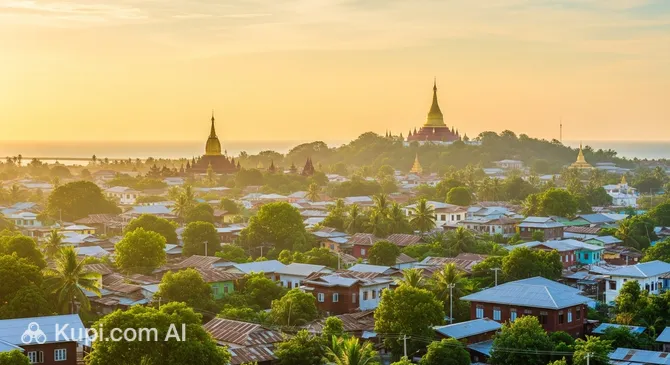
Thandwe. Source: Kupi.Binoculars

Thandwe is a captivating town located in the western part of Rakhine State, serving as a vital hub for travelers exploring this coastal region. Known for its laid-back atmosphere and lush surroundings, it offers a genuine slice of local life in Myanmar. While often viewed as a transit point, the town itself possesses a quiet charm that invites visitors to pause and appreciate its unique character.

Geographically, the town sits in a valley surrounded by hills, contributing to its scenic backdrop. With a population of approximately 133,000 residents, it is a bustling center of commerce and culture. The history of Thandwe is rich and dates back centuries, with the town formerly known as Sandoway during the colonial era. Today, it stands as a testament to the region's enduring heritage and traditional way of life.

Most travelers know Thandwe as the primary gateway to the pristine Ngapali Beach, which is located just a few miles away and is renowned for its turquoise waters and white sands. However, the town boasts its own attractions, including three ancient stupas situated on nearby hilltops: Nandaw, Sandaw, and Andaw pagodas. These sacred sites offer panoramic views of the town and are significant spiritual centers for the local community. Additionally, the vibrant central market provides a colorful opportunity to shop for local textiles, fresh produce, and handicrafts.

Whether you are passing through on your way to the coast or taking the time to explore the town's hidden gems, Thandwe promises a memorable experience. Its blend of historical significance, natural beauty, and warm hospitality makes it a destination worth discovering on your journey.

Weather Overview

Thandwe experiences a tropical climate defined by distinct wet and dry periods, ensuring warm temperatures year-round. Understanding these seasonal shifts is key to planning the perfect trip, as the atmosphere changes significantly from month to month. Generally, visitors can expect warm, sunny winters and humid, rainy summers.

The dry season, which runs from November to April, is typically the most popular time to visit. During the peak months of January and February, the weather is delightful, with average temperatures hovering around 23°C to 24°C and virtually no precipitation. As the season transitions into March and April, the heat intensifies, with maximum temperatures reaching up to 32°C. This period is ideal for those looking to enjoy clear skies and outdoor activities.

From May to October, the region enters its wet season. While the air remains warm with average temperatures between 26°C and 28°C, the frequency of rainfall increases drastically. Data indicates that during the height of the monsoon in June, July, and August, there are up to 31 wet days per month, meaning rain is a daily occurrence. For a more specific breakdown of temperature fluctuations and rainfall patterns, you can view the detailed weather in Thandwe. Travelers visiting during this time should pack waterproof gear and be prepared for high humidity.

Interesting Facts

Beyond the main attractions, Thandwe holds many fascinating secrets that reveal its deep historical and mythical roots. While often seen merely as a gateway to the beaches, the town preserves legends and colonial echoes that few visitors take the time to uncover.

  • The Legend of the "Iron-Tied" City: The name "Thandwe" is steeped in local mythology, believed to be derived from the Burmese words for "iron" (Than) and "suspended" or "tied" (Dwe). According to ancient folklore, the city was once magically tethered to the earth with iron chains to prevent it from floating away or being carried off by a giant mythical bird.

  • A Trio of Sacred Relics: The three famous stupas perched on the surrounding hills—Nandaw, Sandaw, and Andaw—form a significant spiritual triad. They are said to enshrine distinct relics of the Buddha: the Nandaw Pagoda houses a rib bone, the Sandaw Pagoda contains a hair relic, and the Andaw Pagoda safeguards a tooth relic, making them a complete pilgrimage circuit for locals.

  • A Colonial Sanatorium: During the British colonial era, the town was known by the anglicized name Sandoway. It served as a popular sanatorium and seaside retreat for British officials stationed in the region, who flocked here to escape the intense heat of the plains and enjoy the restorative coastal air.

  • Center of Rakhine Weaving: Thandwe is a primary trading hub for the intricate Rakhine mats, which are woven from dried reeds. These mats are famous throughout the country for their durability and complex geometric patterns, and the town's market is one of the best places to see the variety of this traditional craft before it is shipped to other parts of Myanmar.

How to Get There

Reaching this coastal destination is most conveniently done by air, as the town is served by its own domestic facility, Thandwe Airport (SNW). This airport is the primary arrival point for visitors heading to the town center and the pristine shores of Ngapali Beach. For a detailed overview of logistics and transport advice, you can read more about how to get to Thandwe.

For international travelers, the journey typically begins at Yangon International Airport (RGN), located in the former capital, Yangon. As the country's busiest aviation hub, it receives the majority of overseas flights. From here, tourists usually transfer to a direct domestic flight to reach the coast. Although Yangon is situated approximately 255 km away, flying is the standard and most comfortable mode of transit compared to overland options.

The region is also served by other airports that function as connectors within the domestic network, such as Kyaukpyu Airport (KYP) and Sittwe Airport (AKY). While Nay Pyi Taw Airport (NYT) serves the capital further inland, these coastal hubs facilitate travel across Rakhine State. Visitors generally use these airports as transit points or stops on a broader itinerary rather than as gateways for road travel to Thandwe.

Here is a summary of the key airports in the wider region that may form part of your travel connections:

Airport Name City Passenger Traffic Distance to Thandwe (km)
Yangon International Airport Yangon Large 254.7
Sittwe Airport Sittwe Medium 242.3
Nay Pyi Taw Airport Naypyidaw Medium 231.6
Kyaukpyu Airport Kyaukpyu Small 137.8

Main Attractions

While often treated as a jumping-off point for the coast, the city itself offers a handful of rewarding sights for those who linger. The most famous destination in the vicinity is undoubtedly Ngapali Beach. Located just a short drive away, this stretch of coastline is celebrated as one of the most pristine in Southeast Asia. Its palm-lined shores, turquoise waters, and quiet fishing villages provide a perfect setting for relaxation, swimming, and enjoying fresh seafood at local beachside restaurants.

For a touch of spiritual history and panoramic vistas, travelers should visit the trio of ancient stupas that watch over the town: Nandaw, Sandaw, and Andaw Pagodas. Perched on separate hilltops, these sites form an important pilgrimage circuit for locals. The Nandaw Pagoda sits at the northern end of town, while the Sandaw Pagoda guards the south. Crossing the river leads to the Andaw Pagoda. Climbing to these elevated platforms rewards visitors with sweeping views of the lush valley, the winding Thandwe River, and the distant Rakhine Yoma mountains.

A visit to the Thandwe Market offers a fascinating glimpse into daily life and local history. Uniquely housed within the walls of a former British colonial jail, this bustling marketplace is the commercial heart of the district. Inside, you can wander through stalls piled high with fresh produce, dried fish, and regional handicrafts. It is an excellent place to find the famous Rakhine mats, intricate textiles, and traditional pottery, all while soaking in the lively atmosphere of a genuine Myanmar trading hub.

Another intriguing site is the Zalun Monastery, located a few miles from the town center. This monastery attracts visitors who come to see the preserved body of a revered monk, Sayadaw U Sujata, who passed away decades ago while in meditation. His body remains uncorrupted and is displayed in a glass case, drawing devotees who come to pay their respects and marvel at this unexplained phenomenon.

Local Cuisine

The local cuisine in Thandwe offers a fiery and flavorful introduction to the distinct culinary traditions of Rakhine State. Unlike the milder, oily curries often found in central Myanmar, the food here is characterized by its sharp contrasts: it is typically spicier, sourer, and heavily reliant on fresh ingredients from the nearby Bay of Bengal. For adventurous foodies, this is a chance to taste some of the country's most exciting dishes in their authentic home setting.

The absolute must-try dish in town is Rakhine Mote Ti (also known as Mont Di). This is the region's signature noodle soup, differing significantly from the national dish, Mohinga. Instead of a thick chowder, Mote Ti features thin rice noodles in a clear, peppery fish broth. It is flavored generously with galangal (blue ginger), garlic, and fresh green chilies. It is often served with a side of crispy fritters and can be eaten as a salad (dry version) or a soup, usually packing quite a spicy punch.

Given its proximity to the coast, seafood is a staple of the local diet. Travelers can enjoy incredibly fresh prawns, squid, and fish, often prepared in spicy curries or simple grills. A common accompaniment to every meal is Ngapi, a fermented fish or shrimp paste. The Rakhine version is particularly pungent and savory, served as a dip with a platter of fresh, raw vegetables known as to-sayer. It is an acquired taste for some but essential for an authentic experience.

When it comes to beverages, the local teahouse culture is vibrant. Locals gather in these open-air establishments to sip on sweet, milky Burmese tea and chat. For something more refreshing to combat the tropical heat, fresh coconut water is widely available and inexpensive. You might also encounter sugar cane juice, freshly pressed by street vendors with a twist of lime to cut the sweetness.

For the best food experience, head to the central Thandwe Market in the morning. Here, you can wander through stalls selling local snacks, seasonal fruits, and dried fish. While high-end dining is mostly found at the nearby beach resorts, Thandwe town itself is dotted with small, family-run eateries and teahouses where you can eat shoulder-to-shoulder with residents, enjoying genuine flavors at very affordable prices.

Travel Tips

Welcome to Thandwe, a charming town that offers a genuine glimpse into the daily rhythm of Rakhine State beyond the nearby beaches. To help you navigate the local customs and logistics smoothly, here are some practical tips to ensure your visit is comfortable and culturally respectful.

  1. Dress for the Tropical Climate: The weather here is generally warm and humid, so pack lightweight, breathable cotton or linen clothing. Since you will frequently need to remove your footwear at pagodas and even some shops or guesthouses, sturdy slip-on sandals or flip-flops are the most practical choice. However, always carry a sarong or long pants to cover your knees and shoulders when visiting religious sites like the Nandaw Pagoda.

  2. Getting Around Locally: Public transport in the Western sense (like buses or metros) does not exist within the town. The most common way to get around is by motorbike taxi or three-wheeled tuk-tuks (locally known as thone-bane). They are affordable and readily available. Always agree on the fare with the driver before starting your journey, as meters are not used.

  3. Cash is King: While high-end hotels at the nearby beaches may accept credit cards, the economy in Thandwe town is almost entirely cash-based. The local currency is the Myanmar Kyat (MMK). ATMs are available but can occasionally be out of service or out of cash, so it is wise to carry enough Kyat for meals, market shopping, and transport. If you bring US dollars to exchange, ensure the bills are pristine—crisp, uncreased, and unmarked—or they may be rejected.

  4. Health and Hygiene: Pharmacies are available in the town center, but they may not stock specific international brands, so bring a sufficient supply of any personal prescription medications. Mosquito repellent is an absolute must, especially around dawn and dusk. As a general rule, avoid tap water and stick to sealed bottled water for drinking and brushing your teeth to prevent stomach issues.

  5. Staying Connected: English is spoken at hotels and by some tour guides, but it is less common among market vendors and drivers. Learning a few basic phrases like "Mingalaba" (Hello) and "Je-zu-tin-ba-deh" (Thank you) goes a long way. For internet access, Wi-Fi can be slow, so buying a cheap local SIM card (such as MPT, Atom, or Ooredoo) upon arrival in the country is highly recommended for reliable data.

  6. Temple Etiquette: Religion plays a central role in daily life. When entering any pagoda or monastery, you must remove your shoes and socks. Walking around the stupas is traditionally done in a clockwise direction. It is also polite to avoid turning your back directly on a Buddha image when sitting; instead, sit with your legs tucked to the side.

  7. Mind Your Feet: In local culture, the head is considered the most sacred part of the body, while the feet are the lowest and "dirtiest." Never point your feet at people or religious objects, and avoid touching anyone on the head, even children. This is considered highly disrespectful.

  8. Prepare for Power Cuts: Infrastructure in smaller towns can be unpredictable. Occasional electricity outages are part of life here. It is a great idea to pack a power bank to keep your phone charged and a small flashlight or headlamp, which can be very useful if you are walking back to your accommodation after sunset.

By keeping these simple guidelines in mind, you will find it easy to connect with the friendly locals and enjoy the laid-back atmosphere of the town. Thandwe is a welcoming place where a little cultural awareness opens many doors to authentic and heartwarming experiences.

Entertainment & Nightlife

Nightlife in Thandwe offers a distinctively local and laid-back experience, contrasting sharply with the polished entertainment found in major Asian cities. As a traditional town in Rakhine State, the evening scene here does not revolve around neon-lit nightclubs or high-end cocktail lounges. Instead, it centers on authentic social gatherings, street food culture, and the ubiquitous Myanmar "beer station." For travelers willing to embrace the local rhythm, the town provides a warm and unfiltered look at how residents unwind after sunset.

The heart of the evening activity is undoubtedly the local beer stations found along the main road and near the central market. These open-air venues are the social hubs of the town, characterized by low plastic chairs, draft beer towers, and a lively atmosphere. They are typically filled with locals watching football matches on large screens, chatting animatedly, and sharing plates of barbecue. The vibe is casual and friendly, with no dress code required—shorts and flip-flops are the norm. These spots usually close relatively early, winding down by 10:00 PM or 11:00 PM.

For those seeking a more recognizable tourist nightlife scene with cocktails, music, and ocean views, the best option is to head to the nearby Ngapali Beach area, which is just a short drive away. While Thandwe town is quiet, the beachfront resorts and bars offer a more vibrant setting. Famous venues like PVI (Pleasant View Islet) offer a unique setting on a small islet for sunset drinks, while places like the Original Sunset Bar provide a classic beach shack atmosphere where travelers gather to socialize well into the night.

Food lovers will find their entertainment in the evening culinary scene. As dusk falls, street vendors set up stalls near the Thandwe Market and along the riverfront. This is an excellent time to try inexpensive local snacks, such as grilled skewers, spicy salads, and fried delicacies. The cost of a night out in Thandwe is very low compared to international standards; a draft beer might cost less than a dollar, and a hearty meal can be had for a few dollars. Cash is essential, as credit cards are rarely accepted in town venues.

Safety in Thandwe is generally good, and violent crime is rare. However, the streets can be poorly lit at night, so it is advisable to stick to populated areas. Walking alone on dark outskirts is not recommended due to the uneven terrain and stray dogs. The primary mode of transport at night is the tuk-tuk (thone-bane). It is best to arrange a ride in advance or have your hotel call one for you, as flagging them down late at night can be difficult.

Regarding daytime entertainment, Thandwe is less about amusement parks and theaters and more about cultural immersion. There are no large museums or cinemas in the town. Instead, the "entertainment" lies in exploring the bustling morning market, visiting the hilltop pagodas for views, or watching the traditional weavers at work in the surrounding villages. For water sports, snorkeling, and boat tours, the focus shifts back to the coast at Ngapali.

Parks & Museums

Thandwe is not a city of manicured botanical gardens or sprawling glass-walled museums; rather, its charm lies in its raw, unpolished natural beauty and its "living" history. For travelers, the entire region serves as an open-air gallery where ancient traditions, colonial architecture, and lush tropical landscapes blend seamlessly. Instead of buying tickets to enclosed exhibits, visitors here experience culture and nature by exploring the verdant hills, riverbanks, and bustling community hubs.

Nature and Green Spaces

While the town center is dense and busy, the most significant natural area is undoubtedly the coastline that lies just a few miles to the west. Ngapali Beach serves as the region's primary "park," offering miles of pristine white sand backed by swaying palms and casuarina trees. Unlike crowded city parks, this natural expanse provides a serene environment for walking, cycling, and observing local fishing life. The beachfront is not just for sunbathing; it is a biodiverse zone where you can explore rocky headlands and observe coastal birds in a tranquil setting.

Closer to the town center, the Pagoda Hills function as the area's elevated green spaces. The grounds surrounding the Nandaw, Sandaw, and Andaw pagodas are peaceful retreats shaded by large trees. These hilltops offer the best vantage points in the city, allowing visitors to breathe in fresh air while overlooking the lush valley and the winding Thandwe River. The climb up the stone stairways is a scenic walk in itself, flanked by vegetation and offering a quiet escape from the market's noise below.

Museums and Cultural Heritage

Thandwe does not possess formal national museums, but its historical depth is preserved in its architecture and religious sites. The Thandwe Central Market is perhaps the most fascinating "living museum" in the city. Housed within the thick brick walls of a former British colonial jail, the structure itself is a relic of the 19th century. Walking through its arches offers a tangible connection to the town's colonial past, while the vibrant trade inside showcases the enduring culture of the Rakhine people through textiles, food, and crafts.

For those interested in art and religious history, the local monasteries and pagodas serve as the custodians of the region's heritage. These sacred sites often house collections of Buddha images, intricate wood carvings, and religious manuscripts that date back generations. They function as community galleries where the artistic traditions of Myanmar are displayed not in glass cases, but as objects of daily veneration. The craftsmanship visible in the stupas and the statues provides insight into the spiritual devotion and artistic skill of the local population.

Authentic Experiences

To see culture in action, visit the nearby weaving villages on the outskirts of town. These small communities are renowned for producing the famous Rakhine mats and textiles. Watching artisans work their looms is an interactive cultural experience that rivals any static museum display, offering a firsthand look at a craft that has been passed down for centuries.

Getting Around

The public transport system in Thandwe is informal and differs significantly from the structured networks found in major global cities. There are no metros, trams, or large municipal bus fleets operating within the town itself. Instead, the local transportation relies heavily on small, versatile road vehicles that navigate the narrow streets and connect the town center with nearby villages and the popular coastal area of Ngapali. For tourists, getting around is an authentic experience that requires a bit of negotiation and flexibility rather than reading complex route maps.

The most common mode of transport for short distances is the motorbike taxi. You will see drivers waiting at street corners, markets, and the airport, often wearing vests or simply signaling their availability. For those who prefer more stability or are traveling in pairs, tuk-tuks (locally known as thone-bane) are the primary choice. These three-wheeled vehicles serve as the town's de facto taxi service, offering a breezy and affordable way to travel between the market, pagodas, and hotels. They are nimble enough to navigate crowded areas and are widely available throughout the day.

For slightly longer journeys, such as the trip between Thandwe and Ngapali Beach, shared pick-up trucks or converted light trucks (often called "line cars") are frequently used by locals. These vehicles run along fixed routes and pick up passengers until they are full. Passengers typically sit on bench seats in the covered rear bed. While this is the most economical way to travel, it can be crowded and slower due to frequent stops. It offers a genuine glimpse into local life but may not be suitable for travelers with large luggage or those seeking comfort.

The payment system in Thandwe is entirely cash-based. There are no travel cards, mobile apps, or electronic ticketing machines. The currency used is the local Kyat. For motorbike taxis and tuk-tuks, it is essential to negotiate and agree on the fare before the journey begins, as vehicles are not equipped with meters. Prices are generally reasonable, but it is helpful to ask your hotel staff for current standard rates to avoid overpaying. For shared pick-up trucks, the fare is usually a fixed low amount paid directly to the driver or conductor upon exiting.

Tourists should be aware that public transport availability decreases significantly after sunset. While you might find a ride easily during the day, few drivers operate late at night. If you plan to be out late, it is advisable to arrange a return trip with a driver beforehand or ask a restaurant or hotel to call a taxi for you. Additionally, always carry small denominations of cash, as drivers often do not have change for large bills.

As an alternative to public transport, private car taxis are available, primarily for airport transfers or hired for full-day excursions. These are more expensive but offer air-conditioned comfort. For those who prefer self-guided exploration, bicycle and e-bike rentals are popular, particularly in the Ngapali area, allowing visitors to ride into Thandwe town at their own pace. Walking is also a viable option within the town center itself, as the main market and several religious sites are located within a relatively compact area.

Accommodation

Accommodation options in Thandwe cater to two distinct types of travelers: those seeking a convenient transit stop in the town center and those heading for a relaxing vacation at the nearby coast. While the town itself offers a modest selection of simple guesthouses and budget hotels, the vast majority of international visitors choose to stay at the resorts along Ngapali Beach, located just a short drive away.

For those who prioritize logistics and local immersion, the town center is a practical choice. Staying here places you within walking distance of the bustling central market and the historic pagodas. The accommodation in this area is typically functional and affordable, consisting of small, family-run establishments that provide basic amenities. It is an ideal option for travelers arriving late or departing early from the nearby airport, as it minimizes travel time and offers a genuine look at daily life in the district.

However, the premier location for tourists is undoubtedly the coastal strip. Here, the options range from high-end luxury resorts with private beachfronts to charming mid-range bungalows tucked into the palm groves. These establishments generally offer a much higher standard of service, including swimming pools, spas, and on-site restaurants serving fresh seafood. The atmosphere is far more relaxed and scenic compared to the busy streets of the town.

Prices vary significantly depending on the location. Guesthouses in Thandwe town are generally budget-friendly, often costing a fraction of the price of beachside properties. In contrast, the resorts at the beach can command premium rates, especially during the peak dry season. While luxury hotels usually accept credit cards, it is advisable to have cash on hand if you choose to stay in the smaller, budget-oriented lodgings in town.

Booking Tip: If you plan to visit during the high season (November to April), booking in advance is essential, as the most popular beachfront resorts fill up quickly. While major online platforms cover the beach hotels extensively, some of the smaller guesthouses in the town center may not be listed online and might require a direct inquiry or a walk-in arrangement.

Nearby Cities

For those planning to expand their travel itinerary, Thandwe acts as a connecting point to several significant cities in the wider region. While the distances and terrain make these locations unsuitable for quick day trips, they are excellent options for the next leg of a journey through the country, offering a deeper dive into the culture and landscapes of Myanmar.

One of the most prominent stops in the area is Pathein, a city celebrated for its traditional workshops producing intricate, hand-painted parasols. Visitors here can witness artisans at work and enjoy a lively waterfront atmosphere that differs significantly from the quiet beaches of Rakhine State. It serves as a vibrant cultural counterpoint to the coastal relaxation found near Thandwe.

Traveling further inland leads to Magway, a bustling river port situated on the banks of the majestic Irrawaddy River. The city is famous for the Mya Thalun Pagoda, a golden stupa that offers stunning views over the water. As a major commercial and spiritual hub, it provides travelers with an authentic glimpse into life in the central dry zone of the country.

Another key location is Hinthada, which serves as a vital trade center in the Ayeyarwady Delta. Known for its agricultural importance, particularly in rice cultivation, this town offers a look at the industrious daily rhythm of the delta region. It is a destination best suited for those looking to explore the authentic, non-touristy side of the local economy.

City Population Distance (km)
Pathein 300,000 191
Magway 289,247 196
Hinthada 180,728 146
Letpadan 176,571 165
Kyaunggon 163,035 174

These regional neighbors invite travelers to extend their adventure and discover the diverse heritage that lies beyond the immediate coast.

Shopping & Souvenirs

Shopping in Thandwe offers a refreshingly authentic experience that contrasts sharply with the commercialized retail scenes of major cities. Visitors will not find glitzy department stores or high-end fashion boutiques here. Instead, the town provides a genuine glimpse into the local trade of Rakhine State, where commerce revolves around bustling traditional markets, family-run shophouses, and the sale of regional handicrafts. It is a destination where the charm lies in the interaction with friendly vendors and the discovery of unique, locally made products rather than international brands.

The primary shopping district is concentrated along the main road that runs through the center of the town. This thoroughfare is lined with small convenience stores, pharmacies, and shops selling clothing and household goods. The area surrounding the central market is particularly lively, with vendors often spilling out onto the streets to sell seasonal fruits, flowers, and snacks. Walking along this strip allows tourists to browse through a variety of goods while soaking in the energetic atmosphere of daily town life.

Travelers looking for modern shopping experiences should be aware that Thandwe does not have any shopping malls or large retail complexes. The retail landscape is dominated by independent small businesses. For those in need of imported goods or specific travel supplies, there are a few mini-marts and general stores, but the selection is limited compared to what one would find in Yangon or Mandalay.

The absolute heart of the local shopping scene is the Thandwe Market. Uniquely housed within the walls of a former British colonial jail, this market is a landmark in itself. Inside, it is a maze of stalls offering everything from fresh produce and pungent dried fish to colorful textiles and gold jewelry. The morning hours are the best time to visit, as the market is at its most vibrant with locals doing their daily grocery shopping. It is an excellent place to observe local culture and find affordable goods.

When it comes to souvenirs, Thandwe is famous for its intricate Rakhine mats. Woven from dried reeds, these mats are renowned across Myanmar for their durability and beautiful geometric patterns. They make for lightweight and authentic gifts. Additionally, visitors can purchase traditional longyis (sarongs) featuring distinct Rakhine designs, or buy packs of local dried seafood, which is a specialty of the region, though travelers should be mindful of airline packing regulations regarding strong-smelling items.

Store hours in Thandwe are generally dictated by daylight. The main market and most shops open early, often around 6:00 AM or 7:00 AM, and close relatively early, typically by 5:00 PM. Payment is almost exclusively in cash (Myanmar Kyat). Credit cards are virtually useless in the town's shops and markets, although some high-end resorts at the nearby beach may accept them. Visitors should ensure they carry enough small denominations of local currency for purchases.

Tax-free shopping and VAT refund schemes are not available in Thandwe. The prices listed or negotiated are final, and tourists should not expect any formal tax reclamation facilities at the airport or in town.

Reached the end of the page?

That means the route is fully explored