Support

Pakse Airport

About the Airport

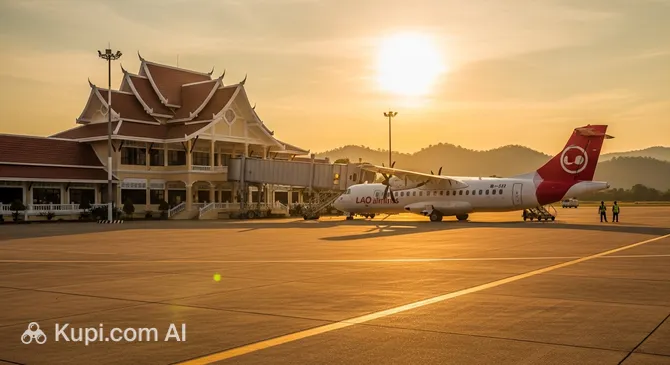
Pakse Airport. Source: Kupi.com Binoculars

Pakse International Airport is not merely a transport hub, but a welcoming aerial gateway into the enchanting world of Southern Laos. Unlike the noisy hubs of capital cities, a relaxed atmosphere reigns here, tuning travelers into the measured rhythm of the region's life from the very first minute. It is from here that the most exciting routes begin: to the coffee plantations of the Bolaven Plateau, majestic waterfalls, and ancient temples hidden within the tropical greenery.

IATA Code PKZ
ICAO Code VLPS
City Pakse
Distance to Center 3 km
Status International
Annual Passengers About 190,000
Schedule Check airline websites

Features and Advantages of the Airport

The main advantage of Pakse Airport is its incredible proximity to the city. The terminal is located just 3 kilometers from the center, allowing you to reach your hotel by taxi or tuk-tuk in literally 10–15 minutes. This spares tourists from long and tiring transfers after their flight.

Thanks to the compact size of the terminal, all pre-flight procedures are completed here quickly and without fuss. Queues for check-in and passport control are rarely long, and navigation inside the building is intuitive even for inexperienced travelers. This is a perfect example of a "boutique" airport where everything is within walking distance.

The airport serves as a strategic hub for exploring Southern Laos. From here, it is convenient to plan trips to the UNESCO World Heritage Site — the Vat Phou temple complex, as well as to the picturesque Si Phan Don ("4000 Islands") on the Mekong River. The terminal building, designed with elements of traditional Lao architecture, blends harmoniously into the surrounding landscape.

Contact Information

Finding direct contact details for a small regional airport like Pakse Airport (PKZ) can be challenging. Most communication is handled through the airlines. Below is the most current information and recommendations for contact.

  • Official Website: Pakse Airport does not have a separate official website. To check flight schedules, flight status, and other information, it is recommended to use the websites of airlines operating flights to Pakse (for example, Lao Airlines).
  • Inquiry Service Phone: A single public phone number for the airport inquiry service is not published. For all questions related to your flight, please contact your airline's call center directly.
  • Airport Address: The airport is located at: Route 13, Pakse, Champasak Province, Laos. It is situated just a few kilometers from the city center.
  • Email: An official email for general passenger inquiries is not provided.
  • Social Media: The airport does not maintain official pages on social networks. News and updates are best tracked via air carrier resources.
  • Lost Luggage Information: If your luggage has been lost or damaged, you must immediately contact the Lost & Found service of the airline you flew with. Their counters are usually located in the arrival hall.
  • Passenger Support Contacts: Any questions regarding tickets, check-in, special services on board, or changes to bookings are resolved through your airline's support service.

How to Get to the Airport

Getting to Pakse International Airport (PKZ) from the city center is quite simple, as it is located just 3-4 kilometers away. The journey will take no more than 10-15 minutes, and you can choose from several convenient transport options.

Taxi and Tuk-tuk. This is the most popular and convenient way to get to the airport. Taxis and motorized rickshaws (tuk-tuks, or "sam-lor") are easy to find anywhere in the city. The cost of the trip is low, but it is better to agree on the price with the driver in advance, as meters are rarely used. A trip on a tuk-tuk will cost slightly less than a taxi and will provide an authentic experience.

Transport Rental. If you prefer freedom of movement, you can rent a car or, more popularly, a motorbike in Pakse. This is especially convenient if you plan to explore the surroundings, such as the Bolaven Plateau, and then drive to the airport yourself. There is a parking area at the terminal where you can leave the vehicle.

Airport Parking. For those arriving in their own or rented vehicle, a small parking lot is provided at the terminal. It is suitable for both short stops to drop off passengers and longer vehicle storage.

Public Transport. There are no direct public transport routes from the city center to the airport. Theoretically, one could use local pickup trucks (songthaews), but this can be extremely inconvenient with luggage, as it would require walking from the main road to the terminal. This method is not recommended for tourists.

When planning a trip to Laos and neighboring countries, it is also useful to know about alternative air harbors. Depending on your route, it may be more convenient to fly into one of the following airports and reach Pakse by ground transport:

Terminals and Map

Pakse Airport (PKZ) is a compact and very passenger-friendly aviation hub. It consists of one terminal that serves both domestic and international flights. Such compactness makes it extremely easy to navigate, relieving travelers of the stress associated with moving through large and confusing airports.

The terminal structure is intuitive. The arrival and departure zones are located in the same building, in close proximity to each other. After entering the terminal, you will immediately see the check-in counters. Having completed check-in and dropped off your luggage, you proceed to security screening, after which you enter a small waiting hall. All infrastructure is within a few minutes' walk, so getting lost here is practically impossible.

Check-in and screening procedures at Pakse Airport usually proceed very quickly due to the low passenger flow. Nevertheless, for international flights, it is recommended to arrive 1.5–2 hours before departure, and for domestic flights — about 1 hour. This time will be more than sufficient to complete all formalities without rushing and find your boarding gate.

Since there is only one terminal, the question of transfers between them is irrelevant. The main advice for navigation is simply to follow the signs; there are few of them, but they clearly indicate the direction to key areas. This airport is a fine example of how simplicity and functionality make travel comfortable, serving as an excellent gateway for exploring the southern part of Laos.

Airport History

The history of Pakse International Airport (PKZ) reflects the stages of development of all of southern Laos. Its story began in the colonial period when the French administration built the first runway here in 1959. Initially, it was a small airfield intended mainly for administrative and transport needs, connecting this remote region with the capital and other parts of the country.

Over the decades, the airport played an important but modest role in the country's transport system. In the mid-20th century, its importance as a strategic hub for moving people and cargo in southern Laos increased. However, for a long time, it remained an airfield with very basic infrastructure, unable to accommodate large aircraft or international flights.

A turning point in the airport's history was the large-scale reconstruction completed in 2009 with the support of international partners. Under this project, a new modern terminal was built, the runway was lengthened and strengthened, and new navigation equipment was installed. This modernization allowed the airport to obtain international status and begin accepting aircraft such as the Airbus A320 and ATR 72, which was a real breakthrough for the region.

The main achievement of Pakse Airport is its transformation into the southern gateway of Laos for tourists from all over the world. Today, it serves as a starting point for travelers heading to the famous Bolaven Plateau, the ancient Vat Phou temple complex, and the "4000 Islands" archipelago on the Mekong River. Unfortunately, the airport's history is marred by a tragic event: in 2013, a Lao Airlines plane crashed nearby. Nevertheless, the airport continues to develop, playing a key role in the economy and tourist appeal of southern Laos.

Services and Amenities

Despite its modest size, Pakse International Airport (PKZ) provides passengers with all necessary services for a comfortable wait for their flight. Before departure, you can have a snack at one of the small cafés offering drinks, light refreshments, and local dishes. The terminal also has shops where you can buy souvenirs, travel essentials, and some Duty-Free products.

The airport is equipped with a general waiting hall. Information regarding the availability of separate VIP lounges may change, so it is worth checking with your airline. Passengers generally have access to free Wi-Fi, allowing them to stay connected. To charge gadgets, there are power outlets in the waiting hall, though their number may be limited.

For financial matters, there are currency exchange points in the terminal where you can exchange Dollars or Euros for the national currency of Laos — the Kip (LAK). There is also at least one ATM for cash withdrawals. In case of illness, passengers can visit the first aid station.

Basic amenities may be provided for travelers with children, such as a mother and child room. Passengers with reduced mobility are advised to contact their airline in advance to book assistance services. The terminal itself is equipped with ramps for ease of movement. There are no hotels directly on the airport grounds, but many accommodation options are located in the city itself, just a few minutes' drive away.

Specialized business centers and conference rooms are absent from the terminal building. For business meetings, travelers are better off utilizing the infrastructure of hotels in Pakse.

Where to Eat

Pakse Airport (PKZ) is a small and compact international airport, so dining options here are quite modest and designed primarily for a quick snack before departure. Do not expect a wide variety of restaurants or a food court as seen in major aviation hubs.

The main catering establishment is usually located in the general hall of the airport, before passport control and security screening (landside). Typically, this is a small café or diner. Here, travelers can order coffee, tea, soft drinks, as well as light snacks such as sandwiches, pastries, and packaged snacks. Sometimes the menu features simple local dishes — for example, noodle soup (pho) or fried rice, offering a final chance to taste the authentic flavors of Laos.

After passing security control (airside), in the departure zone, the selection becomes even more limited. There may be a small kiosk operating here, selling mainly bottled drinks and packaged snacks (chips, cookies). This is a convenient option to grab something to take on board the plane, if permitted by airline rules.

It is important to note that specialized dietary dishes (vegetarian, vegan, gluten-free, or Halal) are practically impossible to find at Pakse Airport. Passengers with strict dietary requirements are strongly advised to bring food with them. Prices in airport cafés are generally higher than in the city, and opening hours are directly tied to flight schedules. For a full lunch or dinner, the best solution would be to visit one of the numerous restaurants in Pakse itself before traveling to the airport.

Travel Tips

To ensure your journey through Pakse International Airport (PKZ) goes smoothly, use these helpful tips. This small but important transport hub in southern Laos has its own specific features, knowing which will make your trip more comfortable.

Arrival Time at the Airport: Despite the airport's compact size, it is recommended to arrive 2-3 hours before international flights and 1.5-2 hours before domestic ones. This will give you enough time in case of unforeseen queues and allow you to complete all formalities without rushing.

Check-in and Security Control: Check if online check-in is available with your airline, as this service may be limited for flights from Pakse. Have your passport, visa, and ticket ready. The security screening procedure is standard, but be prepared for it to proceed at a more measured pace than in major hubs.

Seat Selection: If you are flying during daylight hours, choose a window seat. From above, breathtaking views of the Mekong River and the picturesque landscapes of southern Laos, especially the Bolaven Plateau, open up.

Hand Luggage: Standard rules for carrying liquids (no more than 100 ml in one container) apply here as well. Ensure you do not have prohibited items: sharp objects, flammable substances. Power banks must be carried only in hand luggage.

Transfer Passengers: Pakse Airport is rarely used as a major transit hub. If you have a long layover, bear in mind that opportunities for rest and entertainment in the terminal are limited. Check visa requirements in advance if you plan to leave the airport and explore the surroundings.

Customs Control: When entering and leaving the country, it is necessary to fill out a migration card. Honestly declare all goods subject to declaration. Familiarize yourself with the rules for importing and exporting local currency (Lao Kip) and other specific goods to avoid misunderstandings.

Saving Time and Money: To save money, eat before leaving for the airport or bring light snacks with you, as the choice of cafés in the terminal is small and prices may be inflated. Exchange only a small amount at the airport for initial expenses — the rate in the city is usually more favorable. To save time, book a transfer in advance or use official taxi services.

In Case of Flight Delay: If your flight is delayed, contact your airline representative for information on the reasons and estimated departure time. There are a few small cafés in the airport, but waiting areas are quite modest. A charged phone, a book, or downloaded movies will help pass the time.

Reached the end of the page?

That means the route is fully explored