Support

Xam Nua

About

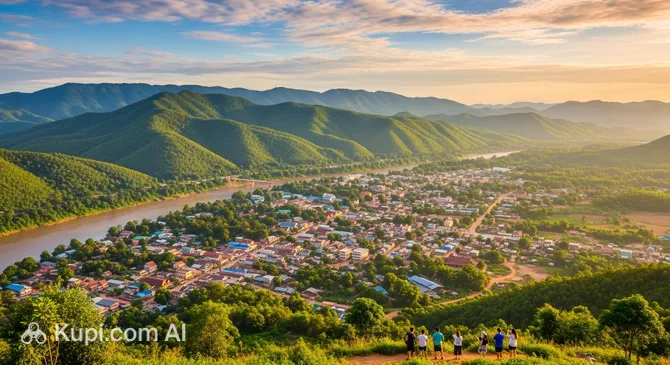
Hidden away in the northeastern mountains, Xam Nua (also known as Sam Neua) offers travelers a rare glimpse into a quiet, authentic side of Asia. As the capital of Houaphanh Province, this town is situated in a misty valley that gives it a distinctively cool and mysterious atmosphere compared to the tropical plains. It serves as a vital cultural and administrative hub for the region, home to a population of approximately 46,800 residents who maintain a traditional way of life.

Geographically, the city is surrounded by verdant peaks and limestone karsts, making the journey here a scenic adventure in itself. While it may feel remote, Xam Nua is an essential stop for those wishing to explore the northern reaches of Lao, People's Dem. Rep.. The climate here can be surprisingly brisk, especially in the mornings and evenings, adding to the charm of sipping hot local coffee while watching the fog lift over the river.

Xam Nua. Source: Kupi.Binoculars

The town is perhaps best known as the gateway to the famous Vieng Xai Caves, an extensive network of shelters that once housed thousands of people. Delving into the history of Xam Nua reveals its pivotal role in the country's past, which is commemorated by the striking Independence Monument located on a hill overlooking the city. In town, visitors can admire the Suan Keo Lak Meung (City Pillar Park), a fascinating site that blends modern concrete sculpture with traditional motifs.

Beyond its historical sites, Xam Nua is celebrated for its exquisite textiles. The local markets are filled with intricately woven fabrics featuring unique patterns specific to the local ethnic groups, making it a perfect place to find high-quality souvenirs. Whether you are passing through to visit the caves or staying to enjoy the peaceful mountain ambiance, Xam Nua promises a memorable and educational experience off the beaten path.

Weather Overview

The climate in this mountainous region differs significantly from the hotter lowlands of Laos, offering distinct seasonal variations that travelers should plan for. Generally, you can expect warm, humid summers with frequent rainfall and cool, dry winters that may require warm clothing, especially in the evenings.

During the cooler months from December to February, temperatures drop noticeably, with December seeing average lows around 9.7°C and daily averages near 14.3°C. This is the driest time of year, with minimal precipitation, making it excellent for outdoor exploration provided you pack layers. As the season shifts into spring, the weather warms up steadily, leading into the hottest period around June, where average temperatures hover around 24.5°C.

The wet season typically spans from May through September, characterized by high humidity and frequent showers; August alone can experience up to 28 wet days. For a more detailed breakdown of seasonal trends to help schedule your trip, you can check the weather in Xam Nua. By October and November, the rain subsides significantly, and the air becomes crisp again, marking a pleasant transition back to the cooler winter season.

Interesting Facts

Beyond the main attractions, Xam Nua holds many fascinating secrets that reveal its deep historical roots and cultural significance. While often viewed merely as a gateway to nearby caves, the city itself possesses a distinct character defined by ancient mysteries and enduring traditions.

  • The Name's Literal Meaning: The name "Xam Nua" translates to "Northern Swamp" (Sam meaning swamp and Neua meaning north). This moniker likely refers to the marshy conditions of the valley floor before it was developed into the administrative center it is today.

  • Prehistoric "Standing Stones": Just outside the city lies the enigmatic Hintang Archaeological Park, home to ancient vertical rock slabs known as menhirs. These standing stones date back more than 2,000 years—predating the famous Plain of Jars—and are believed to mark Bronze Age burial grounds, though their exact origin remains a mystery.

  • The Weaver's Capital: Xam Nua is widely considered the weaving capital of Laos. The local Tai Daeng and Tai Dam ethnic groups are renowned for creating some of the most intricate silk textiles in the world, often incorporating complex motifs of mythical creatures like the siho (half-lion, half-elephant) that are traditionally believed to offer spiritual protection.

  • A Monument to Resilience: The city's central roundabout features the Suan Keo Lak Meung (City Pillar), which is distinct from traditional Lao shrines. Its design includes a large, gem-like structure atop four pillars, symbolizing the region's reputation as an "indestructible jewel" of the north.

  • A City in the Clouds: Unlike the tropical heat found in most of the country, Xam Nua experiences a unique microclimate due to its location in a bowl-shaped mountain valley. In the winter months, the city is frequently shrouded in thick morning fog, and temperatures can drop surprisingly low, sometimes reaching single digits Celsius.

How to Get There

Reaching this remote provincial capital is an adventure that takes you through some of the most scenic landscapes in Southeast Asia. While the journey requires some planning due to the mountainous terrain, the destination is well worth the effort. For a comprehensive guide on all transport options, routes, and tips, you can read more about how to get to Xam Nua on our detailed page.

The city of Xam Nua does not have its own major commercial airport for standard flights, so travelers typically arrive via neighboring transport hubs. It is important to note that the distances listed below are straight-line measurements; actual travel distances by road are significantly longer due to the winding mountainous routes. One of the closest regional options within the country is Xieng Khouang Airport (IATA: XKH) in the city of Phonsavan, which is approximately 142 km away as the crow flies. The transfer from there is a scenic but lengthy drive. For international arrivals, many visitors choose Noi Bai International Airport (IATA: HAN) in Hanoi, Vietnam. Although it is located about 204 km away in a straight line, the overland journey involves a border crossing and is typically a long day's journey. Another significant hub for tourists is Luang Prabang International Airport (IATA: LPQ) in Luang Prabang, roughly 205 km away, which also requires navigating extensive mountain roads to reach Xam Nua.

For clarity, here is a summary of the main airports:

Airport Name City Passenger Traffic Km from City (Straight Line)
Noi Bai International Airport Hanoi High 203.6
Luang Prabang International Airport Luang Prabang Medium 205.3
Bai Thuong Airport Thanh Hoa Medium 159.1
Dien Bien Airport Dien Bien Phu Small 153.5
Xieng Khouang Airport Phonsavan Small 141.7

There are no railway stations in Xam Nua or the immediate vicinity, as the rugged mountainous region is not currently served by a train network. The most common way to arrive is by road, often via public buses or private minivans connecting from Phonsavan, Luang Prabang, or the Vietnamese border. Travelers should be prepared for winding roads and are advised to check local schedules, as transport frequency can vary depending on the season.

Main Attractions

While Xam Nua is often viewed as a quiet administrative center, it serves as the perfect base for exploring some of the most historically significant and culturally rich sites in northeastern Laos. The town itself is compact and walkable, offering a few distinct landmarks, while the surrounding area holds the region's crown jewels.

Undoubtedly the most famous attraction in the area is the Vieng Xai Caves. Located just a short scenic drive from the city, this extensive network of limestone caverns served as the "Hidden City" and headquarters for the Pathet Lao leadership during the Indochina War. Visitors can take an excellent audio-guided tour that leads through the former living quarters, hospitals, and military command centers built deep inside the mountains. It is a deeply moving experience that offers unique insight into how thousands of people lived underground for years to survive aerial bombardment.

Dominating the skyline of the city itself is the Independence Monument (Phathat Muang Xam). Perched atop a hill that was once the site of a French colonial fortress, this towering stupa-like structure commemorates the country's liberation. It is one of the best vantage points in Xam Nua, offering tourists a panoramic view of the valley and the town below. The climb up is well worth the effort, particularly in the late afternoon when the setting sun illuminates the surrounding green peaks.

For those interested in local culture and craftsmanship, the Xam Nua Market is an essential stop. The province is renowned throughout Laos for its exceptional textiles, particularly the intricate silk weaving of the Tai Daeng and Tai Dam ethnic groups. At the market, you can watch locals trading fresh produce and, more importantly, browse stalls filled with high-quality handwoven fabrics, scarves, and traditional sinhs (skirts). It is arguably the best place in the country to buy authentic textiles directly from the source.

Within the town center, Wat Phoxay Sanalam stands as the principal Buddhist temple and a center of spiritual life for the community. The temple houses a large and highly revered Buddha statue, and the grounds provide a peaceful atmosphere for reflection. While modest compared to the glittering temples of Luang Prabang, it possesses an authentic charm and offers visitors a chance to observe the daily religious practices of the local residents in a tranquil setting.

Local Cuisine

The culinary landscape of Xam Nua is a reflection of its mountainous geography and cool climate, offering hearty, unpretentious meals that rely heavily on fresh, locally sourced ingredients. Unlike the more tourist-oriented menus found in Vientiane or Luang Prabang, the food here is authentically traditional, with a focus on wild herbs, river fish, and preserved meats that provide sustenance during the chilly mornings and evenings.

One cannot visit this region without trying the local variety of Naem (fermented pork sausage). While found throughout Laos, the version made in Houaphanh Province is particularly renowned for its distinct flavor and texture. It is typically mixed with herbs and chilies, wrapped tightly in banana leaves to ferment, and can be eaten raw as a snack or cooked in various dishes. It pairs perfectly with Khao Niew (sticky rice), the staple of every meal, which is eaten by hand and used to scoop up spicy dips known as jeow.

Given the misty and often cold weather, warm soups are a beloved comfort food in the city. Khao Piak Sen, a chewy tapioca noodle soup, is the quintessential breakfast choice for locals. Served piping hot in a savory broth—usually chicken or pork—it is garnished with fresh coriander, lime, and a generous spoonful of chili paste. Another popular option is Khao Soi, though the Lao version differs from the famous curry-based Northern Thai dish; here, it is often a clear broth topped with a savory meat sauce made from minced pork and fermented soybeans.

When it comes to beverages, the local culture is spirited in more ways than one. Lao Lao, a potent rice whiskey, is a traditional drink often shared during social gatherings and festivals. It is distilled locally and is an integral part of hospitality in the highlands. For a non-alcoholic option, freshly brewed local coffee is excellent, often served strong and sweet with condensed milk to combat the morning chill. Of course, the national favorite, Beerlao, is widely available and enjoyed with ice.

The best place to experience the authentic food culture of Xam Nua is undoubtedly the morning market. Here, the scene is vibrant and communal, with vendors selling ready-to-eat treats wrapped in banana leaves, fresh honeycomb, and seasonal mountain vegetables. Dining in the city is mostly a casual affair; you will find small, family-run shophouses and riverside stalls rather than upscale restaurants. These spots offer a welcoming atmosphere where you can sit on small plastic stools and enjoy a simple, delicious meal alongside the locals.

Travel Tips

Visiting Xam Nua is a rewarding journey into the heart of authentic culture, but its remote location and unique climate require a slightly different approach than the typical tourist trail. These practical tips will help you navigate the mountainous capital of Houaphanh Province with ease and enjoy its misty charm to the fullest.

  1. Prepare for Cool Weather: Unlike the tropical heat found elsewhere in Lao, People's Dem. Rep., this region can get surprisingly cold, especially at night and during the winter months (November to February). Pack a warm fleece, long trousers, and a windbreaker; you will definitely need layers if you plan to ride a motorbike to the caves or explore early in the morning.

  2. Getting Around: The town center is compact and best explored on foot. For trips to the famous Vieng Xai Caves, you can hire a local tuk-tuk or rent a scooter from a guesthouse. Note that ride-hailing apps are not available here, and taxis are scarce, so it is wise to arrange your return transport in advance if you hire a driver for a day trip.

  3. Cash is King: While there are a few ATMs (mostly BCEL) in town, they can occasionally run out of money or suffer from connection issues. Always carry a sufficient supply of Lao Kip for daily expenses, as credit cards are virtually unheard of in local eateries, markets, and smaller guesthouses. US Dollars are sometimes accepted for larger payments, but small change is always given in Kip.

  4. Motion Sickness Prep: The road to Xam Nua is infamous for its hundreds of winding curves through the mountains. If you are arriving by bus or minivan from other provinces, bringing motion sickness medication is essential even if you don't usually get car sick. The journey is scenic but can be physically demanding.

  5. Communication Challenges: English is not widely spoken outside of hotel reception desks and the official cave tour center. It is highly recommended to download an offline translation app and offline maps before you arrive. Learning a few basic phrases like Sabai-dee (Hello) and Khop jai (Thank you) will go a long way with the friendly but shy locals.

  6. Safety in the Countryside: When exploring the nature around Xam Nua, never trek off marked trails without a qualified guide. Houaphanh was heavily impacted by past conflicts, and unexploded ordnance (UXO) remains a real danger in remote, uncleared areas. Stick to well-trodden paths to stay safe.

  7. Respect Local Etiquette: This is a conservative region with a strong sense of tradition. Dress modestly by covering your shoulders and knees when visiting temples or the historical caves. Always remove your shoes before entering a home or a temple, and avoid touching anyone on the head, as it is considered the most sacred part of the body.

  8. The Morning Broadcast: Don't be alarmed if you hear loud announcements echoing through the streets at 6:00 AM. The town still uses a public loudspeaker system to broadcast news and music to residents. If you are a light sleeper, packing a pair of earplugs might be a helpful life hack.

With these preparations in mind, you are ready to embrace the slow pace and rugged beauty of this northern outpost. Xam Nua offers a serene escape from the crowds, and a little planning ensures your adventure into the "Hidden City" region is as comfortable as it is memorable.

Entertainment & Nightlife

Entertainment in Xam Nua is a reflection of the town's laid-back, traditional character. Do not expect pulsating nightclubs, neon-lit strips, or international DJ sets here. Instead, the nightlife is authentically Lao, centered around socializing, sharing food, and enjoying the cool evening air. The atmosphere is incredibly friendly and casual, offering travelers a chance to bond with locals over a glass of beer rather than partying until dawn.

The primary hub of evening activity is the riverfront area along the Nam Sam River. As the sun sets and the mist begins to roll in, this part of town comes alive with small eateries and beer gardens. The vibe is relaxed, with plastic chairs set up on patios where groups of friends gather. The dress code is entirely casual; you will fit in perfectly in jeans and a sweater, which you will likely need as the temperatures drop significantly at night.

For a taste of the local scene, the Xam Nua Night Market is the place to be. Located near the river, it serves as the town's evening social center. While it is primarily a food market, it offers entertainment in the form of people-watching and culinary discovery. Here, you can sample grilled meats, spicy salads, and warm sticky rice while soaking in the bustling atmosphere. It is the perfect spot to start your evening before moving on to a sit-down venue.

If you are looking for music and drinks, the local definition of a "club" is almost exclusively a Karaoke (KTV) venue. Singing is a national pastime in Laos, and Xam Nua is no exception. You might hear music drifting from venues like the Dan Nao Restaurant, which is popular for its hearty evening meals and often hosts celebrations with plenty of toasts. Another spot to check out is the restaurant and bar area at the Keo Oudom Hotel, which occasionally attracts a mix of locals and visitors looking for a cold Beerlao in a comfortable setting.

Practical advice for a night out in Xam Nua differs from larger cities. The town shuts down early; most kitchens close by 9:00 PM, and the streets are quiet by 10:00 PM or 11:00 PM. Prices are very affordable, with a large beer costing just a dollar or two. Getting around at night is best done on foot if you are staying centrally, as tuk-tuks stop running early. The town is generally very safe, but street lighting can be dim or non-existent in side alleys, so carrying a flashlight or using your phone torch is recommended to avoid uneven pavement.

Regarding daytime entertainment, Xam Nua focuses more on culture and history than modern amusement. There are no movie theaters or theme parks. Instead, visitors spend their days exploring the Houaphanh Provincial Museum (if open, as hours can be irregular) or visiting the nearby Vieng Xai Caves, which function as an expansive open-air museum of revolutionary history. For a more leisurely afternoon, a walk up to the Independence Monument offers both a workout and the best panoramic views of the valley.

Parks & Museums

While Xam Nua is not defined by manicured botanical gardens or sprawling metropolitan art complexes, its charm lies in the raw beauty of its natural surroundings and the deep historical significance embedded in its institutions. The city serves as a living museum of the country's revolutionary past, set against a backdrop of dramatic limestone karsts and misty valleys that act as nature's own grand parkland.

Suan Keo Lak Meung (City Pillar Park) is the central green space and spiritual heart of the town. Located near the main roundabout, this park is anchored by the unique City Pillar shrine, which diverges from traditional Lao styles with its modern, gem-like design atop sturdy columns. It is a peaceful spot where locals come to relax and pay respects, offering tourists a chance to observe contemporary local culture amidst well-kept flower beds and paved walkways.

For a more immersive natural experience, the Nam Sam Riverfront provides a scenic corridor for walking and reflection. Although not a formal park, the banks of the river are the town's breathing space, particularly beautiful in the early morning when the signature mist clings to the water. It is an ideal setting for a quiet stroll to admire the surrounding green peaks that wall in the valley, creating a sense of isolation and tranquility that defines the region.

Just beyond the city limits lies the Nam Et-Phou Louey National Protected Area, which is often accessed via Xam Nua. This massive conservation area is one of the most important in the country, famous for its "Night Safari" boat tours. It offers nature enthusiasts a rare opportunity to spot diverse wildlife, including civets, otters, and potentially tigers, in their natural habitat, making it a world-class natural attraction within reach of the provincial capital.

In terms of cultural institutions, the Houaphanh Provincial Museum stands as the primary repository of local history within the city. The museum houses a modest but meaningful collection of artifacts ranging from ancient bronze drums and ceramics to weapons and tools used during the Indochina War. It also dedicates space to the region's ethnic diversity, showcasing the intricate traditional clothing and textiles of the Tai Daeng, Hmong, and Khmu people.

While technically a short drive away, the Vieng Xai Caves Information Centre is the most significant "museum" experience associated with Xam Nua. This facility serves as the starting point for tours of the "Hidden City," providing essential context through audio guides and displays before visitors enter the cave network. It effectively chronicles the daily life of the thousands who lived underground, offering a poignant look at resilience and history that is unmatched elsewhere in the country.

Dominating the town's skyline is the Independence Monument (Phathat Muang Xam). Perched on a strategic hill that once hosted a French colonial fort, this site is both a historical landmark and a scenic viewpoint. The structure itself is a towering stupa commemorating the country's liberation, and the grounds offer the best panoramic views of Xam Nua's valley, making it a favorite spot for photographers at sunset.

Another key architectural site is Wat Phoxay Sanalam, the city's most important Buddhist temple. It is a center of religious life and features a large Buddha statue that is highly revered by the community. The temple grounds are serene and welcoming, allowing visitors to appreciate the specific architectural style of northeastern Laos, which often features simpler, more robust lines compared to the ornate temples of Luang Prabang.

For a truly authentic experience, take a morning walk to the Hintang Archaeological Park (often called the Stonehenge of Laos), located roughly 35 km from the city. These ancient standing stones are mysterious menhirs arranged along mountain ridges, believed to be burial markers from over 2,000 years ago, offering a hauntingly beautiful glimpse into the region's prehistory that few tourists ever see.
Getting Around

As a relatively small and remote provincial capital, Xam Nua does not possess a complex public transport network found in larger metropolises. There are no subways, trams, or city bus lines operating within the town itself. The center is compact and easily navigable on foot, allowing visitors to reach most guesthouses, markets, and restaurants with a short walk. For many travelers, walking is the most pleasant and reliable way to explore the immediate surroundings of the town center.

The primary form of motorized public transport consists of tuk-tuks (motorized three-wheelers) and songthaews (converted pickup trucks with two rows of benches in the back). These vehicles function as both taxis and shared buses. You will typically find them waiting near the morning market, the main bus station, or parked along the riverfront. They do not follow fixed schedules or specific routes within the town; instead, they operate on an on-demand basis, taking passengers to specific destinations such as the Vieng Xai Caves or the bus terminal located a few kilometers outside the city center.

Regarding payment, cash is the only accepted method. There are no travel passes, electronic cards, or mobile payment apps available for local transport here. You must pay the driver directly in the local currency. Fares are generally quite low but are not fixed by a meter. A short trip within the town might cost a nominal amount, while hiring a driver for a round trip to nearby attractions will cost significantly more. It is standard practice to negotiate and agree on the price before you start your journey to avoid any misunderstandings upon arrival.

For tourists wishing to explore the region independently, renting a motorbike or scooter is a popular alternative. A few guesthouses and shops in the town center offer daily rentals. This gives you the freedom to visit the famous caves or the archaeological sites at your own pace. If you choose this option, ensure you check the condition of the bike, specifically the brakes and tires, as the roads in the province can be winding and steep. Bicycle rentals are less common but may be available at select accommodations.

Ride-hailing apps and standard metered taxi services are currently not available in Xam Nua. Transport availability decreases significantly after sunset, so if you plan to be out late or need a ride to the bus station for an early morning departure, it is highly advisable to arrange your transport in advance through your hotel or guesthouse. The local transport system is informal and relies heavily on face-to-face interaction, reflecting the relaxed and traditional pace of life in this mountainous region.

Accommodation

Accommodation in Xam Nua reflects the town's status as a remote provincial capital rather than a bustling tourist hub. Visitors should adjust their expectations accordingly; you will not find international luxury chains, high-end resorts, or boutique design hotels here. Instead, the city offers a selection of functional, unpretentious guesthouses and mid-range hotels that prioritize basic comfort and affordability. The hospitality is warm and genuine, often provided by local families running small establishments or older, government-style hotels that serve visiting officials and intrepid travelers alike.

The majority of lodging options are concentrated in the town center, particularly around the morning market and along the banks of the Nam Sam River. Staying in this area is highly recommended as it places you within easy walking distance of the main restaurants, ATMs, and transport stops. The riverside area is especially pleasant, offering a quieter atmosphere with scenic views of the mist-covered mountains in the morning, while still being just a few minutes' walk from the evening food stalls.

In terms of specific hotel types, the landscape is dominated by budget guesthouses and simple hotels. These typically offer clean rooms with private bathrooms, though amenities can vary. "VIP" rooms in larger hotels usually include air conditioning, a television, and a refrigerator, while standard rooms may only have a fan. Given the region's chilly climate, particularly from November to February, checking that your accommodation has a reliable hot water shower and thick blankets (or a heater) is often more important than air conditioning.

Booking Tips: While some of the larger hotels in Xam Nua have begun to appear on major online booking platforms, many smaller guesthouses still operate offline. It is quite common for travelers to simply arrive and look for a room, known as a "walk-in." However, if you are visiting during a local festival or want to secure one of the better rooms in town, it is advisable to try and book in advance or arrive early in the day.

Prices in Xam Nua are exceptionally wallet-friendly compared to Western standards or even major tourist cities in Southeast Asia. Most travelers will find themselves in the budget to lower mid-range price bracket. Payment is almost exclusively in cash (Lao Kip), so ensure you have withdrawn enough money before settling your bill, as card machines are rare. Whether you choose a riverside guesthouse or a central hotel, the experience is usually quiet and laid-back, offering a simple base for your adventures in Houaphanh Province.

Nearby Cities

For those looking to explore the surroundings, Xam Nua serves as an excellent base for day trips to several interesting nearby locations, as well as a starting point for further regional adventures:

City Population Distance (km)
Vientiane 948,487 308
Phonsavan 267,172 140
Savannakhet 124,000 432
Pakse 119,848 616
Sekong 100,000 629

While some of the major cities listed above require a longer journey due to the mountainous terrain, there are specific destinations nearby that are perfect for shorter visits or as the next stop on your itinerary:

Vieng Xai
Located just 30 kilometers east of Xam Nua, Vieng Xai is the most popular day trip from the provincial capital. This "Hidden City" is famous for its extensive network of caves that sheltered the Pathet Lao leadership and thousands of civilians during the Indochina War. Visitors can tour the caves, which were transformed into underground offices, hospitals, and living quarters, set against a backdrop of stunning limestone karst scenery and peaceful lakes.

Phonsavan
Although the straight-line distance is relatively short, the journey to Phonsavan involves a scenic drive through winding mountain roads, making it an ideal next destination rather than a quick day trip. As the capital of Xieng Khouang Province, it is the gateway to the mysterious Plain of Jars, a UNESCO World Heritage site scattered with thousands of ancient stone vessels. The city offers a stark contrast to Xam Nua with its rolling hills and different historical narrative.

These nearby destinations offer a glimpse into the diverse culture and landscapes of the region, ranging from revolutionary history hidden in caves to ancient archaeological mysteries on the open plains.

Shopping & Souvenirs

Shopping

Shopping in Xam Nua is an authentic and culturally immersive experience that differs greatly from the commercialized retail scenes of larger cities. You will not find high-end fashion boutiques or sprawling consumer complexes here. Instead, the city offers a unique opportunity to purchase goods directly from the artisans who make them. The region is famously known as the home of some of the finest textiles in Lao, People's Dem. Rep., making it a dream destination for travelers interested in traditional weaving and handicrafts.

The primary shopping activity is concentrated in the town center, particularly around the main market area and the streets leading to the bridge over the Nam Sam River. These thoroughfares are lined with small, family-owned shophouses that sell everything from daily necessities and hardware to beautiful local fabrics. Walking these streets allows visitors to browse in a relaxed atmosphere where the shopkeepers are friendly, though English is rarely spoken.

Travelers should be aware that there are no shopping malls in Xam Nua. The retail landscape is defined by traditional commerce rather than modern department stores. If you need specific electronics, branded cosmetics, or imported luxury goods, it is best to purchase them in Vientiane or Luang Prabang before arriving. The charm of shopping here lies in the absence of global chains, preserving a local economy that has remained largely unchanged for decades.

The beating heart of the local trade is the Xam Nua Market (often referred to as the Morning Market or Nathong Market). This bustling hub is the most interesting place to visit for shoppers. While a large section is dedicated to fresh produce and meats, there is a significant area where vendors display stacks of colorful fabrics. It is one of the few places in the country where you can buy high-quality textiles at wholesale prices, often directly from the weavers who travel from surrounding villages to sell their wares.

When it comes to souvenirs, textiles are the undisputed highlight. The Houaphanh province is renowned for its intricate silk and cotton weaving, particularly the designs created by the Tai Daeng and Tai Dam ethnic groups. Look for the traditional Lao skirt known as a sinh, or beautiful scarves featuring complex geometric patterns and motifs of mythological creatures. These items are not just souvenirs but pieces of cultural heritage. Additionally, woven bamboo baskets and silver jewelry are also popular and authentic keepsakes to bring home.

Store hours in Xam Nua reflect the town's early-rising culture. The markets are most active between 6:00 AM and 9:00 AM, though dry goods stalls may stay open until late afternoon. independent shops typically open around 8:00 AM and close by 6:00 PM or 7:00 PM. Payment is almost exclusively in cash (Lao Kip). Credit cards are generally not accepted in markets or small shops, so it is essential to carry sufficient local currency in small denominations for your purchases.

As a remote provincial town, Xam Nua does not offer a tax-free refund scheme for tourists. All prices quoted are final, although polite bargaining is acceptable and expected in the markets, especially when purchasing textiles or handicrafts. However, bargaining should always be done with a smile and a sense of fairness, keeping in mind the skill and time invested by the local artisans.

Reached the end of the page?

That means the route is fully explored