Support

Dien Bien Phu

About

Dien Bien Phu is a city of immense historical significance and natural beauty, located in the northwestern region of Vietnam. Nestled in the heart of the Muong Thanh Valley, it is the capital of Dien Bien Province and serves as a cultural and economic hub for the surrounding area. The city is surrounded by steep, forested mountains, creating a dramatic backdrop for the sprawling rice fields that cover the valley floor.

With a population of approximately 70,000 residents, the city offers a relatively quiet and authentic atmosphere compared to the country's bustling metropolises. The climate here is characterized by a tropical monsoon pattern, with a cool and dry season that makes exploring the outdoors particularly pleasant.

Dien Bien Phu. Source: Kupi.Binoculars

For many travelers, the main draw is the deep connection to the past. The history of Dien Bien Phu is pivotal, as it was the site of a major battle in the 20th century. Today, this heritage is preserved in various monuments and museums. Key attractions include the Dien Bien Phu Victory Museum, which houses artifacts and displays detailing the events of 1954, and A1 Hill, a significant historical site offering panoramic views of the city.

Beyond its historical landmarks, the city is a gateway to exploring the diverse cultures of local ethnic hill tribes. Visitors can enjoy the peaceful scenery of the Pa Khoang Lake or simply wander through the local markets to experience daily life in the highlands. Whether you are a history buff or a nature lover, Dien Bien Phu offers a compelling and memorable destination off the beaten path.

Weather Overview

The climate in this region is characterized by a tropical monsoon pattern, featuring distinct wet and dry seasons. Generally, visitors can expect warm summers with frequent rainfall and cooler, drier winters, making the timing of your visit an important factor in planning activities.

The warmest weather typically occurs from May through August, with May seeing average temperatures around 25.5°C and highs reaching up to 30.0°C. This period coincides with the rainy season; for example, August experiences precipitation on up to 30 days, requiring travelers to be prepared for wet conditions. Despite the rain, the warmth remains consistent, with average temperatures staying near 24°C to 25°C throughout the summer months.

Conversely, the winter months from November to February offer a respite from the heat and rain. January is usually the coldest month, with an average temperature of 16.1°C and lows dipping to 11.0°C. Rainfall is scarce during this time, with December and February seeing as few as 4 to 5 wet days. For a more comprehensive breakdown of conditions for your specific travel dates, you can consult the detailed guide to the weather in Dien Bien Phu.

Interesting Facts

Beyond the main attractions, Dien Bien Phu holds many fascinating secrets that reveal the depth of its heritage and unique geography. Here are some intriguing details that often go unnoticed by the casual observer.

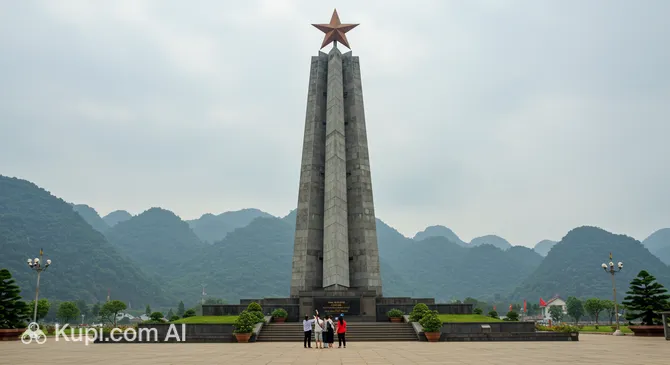
  • The Dien Bien Phu Victory Monument, standing proudly atop D1 Hill, is a marvel of artistic engineering. Weighing approximately 220 tons, it is recognized as one of the largest and heaviest bronze statues in Vietnam, cast specifically to honor the city's historic resilience.

  • The Muong Thanh Valley, where the city sits, is home to the largest rice field in the Northwest region. Local culture celebrates this agricultural abundance with the saying "First Thanh, second Lo, third Than, fourth Tac," ranking the Muong Thanh field as the most significant and fertile among the highland basins.

  • A visit to A1 Hill reveals a massive crater at the summit, distinct from the surrounding terrain. This depression was formed by a powerful explosive charge of nearly 1,000 kilograms detonated from a tunnel dug deep beneath the earth, leaving a permanent mark on the landscape.

  • The Muong Thanh Bridge is a rare surviving example of a Bailey bridge in the region. This pre-fabricated truss bridge was originally designed for rapid military deployment and has been preserved over the decades, serving now as a peaceful pedestrian crossing over the Nam Yum River.

Dien Bien Phu Victory Monument. Source: Kupi.Binoculars

How to Get There

Reaching the historic Muong Thanh Valley is an essential part of the adventure in the Northwest mountains. While the journey can be long due to the rugged terrain, the destination is well worth the effort. For a complete breakdown of routes, including bus schedules and driving tips, you can read more about how to get to Dien Bien Phu in our detailed guide.

The most convenient and time-saving option for travelers is to fly directly into Dien Bien Airport (DIN). This regional hub is located within Dien Bien Phu itself, just 2.9 km from the city center, making it exceptionally accessible. A taxi ride to downtown hotels typically takes less than 10 minutes. The airport handles approximately 210,000 passengers annually and underwent significant upgrades recently to accommodate larger aircraft, ensuring smoother connections from major cities like Hanoi and Ho Chi Minh City.

For those traveling through the broader Indochina region, Luang Prabang International Airport (LPQ) is another notable transport hub, though it requires crossing international borders. It is situated in Luang Prabang, Laos, about 190 km from Dien Bien Phu. While it serves a higher volume of tourists with around 1.2 million passengers annually, choosing this arrival point involves a subsequent overland journey of approximately 5 to 6 hours across the Tay Trang border gate, depending on road conditions and formalities.

For clarity, here is a summary of the main airports:

Airport Name City Passenger Traffic Km from City
Xishuangbanna Gasa Airport Jinghong High 242.7
Luang Prabang International Airport Luang Prabang Medium 189.9
Dien Bien Airport Dien Bien Phu Small 2.9
Xieng Khouang Airport Phonsavan Small 217.1
Luang Namtha Airport Luang Namtha Small 176.3

The city of Dien Bien Phu does not have a railway station, and the mountainous terrain of the Northwest prevents easy rail access. The closest railheads are hundreds of kilometers away in other provinces. Consequently, if you are not flying, the most common way to arrive is by road. High-quality sleeper buses depart regularly from Hanoi, taking about 10 to 12 hours to traverse the winding scenic roads to the city.

Main Attractions

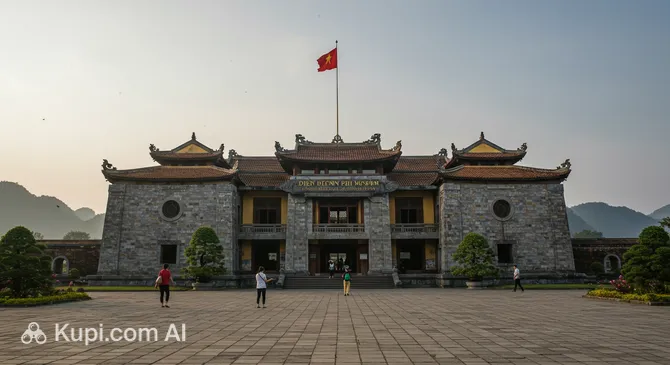
A visit to this historic city would be incomplete without exploring the Dien Bien Phu Victory Museum. This modern structure, designed to resemble the helmet of a soldier, stands as a repository of the region's turbulent past. Inside, visitors can examine hundreds of artifacts, maps, and photographs that vividly recount the strategic details of the famous 1954 campaign. The museum grounds also feature outdoor exhibits of heavy artillery and wreckage, providing a tangible connection to the events that shaped modern Vietnam.

Dien Bien Phu Victory Museum. Source: Kupi.Binoculars

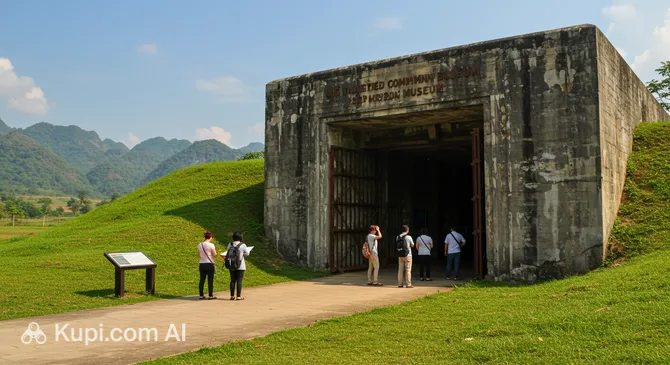
Another essential stop for history enthusiasts is the French Command Bunker (Dien Bien Phu). Once the headquarters of General de Castries, this fortification has been preserved in its original state, complete with its iron roof and defensive trenches. Walking through the bunker offers a unique atmosphere, allowing tourists to imagine the intensity of the final days of the battle from the perspective of the command center.

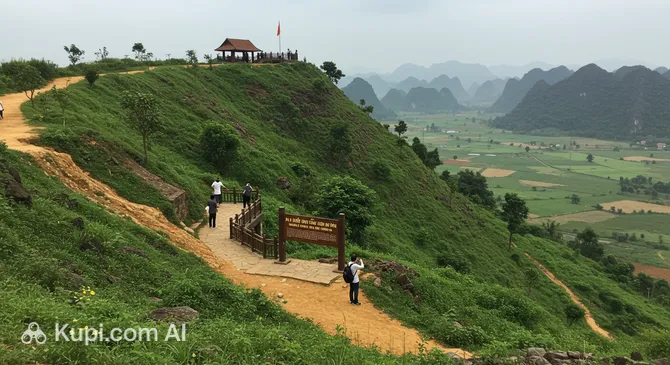
Dominating the landscape is A1 Hill, a site that offers a poignant and atmospheric experience for visitors. The climb to the summit rewards travelers with sweeping panoramic views over the city and the lush Muong Thanh Valley below. Wandering through the network of restored trenches and passing the silent tank skeleton evokes a deep sense of reflection, making it a powerful place to witness the sunset and contemplate the resilience of the human spirit.

A1 Hill. Source: Kupi.Binoculars

For a change of pace, the Muong Thanh Bridge offers a serene spot to appreciate the daily life of the locals. It serves as a charming focal point for photographers and travelers who wish to capture the peaceful flow of the Nam Yum River. A stroll across the bridge provides a gentle contrast to the city's monuments, allowing you to soak in the relaxed ambiance as residents go about their day against a backdrop of distant mountains.

Local Cuisine

The local cuisine of Dien Bien Phu is a captivating blend of traditional Vietnamese flavors and the distinct culinary heritage of the Northwest's ethnic minorities, particularly the Thai people. Food here is characterized by the use of fresh, wild ingredients and aromatic spices gathered from the surrounding forests, creating dishes that are bold, fragrant, and unforgettable.

One cannot visit this region without trying the famous Dien Bien sticky rice (Nep Nuong). Grown in the fertile Muong Thanh fields, this rice is renowned across the country for its large, shiny grains and sweet, fragrant taste. It is typically steamed in wooden baskets to maintain its soft texture and is often served with Pa Pinh Top, a signature grilled fish dish. To prepare Pa Pinh Top, fresh stream fish is marinated with distinctive local herbs, including ginger, garlic, and mac khen (a type of wild pepper), then folded in half and grilled over charcoal until the skin is golden and crisp.

Another delicacy that makes for a perfect souvenir or snack is Thit Trau Gac Bep, or dried buffalo meat. The meat is seasoned with chili, ginger, and wild pepper before being slowly smoked over a wood fire in the kitchens of local stilt houses. The result is a chewy, savory treat with a smoky aroma, usually enjoyed with a squeeze of lime and a spicy dipping sauce known as Cham Cheo. This legendary sauce, made from dried chili, garlic, salt, and wild herbs, is the soul of many meals in the Northwest.

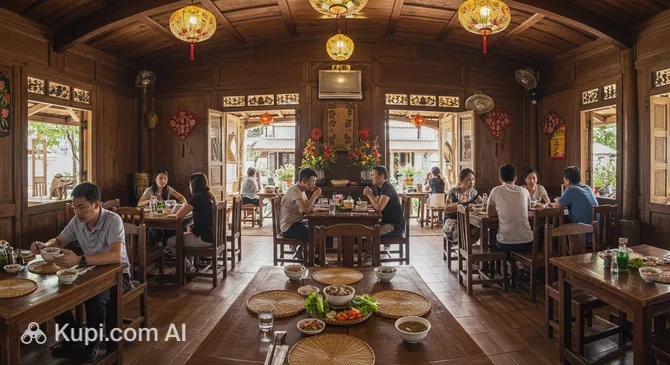
Dan Toc Quan Restaurant. Source: Kupi.Binoculars

To experience these authentic flavors in a traditional setting, travelers can visit the Dan Toc Quan Restaurant. This establishment is well-regarded for serving a wide array of ethnic specialties, allowing visitors to sample the true taste of the highlands in a welcoming atmosphere. Beyond specific restaurants, the local markets are vibrant hubs where you can find street food stalls selling grilled sweet potatoes, corn, and fresh seasonal fruits.

When it comes to drinks, the drinking culture is deeply communal. Ruou Can, a fermented rice wine drunk through long bamboo straws from a large ceramic jar, is a staple at festivals and gatherings. It represents hospitality and unity among the locals. For a non-alcoholic option, visitors can enjoy fresh sugarcane juice or herbal teas brewed from plants native to the mountain ranges, offering a refreshing way to cool down after a day of exploring.

Travel Tips

Visiting Dien Bien Phu offers a unique glimpse into Vietnam's history and highland culture, but its location in the mountainous Northwest requires a bit of specific preparation. To help you make the most of your journey to this legendary valley, here are some practical tips to ensure a smooth and comfortable experience.

  1. Clothing and Gear
    The weather can vary significantly depending on the season. If you are visiting in the summer (May to August), bring light, breathable clothing and a reliable raincoat or poncho, as sudden downpours are common. For winter trips (November to February), a warm jacket is essential because temperatures can drop quite low, especially in the evenings. Since exploring sites like A1 Hill involves walking on uneven terrain and climbing steps, comfortable walking shoes or sneakers are a must. When visiting war memorials or cemeteries, dress modestly out of respect.

  2. Transportation
    Dien Bien Phu is a relatively small city, and public transport options like buses are limited within the town itself. The most convenient way to get around is by taxi; reliable companies like Mai Linh operate here. For the more adventurous traveler, renting a motorbike is a popular option and offers the freedom to explore the surrounding villages and rice fields at your own pace. Xe om (motorbike taxis) are also widely available and affordable for short trips.

  3. Finances
    The official currency is the Vietnamese Dong (VND). While some larger hotels and restaurants in the city center may accept credit cards, cash is king in Dien Bien Phu, especially at local markets, street food stalls, and ticket counters for museums. ATMs are available in the downtown area, so it is wise to withdraw enough cash before heading out for the day. Tipping is not mandatory but is appreciated for good service.

  4. Health and Safety
    The city is generally very safe for tourists. Pharmacies are easy to find along the main streets if you need basic supplies. However, a crucial safety rule in this region is to stick to marked paths when hiking or exploring the outskirts. Due to the area's history, unexploded ordnance may still exist in deep forests or untouched terrain, so avoid trekking off-trail without a local guide. Also, bring mosquito repellent, particularly during the rainy season.

  5. Communication
    Vietnamese is the primary language, and English proficiency is not as widespread here as in major tourist hubs like Hanoi or Ho Chi Minh City. It is highly recommended to have a translation app (like Google Translate) installed on your phone. For mobile data, Viettel SIM cards typically offer the best coverage in these mountainous northern provinces. Wi-Fi is standard in most hotels and coffee shops.

  6. Local Etiquette
    The people of Dien Bien are known for their hospitality, often inviting guests to drink tea or rice wine. When entering a local home or a stilt house, always remove your shoes at the door. As the city is a site of great historical solemnity, maintain a respectful demeanor when visiting museums and monuments. Loud behavior or climbing on exhibits is considered disrespectful.

  7. What to Avoid
    Avoid wearing revealing clothing (shorts above the knee, tank tops) when visiting spiritual sites or the martyrs' cemeteries. Additionally, refrain from photographing local people, especially ethnic minority members in traditional dress, without asking for permission first; a smile and a gesture are usually enough to ask.

  8. Early Morning Market
    For a truly authentic experience, try to wake up early and visit the central market (Cho Muong Thanh) around 6:00 AM. This is when the market is most vibrant, filled with fresh produce from the mountains and locals in traditional attire trading goods. It is a perfect spot to observe daily life and try a local breakfast like Banh Cuon (steamed rice rolls).

By keeping these practicalities in mind, you will be well-equipped to navigate the city with ease and confidence. Enjoy the stunning landscapes, the rich history, and the warm welcome that awaits you in Dien Bien Phu!

Entertainment & Nightlife

Unlike the high-energy party scenes found in Vietnam's larger metropolises, the nightlife in Dien Bien Phu is subdued, authentic, and deeply rooted in local culture. The city tends to sleep early, with most businesses winding down around 10:00 PM. Instead of neon-lit nightclubs and loud discotheques, the evening entertainment here revolves around communal dining, cultural performances, and relaxed strolls under the starlight. The atmosphere is friendly and safe, offering a chance to connect with the rhythms of highland life.

For a lively local experience, travelers should head to Nguyen Chi Thanh Street, where the Muong Thanh Night Market often takes place. This area becomes a hub of activity in the evenings, where you can browse stalls selling brocade fabrics, handicrafts, and local snacks. It is an excellent place to mingle with residents, try street food like grilled corn or sweet potatoes, and soak in the bustling yet unpretentious vibe. The dress code everywhere is casual and modest, reflecting the conservative nature of the region.

A significant part of the "nightlife" here is centered around food and traditional hospitality. A visit to the Dan Toc Quan Restaurant is more than just a meal; it is a social event. In the evenings, this venue often hosts groups enjoying Ruou Can (fermented rice wine drunk from a communal jar with bamboo straws), which is a quintessential Northwest tradition. Sharing this wine is a gesture of friendship and celebration, often accompanied by animated conversation and toasts that can last well into the night.

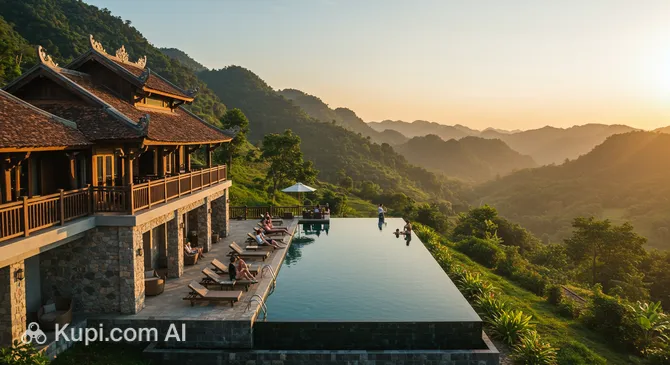
For those seeking a more structured evening of entertainment, the Him Lam Ecotourism Resort is a standout destination located just a few kilometers from the city center. This complex features the largest ironwood stilt house in Vietnam and regularly organizes cultural exchanges. Visitors can watch traditional Thai folk dances, listen to bamboo instrument performances, and participate in the rhythmic Xoe dance around a campfire. It offers a blend of relaxation and cultural immersion that perfectly suits the pace of the city.

Him Lam Ecotourism Resort. Source: Kupi.Binoculars

If you prefer a quiet evening walk, the area around the Muong Thanh Bridge is beautifully serene after dark. The bridge and the nearby riverbanks provide a peaceful setting to enjoy the cool mountain air. The city center, particularly around the Victory Monument, is also well-lit and safe for pedestrians. Seeing the monument illuminated against the night sky adds a solemn grandeur to the experience.

Muong Thanh Bridge. Source: Kupi.Binoculars

Practical Advice for the Evening:

  • Transport: Taxis are the safest and most convenient way to get around at night. Services like Mai Linh are reliable, but it is wise to have your hotel call one for you, as flagging them down on the street can be harder late at night. Xe om (motorbike taxis) are also available but agree on a price beforehand.
  • Safety: The city is very safe, but street lighting can be dim in peripheral areas. Stick to main roads like Vo Nguyen Giap and Nguyen Chi Thanh.
  • Timing: Plan to start your evening early. Dinner typically happens between 7:00 PM and 8:00 PM, and many venues will stop serving food by 9:30 PM.

While the nights are for relaxation, the days in Dien Bien Phu are filled with historical exploration. Visitors can spend their daylight hours touring the extensive trenches, the fascinating museums, and the former battlefields that define the city's legacy. This balance of educational daytime activities and peaceful, culturally rich evenings makes for a well-rounded and memorable travel experience.

Parks & Museums

While the city is globally renowned for its military history, Dien Bien Phu also offers serene green spaces and well-curated cultural institutions that provide a deeper understanding of the region. Visitors can alternate between exploring solemn historical galleries and relaxing in the lush natural environments that surround the Muong Thanh Valley.

For those seeking fresh air and scenic beauty, Pa Khoang Lake is the premier natural attraction in the area. Located about 20 kilometers from the city center, this vast reservoir sits at an altitude of nearly 900 meters, nestled between towering mountains. The lake is a haven for ecotourism, offering opportunities for boat rides to explore its many small islets. It is particularly famous for its cherry blossom gardens on "Flower Island," which transform the landscape into a vibrant wash of pink during the spring, attracting nature lovers and photographers alike.

Closer to the city center, the Him Lam Ecotourism Resort serves as a beautifully landscaped green lung for the area. Although it is a resort complex, its grounds function as a cultural park featuring traditional stilt houses surrounded by well-tended gardens and fish ponds. It is an excellent spot for a leisurely walk to admire the local flora and architecture in a peaceful setting, away from the noise of the main streets.

In terms of museums, the Dien Bien Phu Victory Museum remains the cultural heart of the city. While its exterior architecture is striking, the interior's highlight is the breathtaking Dien Bien Phu Campaign Panorama. This massive circular oil painting, one of the largest of its kind in the world, covers over 3,000 square meters and features thousands of figures. It vividly depicts the entire sequence of the 56-day battle with incredible artistic detail, offering an immersive visual storytelling experience that complements the physical artifacts displayed elsewhere in the museum.

Another significant site that functions as an open-air museum is the French Command Bunker (Dien Bien Phu). Unlike traditional galleries, this site preserves the raw reality of the past. Visitors can walk through the original trenches and see the reinforced shelter used by the French command. The preservation of the steel arches and sandbag fortifications allows tourists to physically step into history, providing a tangible sense of the conditions during the conflict.

French Command Bunker (Dien Bien Phu). Source: Kupi.Binoculars

For a lesser-known cultural experience, consider visiting the Muong Phang Command Center, located in a primeval forest about 30 kilometers from the city. This site served as the headquarters for the Vietnamese campaign and is hidden beneath a canopy of ancient trees. Walking the stone paths through the forest to see the humble bamboo huts and tunnels offers a unique blend of trekking and history, providing a quiet, contemplative atmosphere distinct from the city center.

Getting Around

Navigating Dien Bien Phu is a straightforward and relaxed experience, quite different from the chaotic traffic found in larger metropolises. As a relatively small city in a mountainous province, it does not possess a complex public transport network like a metro, tram, or extensive city bus system. Instead, the transportation landscape is dominated by private vehicles, taxis, and the flexibility of two-wheeled travel, allowing visitors to explore the historic sites and scenic valley at their own pace.

For most tourists, taxis are the most convenient and comfortable way to get around, especially when visiting attractions scattered across the city or heading to the airport. Reliable taxi companies operate within the city, and you can easily hail one on the street, find them waiting at major hotels and landmarks, or ask your receptionist to book one for you. Most taxis are equipped with meters, but it is always good practice to ensure the driver turns it on at the start of your journey. The fares are generally affordable, making this a stress-free option for families or small groups.

If you prefer a more local and adventurous mode of transport, motorbike taxis, locally known as xe om, are ubiquitous. You will often find drivers waiting at street corners, markets, or near bus stations. This is a quick and inexpensive way to travel short distances. However, unlike standard taxis, these do not have meters. It is essential to negotiate and agree on a fixed price with the driver before you hop on to avoid any misunderstandings later. A short trip within the city center typically costs a very modest amount.

For those who crave independence, renting a motorbike is highly recommended. This is a popular choice for travelers who want to venture beyond the city limits to places like Pa Khoang Lake or the remote historical bunkers. Rental shops are available in the city center, often near hotels or hostels. Prices are calculated per day, and you will need to leave a deposit or an ID card. Be sure to check the condition of the bike, including the brakes and lights, and always wear a helmet, as traffic laws are strictly enforced.

Regarding payment, the city operates almost entirely on a cash basis for transport. There are no travel cards, digital passes, or tap-to-pay systems for public transit here. You should carry a sufficient amount of local currency in smaller denominations to pay taxi drivers and motorbike riders, as they may not always have change for large bills. ride-hailing apps are not as prevalent or reliable here as they are in major hubs, so relying on traditional methods is your best bet.

Finally, the city center is quite compact, making walking a viable and pleasant alternative for visiting nearby landmarks. Many of the key historical sites, such as the Victory Museum and A1 Hill, are located relatively close to one another. Strolling between these attractions allows you to soak in the local atmosphere, observe daily life, and enjoy the cooler air of the early morning or late afternoon.

Accommodation

Accommodation in Dien Bien Phu is generally practical, affordable, and deeply integrated with the local environment. Unlike the major tourist hubs of Vietnam that boast high-rise luxury chains, this historical city primarily offers mid-range hotels, family-run guesthouses (known locally as Nha Nghi), and a few nature-oriented resorts. The focus here is on comfortable, authentic hospitality rather than opulence, providing a convenient base for exploring the surrounding battlefields and cultural sites.

The most convenient area for tourists to stay is the city center, particularly along the main arteries like Vo Nguyen Giap Street and near the banks of the Nam Yum River. Staying in this zone places you within walking distance of the central market and key historical landmarks. The area is lively during the day but quiets down at night, ensuring a restful sleep. For those seeking a more tranquil experience, there are options located slightly on the outskirts, nestled closer to the rice fields and hills.

One of the most notable places to stay is the Him Lam Ecotourism Resort. Situated a short distance from the downtown area, this property stands out for its traditional architecture, featuring stilt houses that reflect the style of the local ethnic minority groups. It combines accommodation with cultural experiences and green spaces, making it a popular choice for travelers who want to immerse themselves in the region's heritage while enjoying modern amenities.

Booking Tips and Prices:

Room rates in Dien Bien Phu are generally very reasonable, catering well to budget and mid-range travelers. Standard double rooms in the city center are often quite inexpensive compared to Hanoi or Ho Chi Minh City. While major hotels can be booked via international online platforms, many smaller guesthouses may require direct contact or booking upon arrival. A crucial tip for visitors is to plan ahead if traveling around May 7th, the anniversary of the Dien Bien Phu Victory. During this period, the city floods with veterans and domestic tourists, causing accommodation to sell out weeks or even months in advance.

Nearby Cities

For those looking to explore the surroundings, Dien Bien Phu serves as an excellent base for day trips to several interesting nearby locations:

City Population Distance (km)
Thai Nguyen 330,000 290
Viet Tri 277,539 241
Son Tay 230,577 258
Vinh Yen 152,801 268
Son La 150,000 92

Among the destinations listed, Son La stands out as the most accessible option for a short visit or an extended day trip. Located approximately 92 km away, the journey takes travelers through stunning mountain passes. Son La is best known for the Son La Prison and Museum, a historical site built during the French colonial period that offers deep insights into the revolutionary history of the region. Additionally, the city is famous for its natural hot springs, which provide a relaxing break after a day of travel, and its picturesque hills that turn white with plum blossoms in the spring.

Although significantly further away and better suited for a stopover on a longer journey back to Hanoi, Viet Tri is another notable regional hub. Known as the "City of Festivals," it is home to the sacred Hung Kings Temple Complex, a site of immense spiritual importance dedicated to the legendary founders of the nation. While the distance makes it impractical for a quick day trip from Dien Bien Phu, it remains a key cultural landmark in the wider northern region.

These nearby destinations offer a glimpse into the diverse culture and landscapes of the region.

Shopping & Souvenirs

General Overview

Shopping in Dien Bien Phu offers a distinct departure from the polished malls and high-end boutiques found in Vietnam's larger cities. Here, the experience is grounded in authenticity and local culture. Visitors will not find international luxury brands; instead, the city provides a wonderful opportunity to purchase handmade crafts, traditional clothing, and regional specialties directly from the people who make them. The shopping scene is intimate and friendly, centered around bustling markets and small family-run shops that reflect the simple, agricultural lifestyle of the Northwest highlands.

Main Shopping Areas/Streets

The commercial heart of the city runs along Vo Nguyen Giap Street (formerly Street 7/5). This main artery is lined with a variety of small convenience stores, pharmacies, and shops selling electronics, clothes, and household goods. A stroll down this road provides a glimpse into the local economy and is the best place to find essential travel supplies. Another key area is the vicinity of the Muong Thanh Bridge, where vendors often set up stalls selling fresh produce and snacks, creating a lively atmosphere throughout the day.

Shopping Malls

Travelers should be aware that Dien Bien Phu does not have large-scale modern shopping malls or department stores. The retail landscape is dominated by traditional trade. However, there are a few small supermarkets and trade centers, such as the local supermarket near the city center, where you can buy fixed-price groceries, beverages, and basic toiletries. For a more comprehensive shopping experience, the markets remain the primary destination.

Markets

The most important shopping hub in the city is the Muong Thanh Market (Cho Muong Thanh). Located centrally, this sprawling market is the lifeblood of the town. It is divided into sections selling everything from fresh vegetables, meat, and river fish to clothing and kitchenware. The market is particularly vibrant in the early morning when ethnic minority women from the surrounding villages come to trade. It is an excellent place to observe local life and practice your bargaining skills. In the evenings, the area often transforms into a night market, offering street food and souvenirs in a cooler, more relaxed setting.

Souvenirs

The best souvenirs from Dien Bien Phu are those that celebrate the region's cultural heritage. Thai ethnic brocade is a top choice; look for hand-woven scarves, bags, and skirts featuring intricate geometric patterns and bright colors. Food items also make excellent gifts. Dien Bien sticky rice (Nep Nuong) is famous nationwide for its flavor and texture. Another unique specialty is Thit Trau Gac Bep (dried buffalo meat), a savory, smoky snack seasoned with local spices. You can also find bottles of wild honey or the traditional Ruou Can (fermented rice wine) to take a taste of the highlands home with you.

Opening Hours and Payment

Most shops and market stalls open early, typically around 7:00 AM, and close between 8:00 PM and 9:00 PM. The central market is busiest in the morning but remains open throughout the day. Cash is the primary method of payment everywhere. While a few larger hotels or the main supermarket might accept credit cards, vendors at the market and small street shops deal exclusively in Vietnamese Dong (VND). It is advisable to carry small denominations for easier transactions.

Tax-Free

Tax-free shopping and VAT refunds are generally not available in Dien Bien Phu. The tax refund scheme for tourists in Vietnam is typically limited to major international airports and large authorized retailers in big cities like Hanoi or Ho Chi Minh City. Visitors should expect to pay the marked price, or the negotiated price in markets, inclusive of any local taxes.

Reached the end of the page?

That means the route is fully explored