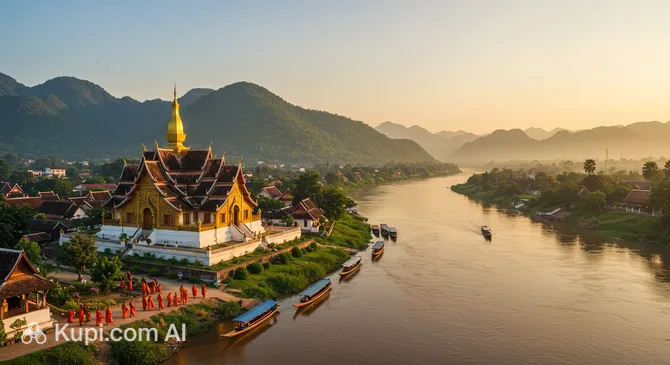
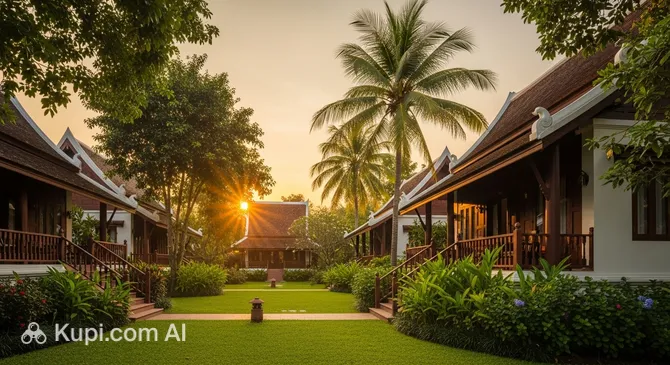
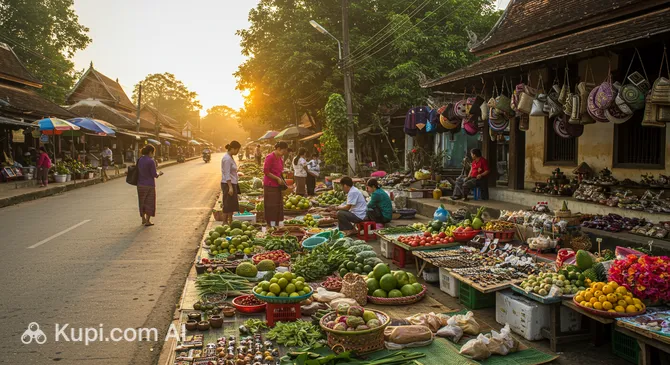
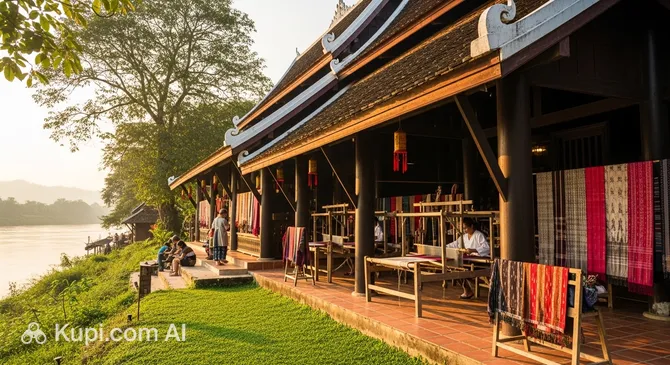
Nestled in the lush northern mountains of Lao, People's Dem. Rep., Luang Prabang is a destination that captivates travelers with its spiritual serenity and timeless charm. Situated at the sacred confluence of the Mekong and Nam Khan rivers, this UNESCO World Heritage city is renowned for its unique fusion of traditional urban structures and European colonial architecture. With a population of approximately 54,000, it retains a peaceful, small-town atmosphere that invites visitors to slow down and soak in the surroundings.
Luang Prabang. Illustration.
Source: Kupi.com AI
The city serves as the center of Buddhist culture in the region, and those interested in the history of Luang Prabang will find a rich tapestry of royal heritage and religious significance. The streets are lined with gleaming temple roofs, intricate wood carvings, and well-preserved French provincial houses, creating a living museum that reflects centuries of diverse influences. The morning mist often reveals saffron-robed monks walking in silence to collect alms, a deeply moving tradition known as Tak Bat that defines the city's spiritual rhythm.
Among the must-visit attractions is the magnificent Wat Xieng Thong, a temple famous for its sweeping low roofs and stunning "Tree of Life" mosaic. For a breathtaking perspective, a climb up Mount Phousi offers panoramic views of the city and the river valleys, especially enchanting at sunset. Whether you are exploring the vibrant Night Market or simply enjoying the tranquility of the riverbanks, Luang Prabang offers an unforgettable escape into a world of culture and natural beauty.
Weather Overview
Travelers planning a trip should be aware that the climate varies significantly throughout the year, offering different experiences depending on the season. For comprehensive forecasts and specific monthly details, you can consult the guide to the weather in Luang Prabang. The city generally enjoys a warm climate, though it has distinct dry and wet periods that influence the best times for outdoor activities.
The cool, dry season typically spans from November through February, making it a comfortable time to explore; during months like December and January, average temperatures hover around 19°C, with nights cooling down to approximately 14°C. As the year progresses into March and April, the heat intensifies, with maximum temperatures frequently climbing above 32°C. From May onwards, the region enters its wet season, which peaks around August when rain is recorded on nearly 28 days of the month. Overall, expect warm temperatures year-round, with frequent rainfall in the summer and drier, cooler conditions in the winter months.
Average monthly temperature
Average monthly precipitation
Interesting Facts
Beyond the main attractions, Luang Prabang holds many fascinating secrets that reveal the depth of its history and local culture.
The city is famous for its seasonal bamboo bridges that span the Nam Khan River. These intricate structures are built by hand every dry season to allow pedestrians to cross, but they are dismantled or washed away when the river levels rise during the monsoon rains, symbolizing a unique cycle of renewal.
One of the most distinctive landmarks is the "Watermelon Stupa" at Wat Visounarat. Built in the early 16th century, this stupa is technically named That Pathum, but locals affectionately call it That Makmo due to its rounded, hemispherical shape that resembles the fruit.
Luang Prabang is often referred to as a "sleeping town" due to a strictly enforced midnight curfew for businesses. This regulation helps maintain the peaceful atmosphere and ensures silence for the monks' alms-giving ceremony at dawn, although a local bowling alley just outside the town limits famously stays open late for those seeking entertainment.
The city derives its name from the Phra Bang, a sacred gold-alloy Buddha statue. This revered image, which is believed to possess the power to bring rain and protect the region, is enshrined within the complex of the Royal Palace Museum.
Wat Visounarat. Illustration.
Source: Kupi.com AI
Traveler photos:
How to Get There
Reaching this UNESCO World Heritage city is relatively straightforward, with air travel being the most convenient method for international and domestic visitors alike. For a complete overview of all transport options, including boats and buses, you can read more about how to get to Luang Prabang. The city is served by its own major hub, which handles the vast majority of tourist arrivals.
The primary gateway is Luang Prabang International Airport (IATA: LPQ), located just 3 km from the city center. This proximity makes transfers incredibly quick and easy; a taxi or tuk-tuk ride to the heart of the town typically takes only a few minutes. As a key entry point, it connects the city with major regional hubs like Bangkok, Hanoi, and Vientiane.
For travelers planning a wider itinerary across northern Laos, other regional airports exist, though they are situated at a significant distance from Luang Prabang. Xieng Khouang Airport (XKH) in Phonsavan and Luang Namtha Airport (LXG) serve their respective provinces. It is important to note that while these airports appear relatively close on a map, ground transfers to Luang Prabang involve navigating winding mountainous terrain, resulting in travel times that are much longer than the straight-line distances might suggest.
For clarity, here is a summary of the main airports in the vicinity:
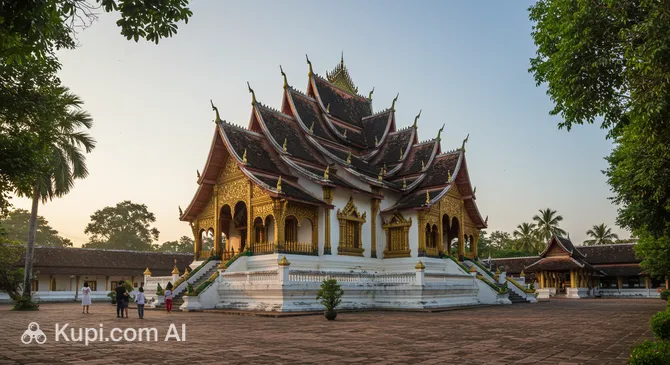
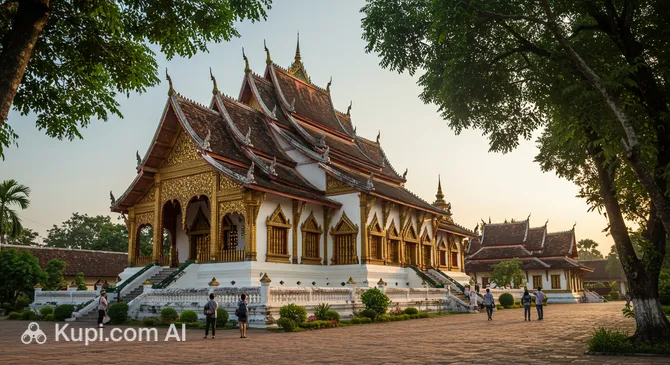
Luang Prabang is a treasure trove of cultural and historical landmarks, each offering a unique glimpse into the city's rich heritage. A great starting point for any visitor is the Royal Palace Museum (Haw Kham). Built in 1904 for King Sisavang Vong, this structure is a fascinating blend of traditional Lao motifs and French Beaux-Arts architecture. Inside, you can explore the preserved royal living quarters and view the revered Phra Bang Buddha image, the city's namesake and spiritual protector. It provides an essential context for understanding the local history before exploring the rest of the town.
Royal Palace Museum. Illustration.
Source: Kupi.com AI
Traveler photos:
No trip to the city is complete without visiting its most iconic temple, Wat Xieng Thong. Known as the "Temple of the Golden City," it stands as a masterpiece of traditional Lao architecture with its sweeping roofs that cascade low to the ground. Dating back to 1560, the temple complex features intricate gold stencil work on black lacquer and the famous "Tree of Life" glass mosaic on the rear wall of the main chapel. It is a peaceful place to observe monks going about their daily rituals and to admire the incredible craftsmanship of the Lan Xang kingdom.
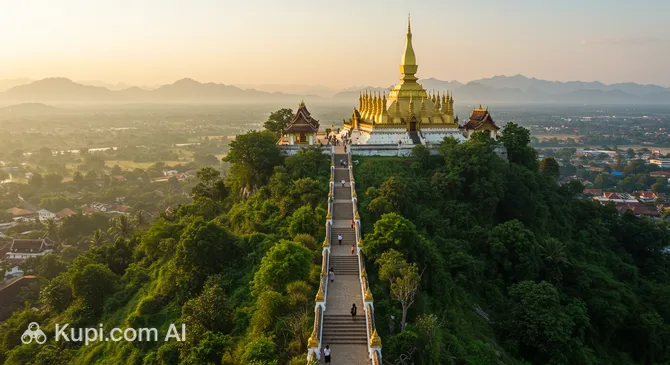
For those willing to exert a little energy for a spectacular reward, Mount Phousi rises 100 meters above the center of the old town. Accessible via a staircase of over 300 steps, the summit is crowned by the golden stupa of Wat Chom Si. It is arguably the most popular spot in the city for watching the sunset, offering a breathtaking 360-degree panoramic view of the Mekong and Nam Khan rivers, as well as the surrounding verdant mountains.
Mount Phousi. Illustration.
Source: Kupi.com AI
Traveler photos:
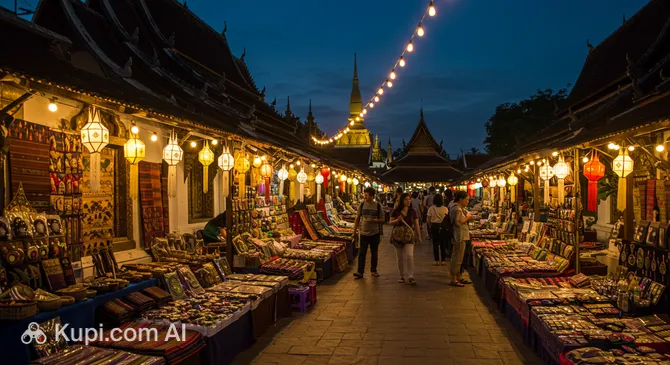
As evening falls, the main street transforms into the vibrant Luang Prabang Night Market. Stretching along Sisavangvong Road, this market is famous for its relaxed and quiet atmosphere compared to other Asian markets. Here, local artisans from surrounding hill tribes sell handmade textiles, indigo-dyed clothing, silver jewelry, and bamboo crafts. It is the perfect place to pick up authentic souvenirs and enjoy the cool evening air while browsing the colorful stalls.
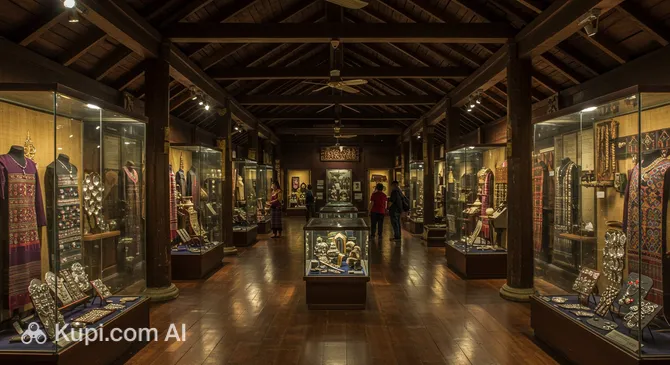
Another fascinating stop for culture enthusiasts is the Traditional Arts and Ethnology Centre. This museum is dedicated to the diverse ethnic groups of Laos, showcasing their traditional clothing, tools, and religious artifacts. It offers valuable insight into the cultural diversity of the region and provides detailed information about the customs and lifestyles of the Hmong, Khmu, and other ethnic communities that inhabit the hills around Luang Prabang.
Local Cuisine
The culinary landscape of Luang Prabang is a delightful journey for the senses, characterized by fresh herbs, spicy dips, and the ubiquitous sticky rice, known locally as Khao Niew. Unlike the cuisine of neighboring countries, local dishes here rely heavily on wild ingredients gathered from the surrounding jungles and rivers. A meal typically begins with a bamboo basket of sticky rice, which is eaten by hand and used to scoop up various savory accompaniments, creating a communal and tactile dining experience.
One cannot visit this city without trying its signature dish, Or Lam. This thick, slightly spicy stew is unique to Luang Prabang and is traditionally made with buffalo meat or skin, eggplant, wood ear mushrooms, and locally grown herbs, including the essential spicy pepper wood known as sakhan. Another local favorite is Kaipen, crispy sheets of river weed harvested from the Mekong, seasoned with sesame seeds and garlic, and flash-fried. It is perfectly paired with Jeow Bong, a sweet and spicy chili paste made with galangal and buffalo skin. For a hearty lunch, look for Khao Soi, a flat rice noodle soup topped with a rich bolognese-like sauce of minced pork and fermented soy beans, garnished with fresh watercress.
Luang Prabang Night Market. Illustration.
Source: Kupi.com AI
Traveler photos:
The dining culture in Luang Prabang ranges from vibrant street stalls to charming colonial-style eateries. For an authentic and affordable experience, the food alley at the Luang Prabang Night Market is a must-visit. Here, you can find rows of grilled fish, charcoal-roasted meats, and colorful vegetarian buffets. Early risers should explore the Luang Prabang Morning Market, where locals shop for fresh produce, exotic spices, and grilled snacks like Sai Oua (herbal sausage). For a deeper dive into local ingredients, the bustling Phosy Market offers a raw and unfiltered look at the region's food sources.
When it comes to beverages, Beerlao is the national drink and is widely regarded as one of the best beers in Asia, often served over ice to combat the heat. Coffee lovers will appreciate the strong, rich Lao coffee grown in the nearby Bolaven Plateau, usually served with sweetened condensed milk. For a relaxed atmosphere to enjoy a drink or a meal, travelers often head to Tangor Restaurant Bar & Lounge on the main street, known for its stylish decor and fusion menu. Alternatively, Utopia Bar & Restaurant offers a laid-back riverside setting perfect for unwinding with a fruit shake or cocktail while watching the river flow by.
Travel Tips
Visiting Luang Prabang is a serene experience, but a little preparation goes a long way in ensuring your journey through this UNESCO World Heritage town is as smooth as it is memorable. Here are some practical tips to help you navigate local customs, logistics, and daily life with ease.
Clothing and Gear: The climate is generally warm and humid, so pack lightweight, breathable fabrics like cotton or linen. However, if you are visiting between November and February, bring a light jacket or sweater, as mornings and evenings can be surprisingly cool. Crucially, modest dress is required for visiting temples: both men and women must cover their shoulders and knees. Slip-on shoes are highly recommended, as you will need to remove them frequently when entering temples and private homes.
Transportation: The historic center is compact and best explored on foot or by bicycle, which can be rented cheaply from many guesthouses. For longer distances, tuk-tuks (three-wheeled motorized taxis) are the primary mode of transport; always agree on the price before starting your journey. While ride-hailing apps like Loca are becoming available in Laos, they may have longer wait times here than in the capital, so flagging down a tuk-tuk is often faster.
Finances: The local currency is the Lao Kip (LAK). While US Dollars and Thai Baht are often accepted for larger purchases (hotels, tours), everyday transactions like street food and tuk-tuks require Kip. Cash is king here, so keep a sufficient supply. ATMs are available throughout the town but often have withdrawal limits and transaction fees. Tipping is not strictly mandatory but is greatly appreciated in restaurants and by guides.
Health and Safety: Luang Prabang is generally very safe, but it is wise to take standard precautions. Dengue fever is a risk in tropical Laos, so carrying and using a strong mosquito repellent is essential, especially at dawn and dusk. Pharmacies are available along the main streets for basic supplies, but serious medical issues may require evacuation to Vientiane or Thailand. Always drink bottled or filtered water, and avoid ice if you are unsure of its source.
Communication: The official language is Lao. In the town center, hotels, and restaurants, English is widely spoken and understood. However, learning a few local phrases goes a long way in building rapport; say "Sabaidee" for hello and "Khop Chai" for thank you. Wi-Fi is common in cafes and guesthouses, but for reliable connectivity, it is best to buy a local SIM card (Unitel or Lao Telecom) upon arrival at the airport or in town.
Local Etiquette: The traditional greeting is the Nop, performed by pressing your palms together in a prayer-like gesture and bowing slightly. The head is considered the most sacred part of the body, so never touch anyone on the head. Conversely, the feet are considered the lowest and dirtiest part; never point your feet at people or Buddha images, and avoid stepping over someone's legs.
What to Avoid: Do not treat the morning Alms Giving ceremony (Tak Bat) as a mere photo opportunity. Avoid using flash photography, standing in the way of the procession, or getting too close to the monks. It is a solemn religious ritual, and tourists should observe respectfully from a distance or participate only if they are properly informed and dressed.
Additional Tip: Life in Luang Prabang moves at a relaxed pace, and businesses often close earlier than in other Southeast Asian hubs. Most restaurants shut their kitchens by 10:00 PM, and the town has a strict curfew around midnight to maintain its tranquility. Plan your dinners accordingly, and embrace the slow, rhythmic lifestyle of the locals.
By keeping these practicalities in mind, you will be well-equipped to immerse yourself in the spiritual and cultural beauty of Luang Prabang. Respecting these local norms will not only make your trip easier but will also earn you the warm smiles for which the Lao people are famous.
Entertainment & Nightlife
Entertainment in Luang Prabang is defined by a relaxed, sophisticated atmosphere rather than a high-energy party scene. Known affectionately as a "sleeping town," the city operates on a rhythm that respects the early rising habits of the local monks. Consequently, a strict curfew is enforced, with most businesses, bars, and restaurants closing by 11:30 PM or midnight. This creates a unique nightlife culture where the focus is on sunset drinks, leisurely dinners, and quiet conversations along the riverbanks rather than all-night clubbing.
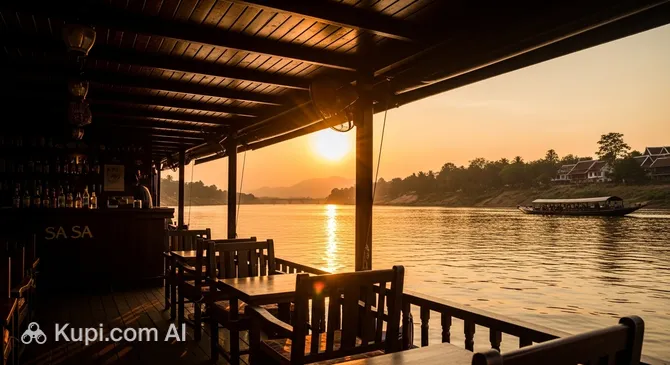
The evening typically begins on the banks of the Mekong or Nam Khan rivers, where travelers gather to watch the sun dip below the mountains. A popular way to experience this transition is aboard the Sa Sa Sunset Cruise. This floating venue offers a laid-back setting to enjoy refreshing cocktails and a barbecue while drifting along the water, providing a perfect vantage point for the city's golden hour. The main nightlife district is concentrated around Sisavangvong Road and its side streets, where you will find a blend of chic wine bars and open-air terraces catering to a diverse international crowd.
Sa Sa Sunset Cruise. Illustration.
Source: Kupi.com AI
Traveler photos:
For those looking to extend their evening a bit further or engage in a favorite local pastime, Fullmoon Karaoke offers a glimpse into the Lao style of entertainment. Karaoke is incredibly popular in the region, and visiting a local venue can be a fun, authentic experience away from the main tourist trail. While the city center quiets down before midnight, it is an open secret that a local bowling alley, located slightly out of town, often stays open later, serving as the unofficial after-party spot for those not ready to sleep.
Practicalities are important when enjoying a night out here. Dress codes are generally casual, but "smart casual" fits the vibe of the upscale colonial-style bars. Since the curfew is strictly observed, it is wise to start your evening early, around 6:00 PM or 7:00 PM. Transportation is safe and easy; tuk-tuks are readily available in the center, but if you plan to stay out until closing time, ensure you have a ride arranged or be prepared to pay a slightly higher fare for late-night service. The town is very safe for walking, but sticking to well-lit streets is always recommended.
During the daylight hours, entertainment shifts towards cultural immersion and creativity. Beyond the temples, visitors can engage with the local artisan community at the Ock Pop Tok Living Craft Centre. Set in a tropical garden by the Mekong, this center offers workshops in silk weaving and natural dyeing, allowing tourists to learn traditional skills directly from master weavers. It serves as an excellent educational counterpart to the city's museums, offering a hands-on way to appreciate the region's artistic heritage.
Parks & Museums
Luang Prabang is frequently celebrated as a "garden city," where the boundaries between the urban environment and the lush jungle blur. While you will not find typical city parks within the town center, the surrounding region offers spectacular natural retreats. The most renowned of these is the Kuang Si Waterfalls, located about 30 kilometers away. This multi-tiered cascade is famous for its striking turquoise pools suitable for swimming and is also home to a bear rescue center, providing a sanctuary for Asiatic black bears.
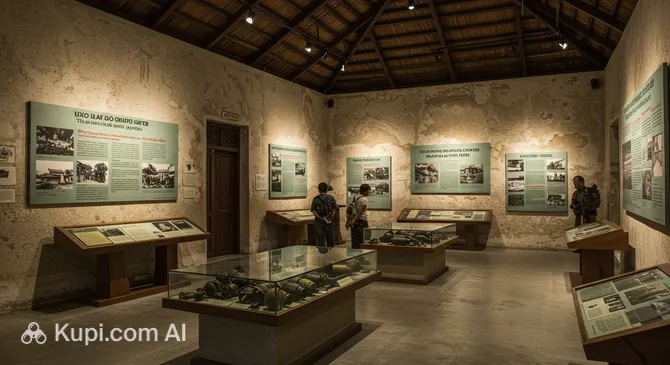
For those interested in recent history, the UXO Lao Visitor Center is an essential stop. This small but powerful museum documents the devastating impact of the "Secret War" and the ongoing challenges posed by unexploded ordnance in Laos. Through documentaries and exhibits, it offers a sobering context to the beautiful landscapes travelers admire, highlighting the resilience of the local people.
UXO Lao Visitor Center. Illustration.
Source: Kupi.com AI
Traveler photos:
To further explore the region's cultural depth, visit the Traditional Arts and Ethnology Centre (TAEC). Situated in a restored heritage building, this institution goes beyond a typical museum display by actively engaging with ethnic minority communities. It focuses on the preservation of traditional craftsmanship and knowledge, offering a curated experience that complements the broader cultural introduction found elsewhere in the city.
Traditional Arts and Ethnology Centre. Illustration.
Source: Kupi.com AI
Traveler photos:
The entire Old Town acts as a living museum, best appreciated by simply walking its streets. The Royal Palace Museum anchors the historical center, preserving the legacy of the Lao monarchy. For a quieter glimpse into the past, the Heuan Chan Heritage House offers a rare opportunity to see a well-preserved traditional wooden stilt house set within a tranquil garden, allowing visitors to imagine the daily life of a bygone era.
Getting Around
Navigating Luang Prabang is refreshingly simple compared to bustling metropolises. The city does not possess a complex public transport network like a metro, tram, or extensive municipal bus system. Instead, the UNESCO-protected historic center is compact and pedestrian-friendly, making walking the most delightful and efficient way to explore the temples, markets, and colonial streets. For distances that are too far to walk, the local transport system relies primarily on motorized three-wheelers, shared vehicles, and a growing number of modern ride-hailing options.
The most ubiquitous form of transport is the tuk-tuk, often referred to locally as a "jumbo" or "skylab" depending on its size and design. These three-wheeled vehicles function as taxis and can be found waiting at nearly every street corner, outside hotels, and near major attractions. They can be hired for a quick hop across town or chartered for a half-day trip to nearby waterfalls. There are no fixed routes or schedules for these vehicles within the city; they operate on an on-demand basis, offering flexibility for tourists who want to move at their own pace.
Regarding payment, cash is the absolute rule for street-hailed transport. There are no travel passes, magnetic cards, or tap-to-pay systems for tuk-tuks. You must pay in the local currency, and it is crucial to carry small bills, as drivers may not always have change for large denominations. The fare system is informal and based on negotiation. It is essential to agree on the price before you step into the vehicle to avoid misunderstandings at your destination. A short trip within the town center typically costs a modest amount, but prices increase for trips to the airport or outskirts.
For those who prefer a more transparent pricing structure, the Loca app has become an invaluable tool for travelers. Functioning similarly to major international ride-hailing platforms, Loca allows you to book private cars or tuk-tuks with a fixed price displayed upfront. This eliminates the need for bargaining and allows for payment via credit card through the app, which is a significant convenience. It is highly recommended to download and set up this app prior to your arrival or using the local Wi-Fi.
Renting a vehicle is another popular alternative for independent exploration. Bicycles are widely available for rent at very low daily rates and are perfect for the flat roads of the peninsula. Many guesthouses offer them to guests for free. For venturing further into the countryside, automatic scooters and motorbikes can be rented, though riders should be cautious of local traffic rules and ensure they have a valid international driving permit. Additionally, electric buggies are increasingly used for shuttle services in the heritage zone to reduce noise and pollution.
Given the city's location at the confluence of two rivers, water transport is also a key part of the local infrastructure. Long-tail boats act as ferries, shuttling locals and tourists across the Mekong River to the Chomphet district on the opposite bank. These boats depart from the riverfront stairs behind the Royal Palace museum. While not a "metro," the river acts as a natural highway, and hiring a boat for a sunset cruise or a trip to the Pak Ou Caves is a standard travel experience here.
Finally, travelers arriving or departing via the new Laos-China Railway should be aware of the specific shuttle services connecting the city center to the railway station, which is located about 12 kilometers away. Shared minivans and electric buses often run between the station and a designated drop-off point in the town center, with tickets usually purchasable at a kiosk upon arrival. This shuttle service is often the most economical way to bridge the distance between the modern train terminal and the historic heart of the city.
Accommodation
Luang Prabang offers a diverse array of accommodation options that blend seamlessly with its UNESCO World Heritage charm. Travelers can find everything from affordable, family-run guesthouses and backpacker hostels to exquisite boutique hotels and high-end luxury resorts. The architectural style of many properties reflects the city’s unique heritage, with stays often housed in restored French colonial villas or traditional wooden buildings set amidst lush tropical gardens.
When choosing a location, most visitors gravitate towards two main areas. The historic peninsula, often referred to as the Old Town, is the most convenient choice for those who wish to be within walking distance of the major temples, the Night Market, and the best cafes. Alternatively, the areas along the banks of the Nam Khan and Mekong rivers offer a more tranquil, resort-style experience. These riverside locations provide stunning views and a sense of seclusion while remaining just a short tuk-tuk ride or walk from the city center.
For a comfortable stay that captures the essence of the region, there are several well-regarded establishments to consider. MyBanLao Hotel is a popular choice, offering a relaxing environment with modern amenities that cater to travelers looking for convenience and style. Another excellent option for those seeking a scenic retreat is Le Bel Air Resort, which is known for its elegant design and beautiful riverside setting, providing a perfect escape after a day of sightseeing.
Le Bel Air Resort. Illustration.
Source: Kupi.com AI
Traveler photos:
A crucial tip for booking accommodation in Luang Prabang is to plan well in advance if you are visiting during the peak dry season, which runs from November to February. During these months, the best rooms fill up quickly, and prices can rise. In general, accommodation costs cater to all budgets: simple guesthouses can be found for under $20 USD per night, mid-range boutique hotels typically range from $50 to $100 USD, and luxury resorts can exceed $200 USD. Most properties are easily bookable via major online platforms, which is often the most convenient method for securing your stay.
Nearby Cities
For those looking to explore the surroundings, Luang Prabang serves as an excellent base for day trips to several interesting nearby locations:
Thanks to the inauguration of the Laos-China Railway, the capital city of Vientiane has become surprisingly accessible for a long day trip or a quick excursion. What used to be a grueling day-long drive is now a comfortable journey of approximately two hours by high-speed train. Visitors can hop on a morning train to explore the city's French colonial architecture, visit the golden Pha That Luang stupa, and enjoy the cosmopolitan riverside dining scene before returning in the evening.
Another compelling destination in the region is Phonsavan, the capital of Xieng Khouang Province. While it is geographically close, the mountainous terrain makes the journey an adventure in itself, often better suited for an overnight stay than a quick return trip. However, it remains a crucial stop for history buffs and archaeologists, as it serves as the gateway to the mysterious Plain of Jars, a UNESCO World Heritage site scattered with thousands of ancient stone jars.
These nearby destinations offer a glimpse into the diverse culture and landscapes of the region, ranging from bustling urban centers to historic highland plateaus.
Shopping & Souvenirs
Shopping in Luang Prabang is a delightful contrast to the high-paced commercialism found in many other Southeast Asian destinations. Instead of sprawling concrete complexes and neon-lit centers, the city offers a tranquil retail experience characterized by open-air markets, charming boutique stores, and a strong focus on locally produced handicrafts. Visitors will find that the shopping scene here is intimate and culturally rich, with a particular emphasis on hand-woven textiles, silver jewelry, and traditional art that supports the livelihoods of local ethnic communities.
The primary hub for retail therapy is Sisavangvong Road, the city's main street that runs through the heart of the historic peninsula. By day, this avenue is lined with independent boutiques, galleries, and cafes housed in restored French colonial shophouses. These stores offer high-quality silk fashion, home decor, and fine jewelry, often with a modern twist on traditional Lao designs. It is a pleasant area to stroll, allowing you to browse unique items in air-conditioned comfort before the street transforms in the evening.
Travelers should be aware that Luang Prabang does not possess large, western-style shopping malls. The retail landscape is dominated by small, family-run businesses and markets rather than international chains or department stores. While there are a few small supermarkets and commercial centers for basic necessities, the city preserves its heritage atmosphere by avoiding massive modern developments, making the shopping experience feel personal and authentic.
The markets are undoubtedly the highlight of the shopping experience here. The most famous is the Luang Prabang Night Market, which takes over the main street every evening. Underneath a canopy of red and blue tents, hundreds of vendors from surrounding hill tribes sell colorful embroidered bags, indigo-dyed clothing, bamboo lamps, and silver trinkets. It is renowned for being one of the quietest and most relaxed markets in Asia, where bargaining is done with a smile and a whisper rather than a shout.
For a completely different atmosphere, the Luang Prabang Morning Market offers a fascinating glimpse into local life. Located in the narrow alleys near the Royal Palace, this market is where residents shop for fresh ingredients. While primarily a food market, it is an excellent place to find local spices, Lao coffee beans, and unique snacks like river weed (Kaipen) to take home. For a more extensive selection of everyday goods and textiles used by locals, the Phosy Market on the outskirts of town is the largest in the city and offers authentic prices.
Luang Prabang Morning Market. Illustration.
Source: Kupi.com AI
Traveler photos:
When it comes to souvenirs, Lao textiles are the standout purchase. The intricate weaving techniques of the Tai Lue and Hmong people are world-class. For those seeking high-quality, ethically produced fabrics, the Ock Pop Tok Living Craft Centre is a premier destination. Here, you can buy exquisite silk scarves and wall hangings directly from the artisans, ensuring fair trade practices. Other recommended buys include hammered silver bowls, handmade mulberry paper (Saa paper) products, and wood carvings.
Ock Pop Tok Living Craft Centre. Illustration.
Source: Kupi.com AI
Traveler photos:
Most boutique shops along the main street are open from approximately 9:00 AM to 8:00 PM, while the Night Market operates from 5:00 PM until around 10:00 PM. Cash is king in Luang Prabang, especially at the markets where the Lao Kip is the preferred currency. While US Dollars and Thai Baht are often accepted for larger purchases, you will get a better rate using local currency. Credit cards are widely accepted in hotels and upscale boutiques, though a transaction fee of 3% is common. ATMs are available, but it is wise to carry sufficient cash when visiting smaller stalls.