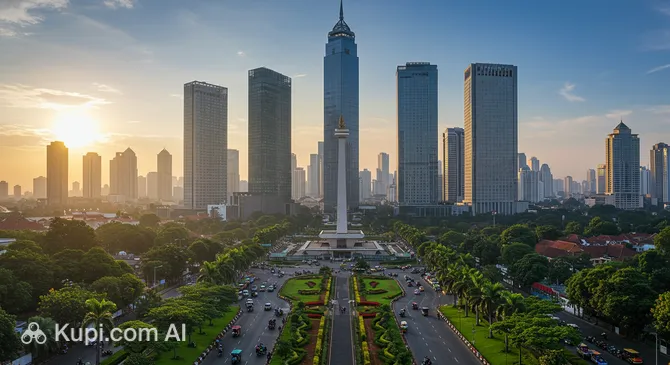
Jakarta is not just the capital of Indonesia, but a massive cultural melting pot where ultra-modern skyscrapers stand side-by-side with colonial buildings and bustling street markets. This metropolis, located on the northwest coast of Java, is home to over 33 million people. Despite its chaotic pace and status as one of the world's most populous cities, Jakarta holds an incredible allure for those willing to look beyond the facade of its noisy avenues.
Jakarta. Illustration.
Source: Kupi.com AI
The city carefully preserves its rich history, dating back to the days of the Dutch East Indies. In the historical district of Kota Tua, which was known as the "Queen of the East" in the 16th century, the atmosphere of an old outpost still lingers. Modern Jakarta, meanwhile, is the country's economic heart and a major ocean port, offering tourists an endless variety of experiences: from majestic museums to enormous entertainment centers.
Key landmarks include the monumental National Monument (Monas) and one of the region's largest mosques, Istiqlal. Jakarta may seem challenging at first due to its traffic and humid tropical climate, but its hospitality, gastronomic diversity, and cultural depth make visiting the capital an essential part of any journey through Indonesia.
Weather Overview
Jakarta enjoys an equatorial climate year-round, characterized by consistently high temperatures and significant humidity. The average daily maximum usually hovers around 29°C–32°C, while night-time temperatures rarely drop below 24°C. This temperature regime makes the city accessible for visiting at any time, although the alternation of dry and wet seasons should be considered.
The rainiest months occur from December to March, when tropical downpours can be short but extremely intense, sometimes leading to street flooding. Peak rainfall is often observed in January and February. The dry season arrives in August and September—this time is considered most favorable for long walks, although the weather in Jakarta during this period may be accompanied by increased urban smog.
Expect a humid and hot summer with frequent but brief rains that bring temporary relief from the heat. When planning your trip, try to schedule sightseeing for early morning to avoid the afternoon sun and high humidity, leaving the evening hours for relaxing in air-conditioned spaces.
Average monthly temperature
Average monthly precipitation
Interesting Facts
Jakarta is the official capital of Indonesia—the country with the largest Muslim population in the world.
The Istiqlal Mosque, located in the heart of the city, is recognized as the largest mosque in Southeast Asia and can accommodate up to 120,000 worshippers at once.
The city is famous for its extreme traffic jams, which are considered among the most significant in Asia; therefore, travel time should always be calculated with a generous margin.
At the Taman Mini Indonesia Indah ethnographic park, you can see the entire country in miniature: traditional houses from all Indonesian provinces are recreated across 150 hectares, including a lake with artificial islands in the shape of the archipelago.
The historic Kota Tua district still preserves traces of 17th-century Dutch rule, featuring authentic warehouses and administrative buildings of the Dutch East India Company.
How to Get There
Jakarta serves as the main gateway to Indonesia, connecting the archipelago with major world capitals and neighboring islands. Travelers have various route options, but air travel remains the primary method of arrival given the city's island location on Java.
The main air hub is Soekarno-Hatta International Airport (CGK). It is located about 20 km northwest of the center. This modern complex is connected to the city via the Railink express train, Damri buses, or official taxis. For domestic flights and business aviation, Halim Perdanakusuma Airport (HLP) is often used, as it is much closer to the business districts (just 11 km away), making it convenient for short trips.
Rail services connect Jakarta with other important cities on the island of Java, such as Bandung, Yogyakarta, and Surabaya. The main stations (Gambir and Kota) are located in the central and northern parts of the city, providing comfortable access to historical and business districts. Trains are an excellent way to see Indonesia's picturesque landscapes while avoiding the famous traffic congestion.
Main Attractions
The symbol of Jakarta and the entire country is the majestic National Monument (Monas), rising high above Independence Square. At the top of this 132-meter obelisk is an observation deck offering breathtaking panoramic views of the metropolis's endless neighborhoods. At the base of the monument lies a museum detailing the Indonesian people's struggle for freedom.
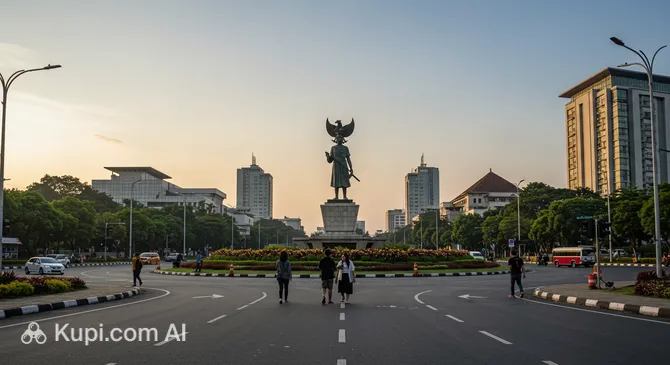
In the city center, you'll find the Hotel Indonesia Rotunda—a famous traffic circle with fountains and the "Welcome" monument, which has become a major landmark and meeting point. Nearby is a striking architectural contrast: the Neo-Gothic Cathedral of the Assumption of the Blessed Virgin Mary, whose elegant facade recalls the colonial past, and the grand Istiqlal Mosque, capable of holding tens of thousands of worshippers.
Hotel Indonesia Roundabout. Illustration.
Source: Kupi.com AI
Traveler photos:
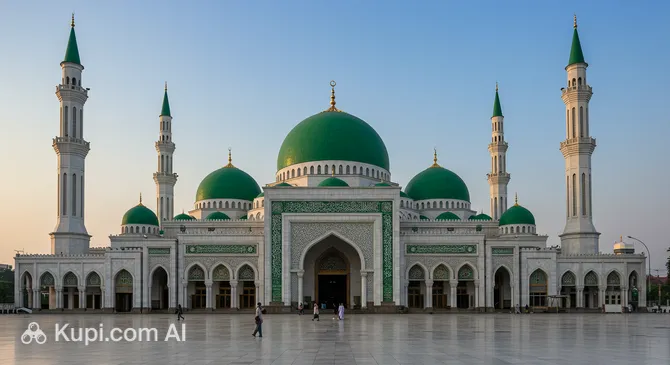
For those interested in religious architecture in the surrounding areas, the Great Al-Azhom Mosque in Tangerang is worth visiting, known for its massive domes and modern design. Don't forget to stop by the historic port of Sunda Kelapa, where traditional wooden "pinisi" ships are docked, still used today for transporting goods between the islands of the archipelago.
Al-A'zhom Grand Mosque Tangerang. Illustration.
Source: Kupi.com AI
Traveler photos:
Local Cuisine
Jakarta's culinary scene is an endless journey through the flavors of the Indonesian archipelago. One of the unique local features is the Betawi culture. Be sure to try Bir Pletok—a traditional drink that, despite its name, contains no alcohol. It is made from ginger, cinnamon, and lemongrass, creating a warming vitamin cocktail that is very refreshing in the tropical heat.
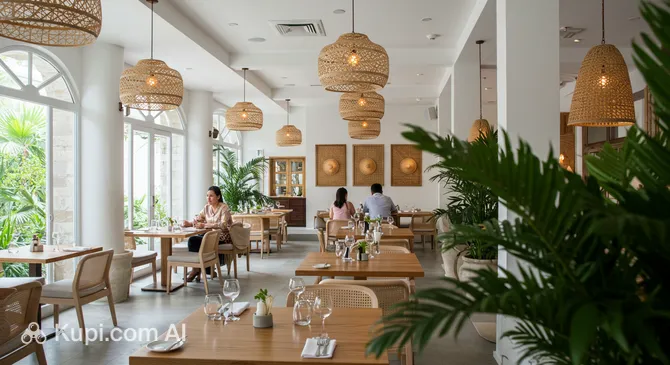
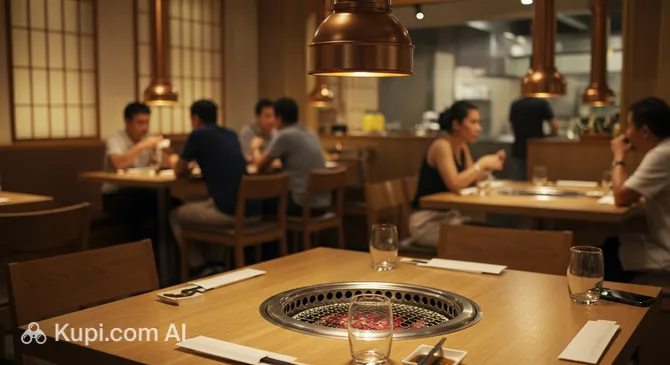
For those who want to experience a modern take on Indonesian and Asian cuisine in an exquisite setting, SEMAJA Menteng is a must-visit. This place is known for its attention to detail and authentic ingredients. Fans of grills and Asian BBQ will enjoy Hachi Grill Kebon Sirih, where you can savor high-quality meat and seafood in the very center of the city.
SEMAJA Menteng. Illustration.
Source: Kupi.com AI
Traveler photos:
Don't forget to stop by the historic Cafe Batavia in the old town to try a piece of Dutch heritage—Bitterballen (meat croquettes) served with mustard. Street food in Jakarta also deserves attention: nasi goreng (fried rice), satay skewers, and traditional soups are sold on literally every corner. Keep in mind that locals often prefer dining either in modern shopping mall food courts or in small, authentic warungs.
Hachi Grill Kebon Sirih. Illustration.
Source: Kupi.com AI
Traveler photos:
Travel Tips
Visiting Jakarta is an exciting adventure that requires some preparation for maximum comfort. Here are some proven tips to help you navigate this Indonesian metropolis with confidence.
Clothing and Essentials: Choose light clothing made from natural fabrics, as the city is very humid and hot. However, don't forget a light sweater for shopping malls and public transport where air conditioning works at full blast. When visiting mosques (like Istiqlal), shoulders and knees must be covered.
Transport: To avoid wasting time in traffic jams, use the metro (MRT) or TransJakarta rapid buses. For calling a taxi, install the Grab or Gojek apps—they are reliable and allow you to see the trip cost in advance.
Finances: The local currency is the Indonesian Rupiah (IDR). Cards are accepted in hotels and major malls, but always carry cash for markets and street food. It's better to exchange large bills at official exchange offices with a good reputation.
Health and Safety: Drink only bottled water and avoid ice in street drinks. Due to smog on particularly hot days, it's worth checking air quality via apps and using a protective mask if necessary.
Communication: The official language is Indonesian, but many people speak English in tourist spots and offices. Buy a local SIM card (e.g., Telkomsel) at the airport for access to maps and translators.
Local Etiquette: Indonesians are very friendly. When greeting or passing something, use only your right hand, as the left is considered "unclean." A polite smile will help solve almost any issue.
What to Avoid: Do not plan long walks in the middle of the day under the direct sun. Also, try not to show strong emotions or anger in public—this is considered a sign of losing face and is highly disapproved of.
Secret Tip: If the city bustle becomes too overwhelming, head to the Marina Ancol pier and take a boat to one of the Pulau Seribu (Thousand Islands) archipelago islands—pristine beaches and silence await you there.
Jakarta will reward the patient traveler with its incredible contrasts and the genuine smiles of its residents. Enjoy your trip!
Entertainment & Nightlife
Jakarta rightfully prides itself on its energetic nightlife, often called the most vibrant in Southeast Asia. As dusk falls, the lights of stylish bars and clubs flicker on, concentrated in the districts of Senopati, Kemang, and around Medan Merdeka square. For instance, Fine Jakarta attracts crowds with its sophisticated atmosphere and modern beats, while Stalk Jakarta offers a unique experience for those seeking high-energy night vibes.
Fyne Jakarta. Illustration.
Source: Kupi.com AI
Traveler photos:
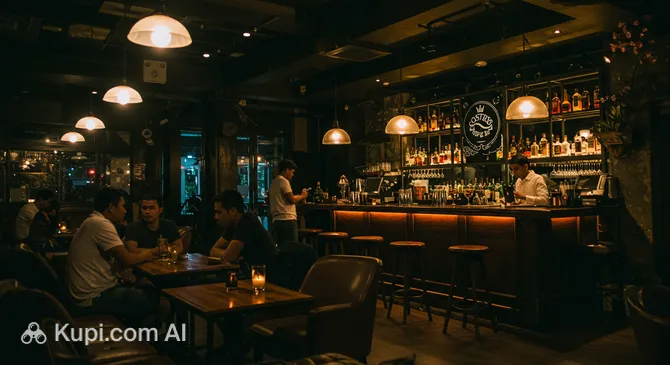
For those who prefer a cozy evening overlooking the city lights, COSTESS Cafe & Bar is an excellent choice, where you can enjoy cocktails on an open-air terrace. The crowd in Jakarta's venues is international, and the dress code at top spots usually requires a smart casual style. For nighttime travel, it is recommended to use reliable ride-hailing apps, as public transport is virtually non-existent at this time.
COSTESS Cafe & Bar. Illustration.
Source: Kupi.com AI
Traveler photos:
Daytime entertainment is just as diverse. Families with children can spend an entire day at Ancol Dreamland park with its rides, water park, and massive aquarium. In the southern part of the city, the Kidzania center located in the Pacific Place mall is popular. On weekends, locals often head to the coast to escape the city bustle and smog in green zones by the sea.
Parks & Museums
The main cultural and natural attraction in Jakarta is the massive Taman Mini Indonesia Indah ethnographic park. Across its 150 hectares, you will find not only traditional dwellings from all the country's provinces but also a magnificent orchid garden, a bird park, and even a cinema shaped like a giant golden snail. This place is perfect for getting to know the incredible diversity of all Indonesia in a single day.
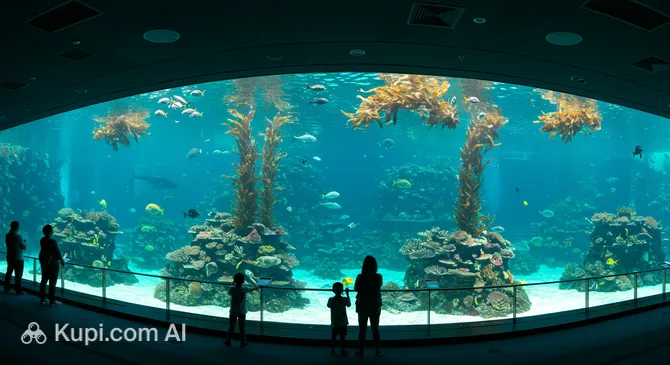
For history buffs, the National Museum on Medan Merdeka square is a must-visit. Its treasury holds unique royal jewels and ethnographic artifacts. Also of historical interest is St. Paul's Protestant Church, one of the city's oldest Christian churches. And those looking for modern indoor entertainment should visit the BXSea Aquarium, where you can observe marine life in giant tanks.
BXSea Aquarium. Illustration.
Source: Kupi.com AI
Traveler photos:
If you are traveling with pets or just love animals, an unusual spot is the Dog Cafe & Park, which provides all the amenities for relaxing and socialising with four-legged friends. For those seeking solitude by the water, the Setu Babakan lake area is ideal—it houses a Betawi cultural village surrounded by lush greenery and water, creating a rare sense of tranquility for a megacity.
Dog Cafe and Park. Illustration.
Source: Kupi.com AI
Traveler photos:
Getting Around
Jakarta's public transport system is actively developing as it tries to cope with legendary traffic jams. The city's main pride is the TransJakarta bus rapid transit network, which runs in dedicated lanes. It is one of the fastest and cheapest ways to get around. To pay for trips, you must purchase an electronic card (such as JakLingko or cards from major banks), which can be topped up at ticket offices or ATMs.
The capital recently opened a modern Metro (MRT) and Light Rail Transit (LRT), connecting residential areas in the south with the business center. Trains run strictly on schedule and are equipped with powerful air conditioning. For short trips around historical areas like Kota Tua, tourists often rent colorful bicycles, and in parks like Taman Mini, you can ride a cable car or monorail.
Alternatives to public transport include taxi and motorcycle taxi apps (Gojek or Grab), which are very popular due to their affordability and maneuverability in traffic. If you plan to use a regular taxi, choose the trusted Blue Bird company. Remember that due to heavy traffic, a journey that looks short on the map can take over an hour, so always allow extra time for travel.
Accommodation
Jakarta offers a colossal selection of accommodation: from ultra-luxurious skyscraper hotels to cozy budget guesthouses. Most tourists prefer staying in central areas like Menteng or around the Hotel Indonesia Circle to be within walking distance of major shopping malls and top attractions.
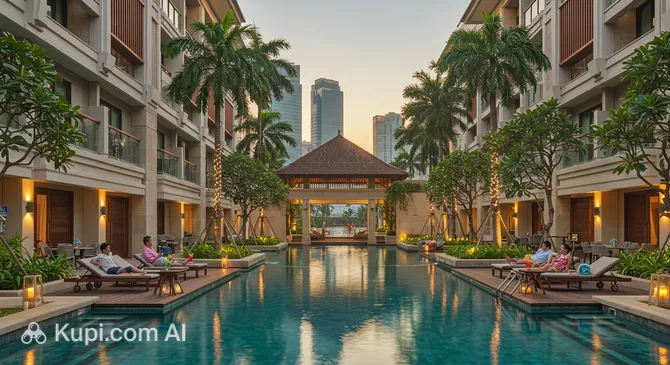
For those who value impeccable service and exclusivity, the Four Seasons Jakarta opens its doors, offering luxurious suites and magnificent panoramic views. Another benchmark of hospitality is the Grand Hyatt Jakarta, located in the very heart of the business and shopping district, making it an ideal choice for both business travelers and shopping enthusiasts.
Four Seasons Jakarta. Illustration.
Source: Kupi.com AI
Traveler photos:
If you are looking for tranquility and want to escape the city noise, consider the elite resorts on the nearby islands in Jakarta Bay. There, you can find excellent service and beach relaxation just a few dozen kilometers from the metropolis. During peak seasons and major holidays, it is recommended to book accommodation in advance through popular international platforms.
Nearby Cities
Jakarta serves as an ideal starting point for exploring the western part of Java. The capital's surroundings offer both historical landmarks and natural wonders reachable within a day trip.
Just a few kilometers from the center are towns like Rawasari and Astagatra, which have effectively merged with the capital but retained their own character. Slightly further out is Pondok Aren, which attracts tourists with its green spaces and a calmer pace of life compared to Jakarta's central blocks. For adventure seekers, excursions are organized to the famous Krakatoa volcano or the "Thousand Islands" in Jakarta Bay, where you can enjoy diving and luxury beach relaxation.
Exploring nearby settlements like Kampung Tengah or Cakung provides a better understanding of the daily lives of Indonesians and reveals the contrasts between the modern metropolis and traditional villages. We highly recommend setting aside time for trips outside central Jakarta to discover the region's true diversity.
Shopping & Souvenirs
Shopping in Jakarta is a national sport. The city is dotted with colossal shopping malls that serve not just as stores but as full-fledged leisure centers for locals, complete with air conditioning, cinemas, and restaurants. One of the most popular and modern is Central Park Mall, where hundreds of international and local brands are gathered under one roof.
Central Park Mall. Illustration.
Source: Kupi.com AI
Traveler photos:
Another key spot on the shopping map is Summarecon Mall Bekasi, offering a wide range of goods for every taste. If you are looking for luxury brands and exclusive boutiques, head to the Hotel Indonesia Circle area, home to the famous Grand Indonesia Mall. Shopping here is particularly comfortable during the day when the malls become a true refuge from the tropical heat and street noise.
Summarecon Mall Bekasi. Illustration.
Source: Kupi.com AI
Traveler photos:
For authentic souvenirs and local flavor, head to the markets in the historic Kota Tua district or the flea market on Jalan Surabaya. There you can find antiques, traditional handmade batik, and woodwork. Most large stores accept international bank cards, and a Tax Free refund system is available for tourists, with information found at registration desks in major malls.