Support

Ngurah Rai International Airport

About the Airport

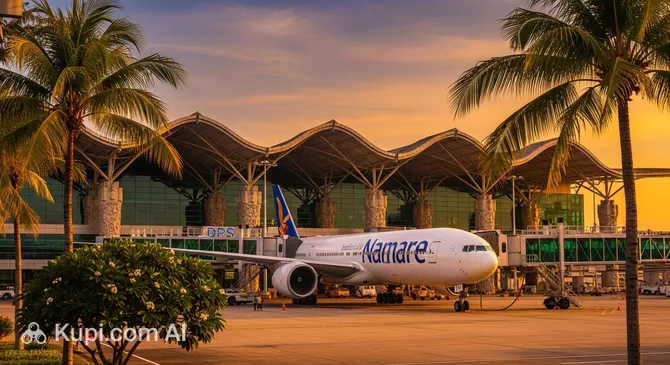
Ngurah Rai International Airport. Source: Kupi.com Binoculars
Ngurah Rai International Airport is not merely a transit point, but a true "gateway to paradise," where the atmosphere of a long-awaited holiday embraces you from the very first moments. The unique architecture of the terminals, designed in the style of traditional Balinese temples with split "Candi Bentar" gates, immediately immerses you in the island's culture. Landing here is an art form in itself: the runway is built on a causeway extending directly into the ocean, creating the illusion that the plane is landing on water.
IATA Code DPS
ICAO Code WADD
City Denpasar (Bali)
Distance to Centre 13 km
Status International
Annual Passengers ~23.9 million (2024)
Features and Advantages of the Airport: * Unique Design: The airport harmoniously combines modern technology with national character. The interiors are adorned with elements of Balinese decor, statues, and live plants, creating a cosy feeling rarely found in standard "glass" terminals. * Convenient Location: Ngurah Rai is strategically located close to the most popular resort areas. It is just 2–3 km to the lively Kuta and about 10–15 km to the luxury hotels of Nusa Dua, allowing you to reach your holiday destination very quickly. * Service and Comfort: Passengers have access to a wide selection of business lounges, spa centres, and shower rooms where one can freshen up after a long flight. The Duty Free area offers not only global brands but also high-quality local souvenirs, from coffee to textiles. * High Standards: The airport regularly receives awards for service quality (ASQ Awards) and is considered one of the best in the Asia-Pacific region for passenger satisfaction levels.

Contact Information

Below are the main contact details for communicating with Ngurah Rai Airport representatives.

  • Official Website: To find the current flight schedule, information about services, and passenger regulations, visit the official website bali-airport.co.id.
  • Information Service Phone: For immediate information, you can call the 24-hour contact centre at: +62 361 9351011.
  • Airport Address: Jalan Raya Gusti Ngurah Rai, Tuban, Kuta, Kabupaten Badung, Bali 80361, Indonesia.
  • Email: For written inquiries, you can use the contact centre email: cc172@ap1.co.id.
  • Social Media: The airport maintains official pages on social networks (e.g., Instagram: @baliairport), where you can follow news and important announcements.
  • Lost & Found Information: If your luggage has been lost or damaged, first contact your airline representative. Additionally, you can contact the airport's Lost & Found service by phone: +62 361 9351011 (extension 5055).
  • Passenger Support Service: For general questions and consultations, use the main information service phone number or email address.

How to Get to the Airport

Ngurah Rai International Airport (DPS), located near Denpasar, is the main transport hub for travellers arriving in Bali. The transport system here is well-developed, offering options for every budget and preference for trips to the popular resorts of Indonesia.

Taxis and Online Ride-Hailing Services are the most popular way to get to your hotel. Right in the arrival hall, there is an official airport taxi counter where you can pay for a trip at a fixed rate to your destination. This is a reliable way to avoid inflated prices. Apps like Grab and Gojek are also popular and have designated pick-up zones. A trip to Kuta will take 15–25 minutes, to Seminyak — 30–45 minutes, and to Ubud — from 1 to 1.5 hours depending on traffic conditions.

For budget-conscious tourists, there is public transport — Trans Sarbagita buses. Their stop is located to the left of the domestic terminal exit. This is the cheapest option, but bear in mind that routes may not pass near your hotel, and travelling with bulky luggage may not be very comfortable. This method is better suited for those travelling light.

Many tourists prefer a pre-booked transfer. This service can be ordered online or through your hotel. The driver will meet you with a sign in the arrival hall, help carry your belongings to the car, and take you directly to your accommodation. This is particularly convenient for families with children, large groups, or those arriving late at night who do not want to spend time looking for transport.

If you plan to explore the island on your own, you can rent a car or scooter directly at the airport. Representatives of many international and local rental companies operate here. However, remember that traffic in Bali is on the left side and very intense. For those arriving at the airport in their own vehicle, there is a large car park offering both short-term and long-term parking.

Terminals and Map

Ngurah Rai Airport consists of two main terminals: International and Domestic. They are located in close proximity to each other, making movement between them simple and convenient. Navigation in the airport is intuitive thanks to numerous signs in Indonesian and English, so it is quite difficult to get lost here.

The International Terminal is a modern and spacious building, designed in a recognisable Balinese style with a striking wave-shaped roof. It serves all flights outside of Indonesia. The terminal structure is logically divided by floors:

  • The Departure Zone is located on the 3rd floor. Here you will find check-in counters, after which passengers proceed to passport control and security screening, and then enter a large waiting area with Duty Free shops, restaurants, and boarding gates.
  • The Arrival Zone occupies the 1st floor. After disembarking, travellers go through passport control, collect luggage at the baggage claim belts, and pass through customs inspection.

The Domestic Terminal is located in an older building, slightly west of the international one. It is designed to serve flights throughout Indonesia, including popular destinations such as Jakarta, Surabaya, and the neighbouring island of Lombok. Although this terminal is smaller and more modest than the international one, it is equipped with everything necessary: check-in counters, a screening area, a small waiting hall, as well as several cafes and shops.

Transfer between terminals takes no more than 5-10 minutes on foot. For passenger convenience, they are connected by a covered corridor with travelators (moving walkways). When planning a departure from the international terminal, it is recommended to allow at least 2-3 hours for completing all formalities, as there can be significant queues during the high season. In the domestic terminal, procedures usually go faster, but arriving at the airport in advance is still necessary.

Airport History

The history of Ngurah Rai International Airport is a reflection of Bali's own journey from a secluded island to one of the most desired tourist destinations in the world. It all began in 1931, when the Dutch colonial administration established a simple airfield here with a grass runway. Initially, it bore the modest name "Tuban Airfield," named after the nearby fishing village.

After Indonesia gained independence, the airport began a new chapter. In 1968, it was officially renamed in honour of the Indonesian national hero, I Gusti Ngurah Rai, who led the struggle for independence in Bali. This moment coincided with the beginning of the tourism boom on the island, which required serious modernisation. In the following decades, the airport constantly expanded to cope with the growing flow of travellers eager to see the island's beauties.

The most massive transformation occurred ahead of the APEC Summit in 2013. The airport was radically reconstructed: a new, spacious international terminal appeared, designed in a modern style with elements of traditional Balinese architecture, while the old international terminal was converted to serve domestic flights. This modernisation not only increased the capacity to 25 million passengers per year but also made the airport one of the most comfortable and beautiful in Southeast Asia.

One of the most interesting facts about the airport in Denpasar is the location of its runway. It is partially built on reclaimed land and extends directly into the ocean, so during landing and take-off, passengers are treated to breathtaking views of the water surface. Today, Ngurah Rai consistently ranks among the top three busiest airports in the country, serving as the main gateway to the magical island of Bali for millions of tourists from all over the world.

Services and Facilities

Ngurah Rai International Airport (DPS) offers passengers a wide range of services and facilities to make their stay comfortable and pleasant, regardless of the purpose of the trip. The needs of both tourists and business travellers are well considered here.

For those feeling hungry, there are numerous restaurants and cafes operating in the airport. You can experience Indonesian cuisine at local establishments, grab a snack at familiar international fast-food chains, or enjoy a coffee. Shopping enthusiasts will find Duty Free shops offering perfumes, cosmetics, and confectionery, as well as numerous boutiques where you can buy Balinese souvenirs, batik clothing, handicrafts, and local delicacies.

For a comfortable wait before a flight, passengers can use the services of several lounges. Typically, access is granted to business class passengers or loyalty card holders, but some lounges offer paid entry for everyone. Inside, you will find comfortable armchairs, complimentary snacks and beverages, newspapers, and shower cabins. Free Wi-Fi is available throughout the terminals, and numerous charging stations for gadgets will allow you to stay connected at all times.

Financial matters are easily resolved at the airport: there are bank branches, ATMs, and currency exchange points located in both the arrival and departure zones. In case of feeling unwell, you can visit the medical centre, where first aid is provided. For passengers with reduced mobility, ramps, lifts, and specially equipped toilets are provided, and assistance services can be booked in advance through the airline.

Families with children will appreciate the availability of nursery rooms, where you can change a baby in a quiet environment. For those who need to rest between flights, the Novotel hotel is located right on the airport grounds, and there are many other accommodation options in the immediate vicinity. For business travellers, conference rooms and business services are available in some lounges and at the airport hotel.
Where to Eat

Ngurah Rai International Airport offers a multitude of dining options for every taste and budget, allowing passengers to enjoy both authentic Indonesian cuisine and familiar international dishes before departure. Establishments are distributed throughout the airport, including areas before and after passport control.

In the International Terminal, in the departure zone (airside), the largest number of restaurants and cafes is concentrated. Here you will find establishments for a full lunch as well as spots for a quick snack. Chain coffee shops such as Starbucks and The Coffee Club are popular, where you can have coffee with fresh pastries. For those who prefer familiar food, fast-food restaurants like Burger King are available. There are also restaurants offering Asian and European cuisine with à la carte service.

If you want to try something local, pay attention to establishments specialising in Indonesian cuisine. This is a great opportunity to enjoy the flavours of Bali one last time. Be sure to order Nasi Goreng (fried rice), Mie Goreng (fried noodles), or Sate Ayam (chicken satay with peanut sauce). Such dishes can often be found in food courts or in restaurants with "Indonesian Cuisine" signage.

Passengers with specific dietary needs will also be well catered for. Since Indonesia is a country with a predominantly Muslim population, the majority of dishes in establishments are Halal. Vegetarians and vegans should look for dishes with tofu and tempeh, as well as vegetable curry (Gado-gado). Most cafes can prepare a dish without meat upon request. Gluten-free options are harder to find, but rice is the basis of many local dishes.

The price range at the airport is generally higher than in the city. A quick snack with coffee and pastries will cost a moderate amount, while a full dinner in a restaurant will be more expensive. Most establishments in the international departure zone operate around the clock or until late at night, adapting to the flight schedule, while cafes in the arrival zone and in the domestic terminal may close earlier.

Tips for Travellers

Planning a trip through Ngurah Rai International Airport (DPS), Bali's main aviation hub, requires a little preparation to ensure your journey begins and ends smoothly. Given the high traffic, especially during the tourist season, knowing a few nuances will help save time and reduce stress.

Arrival Time and Check-in: For international flights, it is recommended to arrive at the airport at least 3-4 hours before departure, and for domestic flights — 2-3 hours. This will give you enough time to complete all formalities without rushing. Many airlines offer online check-in, which saves time in queues at the counters. Remember that there may be several stages of security checks at the airport, including luggage scanning at the terminal entrance, so keep your passport and ticket handy.

Seat Selection and Hand Luggage: When flying from Denpasar, window seats will offer you stunning views of the island's coastline. Aisle seats are more convenient if you want to stand up freely during the flight. Regarding hand luggage, standard international rules apply: liquids up to 100 ml in a transparent bag. Pay special attention to electronic devices: power banks and lithium batteries are permitted only in hand luggage. Be sure to check your airline's baggage allowance, as it may vary.

Passengers with Connections: If you have a connecting flight, clarify at check-in whether your luggage will be transferred automatically to the final destination. When transferring from an international to a domestic flight within Indonesia, it is usually necessary to pass passport control, collect luggage, and check it in again for the next flight. Follow the "Transit" or "Transfer" signs to navigate between terminals.

Customs Control: Upon arrival, all passengers must fill out an electronic customs declaration (e-CD). This can be done online in advance to speed up the process. Be mindful of existing regulations regarding the import of tobacco products and other restricted items, as well as the extremely strict laws regarding narcotic substances. Honestly declare all goods subject to duty to avoid fines.

Saving Money and Flight Delays: To save money, bring an empty reusable water bottle with you — after security screening, it can be filled at drinking fountains. Taxi prices from the airport can be compared at official counters and in aggregator apps (they have special waiting zones). In case of a flight delay, first contact your airline representative for information on flight status and possible compensation (food vouchers, hotel accommodation). Fortunately, the airport has free Wi-Fi, and plenty of shops and cafes to pass the waiting time.

Reached the end of the page?

That means the route is fully explored