Welcome to Banyuwangi, a captivating city located at the easternmost tip of Java. Often referred to as the "Sunrise of Java," this vibrant destination serves as the primary gateway between the populous island of Java and the enchanting island of Bali. As a key transit point and a burgeoning tourist hub in Indonesia, Banyuwangi offers a unique atmosphere where bustling port activity meets the serenity of untouched nature.
Banyuwangi. Illustration.
Source: Kupi.com AI
Geographically, the city is situated in the province of East Java, facing the Bali Strait. It is home to a population of approximately 172,000 people, creating a lively yet manageable urban environment. The region enjoys a tropical climate, making it a lush paradise surrounded by volcanic mountains and dense forests. This strategic location has not only shaped its modern significance but also its past; diving into the history of Banyuwangi reveals a rich heritage connected to the ancient Blambangan Kingdom and the distinct Osing culture.
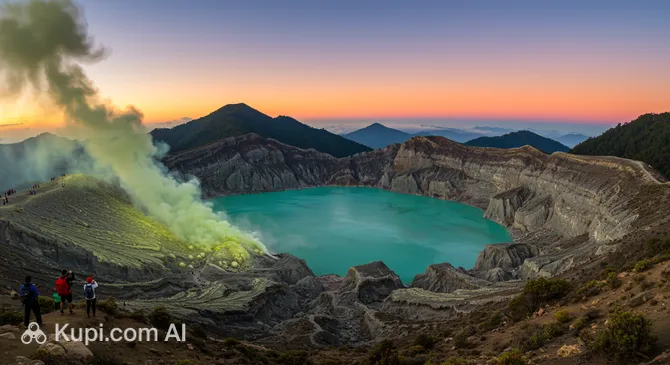
Travelers are drawn to this region for its spectacular natural attractions. The most famous is undoubtedly the Ijen Crater, renowned worldwide for its mesmerizing electric-blue fire and turquoise sulfur lake. Another highlight is the Baluran National Park, often called "Africa van Java" due to its vast savanna landscapes and diverse wildlife. Whether you are seeking adventure on volcanic slopes or relaxation on pristine beaches like Pulau Merah, Banyuwangi is a destination that truly deserves a spot on your travel itinerary.
Weather Overview
Banyuwangi enjoys a tropical climate characterized by warm temperatures and distinct seasonal rainfall patterns. The city remains pleasant throughout the year, with average monthly temperatures generally hovering between 23°C and 25°C. The warmest period typically occurs around October and November, where daytime highs can reach up to 28.3°C, while the months of July and August tend to be slightly cooler, with minimum temperatures occasionally dropping to around 20°C.
Travelers should be mindful of the precipitation trends when scheduling their adventures. The detailed weather in Banyuwangi shows a clear contrast between the seasons. The beginning of the year, particularly from January to March, brings the wettest conditions, with rain occurring on up to 30 days per month. In contrast, the period from July to September is significantly drier, featuring minimal precipitation and fewer wet days, which creates ideal conditions for exploring the region's outdoor attractions.
Average monthly temperature
Average monthly precipitation
Interesting Facts
Beyond the main attractions and its reputation as a transit point to Bali, Banyuwangi holds many fascinating secrets and cultural treasures waiting to be discovered. This easternmost regency of Java is steeped in legends and unique traditions that set it apart from the rest of the island.
Boom Beach. Illustration.
Source: Kupi.com AI
Traveler photos:
The Legend of Fragrant Water: The name "Banyuwangi" literally translates to "fragrant water." It originates from a local folktale about a noblewoman named Sri Tanjung. To prove her innocence after being wrongly accused of infidelity, she threw herself into a river; instead of blood, the water became clear and emitted a sweet fragrance, giving the city its enduring name.
Home of the Osing People: The region is the ancestral land of the Osing tribe, a distinct sub-ethnic group with their own language that blends Javanese and Balinese influences. They are believed to be the descendants of the ancient Blambangan Kingdom who remained in Java while others fled to Bali during religious shifts in history.
The Sunrise of Java: Geographically situated at the extreme eastern tip of the island, the city is the very first place in Java to greet the morning sun. This unique position has earned it the nickname "The Sunrise of Java," offering spectacular dawn views over the Bali Strait.
A Beach with a History: The coastline is not just for relaxation; places like Boom Beach are steeped in history. Formerly an important old port, this black-sand beach has been revitalized into a cultural hub that frequently hosts major events, including the famous Banyuwangi Beach Jazz Festival and traditional kite competitions.
How to Get There
Reaching this eastern Javanese gem is increasingly convenient due to improved infrastructure. Whether you prefer flying directly or taking a scenic overland journey, there are several options available. For a complete overview of routes and tips, you can read more about how to get to Banyuwangi on our detailed page.
The most direct way to arrive is by flying into Banyuwangi Airport (IATA: BWX). Located just 10.5 km from the city center, this regional hub allows you to skip long overland transfers. A taxi or shuttle from here typically takes about 36 minutes to reach the downtown area. While it handles a smaller volume of passengers compared to major international hubs, it offers essential connections from key Indonesian cities.
Alternatively, many international travelers opt to fly into Ngurah Rai International Airport (IATA: DPS) in Denpasar, Bali. Although it is located in a different province about 105 km away, it is a massive international gateway with extensive flight connections. The journey to Banyuwangi involves a drive and a short ferry crossing, taking approximately 4 to 5 hours in total. Another major entry point is Juanda International Airport (IATA: SUB) in Surabaya. Situated roughly 198 km away, this large airport serves as the primary hub for East Java. The travel time from Surabaya to Banyuwangi by road is around 5 hours and 20 minutes.
For clarity, here is a summary of the main airports:
Besides air travel, Banyuwangi is well-connected by rail and sea. The city is a major railway terminus for trains arriving from Surabaya, Malang, and Yogyakarta, offering a comfortable and scenic way to travel across Java. Additionally, the Ketapang Ferry Port serves as the main link between Java and Bali, operating 24 hours a day for those crossing the strait by ferry.
Main Attractions
Banyuwangi is a city where cultural heritage blends seamlessly with natural beauty. While many travelers pass through on their way to Bali or the Ijen Crater, the city itself holds several captivating spots worth exploring. From vibrant public squares to serene coastal escapes, here are some of the key attractions to visit within the city limits.
Located in the very heart of the city, Blambangan Park serves as the center of social and cultural life in Banyuwangi. This expansive green square is surrounded by historical buildings and is a favorite gathering place for locals, especially in the late afternoon and evening. It is interesting to tourists for its lively atmosphere, frequent art performances, and the distinctive traditional gates that frame the area, offering a perfect introduction to the local Osing architecture and community spirit.
Blambangan Park. Illustration.
Source: Kupi.com AI
Traveler photos:
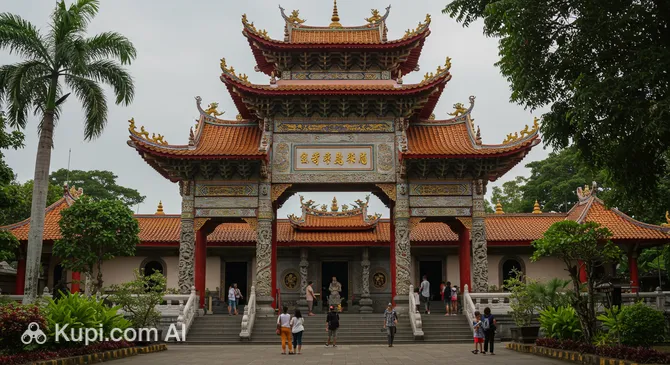
For a touch of history and spiritual heritage, the Hoo Tong Bio Temple is a must-visit landmark. Situated in the Chinatown district (Pecinan), this is one of the oldest Chinese temples in the region, showcasing the multicultural history of the port city. Visitors are drawn to its striking red architecture, intricate dragon ornamentations, and the peaceful ambiance that contrasts with the bustling streets outside. It stands as a beautiful symbol of tolerance and cultural diversity in East Java.
Hoo Tong Bio Temple. Illustration.
Source: Kupi.com AI
Traveler photos:
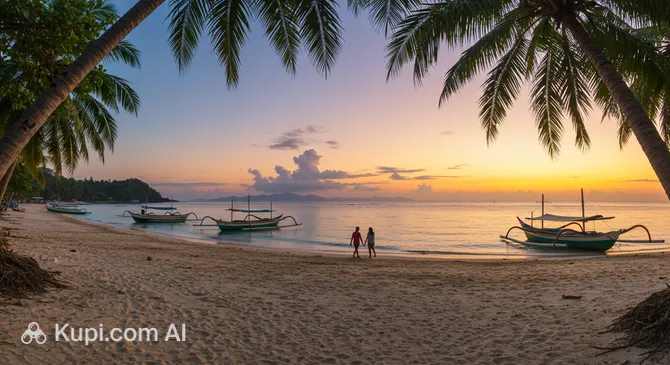
Those seeking a scenic escape near the city center should head to Cacalan Beach. Unlike the busy port areas, this beach offers a more tranquil environment characterized by panoramic views of the Bali Strait and the silhouette of the neighboring island. It is particularly famous for its photogenic mangrove areas and wooden swings set in the shallow water. It is an excellent spot for a relaxing sunrise walk or a family picnic, allowing you to enjoy the coastal breeze without traveling far.
Cacalan Beach. Illustration.
Source: Kupi.com AI
Traveler photos:
A vibrant example of urban revitalization can be found at the Kali Lo Bridge. Once a simple infrastructure crossing, it has been transformed into a colorful icon of the city. The bridge and the surrounding riverside settlement have been painted in bright, cheerful colors, turning the area into an "Instagrammable" destination. It is interesting for tourists who enjoy street photography and want to see how creative initiatives have enlivened the local neighborhoods along the Lo River.
Local Cuisine
The culinary landscape of Banyuwangi is as bold and vibrant as its natural scenery, heavily influenced by the distinct culture of the Osing people. The local cuisine is famous across Indonesia for its intense flavors, particularly its unapologetic love for spiciness. For food enthusiasts, this city offers a gastronomic adventure where savory, spicy, and fresh elements combine to create dishes that are unlike anything found elsewhere in Java.
The undisputed star of the local food scene is Nasi Tempong. The word "tempong" literally means "to slap" in the Osing dialect, a reference to the spicy kick of the sambal (chili paste) that accompanies the dish, which is said to feel like a slap to the face. A standard serving consists of steamed white rice, boiled vegetables such as spinach and cucumber, tofu, tempeh, and a choice of protein like salted fish, fried chicken, or seafood. It is a simple yet unforgettable meal that defines the region's palate.
Another unique creation worth trying is Rujak Soto, a fascinating fusion dish that perfectly represents the local creativity. It combines Rujak Sayur (a salad of boiled vegetables with a nutty, spicy peanut sauce) and Soto Daging (a savory beef soup with a turmeric-infused broth). The result is a thick, rich, and savory soup that is both hearty and refreshing. Locals typically eat this with rice or traditional rice cakes known as lontong.
When it comes to beverages, Banyuwangi is a significant coffee-producing region. Kopi Osing is a local favorite, known for its high quality and traditional roasting methods. You will often find locals enjoying a cup in the evenings, served simply with sugar or sometimes with distinct spices. For non-alcoholic options, fresh young coconut water is widely available, often served directly from the fruit, providing a perfect way to cool down after a spicy meal.
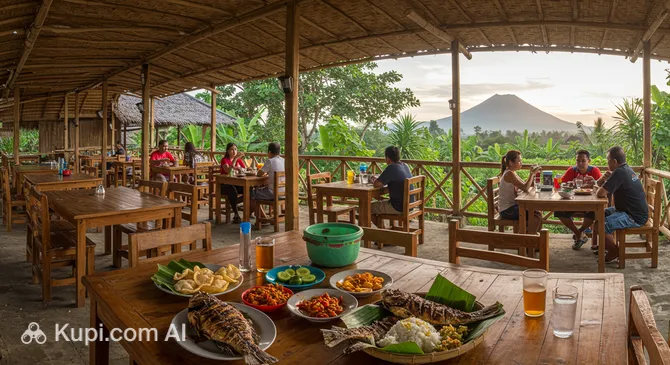
Pondok Pelangi Grilled Fish. Illustration.
Source: Kupi.com AI
Traveler photos:
The dining culture here is laid-back and communal. While there are modern establishments, the heart of the food scene lies in the traditional warungs (small family-owned eateries) and night markets where you can dine lesehan style—sitting on mats at low tables. Given its coastal location, seafood is also a major highlight. Restaurants such as Pondok Pelangi Grilled Fish offer travelers the chance to enjoy fresh catches prepared with local spices, all while soaking in the relaxed atmosphere of this coastal city.
Travel Tips
Planning a trip to Banyuwangi requires a bit of preparation, especially since the region combines humid coastal areas with cool mountainous terrain. To ensure your journey through this adventurous gateway is smooth and enjoyable, here are some essential practical tips to keep in mind.
Clothing and Gear: For the city and beaches, light and breathable clothing is ideal due to the tropical heat. However, if you plan to hike the famous Ijen Crater, you must bring a warm jacket, windbreaker, and sturdy hiking shoes, as temperatures at the summit can drop to near freezing before sunrise. When visiting religious sites or rural villages, dress modestly by covering your shoulders and knees.
Transportation: Public transport, such as the yellow minivans known as bemos, can be confusing for visitors. The most convenient way to explore is by renting a scooter or hiring a car with a local driver, especially for reaching distant nature parks. Ride-hailing apps like Gojek and Grab operate well within the city center but may have limited availability in remote areas.
Finances: The official currency is the Indonesian Rupiah (IDR). While hotels and modern malls accept credit cards, cash is absolutely essential for street food stalls, traditional markets, and entrance fees to natural attractions. ATMs are widely available in the city, but it is wise to withdraw sufficient cash before heading to the mountains or national parks.
Health and Safety: Banyuwangi is generally a safe city for tourists. To stay healthy, avoid drinking tap water and stick to bottled or filtered options. Pharmacies, marked as Apotek, are easy to find; chains like K-24 often operate around the clock. Since it is a tropical region, carrying strong insect repellent is recommended to protect against mosquitoes.
Communication: While English is spoken by staff at hotels and major tourist spots, it is less common among the general population. Learning a few basic phrases in Bahasa Indonesia, such as terima kasih (thank you), will be greatly appreciated. For the best mobile coverage, particularly in highland areas, purchasing a Telkomsel SIM card is advisable.
Local Etiquette: The people of East Java are known for their friendliness and politeness. Always use your right hand for eating, shaking hands, or giving and receiving objects, as the left hand is considered unclean. It is also customary to remove your footwear before entering a local home or a mosque.
What to Avoid: Refrain from public displays of affection, such as kissing, as the local culture is conservative. Additionally, avoid raising your voice or showing outward anger in public situations, as maintaining social harmony and "saving face" are deeply valued concepts here.
Ijen Hiking Tip: If your goal is to see the famous blue fire, be prepared for a very early start. Most tours and travelers depart from the city between 12:00 AM and 1:00 AM to begin the hike in total darkness, which is the only time the phenomenon is visible.
By keeping these practicalities in mind, you will be well-equipped to embrace the diverse experiences that await in this eastern Javanese gem. Banyuwangi’s charm lies in its blend of raw nature and warm hospitality, so travel with an open mind and enjoy every moment of your adventure.
Entertainment & Nightlife
Entertainment and Nightlife:
While Banyuwangi is often celebrated for its natural wonders and early morning treks to Ijen, the city also offers a pleasant, albeit more relaxed, nightlife scene. Unlike the high-energy party hubs of neighboring Bali, the evening atmosphere here is centered around socializing, live music, and culinary exploration. The nightlife is generally concentrated in the city center, particularly around the Jalan Basuki Rahmat area and the bustling streets near the main town square, where locals and travelers gather to unwind after sunset.
For those seeking a modern entertainment experience with music and singing, Karaoke is a favorite local pastime. One of the most popular venues in town is Mascot Karaoke & Club. This establishment is well-known for its vibrant atmosphere, offering private rooms for groups as well as a club area where guests can enjoy DJ performances and dance. It is a go-to spot for those looking to experience the more energetic side of the city's nightlife, typically staying open late into the night.
Mascot Karaoke & Club. Illustration.
Source: Kupi.com AI
Traveler photos:
If you prefer a combination of dining and entertainment, Mascot Resto offers a comfortable setting to enjoy food and drinks before heading to the dance floor or karaoke rooms. The dress code in these venues is generally casual but neat; shorts and t-shirts are acceptable, but flip-flops might be discouraged in the club sections. Prices are significantly more affordable compared to Jakarta or Bali, making a night out here very budget-friendly.
For a more traditional and laid-back evening, the area around Blambangan Park comes alive at night. This district transforms into a culinary hotspot where you can sit on mats (lesehan style) and enjoy live acoustic performances by local street musicians. It is the perfect place to mingle with friendly locals and soak in the "nongkrong" (hanging out) culture that defines Indonesian social life. The crowd here is diverse, ranging from families to groups of teenagers, creating a safe and welcoming environment for evening strolls.
During the day, entertainment options shift towards cultural and leisure activities. Visitors can explore the Banyuwangi Shopping Mall, which serves as a central hub for shopping, watching movies at the cinema, or simply escaping the midday heat. It is the main modern retail complex in the city, offering a variety of local and national brands.
Banyuwangi Shopping Mall. Illustration.
Source: Kupi.com AI
Traveler photos:
Practical Nightlife Tips: Banyuwangi is generally safe for night walks, especially in well-lit main streets. However, public transportation like bemos stops operating early in the evening. The best way to get around at night is by using ride-hailing apps like Gojek or Grab, which are reliable and affordable. If you plan to stay out late, ensure you have the app installed or arrange transport from your hotel, as hailing a regular taxi on the street can sometimes be difficult in quieter neighborhoods.
Parks & Museums
Beyond its dramatic volcanoes and surfing spots, Banyuwangi offers a refreshing mix of open green spaces and cultural landmarks that provide a deeper look into the city's heritage. For travelers looking to slow down and explore the urban landscape, the city presents several parks and historical venues that perfectly blend recreational leisure with stories of the region's past.
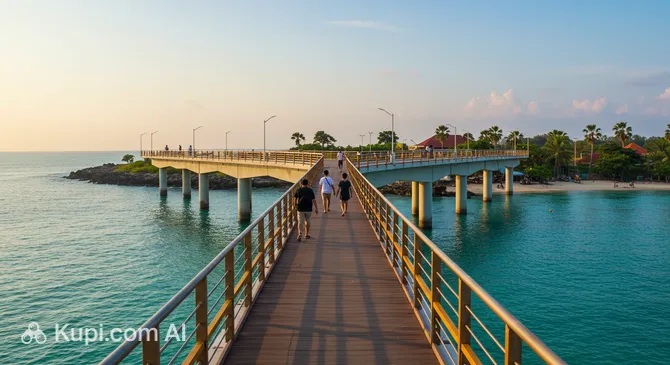
One of the most architecturally striking recreational areas is centered around the Pantai Boom Tourist Bridge. This iconic spiral structure, often illuminated beautifully at night, connects the mainland to the former Boom Beach island area. It is more than just a crossing; it has become a favorite spot for locals to enjoy the sea breeze and take photos against the backdrop of the Bali Strait. The bridge revitalizes the old port area, turning it into a vibrant public space where history meets modern design.
Pantai Boom Tourist Bridge. Illustration.
Source: Kupi.com AI
Traveler photos:
For a greener and more tranquil experience, Taman Sayu Wiwit Park offers a peaceful retreat near the city center. This park is not only a place for relaxation under shady trees but also holds historical significance, often associated with monuments commemorating local heroes. It serves as a quiet sanctuary away from the busy streets, making it an excellent spot for a morning walk or a reflective afternoon break.
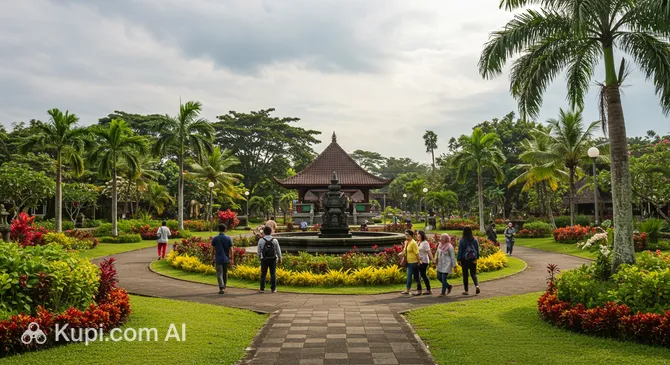
Delving into the cultural history of the region, the Sabha Swagata Blambangan Pavilion stands as a testament to the city's administrative and architectural heritage. Often functioning as the official residence and a venue for state events, this site showcases the traditional Pendopo style architecture characteristic of Java. Its spacious open halls and well-maintained gardens reflect the dignity of the ancient Blambangan Kingdom, offering tourists a glimpse into the classic aesthetic of the local aristocracy.
Sabha Swagata Blambangan Pavilion. Illustration.
Source: Kupi.com AI
Traveler photos:
For a more whimsical and unique cultural stop, visitors can explore the Banyuwangi Doll Palace. This museum-like attraction displays a vast collection of dolls and puppets, ranging from traditional wayang characters to modern figures. It is a fascinating place for families and collectors alike, highlighting the diverse artistic expressions found in the region. The collection provides an unexpected but delightful detour from the typical historical tours.
Banyuwangi Doll Palace. Illustration.
Source: Kupi.com AI
Traveler photos:
Insider Tip: If you want to experience how locals enjoy their seaside leisure without the crowds, head to Ancol Plengsengan Beach. Located near the Ketapang ferry port, it is a modest strip where residents gather to watch the ferries cross to Bali while enjoying simple grilled corn and coffee from roadside stalls. It offers an authentic slice of daily life in this coastal town.
Getting Around
Public transport in Banyuwangi is relatively simple and traditional, differing significantly from the complex systems found in larger metropolises. The city does not have a metro, tram, or extensive large bus network. Instead, the backbone of local transportation is the fleet of minibuses known as Angkot (Angkutan Kota) or Mikrolet. These vehicles, typically painted yellow or blue, operate on specific routes throughout the city and its suburbs. While they offer an authentic local experience, they can be somewhat challenging for first-time visitors due to the lack of clearly marked bus stops and published schedules.
For those choosing to travel by Angkot, the payment system is strictly cash-based. There are no electronic travel cards, passes, or mobile tap-in systems for these minibuses. Passengers pay the driver directly upon exiting the vehicle. The fares are very affordable, usually costing just a few thousand Rupiahs, so it is essential to carry small denominations of the local currency. Prices are generally standard for short distances within the city, but it is always a good idea to confirm the fare with the driver before boarding to avoid any misunderstandings.
To use the Angkot system, simply stand by the side of the road along a route and wave your hand when a vehicle approaches. To disembark, say "Kiri" (which means "left" in the local language) or knock on the window to signal the driver to pull over. Tourists should be aware that these minibuses primarily operate during daylight hours, roughly from 06:00 AM to 05:00 PM. Relying on them for evening plans is not recommended, as their frequency drops significantly or stops altogether after sunset.
For a more convenient and reliable alternative, ride-hailing apps such as Gojek and Grab are widely available and highly popular in the city. These apps allow you to book both motorcycle taxis (Ojek) and private cars with transparent, fixed pricing, eliminating the need to negotiate fares on the street. Payment can be made seamlessly via the app or in cash. This is often the preferred method for tourists to navigate the city comfortably, especially when carrying luggage or traveling in groups.
Given that many of the region's top natural attractions are located far from the city center, renting a scooter or hiring a private car with a driver is a very common choice. Rental agencies are plentiful near the train stations and the ferry port. Additionally, for travelers arriving by air, the state-owned DAMRI bus service operates routes connecting the airport to the city center and the train station. On occasion, special DAMRI routes also serve major tourist destinations like the Ijen Crater, offering a budget-friendly option for reaching the famous volcano.
Accommodation
As Banyuwangi has transformed from a simple transit point into a major tourist destination, its accommodation landscape has expanded significantly. Travelers can now find a diverse range of lodging options that cater to various budgets and preferences. The choices span from affordable guesthouses and traditional homestays, which are abundant and offer a glimpse into local life, to modern mid-range hotels and luxurious beachfront resorts that provide high-end amenities.
For most visitors, the City Center is the most convenient area to base themselves. Staying here places you close to culinary hotspots, shopping centers, and the main train station, making it easy to arrange transport for day trips. If your primary goal is to trek the Ijen Crater, many travelers opt to stay in the Licin or Sempol districts. These areas are located in the highlands closer to the volcano, significantly reducing the travel time for the midnight departure required for the blue fire tour. Alternatively, those passing through to Bali might prefer the Ketapang area near the ferry port for quick access to the crossing.
A unique feature of accommodation in this region is the prevalence of "eco-lodges" and community-based homestays. These establishments often sit amidst rice paddies or coffee plantations, offering a serene environment that connects guests with nature. While international luxury chains are less common, several domestic 4-star hotels have established a presence, offering comfortable pools and ballrooms suitable for both leisure and business travelers.
Booking Tips and Prices:
Prices in Banyuwangi are generally very affordable compared to Bali or Jakarta. Budget travelers can find comfortable homestays starting from as low as IDR 150,000 to IDR 250,000 (approx. $10–$16 USD) per night. Mid-range hotels typically range between IDR 400,000 and IDR 800,000 ($26–$52 USD), while luxury resorts can go upwards of IDR 1,200,000 ($80+ USD). It is highly recommended to book in advance, especially during the dry season (May to September) and major Indonesian holidays, as the best-rated accommodations near Ijen tend to fill up quickly. Online booking platforms like Traveloka, Booking.com, and Agoda are widely used and reliable for securing reservations.
Nearby Cities
For those looking to explore the surroundings, Banyuwangi serves as an excellent base for day trips to several interesting nearby locations:
Located just across the strait on the island of Bali, Denpasar is a fascinating destination that is relatively easy to reach via the ferry service from Ketapang. As the capital of Bali, it offers a rich blend of traditional culture and modern urban life. Visitors can explore the Bali Museum, visit the Bajra Sandhi Monument, or simply use the city as a starting point to discover the famous southern beaches of the "Island of the Gods."
To the west lies Jember, the closest major city to Banyuwangi. Known for its rolling hills and extensive tobacco plantations, Jember offers a more relaxed pace of life compared to the bustling port towns. It has gained international fame for the annual Jember Fashion Carnaval, a spectacular street parade that showcases extravagant costumes. The city is also a gateway to beautiful southern coast beaches like Papuma Beach, making it a worthwhile stop for nature lovers.
For those willing to travel a bit further into the highlands, Malang is a favorite getaway in East Java. Renowned for its cool climate and colonial-era architecture, it feels distinctly different from the coastal heat of Banyuwangi. Travelers love visiting the colorful Jodipan Village, exploring ancient temples like Candi Singosari, or enjoying the local apple orchards that surround the city.
These nearby destinations offer a glimpse into the diverse culture and landscapes of the region.
Shopping & Souvenirs
Shopping in Banyuwangi offers a distinctively local experience that contrasts with the glitzy mega-malls of Indonesia's larger metropolises. Instead of high-end luxury brands, the city invites visitors to explore modest shopping centers, traditional markets, and independent boutiques. It is an excellent destination for finding authentic regional products, from distinct textiles to locally grown produce, allowing travelers to support the local economy while finding unique keepsakes.
The commercial heartbeat of the city is concentrated in the downtown area, particularly along the main thoroughfares such as Jalan Basuki Rahmat and the streets surrounding the central park. Here, rows of shophouses sell everything from clothing and electronics to daily necessities. Walking through these districts provides a glimpse into the everyday life of the locals, where modern convenience stores stand side-by-side with long-established family businesses.
For a more modern retail experience, the Banyuwangi Shopping Mall is the primary destination in the city. As the first major mall in the region, it provides a comfortable, air-conditioned environment where tourists can find supermarkets, department stores, and well-known national food chains. It is a convenient stop for stocking up on travel essentials or enjoying a break from the tropical heat.
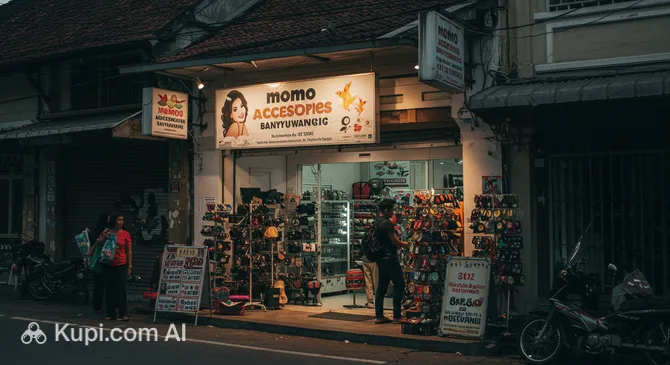
Momo Accessories Banyuwangi. Illustration.
Source: Kupi.com AI
Traveler photos:
If you are looking for specific fashion items or trinkets, smaller specialized stores like Momo Accessories Banyuwangi offer a variety of goods. These types of establishments are popular among local youth and are great places to find affordable jewelry, bags, and cute lifestyle items that make for fun, small gifts.
To truly understand the local culture, a visit to a traditional market (pasar) is a must. The central market is a hive of activity, especially in the early morning. Here, vendors display colorful piles of tropical fruits, aromatic spices, and fresh seafood caught from the nearby strait. It is a sensory experience where you can observe the vibrant trade of the Osing community and perhaps buy some fresh snacks or local fruits like the red dragon fruit, which is famous in this region.
When hunting for souvenirs, the most iconic item to bring home is Batik Banyuwangi. The region has its own distinct motif known as "Gajah Oling," which resembles a curled elephant trunk and represents the circle of life. Coffee lovers should look for Kopi Osing, the local coffee variety known for its quality and unique processing. Additionally, processed food souvenirs such as bagiayak (a type of cookie) and dried seafood crackers are popular choices to share with friends and family back home.
Modern shops and the shopping mall typically operate from 10:00 AM to 9:00 PM or 10:00 PM. Traditional markets start much earlier, often before dawn around 3:00 AM, and wind down by midday. While the mall and larger stores accept credit and debit cards, cash is king in traditional markets and smaller souvenir shops. It is highly recommended to carry sufficient Indonesian Rupiah (IDR) in smaller denominations when exploring local stalls.
Tourists should be aware that Banyuwangi is not a major international shopping hub, and the tax-free refund (VAT refund) facilities found in Jakarta or Bali are generally not available here. Most local shops do not participate in the tourist tax refund scheme. If you have purchased eligible tax-free goods elsewhere in Indonesia, you will likely need to process your refund at the international airport where you depart the country, such as in Denpasar or Surabaya.