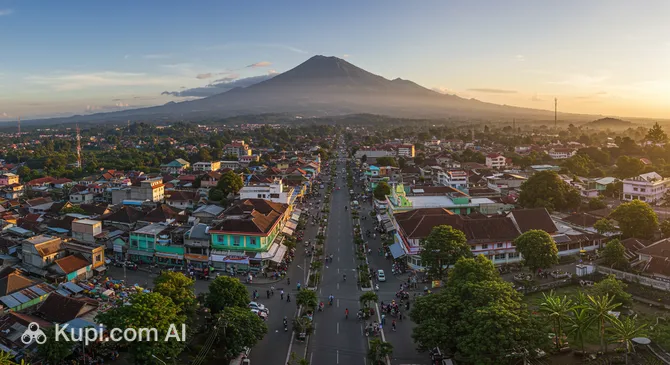
Welcome to Jember, a captivating destination located in the eastern part of Java. Often overshadowed by its larger neighbors, this vibrant city offers a unique blend of cultural heritage and natural beauty that makes it a worthwhile stop for any traveler exploring Indonesia. Known locally as the "City of Tobacco" due to its high-quality leaf production, Jember has a distinct atmosphere that combines bustling urban life with the laid-back charm of an agricultural hub.
Jember. Illustration.
Source: Kupi.com AI
Geographically, Jember is situated in a fertile region surrounded by mountains and rolling hills, contributing to its pleasant tropical climate. With a population of approximately 298,585, the city feels lively yet manageable. The history of Jember is deeply rooted in its plantation era, which shaped much of its current infrastructure and diverse community. Visitors can still see the influence of this agricultural legacy in the surrounding landscapes and local economy.
One of the city's most famous claims to fame is the spectacular Jember Fashion Carnaval (JFC). This annual event transforms the streets into a massive runway, showcasing extravagant costumes and creativity that rivals global fashion capitals. Beyond the festivities, nature lovers will appreciate the proximity to stunning coastal areas, such as the picturesque Papuma Beach (Pasir Putih Malikan), known for its white sands and dramatic rock formations rising from the sea.
Whether you are interested in exploring lush coffee and cocoa plantations or witnessing one of the world's most unique street parades, Jember offers an unforgettable experience. It is a perfect destination for those seeking to discover the authentic heart of East Java away from the most crowded tourist trails.
Weather Overview
Jember enjoys a pleasant tropical climate characterized by consistent warmth and distinct seasonal rainfall patterns. Generally, the city maintains a comfortable atmosphere with average temperatures ranging from 22°C to 25°C throughout the year. Travelers can expect warm days with occasional rain during the wet season and slightly cooler, drier conditions in the middle of the year.
To help plan your daily activities, it is worth consulting the detailed guide to the weather in Jember. The warmest period usually occurs around October, with daytime highs reaching approximately 28°C. In contrast, July is typically the coolest month, where temperatures can dip to a refreshing 19°C at night, offering a cool respite after a day of exploring.
Precipitation is most frequent from November through April, with January and March experiencing rain on up to 30 days per month. The drier season, spanning from May to September, offers more stable conditions; July and August are particularly favorable, recording the lowest rainfall and fewer wet days, making this the ideal time for visiting the region's beaches and outdoor attractions.
Average monthly temperature
Average monthly precipitation
Interesting Facts
Beyond the famous carnival and tobacco fields, Jember holds fascinating cultural and agricultural secrets. Here are some unique insights into what makes this East Javanese city truly special.
A Cultural Melting Pot: Jember is the center of the "Pendalungan" culture, a distinct hybrid society formed by the intermingling of Javanese and Madurese migrants. This unique fusion has created a specific dialect and set of traditions found nowhere else in Indonesia.
Edamame Capital: While tobacco is its historic crop, Jember has quietly become a global leader in edamame production. The region exports vast quantities of these high-quality green soybeans directly to Japan, meeting strict international standards.
The Bremen Connection: The city's tobacco legacy has a specific European link; the "Na-Oogst" tobacco leaves grown here are world-renowned for their elasticity and are exported specifically to Bremen, Germany, to be used as premium cigar wrappers.
Unique Local Delicacy: The city is famous for suwar-suwir, a traditional sweet made from processed fermented cassava. These small, rectangular treats look like hard candy but have a soft texture and come in various fruit flavors like soursop and pineapple.
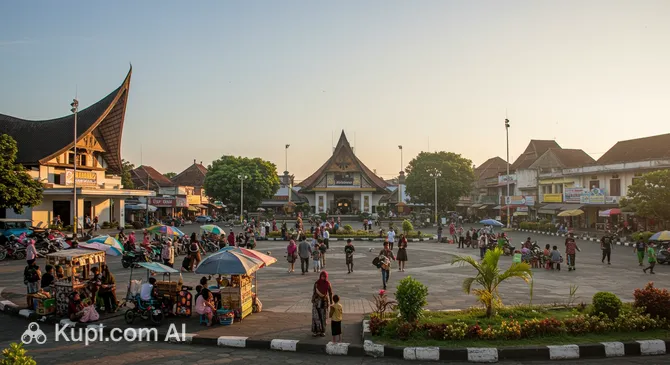
The City's Living Room: The Jember Town Square is more than just a park; it is the social heart of the city where the community gathers for everything from morning exercise to night markets, reflecting the vibrant local lifestyle.
Jember Town Square. Illustration.
Source: Kupi.com AI
Traveller photos:
How to Get There
Reaching Jember is an adventure that takes you through the scenic landscapes of East Java. While the city itself is tucked away from the main tourist trail, it is well-connected by road and rail to major hubs in the region. For a detailed breakdown of all transport options, including buses and trains, you can read more about how to get to Jember.
The city of Jember does not have its own major international airport, but you can fly into Juanda International Airport (IATA: SUB) in the city of Surabaya, which is the primary gateway for most international and domestic travelers visiting East Java. Located approximately 134 km from Jember, this bustling hub offers extensive connections. The journey from Surabaya to Jember by taxi or private car generally takes around 3 hours and 40 minutes, depending on traffic conditions.
For a closer alternative, you might consider Banyuwangi Airport (IATA: BWX) in the neighboring city of Banyuwangi. Situated just 72 km away, it is the nearest airport option listed. The drive from there to Jember is relatively quick, taking about 2 hours and 10 minutes. Another viable option is Abdul Rachman Saleh Airport (IATA: MLG) in Malang, located about 112 km away, offering a transfer time of roughly 3 hours through the picturesque highlands.
For clarity, here is a summary of the main airports in the region:
While Jember is often celebrated for its natural landscapes and carnival, the city center offers several engaging spots for recreation, shopping, and dining. Visitors looking to unwind or enjoy some local leisure time will find a variety of facilities that cater to both families and solo travelers.
For those traveling with family or seeking a refreshing escape from the tropical heat, Tiara Park Waterboom Jember is a top destination. This water park is a favorite among locals for its variety of swimming pools and water slides. It offers a fun atmosphere where you can cool off and enjoy a day of aquatic activities, making it an excellent stop for energetic entertainment.
Tiara Park Waterboom Jember. Illustration.
Source: Kupi.com AI
Traveller photos:
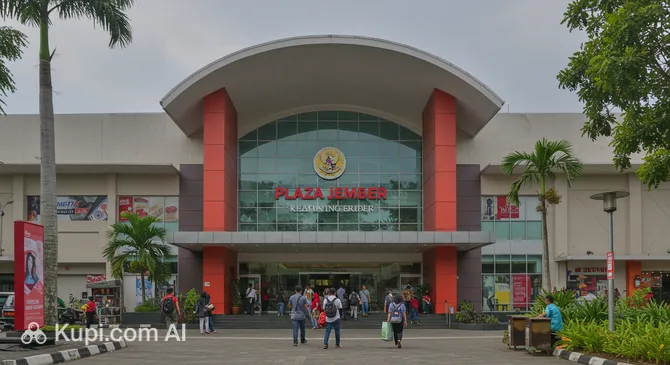
Shoppers will appreciate a visit to Plaza Jember, one of the city's primary shopping malls. It serves as a modern retail hub where you can find a wide range of goods, from fashion and accessories to electronics. It is a convenient place to pick up travel essentials, enjoy air-conditioned comfort, or simply browse through the latest local and national brands.
Plaza Jember. Illustration.
Source: Kupi.com AI
Traveller photos:
Another bustling commercial spot is the Golden Market. This venue offers a different shopping experience, often bustling with activity and offering a diverse array of products. It is a great place to immerse yourself in the local commercial vibe and find everything from daily necessities to unique items at competitive prices.
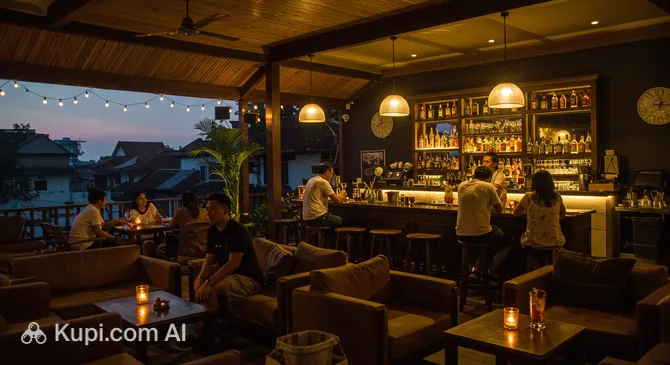
After a day of exploring, you might want to relax at De Terrace Cafe & Resto. This establishment is known for its inviting ambiance, making it a popular spot for evening hangouts. Whether you are looking for a hearty meal or just a place to sit back with a drink and enjoy the local social scene, it provides a comfortable setting to recharge.
De Terrace Cafe & Resto. Illustration.
Source: Kupi.com AI
Traveller photos:
Local Cuisine
The culinary scene in Jember is a delightful reflection of its unique "Pendalungan" culture, blending the sweetness of Javanese cuisine with the savory and spicy notes typical of Madurese food. Thanks to the region's fertile soil, dishes here are prepared with fresh, locally sourced ingredients. Food lovers will find that the city offers a gastronomic journey that is both authentic and affordable, ranging from street-side snacks to hearty traditional meals.
One of the signature dishes you must try is Nasi Langgi. This local favorite consists of white rice served with a variety of side dishes such as beef stew, fried tempeh, potato chips, eggs, and a distinctively spicy sambal. It is a comforting meal that provides a burst of flavors in every bite. Another interesting local fusion is Pecel Gudeg, which combines the savory peanut sauce salad known as pecel with gudeg, a sweet young jackfruit stew. This unique mix perfectly captures the diverse culinary influences of the region.
For those with a sweet tooth or looking for a light snack, Jember is famous for its high-quality edamame, which is often served steamed and lightly salted. You should also look for suwar-suwir, a fermented cassava treat that resembles hard candy but has a soft texture, available in various fruit flavors. To wash it all down, try Wedang Cor, a traditional warming drink made from milk, ginger, and fermented sticky rice (tape ketan), which is especially popular during the cooler evenings.
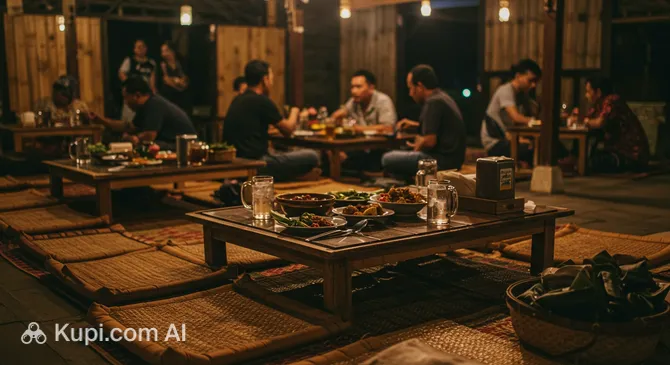
The dining landscape in Jember is vibrant and diverse. You can find everything from humble warungs (food stalls) serving authentic homemade dishes to more established restaurants suitable for families. For a reliable and delicious meal, Sri Rejeki Restaurant is a well-regarded establishment where you can enjoy a wide range of Chinese-Indonesian and traditional dishes in a comfortable setting.
Sri Rejeki Restaurant. Illustration.
Source: Kupi.com AI
Traveller photos:
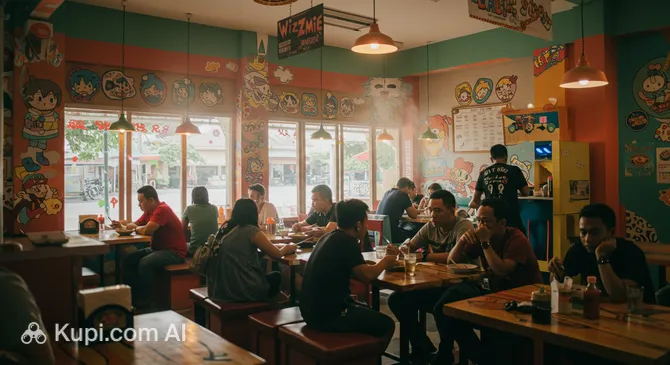
If you prefer a more modern atmosphere, the city has a growing number of trendy spots popular with the younger crowd. Wizzmie Jember is a prime example, known for its spicy noodle dishes and lively vibe. It is a great place to experience how the local food culture is evolving while still maintaining the bold flavors that East Java is known for.
Wizzmie Jember. Illustration.
Source: Kupi.com AI
Traveller photos:
Travel Tips
To ensure your trip to Jember is as smooth and enjoyable as possible, we have compiled a set of practical guidelines to help you navigate the city with confidence. While Jember is a welcoming destination, knowing a few local nuances regarding logistics and etiquette will go a long way in making your experience stress-free and authentic.
Clothing and Gear: Given the tropical climate, lightweight and breathable fabrics like cotton or linen are your best bet to stay comfortable in the heat. Pack a light raincoat or umbrella if you are visiting during the wet season (November to April). While casual wear is generally acceptable, Jember is a relatively conservative city; always dress modestly by covering your shoulders and knees when visiting religious sites or rural villages. Comfortable walking shoes are essential for exploring plantations or the town square.
Transportation: The most authentic way to get around the city center is by becak (traditional pedicab), which is perfect for short distances; just be sure to negotiate the fare beforehand. For longer trips, yellow public minivans known as lin or angkot ply specific routes and are very affordable, though they can be confusing for first-timers. Ride-hailing apps like Gojek and Grab are widely available and are often the most convenient option for tourists. If you plan to explore the southern beaches like Papuma, renting a car with a driver is highly recommended.
Finances: The official currency is the Indonesian Rupiah (IDR). While credit cards are accepted at major hotels, malls like Plaza Jember, and modern restaurants, cash is king for street food, traditional markets, and smaller shops. ATMs are plentiful in the city center, but it is wise to carry small denominations for parking fees, tips, and small purchases. Tipping is not strictly mandatory but is appreciated for drivers and service staff; rounding up the bill or leaving small change is a common gesture.
Health and Safety: Jember is generally a safe city for travelers, but standard precautions apply. Avoid drinking tap water; stick to bottled or filtered water to prevent stomach issues. Pharmacies, known locally as Apotek, are easy to find, with major chains like Kimia Farma or K-24 often open 24 hours. Use insect repellent if you are visiting nature spots or plantations to protect against mosquitoes.
Communication: The primary language is Bahasa Indonesia, with many locals also speaking Javanese or Madurese. English is not widely spoken outside of major hotels and tourist agencies, so learning a few basic phrases like terima kasih (thank you) and permisi (excuse me) will be very helpful. It is highly advisable to purchase a local SIM card (Telkomsel usually offers the best coverage in this region) to access maps and translation apps on the go.
Local Etiquette: Politeness is highly valued in Javanese culture. Always use your right hand for eating, giving, or receiving items, as the left hand is considered unclean. When entering a local home or a mosque, remember to remove your shoes. A friendly smile is the universal language here; locals are generally curious and warm towards visitors, so a polite greeting is always well-received.
What to Avoid: Avoid public displays of affection, such as kissing or hugging, as this is considered inappropriate in public spaces. Also, refrain from touching people on the head, even children, as the head is regarded as the most sacred part of the body in local culture.
Shopping Tip: If you are looking for unique souvenirs, Jember is one of the few places in Indonesia where you can buy premium cigars directly from the source, thanks to its tobacco heritage. Alternatively, look for packs of frozen or dried edamame, a healthy local snack that the city is famous for exporting.
By keeping these tips in mind, you will be well-prepared to immerse yourself in the vibrant culture and scenic beauty of Jember. Embrace the slower pace of life, enjoy the friendly interactions with locals, and have a wonderful time discovering this hidden gem of East Java.
Entertainment & Nightlife
Entertainment in Jember reflects the city's friendly and communal spirit, offering a mix of modern leisure facilities and vibrant outdoor gatherings. While it may not have a bustling nightclub scene, visitors will find plenty of ways to unwind, socialize, and enjoy the local atmosphere after the sun sets.
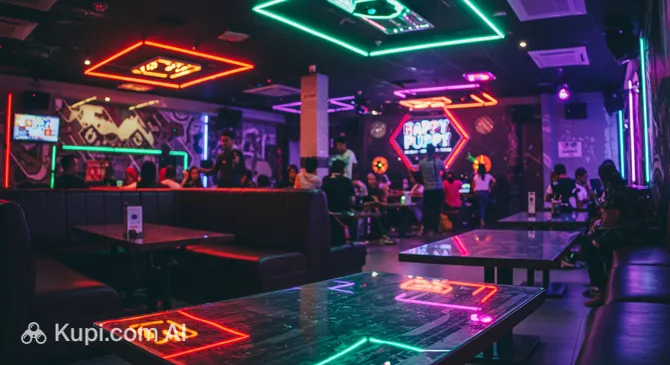
For those looking to enjoy a lively evening with music, Happy Puppy is a top choice. This family-friendly karaoke venue is perfect for groups who want to rent a private room and sing their hearts out. With a vast selection of songs and excellent sound systems, it provides a fun and comfortable environment to relax with friends or family away from the heat of the day.
Happy Puppy. Illustration.
Source: Kupi.com AI
Traveller photos:
If you prefer an outdoor experience, the city center comes alive at night, particularly around the town square. The area transforms into a hub of social activity where locals gather to enjoy the cool evening air. You will often see colorful, neon-lit pedal vehicles cruising around, adding a festive glow to the streets. It is a great place to soak up the authentic local vibe, try street snacks, and watch the world go by.
Additionally, the city's shopping complexes offer more than just retail therapy. They frequently serve as entertainment centers with game arcades and cinemas, making them popular destinations for families and young people looking for indoor fun. Whether you are in the mood for a private karaoke session or a casual night out under the stars, Jember offers a welcoming and relaxed entertainment scene.
Parks & Museums
Beyond its bustling streets and famous carnival, Jember offers a refreshing selection of green spaces and cultural institutions that provide a deeper look into the region's heritage. The city balances its agricultural roots with educational tourism, featuring botanical gardens and unique museums that celebrate everything from local commodities to the art of writing.
For nature enthusiasts, Taman Botani Sukorambi is a must-visit destination located just a short drive from the city center. Nestled at the foot of the mountains, this expansive botanical garden combines recreation with education, featuring a diverse collection of flora, hydroponic gardens, and a mini zoo. Its cool climate and lush surroundings make it an ideal spot for a relaxing walk or a family picnic away from the urban heat.
Another significant natural area nearby is the renowned Meru Betiri National Park. Although it requires a bit of travel from the city, it is the ecological jewel of the region, offering dense rainforests and pristine beaches. It is famous for being one of the last known habitats of the Javan tiger and a nesting ground for sea turtles, making it a fascinating location for eco-tourists seeking authentic wilderness.
Culturally, the city honors its nickname, the "City of Tobacco," with the Museum Tembakau. This specialized museum offers visitors an intriguing insight into the history of tobacco farming in Jember, which has been a pillar of the local economy since the colonial era. Exhibits include various types of tobacco leaves, traditional processing equipment, and a library, explaining why Jember's produce is highly prized in international markets like Bremen, Germany.
For a truly unique cultural experience, stop by the Museum Huruf (Letter Museum). This hidden gem is dedicated to the history and art of typography and world scripts. It showcases a fascinating collection of characters and fonts from different civilizations, offering a rare educational perspective that stands out among typical regional museums.
In terms of architectural landmarks, the Masjid Jami' Al-Baitul Amien dominates the city skyline with its distinctive design. Located right next to the Jember Town Square, this grand mosque is easily unparalleled in East Java due to its unique seven-dome structure, which is said to resemble the Indonesian parliament building. It serves as both a spiritual center and an architectural icon for the city.
For an authentic insider experience, consider visiting the Coffee and Cocoa Research Center (Puslitkoka). Located about 20 km from the city, it is one of the oldest institutions of its kind in Indonesia. Visitors can take a nostalgic ride on a wooden tram through the plantations, learn about chocolate processing, and taste some of the freshest cocoa and coffee products directly from the source.
Getting Around
Navigating Jember is a relatively straightforward experience, though it differs significantly from the structured public transport systems found in major Western metropolises. The city does not rely on a metro or tram network; instead, the backbone of local transportation is the Angkot (Angkutan Kota), locally often referred to as Lin. These are yellow minivans that ply specific routes across the city. They are identified by letters (such as Lin A, Lin B, or Lin D) displayed on their windshields, with each letter corresponding to a specific route covering key areas like the train station, markets, and university districts.
For short distances within neighborhoods or the city center, the traditional Becak (pedicab) remains a popular and charming option. These three-wheeled vehicles offer a slower, open-air way to soak in the sights and sounds of the streets. They are particularly useful for navigating narrow lanes where larger vehicles might struggle. Riding a becak is not just a mode of transport but a cultural experience, allowing you to interact with local drivers who often know the city's hidden gems.
The payment system for public transport in Jember is predominantly cash-based. There are no electronic travel cards or passes for the Lin or becak. Fares for the yellow minivans are very affordable and generally fixed for trips within the city limits. You simply pay the driver directly when you reach your destination. It is highly advisable to carry small denominations of the local currency, as drivers may not always have change for large bills. Operating hours for these minivans are typically from early morning until late afternoon, with frequency dropping significantly after sunset.
For tourists seeking convenience and comfort, ride-hailing applications are the most practical alternative. Apps like Gojek and Grab are widely used in Jember, offering both motorcycle taxi (Ojek) and private car services. These apps overcome language barriers by allowing you to set your pick-up and drop-off points digitally, and they provide fixed prices upfront, which can be paid via the app or in cash. This is often the best choice for travelers unfamiliar with the local route codes.
If you plan to explore the surrounding attractions, such as the southern beaches or highland plantations, renting a car is a common solution. In Jember, car rentals typically come with a driver included. This allows you to relax and enjoy the scenic drives without worrying about navigation or local traffic habits. While conventional taxis exist, they are less visible on the streets compared to the ubiquitous yellow minivans and online transport options.
Accommodation
Accommodation in Jember caters primarily to travelers seeking practicality and comfort, with options ranging from budget-friendly guesthouses to modern mid-range hotels. While the city does not feature an extensive array of ultra-luxury resorts, visitors will find a good selection of clean and well-equipped establishments. The hospitality landscape here is characterized by its affordability and the warm, welcoming nature of the local staff, making it easy to find a pleasant place to rest after a day of exploration.
For the most convenient stay, it is advisable to look for accommodation in the city center, particularly near the train station or the main square. Staying in this area places you within walking distance of local dining spots, shopping centers, and transport links, allowing for easy access to the city's daily life. There are also several reputable hotels located along the main arterial roads leading into the city, which are suitable for travelers with their own vehicles who prefer easy access to the surrounding plantations and beaches.
The price range for lodging in Jember is generally very reasonable compared to Indonesia's major tourist hubs like Bali or Jakarta. Budget travelers can find comfortable homestays and hostels for a very low cost, while mid-range hotels offer amenities such as air conditioning, Wi-Fi, and breakfast at competitive rates. Booking can typically be done through major international online platforms, though some smaller, family-run guesthouses may prefer direct contact via WhatsApp or payment in cash upon arrival.
Booking Tip: If you plan to visit during the annual Jember Fashion Carnaval, which usually takes place in August, it is crucial to book your accommodation well in advance. During this period, the city welcomes thousands of visitors from around the world, and hotels tend to fill up months ahead of the event.
Nearby Cities
For those looking to explore the surroundings, Jember serves as an excellent base for day trips to several interesting nearby locations:
One of the most accessible destinations is Probolinggo. Located approximately 70 km away, this coastal city is best known as the main transit point for visitors heading to the iconic Mount Bromo. Its proximity allows travelers to easily plan an excursion to witness the spectacular volcanic landscapes and the sunrise over the caldera before returning to the quieter pace of Jember.
Further to the west lies Malang, a city celebrated for its refreshing highland climate and Dutch colonial charm. Situated about 120 km away, it is a favorite among tourists for its historical temples, apple orchards, and the vibrant "colorful villages" (Kampung Warna Warni). The cooler air and relaxed atmosphere make it a delightful contrast to the coastal heat of the lowlands.
These nearby destinations offer a glimpse into the diverse culture and landscapes of the region.
Shopping & Souvenirs
Shopping in Jember offers a delightful mix of modern convenience and traditional charm, providing visitors with an authentic glimpse into the local lifestyle of East Java. While the city may not be a sprawling metropolis filled with high-end luxury boutiques, it features a variety of retail centers and bustling markets that cater to everyday needs and souvenir hunters alike. The shopping scene here is less about international designer brands and more about discovering unique local commodities, affordable fashion, and regional handicrafts.
For a comfortable and modern retail experience, the city has several key shopping malls. Plaza Jember is a long-standing favorite located in the heart of the city. It houses a department store, supermarket, and various specialty shops, making it a convenient one-stop destination for clothing, electronics, and travel essentials. Another popular spot is Roxy Square, known for its extensive supermarket and affordable fashion outlets, often bustling with local families.
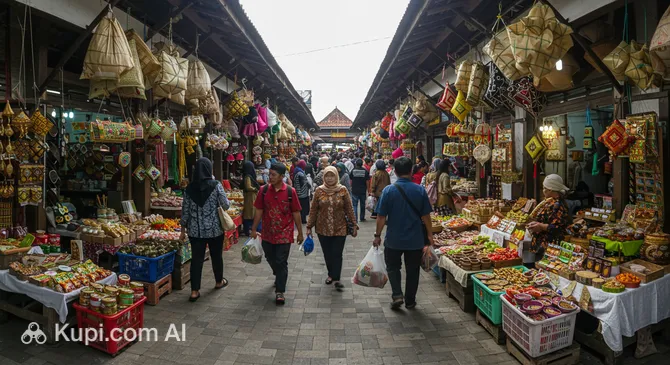
If you prefer a livelier atmosphere where you can find bargains, the Golden Market is an excellent choice. This center operates somewhat differently from a standard mall, functioning as a hub for both wholesale and retail shopping. It is a go-to place for textiles, clothing, and household goods at competitive prices, offering a vibrant environment that sits somewhere between a modern trade center and a traditional bazaar.
Golden Market. Illustration.
Source: Kupi.com AI
Traveller photos:
To truly immerse yourself in the local culture, a visit to Pasar Tanjung is essential. As the largest traditional market in Jember, it is the pulse of the city's trade. Here, you can wander through aisles of fresh tropical fruits, vegetables, and spices. It is the perfect place to see the agricultural bounty of the region and perhaps pick up some local snacks. The market is most active in the early morning, offering a sensory experience filled with the sights and smells of authentic Javanese life.
When it comes to souvenirs, Jember has several distinct specialties that are perfect for bringing home. The city is famous for Suwar-suwir, a sweet treat made from fermented cassava (tape) that resembles fudge or hard candy and comes in various fruit flavors. Another must-buy is Edamame; Jember is a major producer of these soybeans, and you can find them frozen or processed into crispy snacks. For something more lasting, look for Batik Labako, a unique style of batik fabric featuring motifs inspired by tobacco leaves, celebrating the city's heritage as the "City of Tobacco."
Most shopping malls and modern retail stores in Jember operate daily from around 10:00 AM to 10:00 PM. Traditional markets, however, start much earlier, often before dawn, and wind down by the afternoon. Regarding payments, major malls and supermarkets accept credit and debit cards, but cash is still the preferred method of payment in traditional markets, smaller shops, and food stalls. It is advisable to carry sufficient Indonesian Rupiah (IDR) in smaller denominations when exploring these local spots.
Regarding tax-free shopping, tourists should be aware that the Value Added Tax (VAT) refund scheme in Indonesia is generally available only at registered retailers in major international gateways and large cities like Jakarta or Bali. In Jember, it is unlikely that you will find shops participating in the tax refund program, so it is best to plan your budget without expecting a VAT return on your purchases here.
We use cookies and services to collect user information. This is essential for the functioning of the site and for marketing purposes. You can find out more in .