Support

Komodo Airport

About the Airport

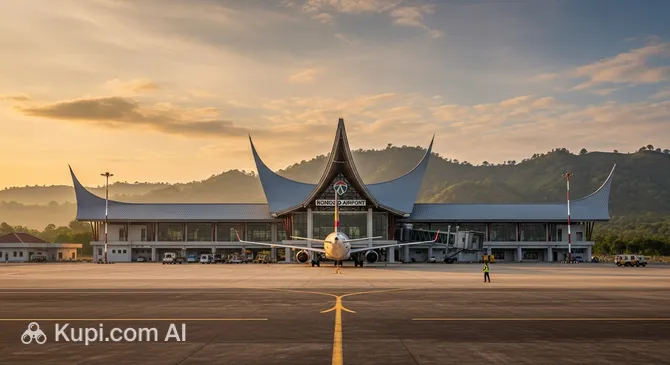
Komodo Airport. Source: Kupi.com Binoculars

Komodo Airport is not merely a transport hub, but a true gateway to a lost world of ancient dragons and incredible seascapes. Even during the approach, passengers are glued to the windows: the runway seems to emerge from the turquoise waters of the Flores Sea, revealing a breathtaking view of the archipelago. The terminal building itself is a landmark: its architecture, with curved roof lines, resembles the silhouette of a Komodo dragon and the traditional houses of Wae Rebo village, immediately immersing travellers in the unique atmosphere of Flores Island.

This airport is considered one of the most picturesque in Indonesia and serves as the starting point for those dreaming of seeing the legendary Komodo National Park. Despite its compact size, the air harbour has recently been modernized to comfortably accommodate the growing flow of tourists seeking to discover the "New Bali". Here, modern comfort harmoniously intertwines with local flair, and the proximity to the port makes travel logistics incredibly convenient.

IATA Code LBJ
ICAO Code WATO
City Labuan Bajo
Distance to Centre ~2 km
Status International
Annual Passengers ~942,000 (2023)

Unique Architecture and Design. The new airport terminal is a tribute to local culture. The shape of the roof mimics the traditional conical houses of the Manggarai tribe, and the interior uses songke motifs—a traditional fabric with a "chicken eye" pattern. Spacious halls are filled with natural light, creating a sense of openness and hospitality.

Strategic Location. One of the main advantages of Komodo Airport is its incredible proximity to the city centre and the main port. A taxi ride takes literally 5–10 minutes, allowing tourists to head to their hotel or transfer to a boat for an island cruise almost immediately after arrival. This is a rarity for resort zones where transfers often take hours.

Modernization and Comfort. In recent years, the airport has undergone major reconstruction to accommodate international flights and larger aircraft. The runway was extended, and the apron was expanded. Passengers have access to modern waiting areas, cafes featuring local cuisine, souvenir shops, and ATMs, making the wait for departure a pleasant part of the journey.

Contact Information

  • Official Website: komodo.ap1.co.id. You can find flight schedules and service information on the Angkasa Pura I management company website.
  • Information Desk Phone: For general inquiries, please call: +62 (0385) 2443329. The Angkasa Pura I unified contact centre is also available at 172.
  • Airport Address: Jl. El Tari, Labuan Bajo, West Manggarai Regency, East Nusa Tenggara, Indonesia.
  • Email: For written inquiries, you can use the unified contact centre e-mail: cc172@ap1.co.id.
  • Social Media: Follow news and updates on the airport's official Instagram page: @komodoairport.
  • Lost Luggage Information: In case of loss or damage to luggage, you must immediately contact the Lost and Found counter or your airline representative.
  • Passenger Support Contacts: For assistance within the airport, please contact the information desk or call the inquiry service numbers.

How to Get to the Airport

Komodo Airport (LBJ) is located very close to the centre of Labuan Bajo, making the journey there fast and convenient. The trip usually takes just 5–15 minutes depending on your location and traffic conditions. There are several ways to reach the terminal, suitable for any budget and travel style in Indonesia.

Taxi or Private Transfer — the most popular and comfortable way to get to the airport. You can hail an official taxi in the city or book a car via popular mobile apps such as Gojek or Grab. Many hotels also offer transfer services for their guests, which can be very convenient. The average cost of a taxi ride from the city centre is approximately 50,000 – 70,000 Indonesian Rupiah.

For a more budget-friendly and authentic journey, you can use local public transport — bemo. These are small minibuses that ply the main streets of the city. They do not have a strict schedule, but they run quite frequently during the day. This is the cheapest option, though it may not be very convenient if you have a lot of luggage. A ride on a bemo will cost significantly less than a taxi.

If you have rented a car or scooter to get around the island, you can easily drive to the airport yourself. The road is well-marked, and the short distance makes this option very simple. The airport provides parking where you can leave your vehicle. Some rental companies also offer the option to drop off the vehicle directly at the airport.

Overall, the choice of transport depends on your preferences. For maximum comfort and speed, a taxi or pre-booked transfer is best. If you are travelling light and want to save money, a bemo offers an interesting local experience. Regardless of the chosen method, thanks to the airport's close proximity, you will easily make your flight.

Terminals and Map

Komodo Airport (LBJ) in Labuan Bajo is a modern and compact aviation hub serving as the main gateway to the famous Komodo and Rinca islands. Its infrastructure is designed for passenger convenience and is intuitive even for first-time visitors.

Structure and Terminals

The airport consists of one main terminal that handles both domestic and international flights. It is a modern two-story building designed with inspiration from the traditional houses of the Manggarai region, immediately immersing you in the local culture. Since there is only one terminal, you do not need to worry about transferring between different buildings — everything is under one roof.

Map and Navigation

Navigation in the airport is extremely simple. Departure and arrival zones are logically separated by floors:

  • Ground Floor: Here you will find the Arrivals area, check-in counters, and the baggage claim area. After collecting your suitcases, you enter the general hall where you can find hotel representatives, tour companies, and taxi services.
  • Second Floor: This is the Departures area. After checking in on the ground floor, passengers proceed upstairs, pass through security control, and enter the waiting lounge with boarding gates.

Procedures and Time

Completing all formalities at Komodo Airport usually does not take much time due to its compactness. Check-in and security screening typically take 30 to 60 minutes. However, during peak hours or when several flights depart simultaneously, small queues may form. It is recommended to arrive at the airport 1.5-2 hours before a domestic flight to go through all procedures without rushing.

Recommendations for Passengers

The airport is well-organized, and signs in Indonesian and English will help you find your way. In the departure area, there are several cafes and souvenir shops where you can pass the time while waiting for your flight. Thanks to the terminal's small size, it is practically impossible to get lost here, making travel through the air gates of Labuan Bajo a comfortable and pleasant start or end to your adventure in Indonesia.

Airport History

Komodo Airport (LBJ), the main air gateway to Labuan Bajo and the famous Komodo National Park, has a relatively recent but very dynamic history. It began its journey as a small and modest airstrip, serving mainly local flights on small aircraft. Its radical transformation is directly linked to the decision of the government of Indonesia to turn this region into a world-class tourism centre.

Key changes began in the 2010s. In 2012, the runway was significantly extended, allowing for larger aircraft such as the Boeing 737 and Airbus A320. However, the real breakthrough was the opening of a new, modern passenger terminal in December 2015. The previous building was small and could not cope with the growing flow of tourists. The new terminal, inaugurated personally by the country's president, not only increased capacity several times over (to 1.5 million passengers per year) but also became an architectural landmark thanks to its futuristic design inspired by local nature.

The latest stage of modernization took place in 2021-2022. In preparation for hosting the G20 and ASEAN summit events in Labuan Bajo, the airport underwent major reconstruction once again. The runway was further expanded and extended to 2,650 metres, and the terminal area was increased. These improvements allowed the airport to accommodate wide-body aircraft and serve even more international and domestic flights, strengthening its status as one of the country's most important tourism hubs.

One interesting fact is that the development of Komodo Airport is a shining example of a successful public-private partnership. Its rapid growth from a provincial airfield to a modern international airport is an achievement that directly contributed to the tourism boom in the region. The airport was, of course, named in honour of the legendary Komodo dragons that inhabit the neighbouring islands and are the main travel objective for many tourists.

Services and Facilities

Komodo Airport (LBJ), being the gateway to the famous islands, offers passengers all necessary amenities in a modern and bright terminal. Before departure or after arrival, you can have a meal at one of several cafes and restaurants serving both local Indonesian dishes and familiar European food. In the shops, you can purchase souvenirs, local handicrafts, and essential items.

For a comfortable wait, the airport provides convenient waiting lounges. Passengers desiring more privacy and service can utilise the VIP lounge, which typically offers beverages, snacks, and a quieter atmosphere. Free Wi-Fi is available throughout the terminal, and special charging stations are equipped for electronic devices, allowing you to stay connected at all times.

Travellers will find several ATMs and currency exchange counters at Komodo Airport, which is particularly convenient for those arriving from abroad. In case of illness or the need for first aid, a medical post operates within the terminal building, ready to provide basic assistance to passengers.

The airport administration has taken care of passengers with special needs. The terminal is equipped with ramps and special toilets for people with disabilities. For travellers with small children, there is a mother and child room where you can feed and change your baby in a quiet environment. This makes waiting for a flight more comfortable for families.

Although there are no hotels directly inside the airport building, many accommodation options are located in the immediate vicinity, in the city of Labuan Bajo, which can be reached in just a few minutes by taxi. Regarding business services, the airport is primarily oriented towards tourists, so specialized conference rooms or business centres are absent here; however, basic amenities such as internet access and laptop work zones are available in the waiting lounges.

Dining

Komodo Airport (LBJ), despite its modest size, offers passengers several decent options for a snack or a full meal before departure. Most dining establishments are concentrated in the general area before security control (landside), so if you have time, it is better to eat there.

In the main area of the airport, you will find several small cafes and eateries offering both local Indonesian cuisine and familiar European snacks. This is a great opportunity to try hits like nasi goreng (fried rice) or mie goreng (fried noodles) one last time. Here you can also enjoy a cup of the famous local coffee from Flores Island. Prices at the airport are higher than in the city of Labuan Bajo, but remain moderate by international standards.

After passing through security (airside), the selection becomes more limited. Usually, a small cafe or kiosk operates in the departure zone, where you can buy drinks, sandwiches, pastries, and light snacks. This is a convenient option for those who want a quick bite right before boarding. Opening hours are generally tied to the flight schedule — they open early in the morning and close after the last flight departs.

Regarding dietary preferences, finding certified gluten-free or vegan dishes can be difficult. However, vegetarians will easily find options — almost every cafe can prepare fried rice or noodles with vegetables (without meat and eggs). Most establishments adhere to Halal standards, which is the norm for Indonesia.

Travel Tips

Travelling through Komodo Airport in the city of Labuan Bajo is the gateway to the amazing world of Komodo National Park. To ensure your adventure starts smoothly, use our tips to help you navigate this small but bustling airport in Indonesia.

Arrival Time and Check-in. Komodo Airport (LBJ) is small, but due to its popularity, it can get quite crowded during the high season. We recommend arriving at least 2 hours before departure for a domestic flight. This will give you enough time to check in calmly and pass through security. Most airlines offer online check-in, which can significantly save your time.

Seat Selection. When flying out of Labuan Bajo or arriving here, be sure to try and get a window seat. The bird's-eye views of the scattered islands of Komodo National Park are simply mesmerizing and will become one of the highlights of the entire trip.

Hand Luggage. Hand luggage rules are standard: liquids in containers up to 100 ml packed in a transparent bag, and a ban on sharp objects. Pay special attention to power banks — they can only be carried in hand luggage. Always check the current requirements of your airline, as low-cost carriers may have strict weight and size restrictions.

Connecting Passengers and Customs. Komodo Airport primarily serves domestic flights. If you are flying from abroad, you will likely pass through customs and immigration control at your first point of arrival in Indonesia, for example, in Jakarta or Denpasar (Bali). You will arrive in Labuan Bajo as a domestic passenger. If you have a connecting flight, allow enough time for the transfer at larger airports.

Saving Time and Money. To save money, book a transfer from the airport to your hotel in advance online or through your accommodation — taxis at the airport may cost more. Prices for food and drinks at the airport are higher than in the city, so it is better to have a snack before arriving. Bring an empty water bottle to fill up after passing security.

In Case of Flight Delay. Delays, especially during the rainy season, are not uncommon. In case of schedule changes, first contact your airline's counter for information. Keep your airline's contacts and your travel insurance number handy. Since the airport is small, options for long waits are limited. Download movies or bring a book in advance to brighten up the wait.

Reached the end of the page?

That means the route is fully explored