Support

Kolaka (Sangia Nibandera)

About the Airport

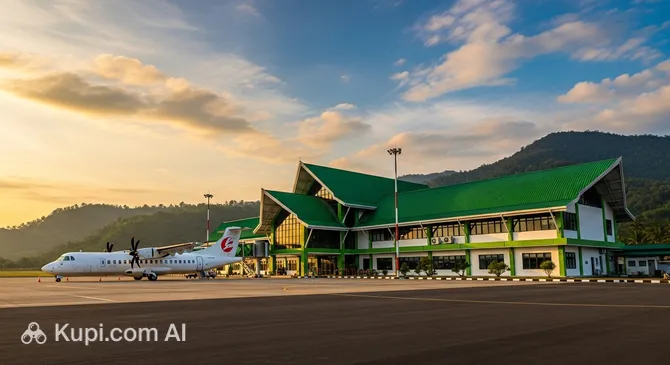
Sangia Nibandera Airport is not merely a runway; it is your gateway to the distinctive region of Southeast Sulawesi. It is here that your introduction to authentic Indonesia begins, far removed from noisy tourist centres. Upon landing in the town of Pomala, you will find yourself in the heart of a land rich in natural resources and secluded beaches, ready to offer you unforgettable impressions. This compact airport serves as a key transport hub for the entire Kolaka Regency, ensuring connectivity with other islands of the archipelago.

Kolaka (Sangia Nibandera). Source: Kupi.com Binoculars
IATA Code KXB
ICAO Code WAWP
City Pomala
Distance to Kolaka Centre ~30 km
Status Domestic
Annual Passenger Traffic ~70,000 - 90,000 passengers
Popular Airlines Wings Air, Susi Air

The main advantage of Sangia Nibandera Airport is its strategic location. It serves one of the region's major industrial centres while also opening access to the coastal tourism gems. From here, it is convenient to reach picturesque beaches, such as Mekongga, and islands renowned for their white sand and excellent snorkelling conditions.

Despite its modest size, the airport offers everything necessary for travellers. Check-in and security procedures here are completed significantly faster than in large international hubs, allowing you to avoid unnecessary bustle. The infrastructure includes a small but cosy waiting lounge and basic amenities, creating an atmosphere of tranquillity before your onward journey through the amazing corners of the Indonesian archipelago.

Contact Information

Finding direct contacts for small regional airports like Sangia Nibandera (KXB) can be challenging. Primary interaction with passengers is usually handled by airline representatives. Below is the main available information.

  • Official Website: Currently, the airport does not have its own official website. General information can be found on the portals of the Civil Aviation Directorate of Indonesia.
  • Information Desk Phone: A direct telephone number for the airport is not published in open sources. For real-time flight information, it is recommended to contact your airline directly.
  • Airport Address: Bandar Udara Sangia Nibandera, Tanggetada, Kabupaten Kolaka, Sulawesi Tenggara, Indonesia.
  • Email: An official email address is not provided.
  • Social Media: The airport does not maintain official pages on social networks.
  • Lost Luggage Information: For all issues related to lost or damaged luggage, please contact the support service of the airline you flew with.
  • Passenger Support Contacts: Passenger support and resolution of issues related to tickets and flights are handled by the airlines operating flights to Pomala airport.

How to Get to the Airport

Kolaka Airport, officially known as Sangia Nibandera Airport, is located in the Pomala district, approximately 25–30 kilometres south of Kolaka city centre. As this is a small regional air hub, the transport infrastructure here is not as developed as in major metropolises, which is worth considering when planning your route.

Here are the main ways to get to the airport and useful tips for travellers:

Taxi and Transfer

The most convenient and reliable way to get to the airport is by taxi or a pre-booked transfer. International ride-hailing apps do not always work in the Kolaka region, so one often has to rely on local private drivers or the city's official taxi services.

A trip from Kolaka city centre to the airport in Pomala usually takes 30 to 45 minutes depending on traffic conditions. It is recommended to agree on the fare in advance, as meters are rarely used. The estimated cost may vary but remains quite affordable by tourist budget standards.

Many hotels in Kolaka offer a transfer service for their guests. This is the most stress-free option: a driver will meet you in the lobby and deliver you directly to the terminal, saving you the need to search for a car yourself.

Public Transport

It is important to know that transport modes familiar to large cities, such as the metro or trains, do not exist in this region. The public bus system is also not oriented towards tourists with luggage.

However, for the most budget-conscious and adventurous travellers, there are local minibuses called "angkot" or "mikrolet". They run between Kolaka and the Pomala district. The fare is very low, but comfort is minimal, and the schedule can be flexible. Also popular in Indonesia is the motorcycle taxi "ojek", which is suitable if you are travelling alone and only with hand luggage.

Car Rental and Parking

Self-drive car rental is rare in this region. Most often, tourists rent a car accompanied by a local driver for the whole day or for a specific route. This eliminates difficulties with navigation and the local driving style.

If you have arrived by private or rented vehicle, there is a small open-air parking lot in front of the Sangia Nibandera airport terminal. There is usually ample space, and parking rates are very reasonable. The parking area is located in immediate proximity to the check-in entrance.

Alternative Airports Nearby

If there are no tickets to Kolaka or the flight schedule does not suit you, you may consider flying via neighbouring transport hubs, from where you will need to travel by land or sea. The nearest major hub is Haluoleo Airport in the city of Kendari, located approximately 100 km away in a straight line (however, the journey by road will take significantly longer due to the terrain).

Additionally, the following airports operate in the Southeast Sulawesi region and its vicinity:

Useful Recommendations

Always carry cash in Indonesian Rupiah, as taxi and minibus drivers rarely accept cards. Leave for the airport with a small time buffer so as not to worry about possible delays on the road.
Terminals and Map

Kolaka Airport (Sangia Nibandera) (KXB) is a small regional airport serving domestic flights. Its infrastructure is simple and functional, making navigation intuitive even for first-time visitors.

Structurally, the airport consists of one terminal that serves both departing and arriving passengers. The terminal building is compact, and all key zones are within walking distance of each other. There are no separate terminals for domestic or international flights, as the airport is oriented exclusively towards local transport. Consequently, transfers between terminals are not required.

Inside the terminal, the space is clearly divided. On one side, there are the check-in counters and the security screening area leading to a small waiting lounge for departing passengers. On the other side is the arrival area with a baggage claim belt. Thanks to the airport's modest size, it is practically impossible to get lost here — all signs and boarding gates are clearly visible.

Check-in and screening procedures at Sangia Nibandera Airport usually proceed very quickly due to the low passenger traffic. It is recommended to arrive at the airport 1.5–2 hours before departure; however, completing all formalities usually takes no more than 30–40 minutes. For navigation, simply follow the standard signs — from the entrance to the check-in counters, then to the security zone and into the waiting lounge. Everything is very simple and logical.

History of the Airport

The history of Sangia Nibandera Airport (KXB) is closely intertwined with the economic development of the region and its industrial heritage. Its journey from a small private airfield to a modern regional hub reflects the drive to improve transport accessibility in the southeastern part of Sulawesi island in Indonesia.

Initially, it was a service airfield built for the needs of the state mining company PT Aneka Tambang (Antam), which is engaged in nickel mining in the vicinity of the town of Pomala. For a long time, the runway was used exclusively for corporate transport, ensuring connectivity with other parts of the country for the enterprise's needs.

A turning point in the airport's history was the government's decision to transform it into a civil aviation facility. In the 2010s, large-scale modernisation began: a new passenger terminal was erected, and the runway was significantly widened and extended. These improvements allowed the airport to receive larger passenger aircraft, such as the ATR 72, and to serve regular commercial flights. The official opening of the renovated airport was a significant event for the entire region.

One of the most interesting facts is related to the airport's name. It was named Sangia Nibandera in honour of a revered King who ruled the Kingdom of Kolaka in the 17th century. This gesture highlights respect for local history and culture. Today, the airport holds no loud records, but its main achievement is opening the region to business and tourism, as well as providing convenient and fast connections for thousands of local residents.

Services and Facilities

Sangia Nibandera Airport (KXB) is a compact regional air hub, so the range of services here focuses on the basic needs of travellers. The terminal infrastructure is simple and functional, allowing you to wait for your flight in comfort.

Inside the terminal, you will find several small cafes where you can order drinks, light snacks, and simple Indonesian dishes. There are also kiosks selling essential items and local souvenirs. A general lounge is designated for all passengers to wait for their flights. Special VIP halls or high-comfort lounges are usually not provided in an airport of this size.

Wi-Fi may be available in the airport building, but the signal is not always stable. For reliable connectivity, it is better to use mobile data. There are power outlets in the waiting lounge for charging gadgets, but their number is limited, so it is worth bringing a portable power bank. There are no currency exchange points or bank branches on the premises — it is recommended to exchange money in advance or use ATMs in the nearest town. A medical point operates at the airport to provide first aid.

Basic amenities may be provided for passengers with children, but it is better to check for the availability of a separate nursing room at the information desk upon arrival. Travellers with reduced mobility must notify their airline in advance of the need for special assistance, such as the provision of a wheelchair for moving around the terminal.

There are no hotels directly on the Kolaka Airport grounds. The nearest hotels and guesthouses are located in the town, which can be reached by taxi or other transport. Specialised business services, such as conference room rentals or working zones, are not offered at the airport.

Where to Eat

Kolaka Airport (Sangia Nibandera) is a small regional air hub, so the choice of dining establishments corresponds to its size. Do not expect large restaurants or international chains here, but finding a place for a snack or a full meal before departure is certainly possible.

The majority of establishments are concentrated in the public area (landside), before passing through security control. Here, several small cafes or so-called warungs — traditional Indonesian eateries — usually operate. This is the best option for those who want a leisurely lunch. The menu most often features classic Indonesian dishes such as Nasi Goreng (fried rice with accompaniments) and Mie Goreng (fried noodles). You can also order local coffee, tea, and various snacks here.

After passing security control, in the sterile area (airside), the choice is usually limited to a small kiosk or retail point. Here you can buy bottled water, carbonated drinks, packaged snacks (crisps, biscuits), and sweets. This is a convenient option for a quick bite immediately before boarding the flight.

Regarding practical points:

  • Price Range: Prices at Kolaka Airport are quite reasonable, especially compared to major international airports.
  • Opening Hours: Establishments usually open a few hours before the first flight and close after the departure of the last aircraft.
  • Dietary Options: Practically all food offered in local cafes is Halal. Vegetarians can ask for a dish to be prepared without meat (for example, vegetable Nasi Goreng), but choices for vegans or people on a gluten-free diet will be extremely limited. In this case, it is recommended to carry your own snacks.

Tips for Travellers

Travelling through Kolaka Airport (Sangia Nibandera) will be an easy and pleasant start or finish to your adventure in the town of Pomala if you prepare in advance. Here are a few useful tips to help you get your bearings and avoid unnecessary hassle.

Arrival Time at the Airport. Sangia Nibandera Airport is relatively small, so huge queues are rare here. Nevertheless, to complete all procedures without rushing, it is recommended to arrive 2–2.5 hours before the departure of a domestic flight. This time is sufficient for check-in, luggage drop-off, and passing security control.

Check-in and Security Control. To save time, use online check-in on your airline's website if such an option is available. At the airport, have your passport and boarding pass ready. During screening, be prepared to remove laptops and other large gadgets, as well as the plastic bag with liquids, from your hand luggage.

Seat Selection on the Plane. If you have the opportunity to choose a seat, consider your preferences. A window seat (A, F) will grant you stunning views of the islands and coast of Indonesia during take-off and landing. An aisle seat (C, D) provides more legroom and allows you to stand up freely without disturbing neighbours.

Hand Luggage Rules. Standard international rules apply here as well. Liquids (shampoos, lotions) may be carried in containers of no more than 100 ml each, packed in a single transparent bag. Sharp objects are prohibited. Remember that power banks and lithium batteries must be carried only in hand luggage.

Passengers with Connections. If you are flying from Kolaka with a connection, check during registration whether your luggage will be automatically transferred to the final destination. Keep the boarding pass for the next flight and find out the boarding gate number at the transit airport in advance so as not to waste time searching.

Customs Control. Since Kolaka Airport serves mainly domestic flights, customs control is absent here. If you are arriving in Indonesia from another country, you will pass customs and immigration formalities at the first airport of arrival (for example, in Jakarta or Denpasar).

Saving Time and Money. Book flight tickets in advance to get the best prices. Travel light to avoid paying for excess baggage. Bring an empty water bottle, which can be filled at a drinking fountain after passing security control, and a light snack to avoid spending on food at the airport.

In Case of Flight Delay. First of all, contact your airline representative for information on the flight status and further actions. Depending on the length of the delay, you may be provided with vouchers for food or drinks. Having travel insurance that covers such cases can also prove very useful.

Reached the end of the page?

That means the route is fully explored