Support

Bani Walid Airport

About the Airport

Bani Walid Airport
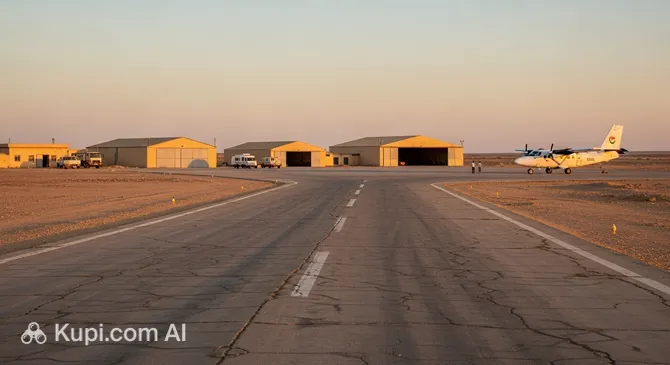
Bani Walid Airport. Source: Kupi.com AI

Bani Walid Airport (QBL) is an important transport hub located in the heart of Libya, in the immediate vicinity of the oasis city of the same name. Surrounded by picturesque, albeit harsh desert landscapes, this air gateway plays a significant role in connecting the region with other parts of the country. Although the airport does not feature the massive infrastructure of major international hubs, it offers travellers an authentic experience and serves as a gateway to one of Libya's historically significant districts.

AirportBani Walid Airport
IATAQBL
CityBani Walid
TimezoneAfrica/Tripoli
ScheduleOnline board

Airport Features and Advantages:

The main advantage of the airport is its strategic location: it is situated just a few kilometres from the centre of Bani Walid, allowing you to reach your destination within minutes of landing. This is particularly valuable for those wishing to avoid long overland journeys through the desert terrain.

The airport is characterised by simplicity and compactness. There are no confusing terminals or long queues typical of capital city airports, making the arrival and departure process as fast and unobtrusive as possible. The surrounding views of endless sands and dunes create a special atmosphere even before you step out into the city.

Contact Information

  • Official Airport Website: Currently, the airport does not have its own official website. It is recommended to check up-to-date information on flights and services through airline web resources or global aggregators.
  • Inquiry Service Phone: A direct public phone number for the airport directorate or inquiry service is not available in open sources.
  • Airport Address: Bani Walid Airport, Bani Walid, Libya (located approximately 5–7 km east of Bani Walid city centre).
  • Email: A public e-mail address for passenger inquiries has not been provided.
  • Airport Social Media: No official verified accounts on social networks have been found.
  • Lost Luggage Information: A dedicated "Lost & Found" service does not operate online. For issues regarding lost items, you must contact the representative of the airline operating the flight immediately upon arrival.
  • Passenger Support Contacts: To resolve operational issues, it is recommended to contact the offices of air carriers or the Libyan Civil Aviation Authority (LYCAA).

How to Get to the Airport

The transport infrastructure in the Bani Walid area has its own specificities, determined by the airport's regional status and the nature of local connections. Since the airport is located just 5–7 kilometres from the city centre, the trip will not take much time, although the choice of transport is limited.

Taxi and Transfer

The most convenient and common way to reach the terminal is by taxi. There are no major international taxi aggregators in the city, so services are provided by local private drivers or small local taxi firms.

  • Travel Time: The trip from the city centre to the airport usually takes 10–15 minutes, depending on traffic conditions.
  • Cost: There are generally no fixed tariffs. The price must be negotiated with the driver before boarding. Payment is made in cash in the local currency.
  • Recommendation: If you are staying at a hotel or guest house, ask the receptionist to book a reliable taxi in advance.

Public Transport

A public transport system in the sense familiar to European tourists (metro, scheduled city buses) is not developed in Bani Walid. There is no rail connection to the airport.

There are shared taxis (minibuses) running between city districts, but there may not be a specific route entering the airport territory directly. This option is suitable only for experienced travellers who know Arabic and the local geography, but it is not recommended for travel with luggage.

Car Rental and Parking

You can rent a car in the city centre, as rental desks within the terminal itself may operate irregularly or be absent. Travelling by car is a good option for those planning to explore the desert surroundings.

An open parking zone is equipped in front of the airport building. Due to the low traffic at the air harbour, finding a free space is usually not difficult. Parking is generally free or has a nominal cost, but it is better to check conditions on-site with security.

Alternative Routes via Neighbouring Airports

Considering that flights to Bani Walid may be irregular, many travellers use the country's larger transport hubs and then reach their destination by ground transport.

The nearest major hub is Misrata Airport, located approximately 123 km away. The journey from there by car takes about 2 hours. Another popular option is the capital's Mitiga Airport (about 143 km), from where a paved road leads to Bani Walid.

Also in the region are Zintan Airport and foreign transport hubs such as Melita Airport (Tunisia) and Lampedusa Airport (Italy), however, they are located significantly further away and would require complex logistics for transfer.

Terminals and Map

The infrastructure of Bani Walid Airport (QBL) is distinguished by extreme conciseness and functionality, which fully corresponds to its status as a small regional hub. You will not find confusing labyrinths of corridors or multi-level crossings here. The entire airport complex is designed to simplify and speed up passenger service as much as possible.

Number and Purpose of Terminals

The airport has one passenger terminal. It is a small single-storey building that serves both departing and arriving flights. The separation of passenger flows here is organised as simply as possible, often within a single common hall zoned with counters and partitions. The terminal is oriented towards handling domestic flights and private aviation.

Airport Layout and Service Zones

The internal space of the terminal is organised intuitively:

  • Check-in Zone: Located immediately at the entrance to the building. Due to the small number of flights, usually only one or two check-in counters operate here.
  • Security Zone: The security control point is located in immediate proximity to the check-in counters. The procedure is standard but proceeds much faster than in major hubs.
  • Waiting Hall (Departure Zone): A small space with seats for passengers awaiting boarding. Conditions here are basic: travellers should be prepared for the absence of Duty-Free shops or entertainment zones.
  • Arrival Zone: Represents a separate exit where passengers can collect their luggage. Luggage delivery is often carried out in a simplified mode, sometimes without the use of conveyor belts.

Transitions and Navigation

Since the airport consists of one compact building, there are no transitions between terminals. Navigation inside is extremely simple: it is impossible to get lost here, as the path from the entrance to the boarding gate is practically a straight line. Visual contact with airport staff is possible from almost any point in the hall, allowing you to quickly ask a question if necessary.

Procedure Times

One of the main advantages of Bani Walid Airport is the speed of service.

  • Check-in and Security: Usually take from 10 to 20 minutes. The absence of long queues allows for arriving at the airport a little later than is customary at international airports.
  • Recommended Arrival Time: Despite the efficiency of services, it is recommended to arrive 1–1.5 hours before departure to complete all formalities calmly and avoid unforeseen delays.

Navigation Recommendations

For a comfortable stay at the airport, keep in mind that information boards may be small or absent altogether. Listen carefully to voice announcements (they may be duplicated in English, but more often sound in Arabic) and follow the instructions of security staff. If you are travelling with a large amount of luggage, be prepared to transport it yourself over short distances, as porter services may be unavailable.

Airport History

The history of Bani Walid Airport is inextricably linked with the development of transport accessibility in the country's interior regions. The air harbour was founded in the second half of the 20th century, during a period of active development of civil aviation in North Africa. Initially, the facility was created as a small airstrip intended to provide a fast connection for the oasis city with coastal metropolises and remote oil fields.

Key Stages of Development

In the first decades of its existence, the airport's infrastructure was minimal. A key stage of modernisation was the asphalt paving of the runway, which allowed for the reception of heavier aircraft than the light aviation used at the dawn of the air hub's operation. Gradually, a stationary passenger terminal was erected, replacing temporary structures, which significantly improved comfort for travellers waiting for flights under the scorching sun.

Reconstruction and Modernity

Over the years of operation, the airport has gone through several stages of technical re-equipment. Special attention was paid to updating navigation equipment and lighting systems necessary to ensure flight safety in conditions of poor visibility, often caused by sandstorms. Although the airport has not undergone massive futuristic reconstructions typical of capital hubs, regular repair works allow its functionality to be maintained at a proper level.

Interesting Facts

  • Battling the Elements: The airport is located in a zone subject to the influence of the desert climate. Engineers had to apply special paving technologies resistant to extreme temperature fluctuations characteristic of this terrain.
  • Strategic Role: For the residents of Bani Walid, the airport long remained the only fast alternative to multi-hour car journeys along difficult routes.
  • Archaeological Surroundings: Traces of ancient civilisations can be found in the airport's vicinity. The construction and expansion of runways were conducted with caution so as not to damage the historical landscape of the region, which is rich in artefacts.

Services and Amenities

Services and amenities at Bani Walid Airport (QBL) correspond to its status as a small regional transport node. Passengers should note that the terminal does not feature the extensive infrastructure characteristic of large international hubs. The focus here is on basic service and quick completion of pre-flight formalities.

Dining and Shops

Gastronomic possibilities in the terminal are extremely limited. Usually, a small buffet or kiosk operates here, where you can purchase bottled water, hot tea, coffee, and light snacks (biscuits, crisps). There are no full-service restaurants or cafes with hot meals in the airport building.

The shopping zone is also minimal. Duty-Free shops are absent. Small stalls selling local souvenirs or essential goods may operate periodically in the hall, but the assortment is small. Travellers are strongly advised to take care of food and necessary items in advance, before arriving at the airport.

Connectivity and Finance

The technical equipment of the terminal is basic:

  • Wi-Fi and Internet: Public Wi-Fi for passengers may be absent or work unstably. It is recommended to rely on your own mobile internet (local SIM cards are best purchased in the city).
  • Charging Stations: There are no specialised stands for charging gadgets. Access to power outlets may be limited, so having a fully charged power bank is an important detail for comfortable waiting.
  • Banking Services: ATMs and currency exchange points inside the terminal are generally not provided. It is best to pay for services and goods in cash in the local currency (Libyan Dinar), having withdrawn money in advance at banks in Bani Walid.

Waiting Halls and Business Services

The airport has one common waiting hall. Separation into service classes or the presence of separate VIP lounges (business lounges) is not provided. All passengers await departure in a single space. Conference rooms and business centres are absent from the terminal premises.

Medical Assistance and Security

The airport building has a basic first aid point for emergencies. In case of serious health problems, transport to city medical facilities will be required. The security service operates in standard mode, ensuring screening at the entrance and before boarding.

Services for Passengers with Children and Special Needs

Infrastructure for special categories of passengers is limited:

  • For Families with Children: There are no mother-and-child rooms or play zones in the terminal. Due to the short waiting time for flights, this usually does not cause serious inconvenience, but parents should bring entertainment for children with them.
  • For Passengers with Reduced Mobility: There is no specialised equipment (lifts, travelators) as the terminal is single-storey. Boarding the aircraft is often carried out using standard stairs. If you require assistance with boarding or disembarking, you must notify the airline in advance—airport staff will provide physical assistance with movement.

Hotels and Accommodation

There is no on-site hotel at the airport or within walking distance. Since the airport is only 5–7 km from the city, passengers can use hotels in Bani Walid itself. Accommodation options there range from small guest houses to local hotels. It is best to book a transfer to your accommodation in advance.

Where to Eat

When planning a trip through Bani Walid Airport (QBL), it is important to consider its status as a small regional hub. The gastronomic infrastructure here is minimal and differs significantly from what tourists are used to seeing in major international hubs. Passengers should not count on a full meal directly in the terminal before departure.

Cafes and Food Points

The airport's single terminal lacks chain restaurants, food courts, or gourmet boutiques. Passenger service is limited to one or two small sales points:

  • Format: Usually, this is a small buffet or kiosk located in the general waiting area (often accessible both before and after security screening, due to the building's compactness).
  • Menu: The assortment consists mainly of packaged snacks: biscuits, chocolate, crisps, nuts. Substantial food such as simple sandwiches or local pastries may sometimes be found, but their availability is not guaranteed and depends on the flight schedule.
  • Drinks: Bottled water, carbonated drinks, and carton juices are available.

Local Flavour: What to Try

Despite the modest choice of food, even at a small airport kiosk, you can experience Libyan tea traditions. If the hot drinks counter is open, be sure to order:

  • Libyan Tea: Strong, sweet black tea, often served with foam and sometimes with the addition of peanuts or almonds. This is an excellent way to invigorate yourself before a flight.
  • Arabic Coffee: Traditionally strong and aromatic, often with the addition of cardamom.

Alcohol and Bars

It is important to remember that Prohibition (Dry Law) is in effect in Libya. The sale and consumption of alcohol are strictly forbidden throughout the country, including airports. There are no bars in the Bani Walid terminal, and alcoholic beverages are not served in any form.

Dietary Requirements

Specialised options for specific diets are practically non-existent at the airport due to the limited assortment:

  • Halal: Since Libya is a Muslim country, 100% of products available at the airport (including any sandwiches or meat snacks) are Halal by default.
  • Vegetarians and Vegans: The choice is limited to simple snacks (nuts, dried fruits, crisps). Fresh salads or special vegan dishes are absent.
  • Gluten-Free: Product labelling may be missing. Passengers with celiac disease are strongly advised to carry their own supply of safe food.

Prices and Payment

The price range at Bani Walid Airport is very democratic and practically does not differ from city prices, as there are no high mark-ups typical of duty-free zones.

  • Average Bill: A cup of tea or coffee and a light snack will cost an amount equivalent to 1–3 US dollars (in local Dinar terms).
  • Payment Method: Only cash (Libyan Dinars) is accepted. Terminals for bank cards may be absent or not working, so be sure to prepare small notes in advance.

Opening Hours

Food points do not operate around the clock. They generally open an hour or two before a flight departure and close immediately after passengers have boarded. On days when there are no flights, the kiosk may be closed.

Recommendations for Passengers

  • For a Quick Snack: The airport kiosk is suitable for buying water and a packet of biscuits while waiting for boarding.
  • For a Full Meal: It is strongly recommended to eat in the city of Bani Walid before travelling to the airport. In the city centre, there are cafes and restaurants serving traditional cuisine where you can have a hearty lunch of grilled meat or couscous. Do not rely on a substantial meal at the airport itself.

Tips for Travellers

Travelling through a regional airport like Bani Walid (QBL) has its own specifics. The lack of complex infrastructure, on the one hand, simplifies procedures, but on the other, requires greater independence and preparation from the passenger. Here are a few key tips to make your flight comfortable and calm.

Optimal Arrival Time

Despite the terminal's compactness and lack of long queues, you should not arrive at the airport at the "last minute".

  • Recommended Time: Arrive at the airport 1.5 hours before departure. This time will be sufficient for a leisurely security check and check-in.
  • Time Buffer: If you have luggage to check in or are flying in a large group, add another 15–20 minutes to this time. Remember that check-in counters may close strictly 30–40 minutes before departure.

Check-in and Security: Important Nuances

Procedures in Bani Walid are conducted in "manual" mode, without the use of self-service kiosks or automated gates.

  • Paper Copies: It is strongly recommended to carry printed itinerary receipts and boarding passes. Electronic systems may fail, and QR code scanners on smartphone screens are not always available at counters.
  • Documents: Keep your passport and ticket handy. Identity checks may be conducted several times: at the terminal entrance, at the check-in counter, and before boarding.
  • Calmness during Screening: The security service works thoroughly. Be prepared to remove shoes or belts at the request of staff. Treat this with understanding—these are standard security requirements.

Choosing a Seat on the Plane

Flights from Bani Walid are often operated by small regional aircraft. This offers an excellent opportunity to enjoy the views.

  • By the Window: Choose a Window Seat to see breathtaking panoramas of the desert, sand dunes, and the green oasis of the Wadi valley during take-off and landing.
  • In the Centre of the Cabin: If you are prone to motion sickness, try to occupy seats in the middle of the cabin, over the wing. In small aircraft, turbulence is felt more strongly, and this is the most stable zone.

Hand Luggage: Do's and Don'ts

Rules for carrying hand luggage here correspond to international standards, but with strict local laws in mind.

  • Strict Prohibition: Under no circumstances attempt to carry alcohol (in any form or volume), narcotics, or pork products. This is a serious violation of Libyan laws.
  • Electronics: Power banks (portable chargers) and spare lithium batteries must be carried only in hand luggage. They are prohibited in checked luggage due to fire risk.
  • Liquids: Observe the 100 ml rule for liquids in hand luggage; although control on domestic flights might be slightly softer, it is better not to risk expensive perfumes.

For Passengers with Connections

Bani Walid Airport is not a transit hub, and there is no dedicated transit zone here.

  • Self-Transfer: If you have a subsequent flight from another airport (for example, Mitiga or Misrata), allow a minimum of 4–5 hours between flights. You will have to collect your luggage, travel to the other airport by ground transport, and check in again.
  • Risk of Delays: Consider that regional flights may shift in time due to weather conditions (sandstorms), so do not plan tight connections.

Customs Control

  • Currency: Upon entry or exit, declare large amounts of cash (foreign currency).
  • Cultural Valuables: The export of any archaeological artefacts, stones "with history", or antiques without special permits is strictly forbidden and punishable by law.

How to Save Time and Money

  • Cash: This is the most important advice. There are no ATMs in the airport. Always carry small cash Dinars to pay for taxis, luggage wrapping, or buying water.
  • Own Food: Prices at the airport are not high, but the choice is extremely poor. Buy sandwiches and water in advance at a regular supermarket in the city—it will be cheaper and tastier.
  • Transfer: Agree on the price with the taxi driver in advance or ask local acquaintances to call a trusted driver. This will save you from inflated tariffs for tourists.

What to Do in Case of Flight Delay

Since infrastructure for comfortable waiting is limited, a flight delay can become a challenge.

  • Offline Entertainment: Wi-Fi in the terminal may be absent. Download films, music, or take a paper book in advance to pass the time.
  • Water Supply: In case of a long wait, water stocks at the kiosk may run out. Have your own bottle of water in your bag.
  • Communication: Ensure your phone is charged and your local SIM card has credit so you can contact those meeting you or rebook a transfer if necessary.

Reached the end of the page?

That means the route is fully explored