Support

Libyan Arab Jamahiriya

About the Country

Libya, a country in North Africa washed by the waters of the Mediterranean Sea, attracts travellers with its rich and multi-layered history, as well as its unique desert landscapes. Its capital, Tripoli, is the main economic and cultural centre, where ancient traditions intertwine with a modern way of life.
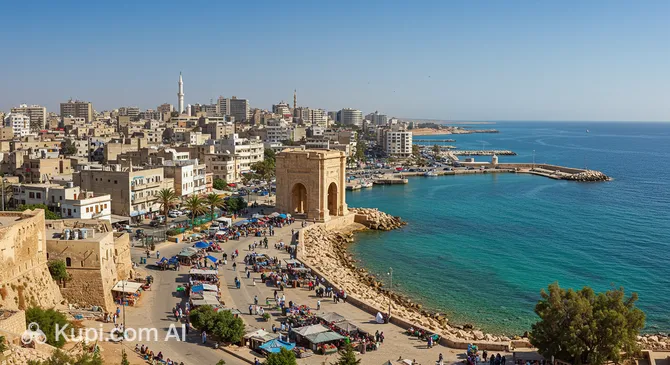
Tripoli. Source: Kupi.com Binoculars

Libya's historical heritage is impressive, with traces of the great civilisations of the past preserved here. Travellers can explore the ruins of ancient Roman cities such as Leptis Magna and Sabratha, admire the craftsmanship of ancient architects by seeing, for example, the Arch of Marcus Aurelius in Tripoli, or immerse themselves in the atmosphere of ancient oasis towns, among which Ghadames stands out, known as the "pearl of the desert" and listed as a UNESCO World Heritage site.

A significant part of Libya's territory is occupied by the majestic Sahara Desert, offering tourists unforgettable experiences of endless sand dunes, rock formations, and unique flora and fauna. The country's climate is predominantly desert-like, hot and dry; however, on the coast, it is milder and more Mediterranean. Libya leaves one with a sense of connection to deep antiquity, combining the stark beauty of nature with a rich cultural heritage, which makes it an interesting destination for inquisitive travellers.
Currency

The national currency of Libya is the Libyan dinar (international code LYD). Dinars are issued as banknotes in various denominations, which often feature important historical figures, cultural symbols, or significant national landmarks. Coins are also in circulation and are used for smaller transactions.

It is recommended to exchange foreign currency for Libyan dinars at official banks or licenced exchange offices, which can be found in major cities such as Tripoli. Avoid exchanging money with street money changers, as this can carry the risk of fraud or receiving counterfeit banknotes. The use of credit cards in Libya is limited; they may be accepted in some large hotels and a restricted number of establishments in the capital. In most cases, it is preferable to carry a sufficient amount of cash for daily expenses, especially when travelling outside of major cities.

Visa Requirements

To enter Libya, citizens of the United Arab Emirates are generally required to obtain an eVisa. The process for securing a visa typically takes place through the embassies or consulates of Libya. A key document for this application is a valid passport, which must have a validity period that covers your intended stay in the country.

In addition to a visa and passport, you may also be asked to provide other standard travel documents, such as return flight tickets, proof of hotel reservation, and a medical insurance policy. Visa requirements and procedures can change, so it is highly recommended to always verify the most current information with the official websites of Libya's embassies or consular departments just before organising your trip.

We'll tell you if you need a visa

Specify where you are going, or
Your citizenship
Destination

Time Zones

Standard time in Libya is Eastern European Time (EET), which is UTC+2. For travellers from the UAE, this means that the time in Libya is two hours behind UAE time. This simplifies planning your movements and activities across the country, as the time is consistent everywhere.

How to Get There

Important Travel Advisory: Due to the ongoing security situation, all travellers are strongly advised to consult the latest official travel guidance from the UAE Ministry of Foreign Affairs before planning or booking any travel to Libya.

When planning a trip to Libya, it is essential to consider your travel route in advance. The primary means of reaching the country is by air. Libya has several international airports, with the main gateway being Mitiga International Airport in the capital, Tripoli. This airport serves flights from various regions, including the Middle East, Europe, and Africa. While direct flights from the UAE are limited, connecting flights are a common option for travellers. Popular routes from the UAE involve layovers in major regional hubs such as Cairo, Istanbul, or Tunis.

Regarding ground transport, Libya shares land borders with several countries, including Egypt, Tunisia, Algeria, Niger, Chad, and Sudan. While crossing by land is possible, it is vital to check the current security situation and entry regulations. For international tourists, the border crossing with Tunisia at Ras Adjir is generally the most viable option. Travel via the Egyptian border is not recommended for tourists due to safety concerns and official restrictions. There is no international railway service to Libya, and while bus routes may connect with neighbouring countries, they are less common for international visitors. Sea transport, such as regular passenger ferries, is not a primary method of arrival for most tourists, although a service does operate between Misrata and Izmir, Turkey.

Regardless of your chosen mode of transport, it is highly recommended to book your tickets in advance, especially if your travel dates coincide with peak seasons or public holidays. You should also carefully research visa requirements and the latest entry rules for the country before finalising your travel plans.

For your reference, here is a summary of the main airports:

Airport Name City Passenger Traffic
Mitiga International AirportTripoliLarge
Benina International AirportBenghaziMedium
Misrata AirportMisrataMedium
Sebha AirportSabhaSmall
La Braq AirportAl BaydaSmall
Gulf of Sirte International AirportSirteResuming

Libya, a country with a history stretching back millennia, offers travellers a kaleidoscope of experiences, from bustling metropolises to ancient desert oases. It is a land with deep Islamic roots, where visitors from the UAE will find a familiar and welcoming cultural environment, with halal food and prayer facilities widely available. Among its most notable destinations is the capital, Tripoli. This city, spread along the Mediterranean coast, combines the charm of the old Medina with its narrow, winding streets and colourful markets, with more modern districts. Tripoli is the country's cultural and economic heart, offering tourists a rich history and a hospitable atmosphere.

Tripoli. Source: Kupi.com Binoculars

Libya's second-largest and most significant city is Benghazi, an important port and economic hub that also possesses an interesting historical heritage. For those seeking unique experiences, a mandatory visit is Ghadames – an ancient oasis town known as the "pearl of the desert". Its traditional architecture, featuring covered alleyways and mud-brick houses, is a UNESCO World Heritage site and an amazing example of adaptation to the harsh conditions of the Sahara.

Enthusiasts of ancient history should turn their attention to Al-Khums, which serves as the gateway to the magnificent ruins of the ancient Roman city of Leptis Magna. Meanwhile, the city of El-Bayda, located in the fertile Jebel Akhdar region, offers an introduction to another side of Libya – one of green hills and a more temperate climate. Each of these cities, and many other settlements in Libya, holds its own secrets, ready to be shared with curious travellers, offering a unique insight into the rich past and present of this North African country.

Top Attractions

Libya, a country with a rich and multi-layered history, offers travellers unique attractions that reflect its diverse eras and cultures. Many of the key historical sites are concentrated in and around the capital, Tripoli.

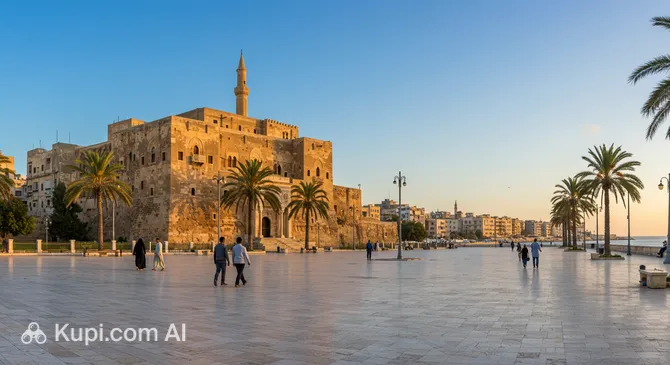
One of the capital's central landmarks is Martyrs' Square. This historic location, formerly known as Green Square, serves as the heart of the city, where important public events take place. The square is surrounded by colonial-era buildings and is a popular spot for a stroll and to experience city life.

Martyrs' Square. Source: Kupi.com Binoculars

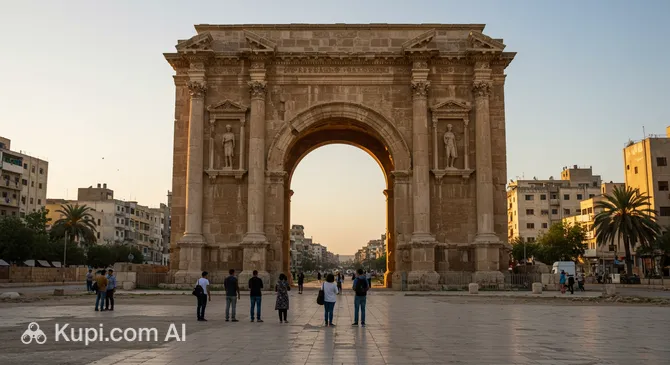
A testament to the ancient Roman heritage in Libya is the majestic Arch of Marcus Aurelius in Tripoli. Built in the 2nd century AD to commemorate military victories, its remarkable preservation and intricate carvings are a powerful reminder of the time when these lands were part of the Roman Empire. This iconic structure attracts history and architecture enthusiasts.

Arch of Marcus Aurelius. Source: Kupi.com Binoculars

For a deeper dive into the country's history, the Red Castle Museum (As-Sarai al-Hamra) is an essential visit. Housed in a massive fortress overlooking the harbour in Tripoli, this museum offers an extensive collection of artefacts that narrate Libya's past, from prehistoric times to the modern day. It is an excellent place to understand the region's cultural heritage.

Red Castle Museum. Source: Kupi.com Binoculars

Best Time to Visit

The best time to visit Libya is during the spring months (March-May) and autumn (September-November). During these periods, the weather is most comfortable for travelling: daytime temperatures are pleasant, allowing you to explore the numerous historical sites and enjoy the unique desert landscapes without the scorching summer heat. This is also a good time to get to know cities like Tripoli. Although the concept of a 'high season' in Libya can be nuanced, it is during these months that the climate is most favourable for a trip.

The summer months, from June to August, are considered the low season due to extremely high temperatures, especially in the inland desert regions where daytime heat can reach very high levels. Travelling during this period can be extremely tiring. Winter (December-February) brings a significant drop in temperature, particularly at night in the desert, although daytime temperatures on the coast can be quite mild. There are usually even fewer tourists at this time, but you should be prepared for cool weather. Libya's climate is predominantly desert, but coastal areas are influenced by the Mediterranean Sea, so it is advisable to check the weather conditions for your specific region before travelling. There are generally no major annual festivals in Libya that attract large numbers of international tourists and influence the timing of a visit, so weather conditions remain the main factor when planning your journey.

Traditions

The culture of Libya is rich and multifaceted, with deep roots in Islamic traditions and Bedouin heritage, which is particularly evident in communication and hospitality. Greetings are typically warm; a handshake with the right hand is standard practice between men. When greeting women, it is advisable to wait for them to offer their hand first. Eye contact is important, though it may be more reserved when interacting with the opposite gender. Hospitality is a sacred duty for Libyans, and being invited to a home is a sign of great respect. It is customary to bring a small gift for the hosts, such as sweets or fruit, though this is not a strict requirement. In keeping with tradition, always use your right hand for offering or receiving items, eating, and greetings, as the left hand is considered unclean in local customs.

Respect for local customs is also expressed through appearance and behaviour. Modest attire is recommended, especially for women, who should ensure their shoulders and knees are covered in public places. When visiting mosques, women are required to cover their heads, and all visitors must remove their shoes before entering. At the dining table, particularly when eating traditional dishes with your hands, use only your right hand. Key holidays that reflect the cultural life include Eid al-Fitr, which marks the end of the fasting month of Ramadan, and Eid al-Adha, the festival of sacrifice. During these times, a special atmosphere of unity and generosity prevails. To avoid causing offence to local residents, refrain from public displays of affection and loud conversations, and always ask for permission before taking photographs of people.

Entertainment

Libya offers travellers a unique combination of deep immersion in ancient history and an introduction to desert culture. Fans of active recreation can explore the vast expanses of the Sahara Desert on jeep tours across the dunes or on camel treks, especially in the areas surrounding ancient oases like Ghadames. The Mediterranean coast also offers opportunities for relaxation, although the country's main focus is on cultural entertainment. This primarily involves visiting magnificently preserved ancient cities, exploring exhibits in museums such as the famous Red Castle Museum in Tripoli, and discovering traditional arts and crafts.

Evening entertainment in Libya has its own distinct character and is mainly centred in major cities like Tripoli and Benghazi. It typically revolves around restaurants offering both local and international halal cuisine (for instance, you could visit Kabab Arabi or Pizzeria El Forno in the capital), and cosy cafés where residents and visitors spend their evenings over a cup of tea or coffee. As for shopping, Libya is famous for its traditional markets (souks), where you can find authentic souvenirs such as leather goods, silver jewellery, handmade carpets, spices, and dates. The markets in the old quarters of the cities are particularly vibrant.

For a family holiday, Libya offers educational excursions to historical sites that will appeal to both adults and children, providing a vivid way to learn about ancient history. Strolls along the waterfront promenades or through city parks can also be a pleasant addition to your itinerary. Overall, entertainment in Libya is geared towards those seeking a deep cultural experience, historical discoveries, and a peaceful, unhurried holiday, rather than loud tourist attractions. Discovering the local traditions, warm hospitality, and unique natural landscapes will leave you with unforgettable memories. As a sign of respect for the local culture, visitors are advised to dress modestly, particularly when visiting public spaces and historical or religious sites.

Currency rates

Planning a trip? Wonderful! To ensure the financial aspects of your journey don't come as a surprise, it's important to remember that currency exchange rates are constantly changing. Therefore, we strongly advise you to monitor the latest rates both before you fly and throughout your trip. For this, you can use the data provided below—we monitor currency rates 24/7 and strive to provide the most up-to-date information.

Reached the end of the page?

That means the route is fully explored